
Tropical Cyclone Vaianu expected to bring damaging winds and heavy rain to New Zealand this weekend
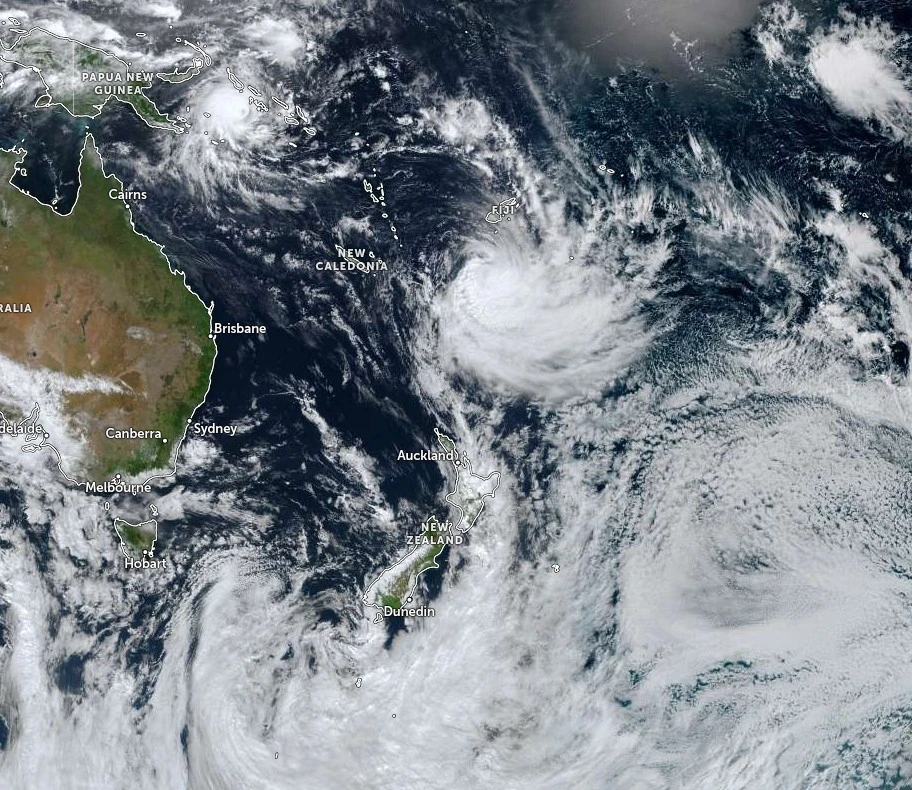
Severe Tropical Cyclone Vaianu was located south of Fiji on April 8, 2026, producing localized flooding while weakening under strong wind shear. The system is forecast to transition into an extra-tropical system before moving toward New Zealand, where damaging winds, heavy rain, and hazardous coastal conditions are expected during the weekend of April 11-12.
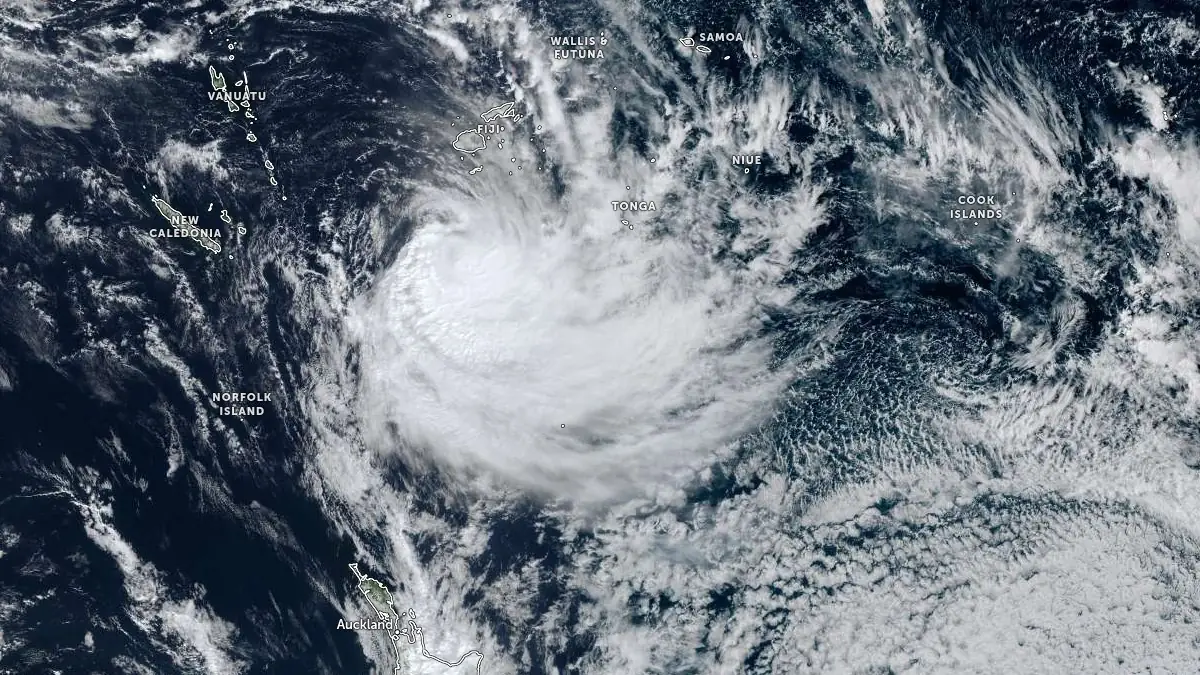
Satellite image of Tropical Cyclone Vaianu at 01:20 UTC on April 8, 2026. Credit: JMA/Himawari-9, Zoom Earth, The Watchers
Severe Tropical Cyclone Vaianu was located approximately 380 km (236 miles) south-southwest of Nadi, Fiji at 06:00 UTC on April 8, with maximum sustained winds estimated at about 111-120 km/h (69-75 mph).
The system was moving south-southeast at 20 km/h (13 mph), under the influence of increasing vertical wind shear.
RSMC Nadi analysis indicated the cyclone’s structure had weakened over recent hours, with deep convection decreasing significantly and dry air intrusion affecting the core. The system remained embedded in a strongly sheared environment, with further weakening expected as it continued moving southward.
Forecast guidance from the Fiji Meteorological Service shows Vaianu continuing south-southeast through April 9, with winds decreasing to around 74 km/h (46 mph) within 24 hours. Continued weakening is expected as the system moves into less favorable environmental conditions.
According to MetService New Zealand, Vaianu is expected to transition into an extra-tropical cyclone on Friday, April 10, as it moves into higher latitudes. During this stage, the system is expected to lose tropical characteristics while remaining an active low-pressure system.
Heavy rainfall associated with Vaianu is still affecting Fiji, prompting flash flood alerts across much of Viti Levu and parts of Vanua Levu. A flash flood warning previously in force from Tavua to Nadi and Semo was canceled at 22:00 LT on April 8, while alerts remained in force for other regions due to ongoing risk from isolated heavy rain and thunderstorms.
Flood alerts also remained in force for low-lying areas adjacent to and downstream of the Tuva River in Nadroga. River levels were reported to be receding below alert thresholds in previously affected catchments such as the Nadi and Nawaka rivers.
As Vaianu continues moving south, responsibility for official forecasting is expected to transition from the Fiji Meteorological Service to MetService New Zealand once the system crosses approximately 25°S.
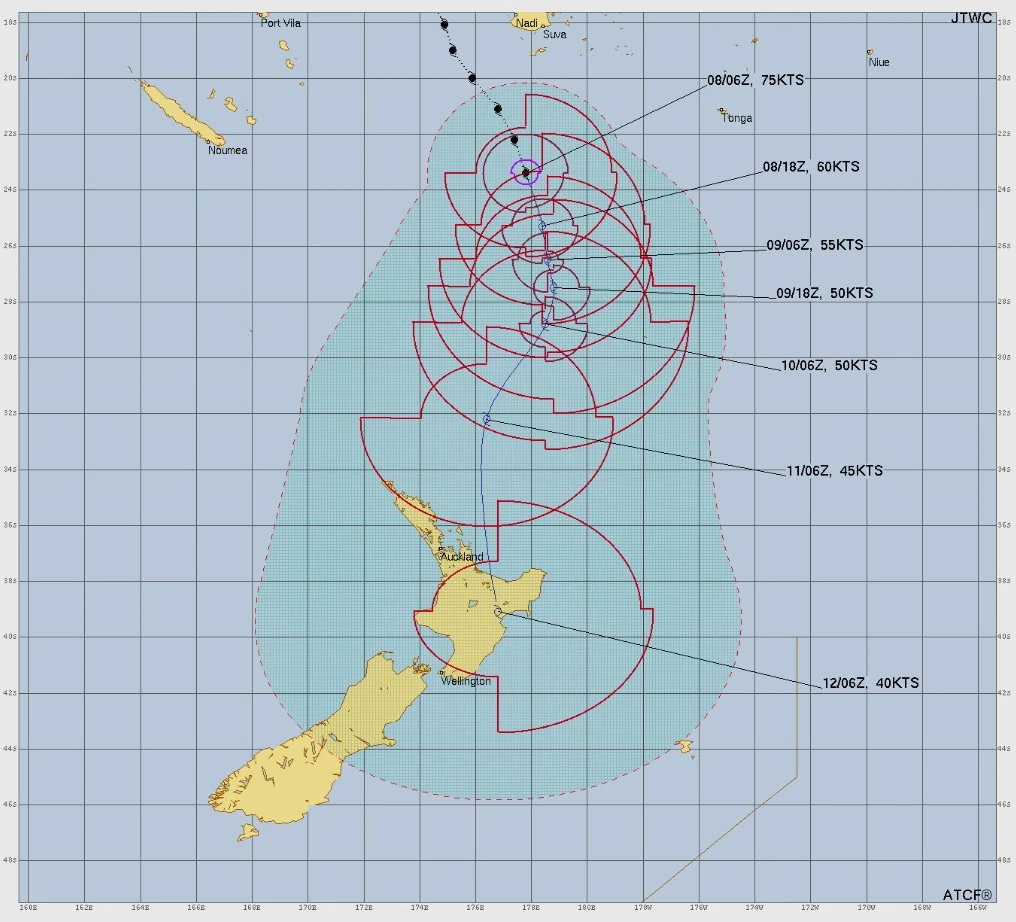
MetService has issued an early Severe Weather Watch for parts of New Zealand’s North Island for Sunday, April 12, indicating the potential for damaging, potentially life-threatening winds.
“We have several days until we see the impacts of Vaianu on New Zealand, so this is an early Severe Weather Watch, a heads up for significant weather this weekend,” MetService Meteorologist John Law said.
The system will remain a deep and active low-pressure system capable of producing severe weather even as it loses tropical characteristics. Forecast hazards include strong to gale-force winds, heavy rainfall with potential for flooding, and hazardous coastal conditions.
“The areas most impacted by Cyclone Vaianu will be heavily dependent on the movement of the system,” Law says. “In the coming days, as clarity in the forecasts increases, the Severe Weather Watch will be updated, and Severe Weather Warnings will be issued highlighting the areas most at risk.”
References:
1 Tropical Cyclone Bulletin – MetService New Zealand – April 8, 2026
2 Tropical Cyclone Advisories and Warnings – RSMC Nadi – April 8, 2026

Teo Blašković founded The Watchers in 2011 and edited it until 2026, covering seismic and volcanic activity, extreme weather, space weather and near-Earth objects. Articles on this page are his archive.
Published in the last 24 hours
- In September 1859, a solar storm lit up the night sky so brightly that gold miners in the Rocky Mountains woke up after midnight and started cooking breakfast, convinced the aurora glowing over their camp was the sunrise Epicenter
- A patch of warm Pacific water that could become the strongest El Niño in more than 70 years sits thousands of miles from any American town, yet it is already the main reason NOAA expects a wetter winter across the South and a milder one across the North
- A 19-year-old Nebraska teacher reportedly tied her pupils together with twine and led them to safety through a blizzard in January 1888 Epicenter
- NASA built the Opportunity rover to last 90 days on Mars, and Martian winds helped keep it alive for nearly 15 years by blowing dust off its solar panels, until a planet-wide dust storm in 2018 blocked sunlight and silenced the rover Epicenter
