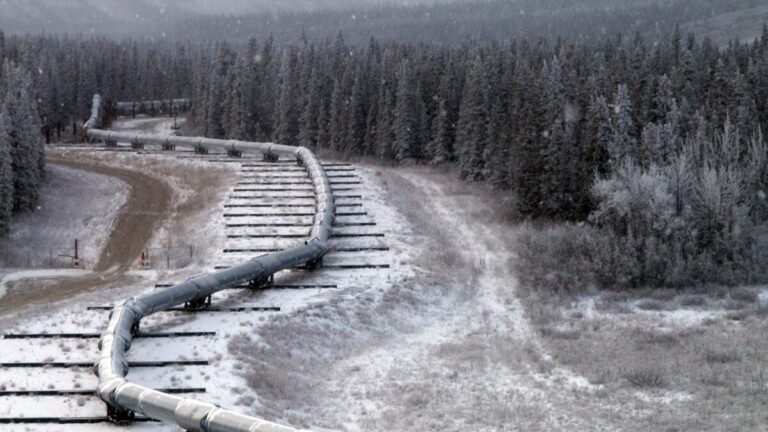
In 2002 a magnitude 7.9 quake on the Denali Fault shoved the ground about 14 feet sideways under the Trans-Alaska Pipeline, but engineers had designed Teflon sliders for the pipe nearly 30 years earlier, and no oil spilled.
On November 3, 2002, the M7.9 Denali Fault earthquake ruptured about 340 km (211 miles) of central Alaska and displaced the ground beneath the Trans-Alaska Pipeline by roughly 4.3–5.8 m (14–19 feet), depending on how the distributed rupture is measured. The pipe slid across low-friction supports and flexed through its zigzag alignment; it did not rupture and no oil escaped.