• Explosive eruption at Sheveluch volcano ejects ash to 10.4 km (34 000 feet), Russia

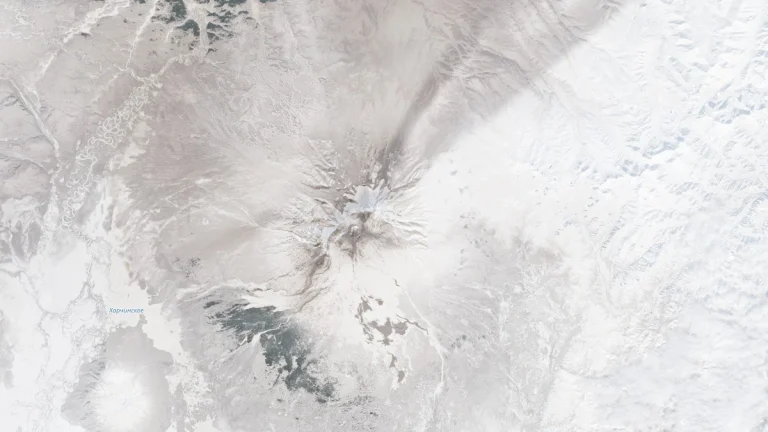
    Explosive activity at Sheveluch volcano on the Kamchatka Peninsula, Russia, produced a volcanic ash plume rising to approximately 10.4 km (34 000 feet) altitude at 11:20 UTC on March 16, 2026, drifting east across the North Pacific. Satellite imagery from Himawari-9 detected the ash cloud moving east at around 110 km/h (70 mph). The Aviation Color Code remains at Orange.

  • Floods in Evros River basin damage over 60 000 ha (150 000 acres) of farmland, threaten 2026 planting season, Greece

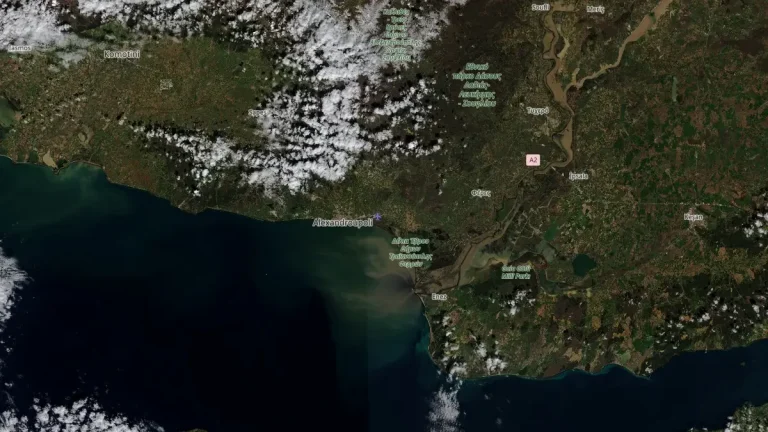
    Prolonged rainfall and cross-border inflows have triggered a state of emergency across northeastern Greece, where severe flooding along the Evros River in February 2026 submerged tens of thousands of acres of farmland and destroyed wheat, barley, lentil, and alfalfa crops. No fatalities have been confirmed, but authorities warn of extensive economic losses for the region’s farm sector.

  • Satellite data show continued expansion of Home Reef volcano in Tonga

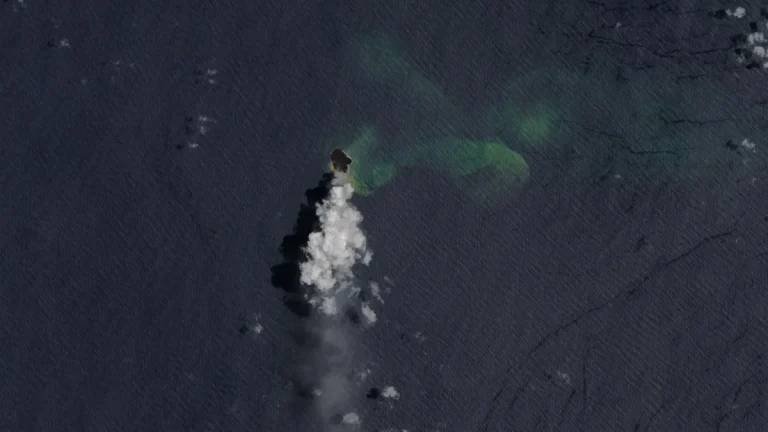
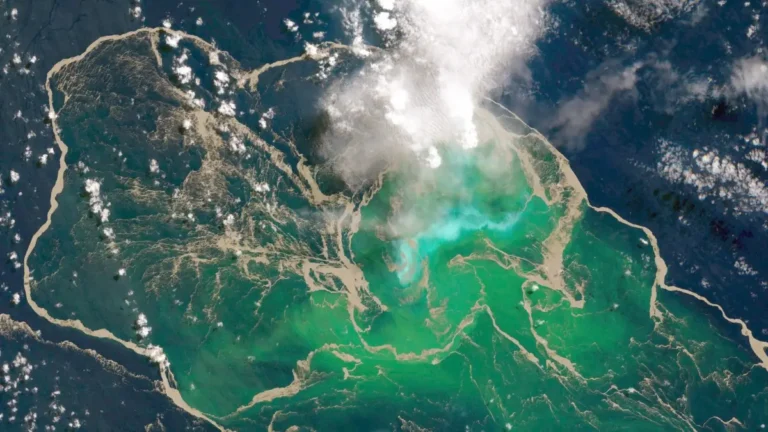
    Satellite monitoring confirms that Home Reef volcano in Tonga remains active nearly two months after its latest eruption began on December 17, 2025. The eruption has expanded the island’s surface area by nearly 8 ha (20 acres) as lava flows extended its margins east, south, northwest, and north.

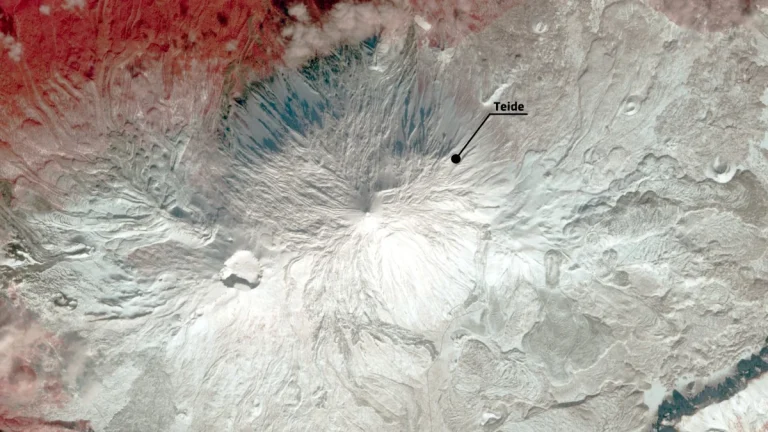
  • Storm Emilia drops historic snowfall over Mount Teide, Tenerife

    A mid-December winter storm produced an unusually extensive snow cover across Mount Teide, a high-altitude volcano located near 28°N latitude in the subtropical eastern Atlantic. False-color satellite imagery acquired on December 15, 2025, shows snow spread widely across summit slopes and interior plateaus of Teide National Park following the passage of Storm Emilia, a rare…

  • Elevated activity, increased sulfur dioxide output at Nyamulagira volcano, DR Congo

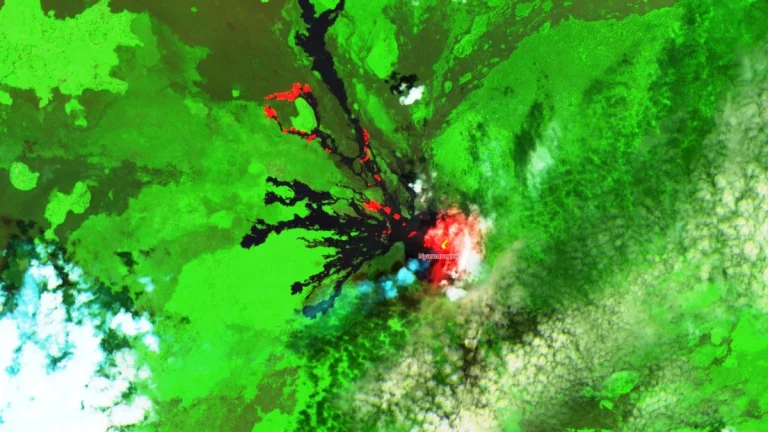
    Effusive eruption at Nyamuragira volcano, Democratic Republic of the Congo, continues at elevated levels. Sentinel-2 imagery from November 12, 2025, shows lava overflowing the northern rim of the caldera and extending about 6.5 km (4 miles) along the northwestern flank. On November 14, 2025, TROPOMI detected a high SO2 plume at approximately 15 km (49 200 feet) altitude, confirming intensified degassing linked to sustained magma supply.