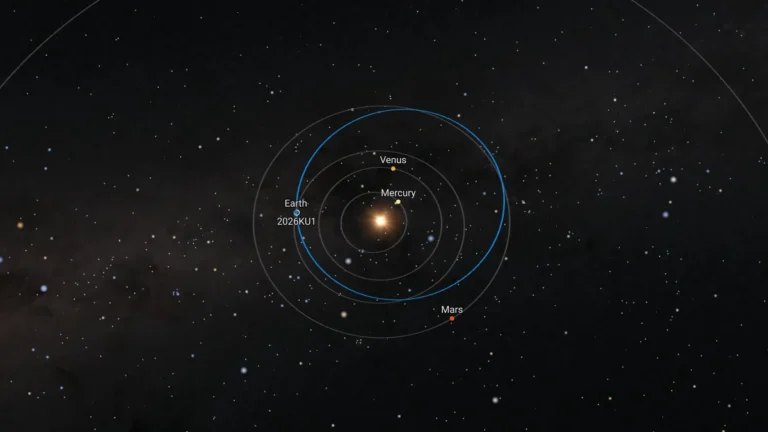
• Asteroid 2026 KU1 flew past Earth at 0.149 lunar distances

    Asteroid 2026 KU1 flew past Earth at a distance of 0.149 lunar distances (about 0.00038 AU / 57 300 km / 35 600 miles) from the center of our planet at 22:11 UTC on May 22, 2026, becoming the 9th closest known asteroid flyby within 1 lunar distance recorded so far this year. Its closest point was about 50 900 km (31 600 miles) above Earth’s surface.

  • Asteroid 2026 JN4 impacts Earth over the Arafura Sea

    A small asteroid designated 2026 JN4 entered Earth’s atmosphere between Australia and Papua New Guinea at 13:44 UTC on May 15, 2026, after ESA’s Meerkat and JPL’s Scout systems identified a high Earth-impact probability from a short observation arc. This is now the 12th predicted Earth impactor and the first since December 3, 2024. Meter-scale asteroids of this size and velocity usually disintegrate high in the atmosphere.

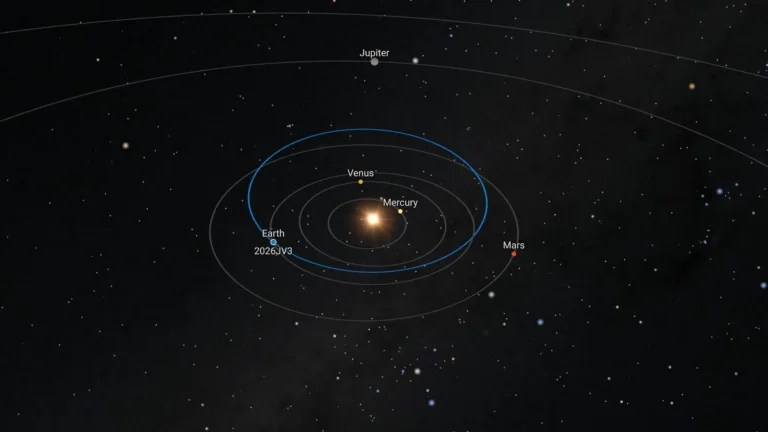
  • Asteroid 2026 JV3 passed Earth at 0.13 lunar distances

    Asteroid 2026 JV3 passed Earth at a distance of 0.130 lunar distances (0.00034 AU / 50 900 km / 31 600 miles) from the center of our planet at 22:59 UTC on May 14, 2026, becoming the 6th closest known asteroid flyby within 1 LD recorded so far this year. Its closest point was about 44 500 km (27 700 miles) above Earth’s surface.
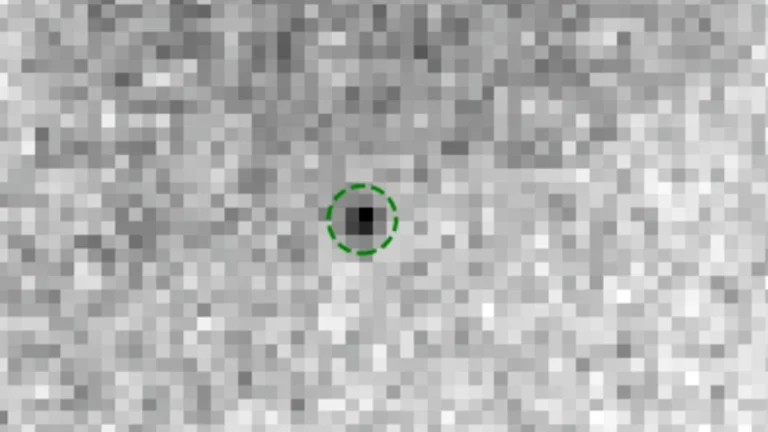
  • Asteroid 2026 JH2 to fly past Earth at 0.24 lunar distances

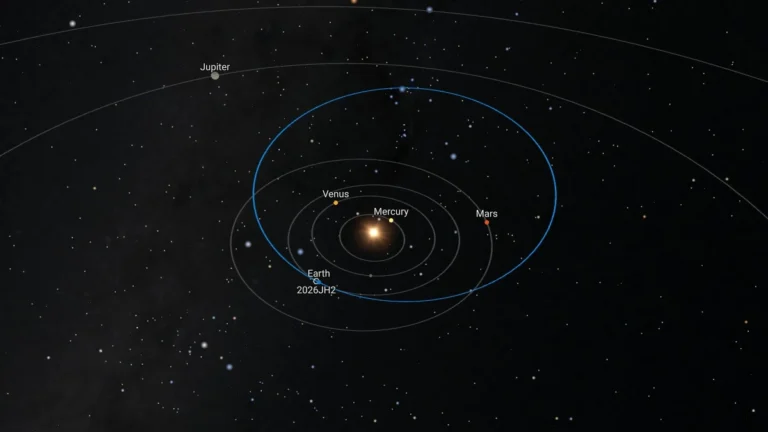
    Asteroid 2026 JH2 is expected to pass Earth at a distance of 0.237 LD (0.00061 AU / 91 300 km / 56 700 miles) from the center of our planet at 21:23 UTC on May 18, 2026. Its closest point will be about 84 900 km (52 700 miles) above Earth’s surface.
  • Asteroid 2026 JM2 passed Earth at 0.1 lunar distance

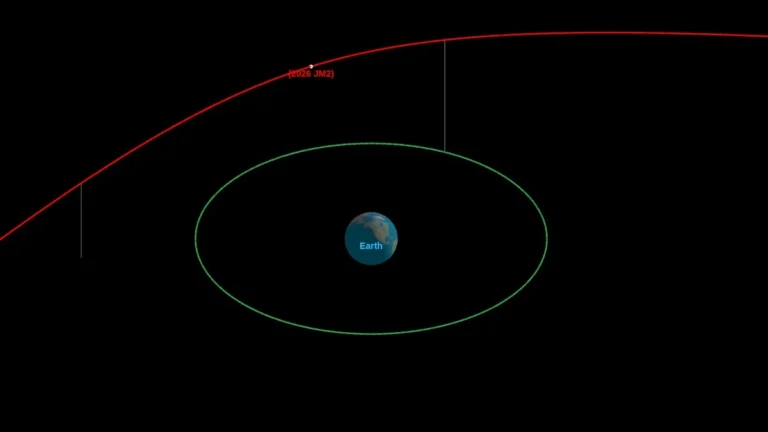
    Asteroid 2026 JM2 passed Earth at a distance of 0.114 LD (0.00029 AU / 43 800 km / 27 200 miles), from the center of our planet at 13:06 UTC on May 7, 2026, becoming the 4th closest known asteroid flyby within 1 lunar distance recorded so far this year. At its closest, the object was about 37 400 km (23 200 miles) above Earth’s surface, about 1 600 km (1 000 miles) outside the altitude used by geostationary satellites.

  • Asteroid 2026 JO flew past Earth at 0.3 lunar distances

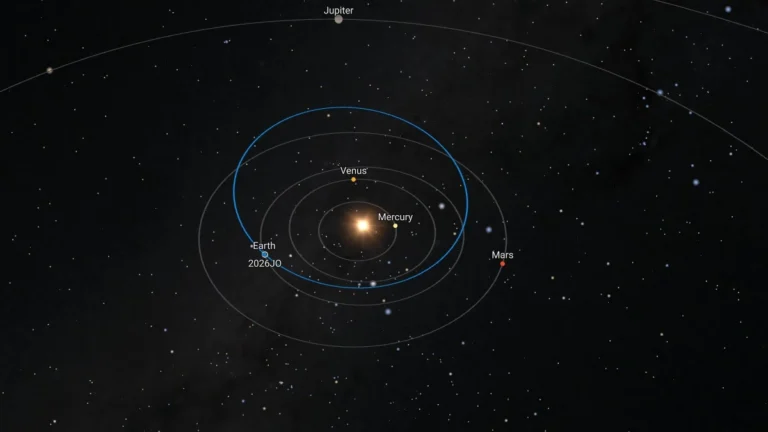
    Asteroid 2026 JO flew past Earth at a distance of 0.347 LD (0.00089 AU / 133 560 km / 83 000 miles), from the center of our planet at 05:04 UTC on May 9, 2026. At its closest, the object was about 126 970 km (78 900 miles) above Earth’s surface.

  • Asteroid 2026 HZ4 passed Earth at 0.072 lunar distances, the second closest of the year

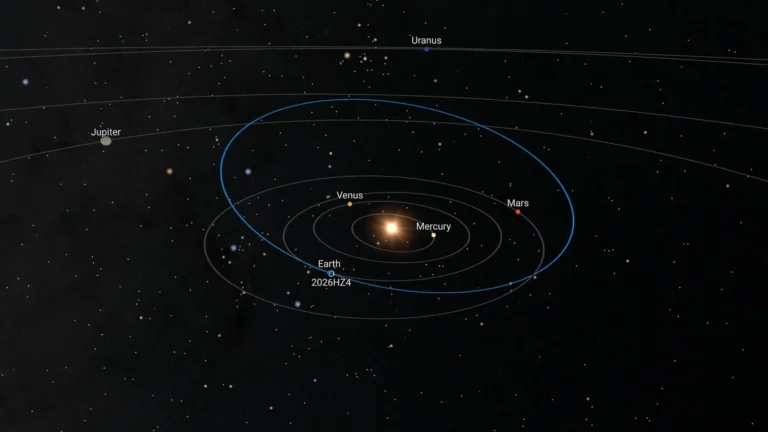
    Asteroid 2026 HZ4 passed Earth at a distance of 0.077 LD (0.00020 AU / 29 709 km / 18 460 miles) from the center of our planet at 12:13 UTC on April 24, 2026, becoming the second-closest known asteroid flyby within 1 lunar distance recorded so far this year. Its closest point was about 23 338 km (14 501 miles) above Earth’s surface, placing it inside the orbit of geostationary satellites.

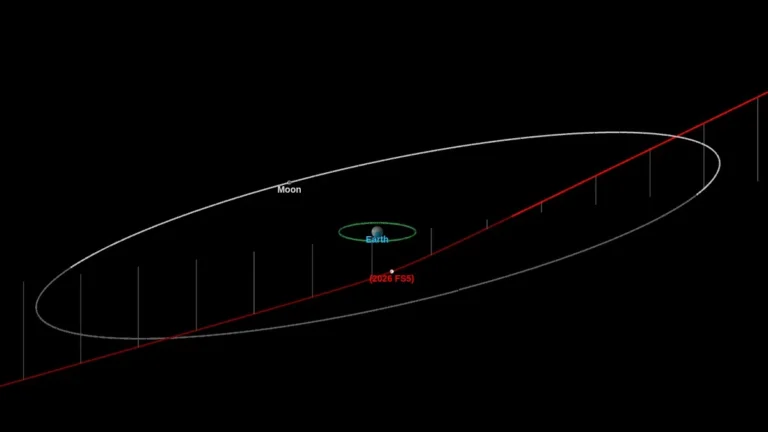
  • Asteroid 2026 FS5 passed within 0.1 lunar distance of Earth

    Asteroid 2026 FS5 passed Earth at a distance of 0.120 LD (0.00031 AU / 46 133 km / 28 666 miles) from the center of our planet at 11:40 UTC on March 22, 2026, becoming the third closest known asteroid flyby within 1 lunar distance recorded so far this year. Its closest point was about 39 762 km (24 707 miles) above Earth’s surface.

  • JWST observations eliminate lunar impact probability of asteroid 2024 YR4 in 2032

    Astronomers have ruled out a potential Moon impact by asteroid 2024 YR4 on December 22, 2032 after precise measurements from the James Webb Space Telescope refined the object’s orbit. The asteroid, once briefly considered among the most closely monitored impact risks discovered in the past two decades, will instead pass safely beyond 20 000 km (12 400 miles) from the Moon.

  • Asteroid 2025 WE14 flew past Earth at 0.07 LD

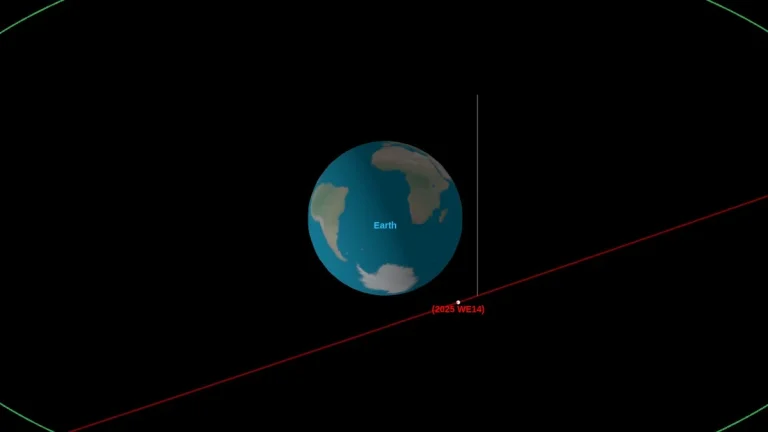
    A newly discovered asteroid designated 2025 WE14 flew past Earth at a distance of 0.073 lunar distances at 18:44 UTC on November 29, 2025. The object was first detected by the Mt. Lemmon Survey on November 30 during a very short one-day observation arc.