• Potomac River advisory lifted in Washington, D.C. as repairs begin on collapsed interceptor

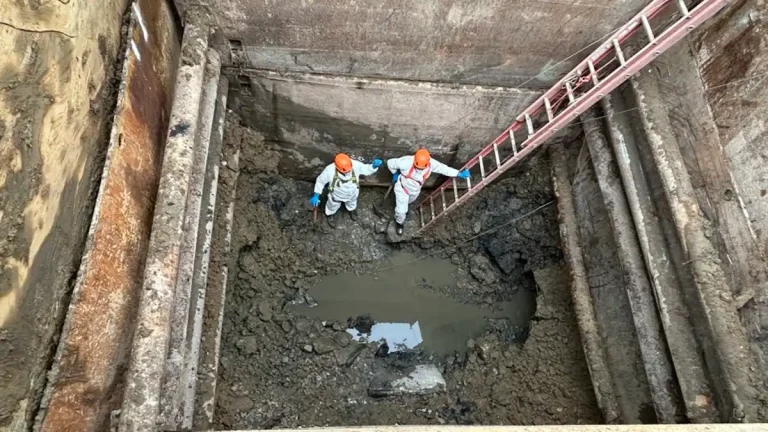
    The District Department of Health lifted a recreational advisory for the Potomac River in Washington, D.C., on March 2, 2026, after three weeks of monitoring showed bacterial levels had returned to typical ranges following the January 19 collapse of the Potomac Interceptor sewer line. Repair operations advanced the following day as crews prepared the damaged pipe for structural reinforcement while environmental restoration continues in the affected section of the C&O Canal National Historical Park.

  • Potomac Interceptor collapse among largest municipal wastewater spills in U.S. history

    A section of the Potomac Interceptor sewer line failed on January 19, 2026, in Montgomery County, Maryland, releasing more than 920 million liters (243 million gallons) of untreated wastewater into the Potomac River. By volume, the incident ranks among the largest documented municipal wastewater spills in U.S. history. Elevated bacterial concentrations prompted recreational advisories and shellfish closures while emergency bypass operations continued into mid-February.

  • Widespread arsenic contamination found in Myanmar’s Ayeyarwady Delta wells

    Around 71 percent of wells in Myanmar’s Ayeyarwady Delta exceed World Health Organization (WHO) safe drinking water limits, placing up to 12 million people at risk of long-term arsenic exposure, a new study led by the University of Portsmouth finds. Travelers and residents relying on untreated well water may be exposed if they consume or use it for cooking.

  • Extremely high particulate levels recorded as Delhi’s air pollution worsens after Diwali

    Air quality across New Delhi, India, deteriorated sharply between October 19 and 21, 2025, reaching “very poor” and “severe” levels at multiple monitoring stations. According to the Central Pollution Control Board (CPCB), the 24-hour average AQI rose from 296 on October 19 to 345–346 on October 20–21, prompting Stage II measures of the Graded Response Action Plan (GRAP) across the National Capital Region.

  • Petroecuador declares force majeure after worst oil spill in 8 years, Ecuador

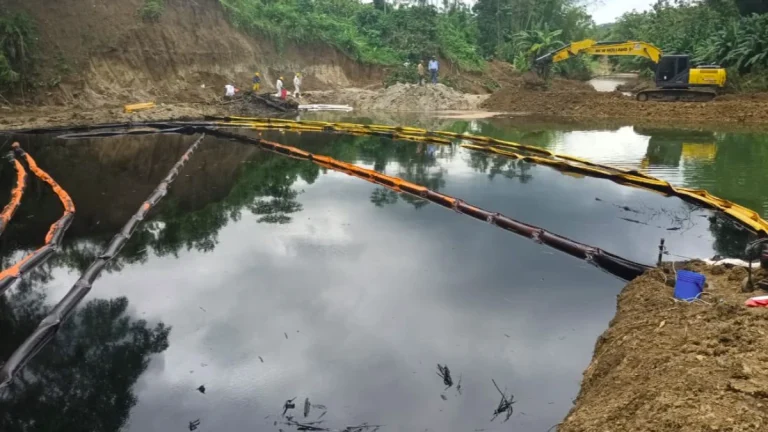
    ​Ecuador’s state oil company, Petroecuador, declared force majeure on its Trans-Ecuadorian Pipeline System (SOTE) on March 18, 2025, following a catastrophic oil spill that began on March 13. The spill, caused by a landslide that ruptured the pipeline, has contaminated the Esmeraldas River, affecting over 500 000 residents who are now experiencing a severe water crisis. The landslide was triggered by heavy rains and severe weather conditions across the country that have claimed 20 lives as of March 19.

  • State of emergency in Ecuador after major oil spill

    Ecuador declared a state of emergency on March 16, 2025, following a major oil spill in the Esmeraldas River, which has severely impacted the region’s water supply. Authorities have urged residents to ration water as efforts to contain the spill and mitigate its effects are underway.

  • Toxic waste delays California wildfire cleanup efforts

    Toxic waste from burned lithium batteries, asbestos, and synthetic materials poses a significant risk in California’s wildfire-affected areas. Cleanup efforts are being delayed as hazardous substances require specialized removal before residents can safely return.

  • Cloud seeding proposed as a solution for the world’s most polluted city, New Delhi, India

    New Delhi reached an air quality index (AQI) of 495 at 10:54 LT (05:24 UTC) on Friday, November 22, 2024, the highest recorded so far this season. Earlier this week, Delhi’s AQI reached 493, placing it among the most polluted cities globally on November 18, 2024. PM 2.5 levels hit 401.1 µg/m3 exceeding the safe limits of the World Health Organisation (WHO) over 27 times.

  • Severe air pollution grips Delhi with AQI at 373, second worst worldwide

    The Air Quality Index (AQI) of 373 in R.K. Puram, Delhi, shows high pollution levels as of 14:35 LT (09:05 UTC) on Saturday, November 16, 2024. The levels of PM2.5 and PM10 are 318 and 258 indicating serious health risks placing Delhi as the second most polluted city in the world, following Lahore, Pakistan. Other pollutants like ozone (AQI 51), nitrogen dioxide (AQI 13), sulfur dioxide (AQI 1), and carbon monoxide (AQI 8) were also measured but are at lower levels.