
Turkey’s Sea of Marmara experiences the largest outbreak of “sea snot” on record
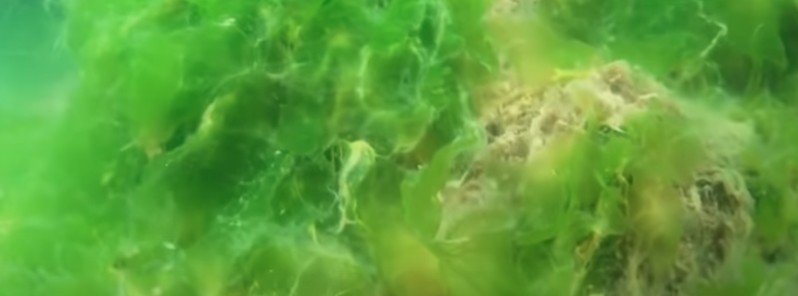
Image credit: Tahsin Ceylan
A large amount of thick, viscous, mucus-like substance known as marine mucilage or sea snot (phytoplankton bloom) is covering the coastline of the Sea of Marmara near Istanbul, Turkey, threatening marine life and the local fishing industry. Sea snot is caused by the overgrowth of phytoplankton — microscopic marine algae — due to pollution.
Sea snot was first reported in the Maramar Sea in 2007 but the latest outbreak is thought to be the largest in history, local media report.
Turkish President, Recep Tayyip Erdoğan, said the cause of the latest increase in phytoplankton coating the surface of the Maramar Sea is unrefined wastewater discharged into the sea, adding that he had instructed Environment Minister Murat Kurum to lead the resolution of this issue.
Erdogan also said the problem could spread to the Black Sea.
With a team of 300 people, the ministry is currently carrying out inspections at 91 different points of the Sea of Marmara, as well as all wastewater refinement and solid waste facilities on land, to detect the source of the pollution, he said.

Teo Blašković founded The Watchers in 2011 and edited it until 2026, covering seismic and volcanic activity, extreme weather, space weather and near-Earth objects. Articles on this page are his archive.
Published in the last 24 hours
- High Risk of excessive rainfall covers Florida’s Space Coast as St. Johns River near Cocoa reaches 5.67 m
- Asteroid 2026 WJ to pass Earth at 1.7 lunar distances at 04:20 UTC on November 22, with 2026 WD following at 4.4 lunar distances on November 23
- Cyclone Akvan weakens after landfall near Gopalpur; more than 300 000 evacuated in Odisha, India
- A broad low over southeastern Florida and the northwestern Bahamas has a 30 percent chance of subtropical or tropical development within 48 hours and a 50 percent chance within 7 days, the National Hurricane Center says
