
Submarine eruption near Titan Ridge opens new island possibility in the Bismarck Sea, Papua New Guinea
A submarine eruption that began on May 8, 2026, continues in the central Bismarck Sea, about 130 km (81 miles) southeast of Manus Island, Papua New Guinea. The eruption revealed a previously unmapped underwater volcano, now provisionally named Titan Ridge Volcano, in a remote and tectonically active area of the Pacific Ocean.
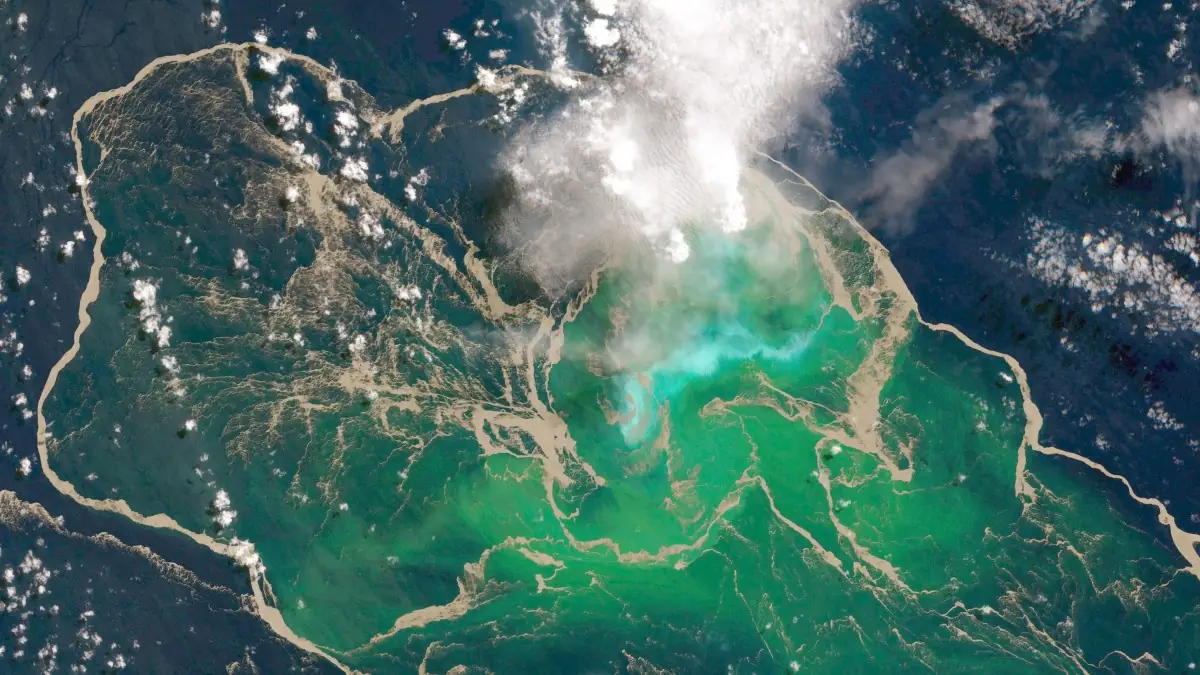
Titan Ridge submarine eruption, Papua New Guinea. Credit: CopernicusEU/Sentinel-2
The eruption was detected at around 01:15 UTC on May 8, based on seismic data recorded by the Rabaul Volcano Observatory (RVO). RVO placed the activity about 16 km (10 miles) southeast of the site of a 1972 submarine eruption.
The eruption has continued since then, with steam-and-gas plumes rising from the site and drifting west and northwest during May 13–14. By May 15, satellite imagery showed emissions from two separate vent areas about 2.5 km (1.6 miles) apart, while discolored-water plumes continued to drift from the eruption zone.
Papua New Guinea authorities warned seafarers of falling pumice, ash, unpredictable swells, turbulent currents, and possible tsunamis near the eruption zone — urging them to avoid the area.
Satellite observations revealed intense activity at the site, including volcanic plumes, ocean discoloration, pumice rafts, and thermal anomalies. However, scientists at NASA’s Earth Observatory noted that no high-resolution seafloor maps of the area were available, which complicates efforts to determine the exact vent geometry and how the eruption may be reshaping the seabed.
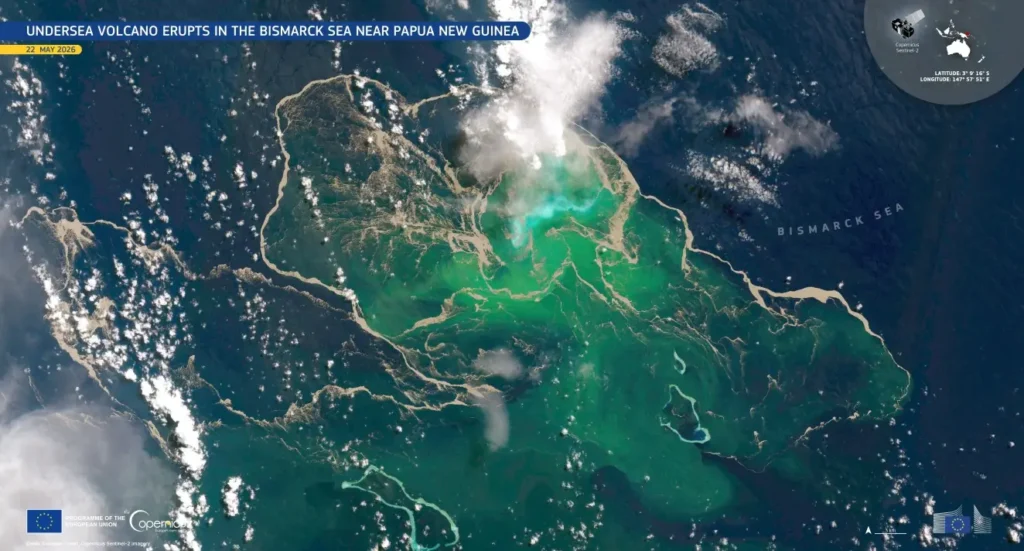
Existing bathymetric data indicate the summit of the provisionally named Titan Ridge Volcano lay more than 400 m (1 312 feet) below sea level before the eruption. The surrounding seafloor in the eruption zone ranges from approximately 500 to 800 m (1 640–2 625 feet) in depth.
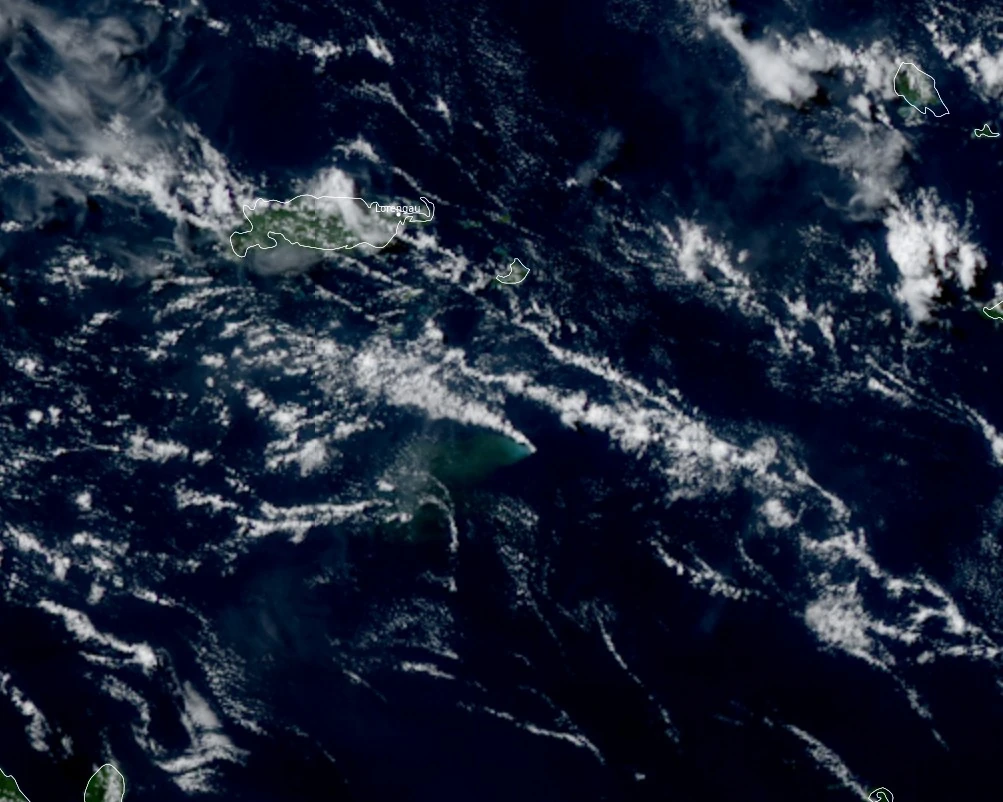
Shallow submarine eruptions can occasionally build volcanic material upward and, in rare cases, produce temporary or permanent islands. Those of you with us over the past 15 years would remember several of the most interesting new volcanic islands, including Nishino-shima, Hunga Tonga-Hunga Ha’apai, and Metis Shoal.

I'm a dedicated researcher, journalist, and editor at The Watchers. With over 20 years of experience in the media industry, I specialize in hard science news, focusing on extreme weather, seismic and volcanic activity, space weather, and astronomy, including near-Earth objects and planetary defense strategies. You can reach me at teo /at/ watchers.news.

Amazing visual you include from Copernicus.
Interesting for-sure. Previously-unmapped, remarkable and what else ocean-floor unrecorded, releasing heat? Cited denial of knowledge, some strategic angle perhaps.
And what of that remote-sensing mission tracking Pacific deep flow-phase change reported last week? Another one for our grey basket of coincidence.
Must be high up on the list of greatest modern pumice releases. Bit impactful for marine ecology, fishing and motorboating. Magmatic analysis to suggest origination will be interesting, sulphur emissions too, methane could be worth a check. Wonder what the water temperature changes have been like.
I think Teo that you are one of if not the first to call the possibility of island formation from that depth, respect to you, impressive seeing your excellent, consistent reporting back 15 years, what an amazing body of work you gift the world, thank you, we shall keep Watching with interest.
Thank you, Barry. I really appreciate your thoughts and comments. Best