
Monsoon landslides and flooding kill 10 Rohingya refugees, affect nearly 16 000 in Cox’s Bazar, Bangladesh
Eight Rohingya refugees, including women and children, were killed early July 6, 2026, after monsoon rain triggered landslides at four locations across camps in Cox’s Bazar, southeastern Bangladesh. A separate hillside collapse in Cox’s Bazar killed a Bangladeshi man and injured two relatives, police said.
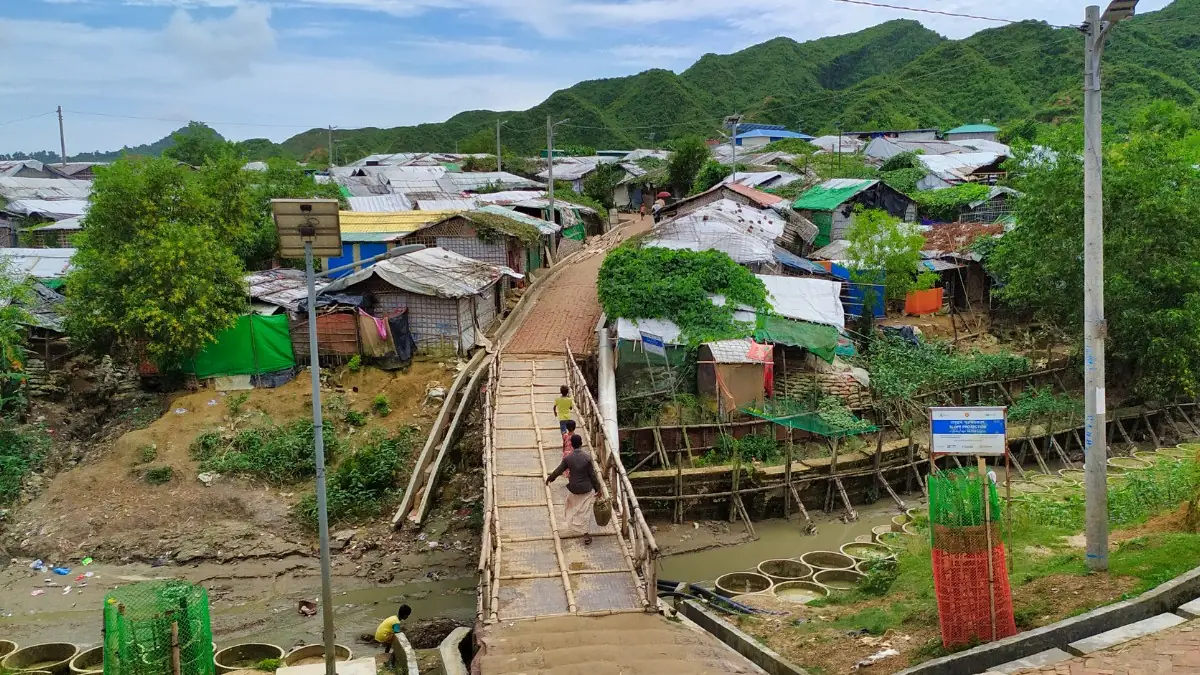
Rohingya Refugee Camp 26, Teknaf, Cox's Bazar, Bangladesh. Image credit: Rocky Masum
The landslides buried shelters under mud and debris while residents were asleep. Dollar Tripura, a Fire Service and Civil Defence official in Cox’s Bazar, told the Associated Press that rescuers recovered seven bodies and that refugees found an eighth. Additionally, two children were injured during the event.
According to Tripura, the landslides hit at least four locations across the camps, burying shelters under mud and debris while residents were asleep.
Bangladesh authorities said they had relocated at least 1 000 refugees from landslide-prone areas to safer locations and planned further moves in phases.
Mohammed Mizanur Rahman, Bangladesh’s refugee relief and repatriation commissioner, said awareness campaigns were underway across the camps.
On July 6, the Bangladesh Meteorological Department (BMD) said the monsoon depression over Odisha and adjoining south Jharkhand has moved northwestwards and now lies over southwest Jharkhand and adjoining Odisha as a Monsoon Land Depression.
The monsoon remains active over Bangladesh and strong over the North Bay, BMD meteorologists said, forecasting additional rain over the region through at least July 8.
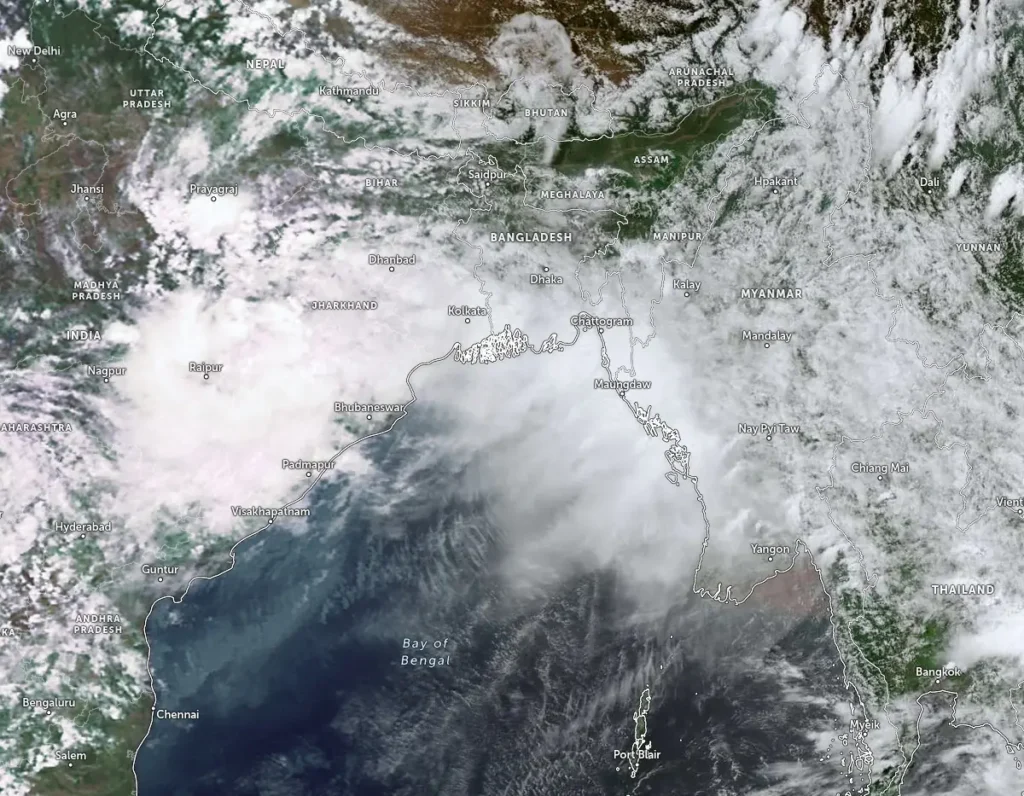
BMD’s 120-hour forecast issued July 6 called for rain or thundershowers in most places across Chattogram division during the following 24 hours, with moderately heavy to very heavy rainfall at places in six divisions, including Chattogram, according to Bangladesh Sangbad Sangstha.
Moderately heavy to very heavy rainfall is forecast nationwide on July 7 and 8.
Update
09:38 UTC, July 8
The number of Rohingya refugees killed in recent rain-related incidents in Cox’s Bazar has risen to at least 10, with 10 others injured, according to UNHCR figures cited by local media.
UNHCR, citing the Rohingya Coordination Platform’s daily incident dashboard, said 15 813 refugees were affected and 3 182 displaced between July 4 and the morning of July 7.
The same release recorded 160 disaster incidents across the camps, including 52 landslides, 14 floods, and 83 storm-related events. At least 1 614 shelters were partially damaged and 10 were destroyed.
Heavy to very heavy rainfall continued to affect Cox’s Bazar and parts of Chattogram, with additional flooding, waterlogging, and landslide risks reported. BMD said heavy rainfall was expected to continue for another 48 hours, while local cautionary signal No. 3 remained in force for the seaports of Chattogram, Cox’s Bazar, Mongla, and Payra.
Outside the Rohingya camps, another landslide in Cox’s Bazar Sadar Upazila killed a 27-year-old woman on July 7 and injured her husband and child. The collapse occurred at about 13:00 LT in the Borochhara area of Dariyanagar after torrential rain destabilized a nearby hillside.
Local authorities said warning announcements were being made in landslide-prone areas and that relocation and eviction drives would be carried out in vulnerable hill settlements.
References:
1 Landslides in Bangladesh kill at least 8 Rohingya refugees while monsoon rains batter India – AP – July 7, 2026
2 Heavy rainfall likely across country – BSS News – July 6, 2026

Teo Blašković founded The Watchers in 2011 and edited it until 2026, covering seismic and volcanic activity, extreme weather, space weather and near-Earth objects. Articles on this page are his archive.
Published in the last 24 hours
- Hawaii's largest freshwater lake was 200 feet deep at 10 a.m. on June 2, 2018. By that afternoon, lava from Kilauea had boiled it away Epicenter
- Flying glass cut a teacher in Russia but none of her 44 pupils, because when a meteor flashed across the sky in 2013, she told them to get under their desks Epicenter
- A South Dakota man put the widest and heaviest hailstone on US record in his freezer, and a power cut melted part of it before NOAA measured it at 8 inches across and nearly 2 pounds in 2010 Epicenter
- Black kites and brown falcons in northern Australia have been seen snatching smoldering sticks from wildfires, flying them into unburned grass and dropping them, starting new fires that send lizards, rodents and insects running straight toward the waiting birds Epicenter
