
Over 5 000 people under threat of landslides due to widening earth cracks in Namisindwa, Uganda
More than 5 000 people are at the risk of landslides as widening earth cracks continue to affect villages across the Namisindwa District in Uganda, authorities said on June 3, 2026. More than 125 villages have already been affected by landslides that destroyed multiple homes and caused widespread damage.
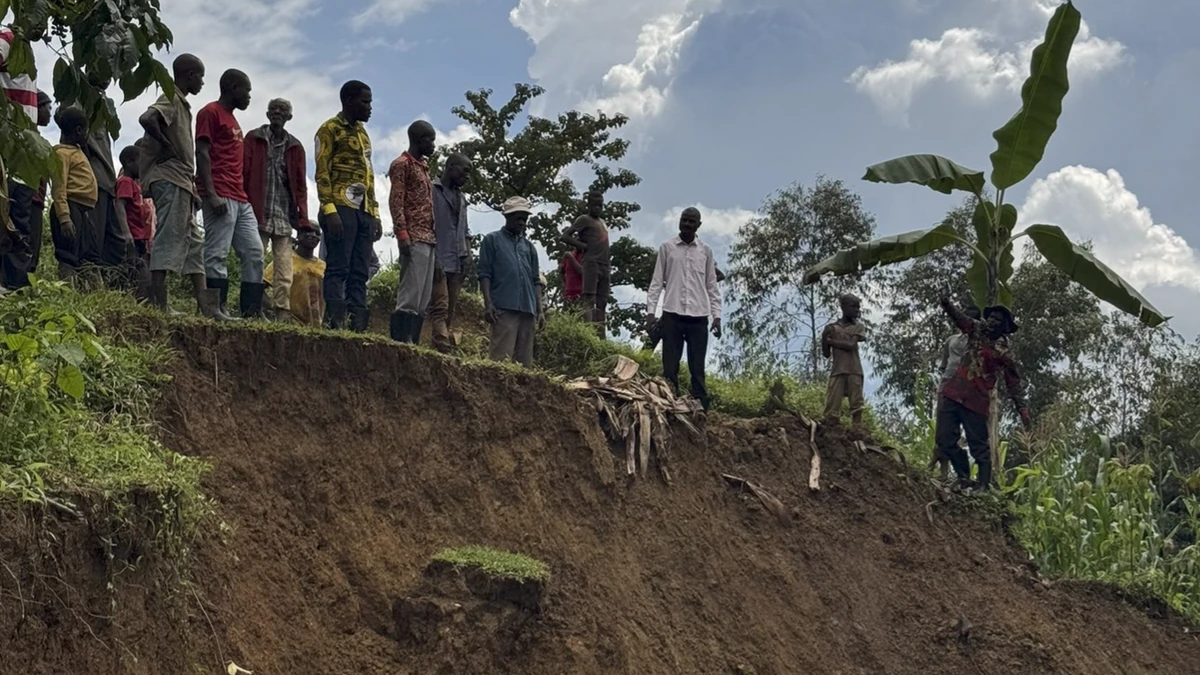
Landslide in the Namisindwa district in Uganda on June 3, 2026. Credit: Emmah M Bwayo
More than 500 villages in Namisindwa District are at risk of landslides due to widening cracks in the ground. At least 125 villages have already been affected by landslides and cracks.
The affected areas include Buwabwala, Bumumali, Tsekululu, Mukoto, and Luwa Town Council, where residents say widening ground fissures have left communities living in fear amid continued heavy rainfall.
The cracks reportedly widened significantly after heavy rains on June 3, and triggered multiple landslides, destroying homes and other structures.
“More than 5 000 people are at risk and urgently need the Government of Uganda’s intervention for their safety,” Emmmah Bwayo, the chairman of the district, said.
“The office of the prime minister needs to fast-track the resettlement process and provide immediate support,” he added.
“Residents are living in constant fear as water continues to flood homes, while widespread crop destruction is worsening food insecurity risks,” the district councilor for Tsekululu and Bungati, Betty Nandutu, said
“If the government does not intervene quickly, hunger will become another disaster facing our people,” Nandutu warned.

Rishav Kothari is Editor-in-Chief of The Watchers, where he runs the newsroom and covers earthquakes, volcanoes, severe weather and space weather.
Published in the last 24 hours
- The Leonid meteor shower peaks on the night of November 17, exactly 60 years after the 1966 storm, when some observers reported meteors falling at up to 40 a second, though this year’s show should be closer to 15 an hour
- When Arctic air reached South Florida in January 2020, Miami fell to 40°F and the National Weather Service warned residents to watch for cold-stunned iguanas dropping out of the trees Epicenter
- In May 2024, the strongest solar storm in 20 years put northern lights over the southern US, and across the Plains, GPS-guided tractors built to plant within an inch drifted about 10 feet off their rows Epicenter
- In 1943, a flight instructor in Texas flew a two-seat training plane into the eye of a hurricane because he was curious, then landed and took the base weatherman up for a second pass Epicenter
