
Bundibugyo Ebola outbreak reaches 1 926 cases in DRC as U.S. tightens travel measures
The Bundibugyo Ebola outbreak in the Democratic Republic of the Congo (DRC) has reached 1 926 confirmed cases and 702 deaths, according to the country’s latest official figures reported on July 13. The epidemic has expanded across five provinces as international response efforts intensify, experimental countermeasures advance, and the United States introduces new travel measures aimed at reducing the risk of international spread.
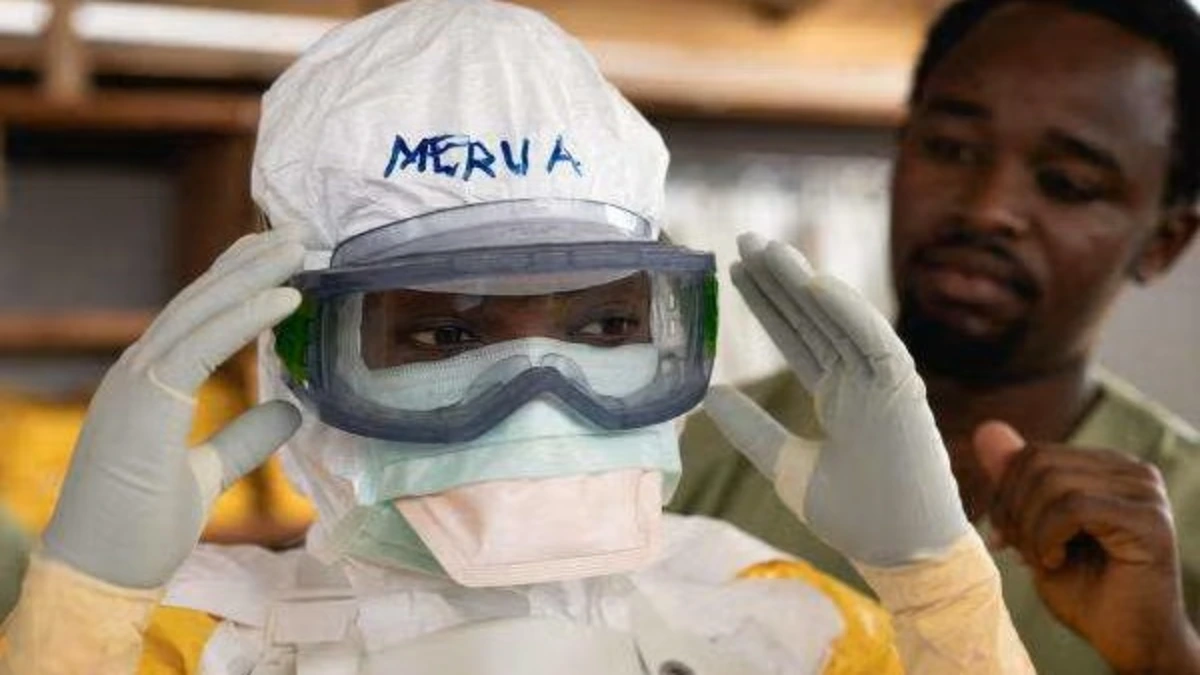
Healthcare workers prepare protective equipment as part of the Ebola response in the Democratic Republic of the Congo. Credit: MSF
The Bundibugyo Ebola outbreak, first declared in Ituri province on May 15, has continued to expand across northeastern Democratic Republic of the Congo, with official figures reported on July 13 showing 1 926 confirmed cases, 702 deaths, 753 patients hospitalized in isolation, and 295 recoveries.
The outbreak has spread beyond Ituri into North Kivu, South Kivu, Haut-Uele and Tshopo provinces, making it one of the country’s largest Ebola emergencies in recent years.
The latest national figures represent an increase of 53 confirmed cases and 39 deaths from the previous DRC report, while the outbreak has grown by 134 confirmed cases and 77 deaths since the European Centre for Disease Prevention and Control’s (ECDC) previous update on July 10. New cases have been reported in Ituri, North Kivu, Haut-Uele, and Tshopo provinces.
According to ECDC, the four confirmed cases detected in Tshopo were imported from Nia-Nia in Ituri Province, highlighting continued geographic spread. Ituri remains the epicenter of the outbreak, accounting for 1 745 confirmed cases and 601 deaths across 26 of the province’s 36 health zones.
The World Health Organization (WHO) continues to classify the outbreak as a Public Health Emergency of International Concern. Unlike the more common Zaire ebolavirus, the Bundibugyo species has no approved vaccine or specific antiviral treatment, making containment significantly more challenging.
WHO said the response is being carried out in a difficult setting shaped by a humanitarian crisis, insecurity, population movement, trade movement, remote but densely populated areas, weak health infrastructure, and misinformation in affected communities.
WHO’s Disease Outbreak News published on July 3 reported 1 460 confirmed cases and 452 deaths in DRC as of July 1, together with 20 confirmed cases and 2 deaths in Uganda as of July 2. WHO also reported one laboratory-confirmed imported case in France involving a medical doctor who returned after deployment in Ituri Province. The newer national total of 1 926 cases and 702 deaths comes from updated DRC figures reported through ECDC and reflects continued growth since WHO’s earlier public update.
Doctors Without Borders (MSF) described the outbreak as continuing to expand despite response efforts. As of July 6, MSF reported 1 708 confirmed cases, 580 confirmed deaths, and 280 survivors in DRC, providing an important operational snapshot before the latest official national update. More than 1 400 MSF staff are deployed across Ituri, North Kivu, and South Kivu in DRC, as well as Kampala, Bwera, and Arua in Uganda.
MSF currently operates seven Ebola treatment centers in DRC while constructing two additional facilities. Since launching its response in May, the organization has admitted at least 843 patients to its Ebola treatment centers, including 357 laboratory-confirmed Ebola patients and 116 survivors. MSF also supports 430 treatment and isolation beds and is rehabilitating a 32-bed Ebola treatment center in Kampala, Uganda.
The response, led by the Congolese Ministry of Health with support from WHO, Africa CDC, MSF, and other international partners, continues to expand as transmission reaches new health zones. MSF warned that current response capacity still falls short of what is required to match the speed and scale of the outbreak.
Uganda has confirmed 20 Ebola cases and 2 deaths linked to the outbreak. WHO has also reported imported cases associated with travel from Ituri into neighboring provinces, while authorities continue extensive contact tracing and surveillance to prevent further spread. ECDC noted that the last confirmed Ugandan case was reported on June 21, with no additional confirmed cases reported since then.
The United States has strengthened its public health response as the outbreak grows. The Centers for Disease Control and Prevention (CDC) continues enhanced entry screening for eligible travelers arriving from affected areas.
Under a CDC order issued July 13, the temporary entry suspension for specified foreign nationals who were physically present in the DRC, Uganda, or South Sudan during the previous 21 days remains in effect for 30 days. Reuters also reported that additional U.S. measures include placing certain travelers departing the DRC on commercial airline “do not board” restrictions until they have spent 21 days in a third country. The 21-day period reflects the maximum recognized incubation period for Ebola virus disease.
CDC says U.S. citizens and U.S. nationals may still return to the United States but are subject to enhanced public health screening if they have recently traveled from affected areas. Eligible travelers are routed through designated airports, including Washington Dulles International Airport, Hartsfield-Jackson Atlanta International Airport, George Bush Intercontinental Airport in Houston, and John F. Kennedy International Airport in New York.
Entry screening includes travel history and symptom questionnaires, temperature checks, observation for signs of illness, and automated follow-up health monitoring. CDC also advises travelers to monitor themselves for symptoms for 21 days after leaving an affected country and to immediately isolate, avoid further travel, and contact public health authorities if symptoms develop.
According to Reuters, about two dozen Americans were set to board U.S.-bound flights on Tuesday, July 15, after traveling to the DRC, and the U.S. State Department would support affected travelers during the required 21-day waiting period in a third country.
WHO continues to advise against general international travel or trade restrictions, emphasizing that exit screening, surveillance, and rapid isolation remain the most effective public health measures.
The U.S. travel measures follow confirmed Ebola infections involving American humanitarian workers deployed in DRC. ECDC reported that CDC announced on July 10 that a U.S. citizen working for a humanitarian organization in DRC had tested positive for Bundibugyo virus disease and was medically evacuated to Germany on July 13. ECDC also noted an earlier U.S. medical evacuation to Germany in May and the imported case reported by France on June 24.
Scientific efforts to develop Bundibugyo-specific countermeasures are accelerating. Researchers at the University of Oxford have launched the world’s first Phase I clinical trial of a vaccine specifically targeting the Bundibugyo ebolavirus under the BD-Ebov program. At the same time, researchers in DRC have begun the first randomized clinical trial evaluating remdesivir and the monoclonal antibody MBP134, both of which remain experimental for Bundibugyo virus disease.
WHO has also granted Emergency Use Listing to the first molecular diagnostic test specifically designed to detect Bundibugyo ebolavirus, improving laboratory confirmation and outbreak surveillance in affected regions.
Health authorities continue to warn that the outbreak remains difficult to contain because of ongoing conflict, insecurity, population movement, and disruptions affecting healthcare workers and treatment operations.
ECDC reported that 78.6% of identified contacts in Ituri and North Kivu were under active follow-up, while WHO said response teams continue strengthening surveillance, contact tracing, clinical preparedness, supply delivery, laboratory capacity, community engagement, and cross-border readiness to limit further spread.
Health authorities continue surveillance, laboratory testing, contact tracing, and case management while monitoring for additional provincial spread and possible cross-border transmission. Updated case totals are expected as laboratory confirmation and reporting continue.
Ebola disease spreads through direct contact with the blood or other body fluids of infected people, contaminated materials, or infected animals. Symptoms include fever, weakness, vomiting, diarrhea, and, in some patients, unexplained bleeding or bruising.
Because Bundibugyo virus disease has no licensed vaccine or specific approved treatment, containment continues to rely on rapid case detection, isolation, contact tracing, infection prevention measures, safe clinical care, and strong community cooperation.
References:
1 Ebola outbreak – Democratic Republic of the Congo 2026 – WHO – July 2026
2 Ebola disease caused by Bundibugyo virus, Democratic Republic of the Congo and Uganda (DON612) – WHO – July 3, 2026
3 Ebola disease outbreak 2026: How MSF is responding – Doctors Without Borders (Médecins Sans Frontières) – July 10, 2026
4 WHO says it has less than half funding needed to fight Ebola – Reuters – July 14, 2026

I’m a science journalist and researcher at The Watchers, contributing to the Epicenter edition, where I cover peer-reviewed scientific research and emerging discoveries across Earth and space sciences. With a background in astronomy and a passion for environmental science, I’ve worked in shark and coral conservation in Fiji, conducting reef and shark-behavior research, contributing to mangrove restoration, and earning PADI Open Water and Coral Reef Certifications. I bring a blend of scientific rigor and storytelling to illuminate the discoveries shaping our planet and beyond.

Commenting rules and guidelines
We value the thoughts and opinions of our readers and welcome healthy discussions on our website. In order to maintain a respectful and positive community, we ask that all commenters follow these rules.