
Shallow M6.6 earthquake hits central Mid-Atlantic Ridge
A strong and shallow earthquake registered by the USGS as M6.6 hit the central Mid-Atlantic Ridge at 18:56 UTC on June 17, 2026. The agency is reporting a depth of 10 km (6.2 miles). EMSC is reporting the same magnitude and depth.
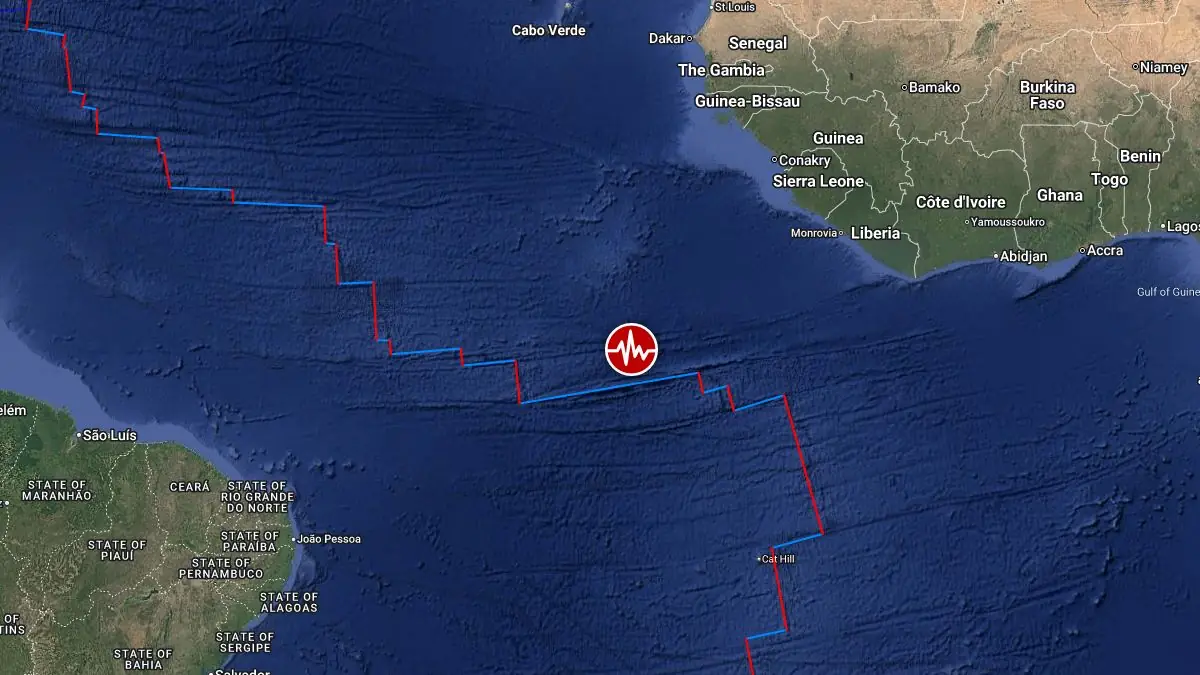
Epicenter of M6.6 earthquake in central Mid-Atlantic Ridge on June 17, 2026. Credit: TW/SAM, Google
The epicenter was located 1 031 km (640 miles) NW of Georgetown (population 538), Ascension, Saint Helena, and 1 222 km (760 miles) SW of Bonthe (population 10 206), Sierra Leone.
Based on all available data, there is no tsunami threat from this earthquake.
The earthquake occurred along the central Mid-Atlantic Ridge, a major divergent plate boundary where the South American and African plates move apart, generating frequent earthquakes associated with seafloor spreading.
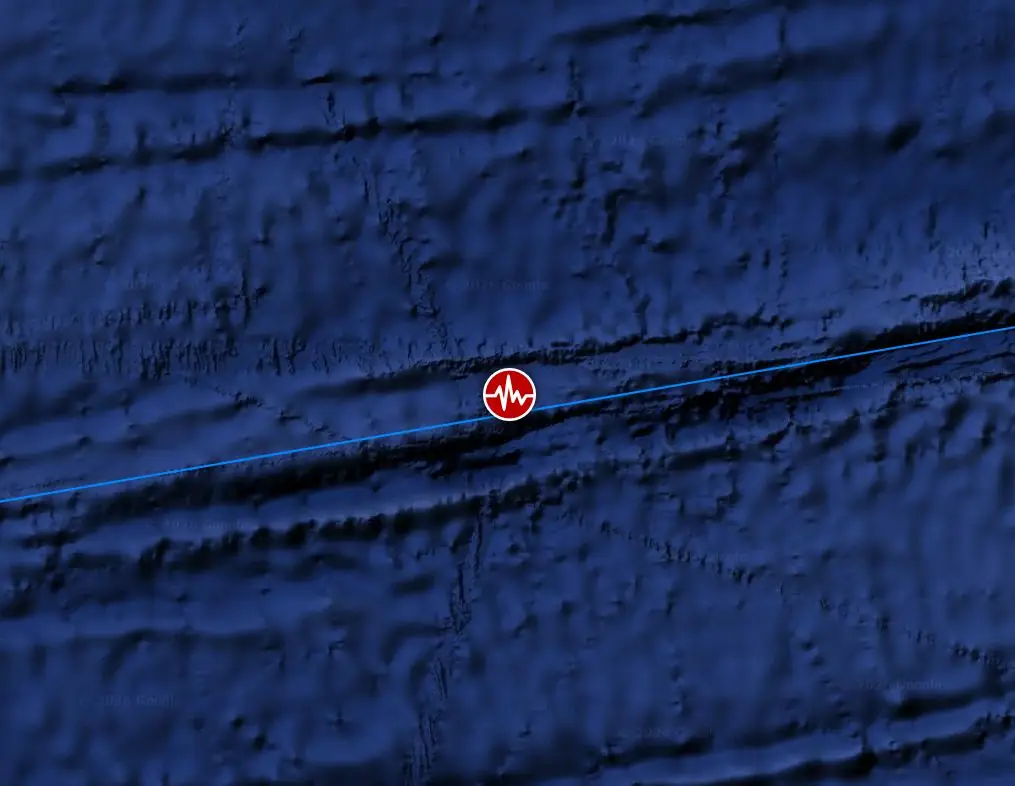
Regional seismicity
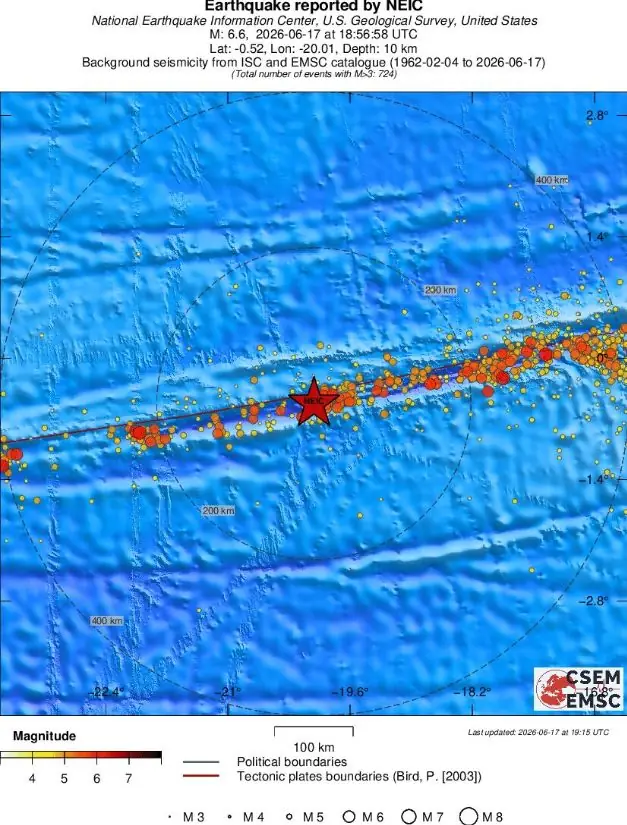
References:
1 M6.6 earthquake central Mid-Atlantic Ridge – USGS – June 17, 2026
2 M6.6 earthquake central Mid-Atlantic Ridge – EMSC – June 17, 2026

Teo Blašković founded The Watchers in 2011 and edited it until 2026, covering seismic and volcanic activity, extreme weather, space weather and near-Earth objects. Articles on this page are his archive.
Published in the last 24 hours
- Strong and shallow M6.4 earthquake hits Santa Cruz Islands, Solomon Islands
- A meteorite blew a crater beside a village near Lake Titicaca in 2007, and dozens of villagers who went to see it got headaches and nausea, though tests found nothing the rock had added to the water Epicenter
- The people who pay closest attention to the weather are the ones storms have already cost the most, a study of 946 students found, with one damaging storm making little difference to how much attention a student paid, but two or more making a clear one Epicenter
- The sea is falling in Juneau, Alaska, because land freed from melted glaciers is rising about 0.6 inches a year Epicenter

Great information to pass along. Keep up the good work.