
Tokachidake volcano erupts for first time since 2004, Japan
The Japan Meteorological Agency (JMA) confirmed a very small eruption at Tokachidake’s 62-2 crater at 11:07 LT (02:07 UTC) on July 22, 2026, the volcano’s first eruption since February 2004. A black plume rose approximately 200 m (656 feet) above the crater rim, while Volcanic Alert Level 2 remained in effect. Tokachidake is located in central Hokkaido, on Japan’s northernmost main island, approximately 900 km (560 miles) north-northeast of Tokyo.
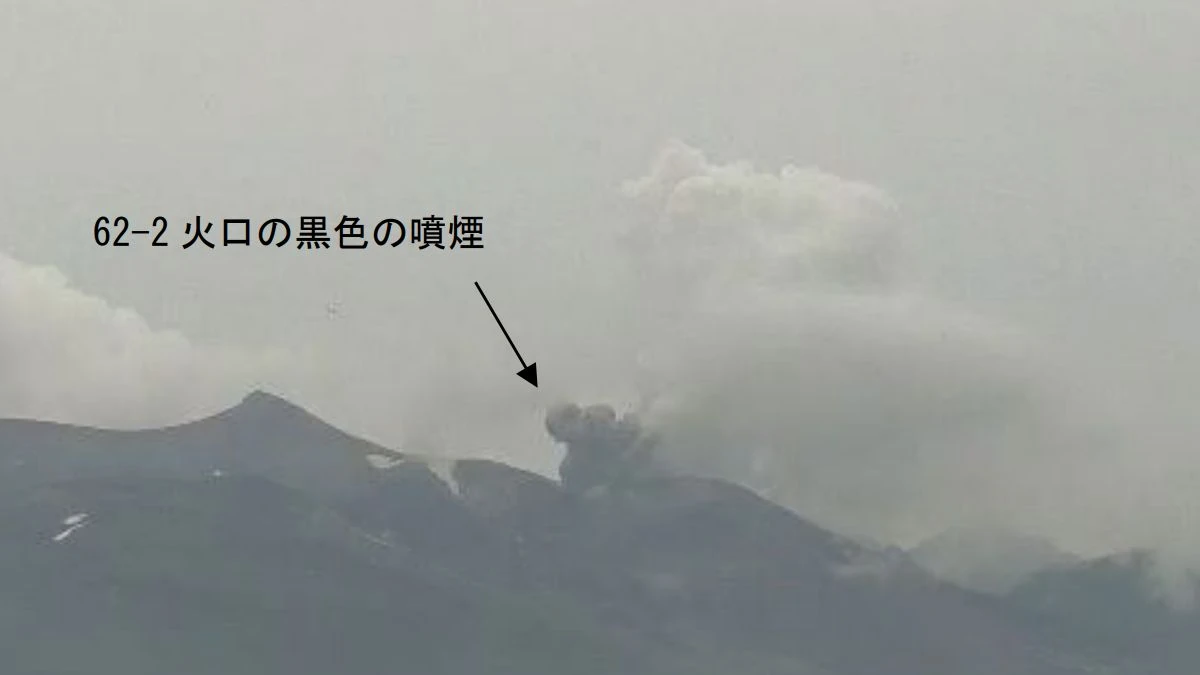
Eruption at Tokachidake volcano, Japan on July 22, 2026. Credit: JMA
The eruption generated approximately 45 seconds of volcanic tremor and a maximum air shock of 0.76 Pa at the evacuation-shelter monitoring station. Monitoring cameras did not observe the dispersal of large ballistic volcanic rocks.
Tokyo Volcanic Ash Advisory Center (Tokyo VAAC) issued Advisory 2026/1 at 02:19 UTC, 12 minutes after the reported eruption. The center reported an ash plume at approximately 2.1 km (7 000 feet) above sea level.
JMA retained Volcanic Alert Level 2, which restricts access near the crater. The agency warned of large ballistic volcanic rocks within approximately 1.5 km (0.9 miles) of the 62-2 crater and said ash and smaller volcanic material could be carried farther downwind. The continuing alert covers Biei, Kamifurano and Shintoku municipalities.
Kamifurano’s municipal government said the eruption had no effect on residents’ daily lives as of July 22. The Tokachidake Onsen and Fukiage Onsen hot-spring areas, which include accommodation and bathing facilities on the slopes of the Tokachidake range, were outside the restricted zone, while hiking trails crossing the exclusion area remained closed.
The July 22 eruption followed several months of unrest. Ground-deformation measurements had recorded inflation at depth beneath the volcano since March, while sulfur dioxide emissions, seismic activity around the 62-2 crater, and thermal activity had increased since April.
JMA raised the alert from Level 1 to Level 2 at 11:00 LT (02:00 UTC) on June 18 after determining that an eruption affecting areas within approximately 1.5 km (0.9 miles) of the crater was possible.
Elevated state of activity continued after the eruption, and JMA warned that further very small eruptions could occur around the 62-2 crater and the adjacent Furikozawa fumarole area.
Tokachidake is a northeast–southwest-trending volcanic complex in central Hokkaido, composed mainly of andesitic stratovolcanoes and lava domes built above a plateau of welded Pleistocene tuffs. Numerous explosion craters and cinder cones occupy its upper flanks, with the youngest Holocene vents concentrated at the northwestern end of the chain.
Historical activity since the mid-19th century has consisted mainly of mild-to-moderate phreatic explosions.
The most recent confirmed VEI 3 eruption occurred from June 29 to September 1962. An earlier VEI 3 eruptive period lasted from November 1925 to September 1927 and included the destructive 1926 eruption, when partial collapse of the western flank generated a debris avalanche and mudflow.
Earlier confirmed VEI 3 eruptions took place around 1250 and approximately 1350 BCE.
References:
1 Tokachidake volcanic activity explanatory material – JMA – July 22, 2026.
2 Tokachidake eruption information – Kamifurano municipal government – July 22, 2026
3 Activity status of Mt. Tokachi – JMA – Accessed July 23, 2026

I'm a dedicated researcher, journalist, and editor at The Watchers. With over 20 years of experience in the media industry, I specialize in hard science news, focusing on extreme weather, seismic and volcanic activity, space weather, and astronomy, including near-Earth objects and planetary defense strategies. You can reach me at teo /at/ watchers.news.

Commenting rules and guidelines
We value the thoughts and opinions of our readers and welcome healthy discussions on our website. In order to maintain a respectful and positive community, we ask that all commenters follow these rules.