
El Niño floods kill 2 in Guayaquil as 172.8 mm of rain swamps Milagro, Ecuador’s toll rises to 14
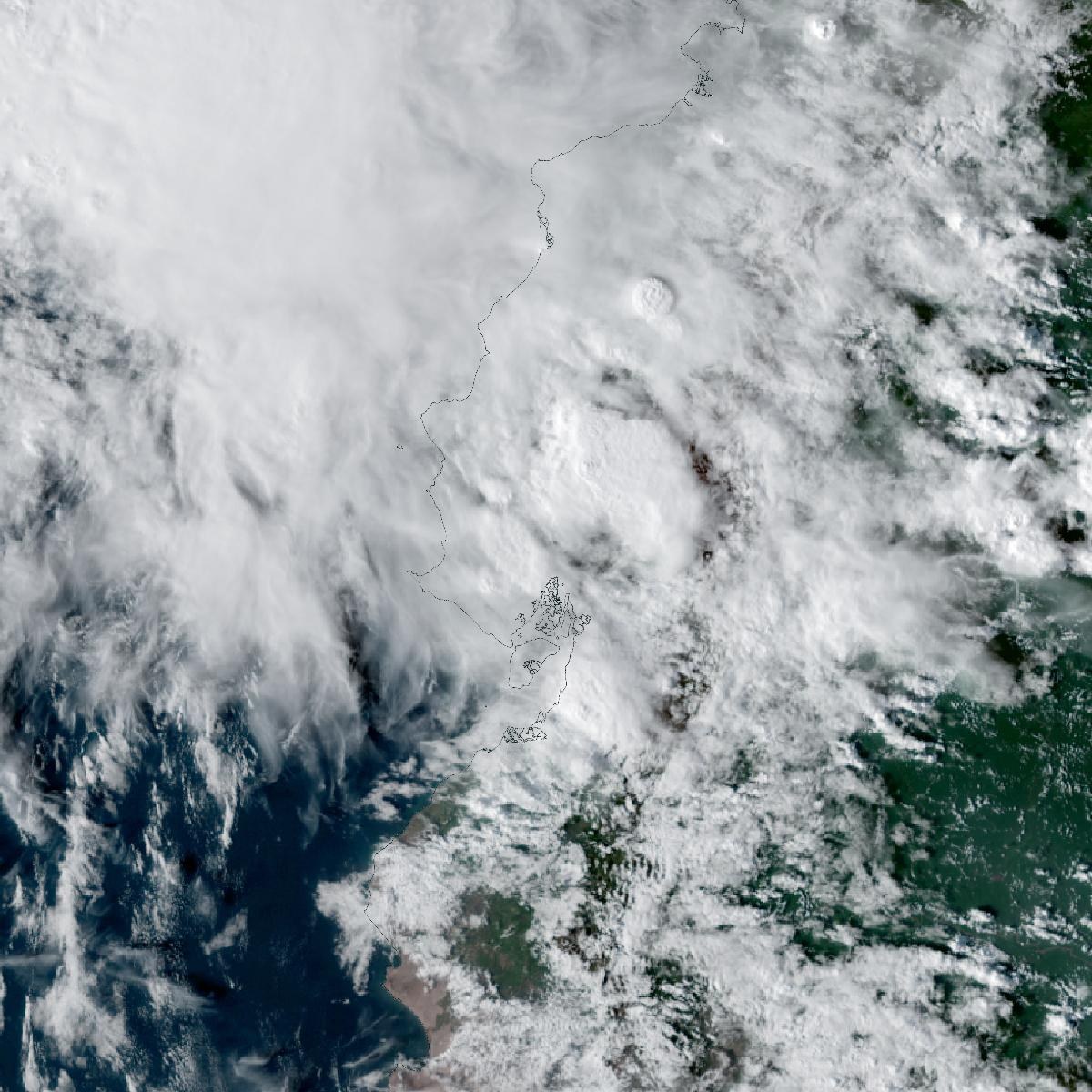
Torrential rain linked to El Niño flooded Guayaquil, Milagro and other parts of Ecuador’s Guayas province on November 12 to 14, 2026, killing two people in Guayaquil and leaving two more missing after they were swept into a drainage canal. The deaths raise the number of fatalities from El Niño rains in Ecuador to 14 since the national alert was declared on August 29, according to the National Secretariat for Risk Management (SNGR).
172.8 mm in one night at Milagro
A thunderstorm that began over Milagro, Samborondón and Daule on the night of Thursday, November 12, reached Guayaquil after midnight. The automatic station of the National Institute of Meteorology and Hydrology (Inamhi) in Milagro recorded 172.8 mm (6.8 inches) of rain between 21:00 on November 12 and 04:00 on November 13 local time (02:00 to 09:00 UTC on November 13), Ecuavisa reported. NOAA’s GOES-19 satellite detected 2 881 lightning flashes over Guayas province between 23:00 and 06:00, with the most intense activity over Milagro.
The Milagro and Venecia rivers and the San Miguel estuary overflowed in Milagro canton, which was left flooded. SNGR has since delivered supplies and opened temporary shelters for affected families in Milagro, El Universo reported.
Deaths and a search in Guayaquil
Heavy rain hit Guayaquil again on Friday, November 13, flooding streets and homes in Florida Norte, Flor de Bastión, Las Orquídeas and Letamendi. In Letamendi, in the southwest of the city, floodwater swept a 17-year-old from a ditch into the Estero Salado, and firefighters later recovered his body. In Tarqui parish, a man identified by local media as a taxi driver died of a heart attack after becoming trapped in his vehicle in floodwater, the Ministry of Public Health said. Infrastructure Minister Roberto Luque, who chairs the National Emergency Operations Committee (COE), confirmed both deaths, Prensa Latina reported.
In Florida Norte, residents said two people, believed to be a father and his young son, fell into a ditch and were carried into the drainage system. The Guayaquil Fire Department searched for 18 hours with 20 rescuers, three rescue units and a boat, working with Interagua divers, police and municipal teams. They covered 3.5 km of the canal and opened 22 manholes before ending the search at 15:00 on November 14 without finding the pair, the Guayaquil municipality said.
No relatives had come forward to identify the missing, said Lt. Col. Polo Terán, the department’s deputy chief. “We know absolutely nothing about them,” he told El Universo. Protective walls have since been installed along the Florida Norte canal.
Twelve rivers overflowing
SNGR recorded 11 adverse events between the afternoon of November 13 and November 14, including 8 floods in Guayas, 1 flood each in Bolívar and Los Ríos, and a ground subsidence in Bolívar. Twelve rivers and estuaries had burst their banks nationwide, according to SNGR situation report No. 88.
In Guayas, they included the Cañal estuary and the Pula and Jaboncillo rivers in Daule, the San Juan estuary in Balzar and the Bachillero River in Pedro Carbo, as well as the rivers in Milagro. In Los Ríos province, the Chilintomo River flooded Babahoyo. In Santa Elena, the California, Salanguillo and Javita rivers left their channels.
Nearly 1 500 events since August
Since August 29, 2026, when Ecuador declared its alert for El Niño, SNGR has recorded about 1 500 rain-related adverse events across all 24 provinces, 166 cantons and 508 parishes. Floods account for 58.27% of them, followed by landslides. SNGR’s latest report counts 77 498 people affected, 21 000 homes damaged and 6 500 ha (16 000 acres) of crops completely lost, according to Prensa Latina. The provinces where the population has been hit hardest are Esmeraldas, Guayas, El Oro, Los Ríos, Santa Elena, Manabí, Galápagos and Bolívar.
The El Niño death toll stood at 14 in SNGR’s situation report No. 88, covering the period to 16:00 on November 14. It could rise to 16 if the two people missing in Florida Norte are confirmed dead.
More rain forecast
Inamhi said intense rain, thunderstorms and gusty winds would continue, mainly along the coast and the western foothills of the Andes. Its forecast for the night of November 15 to the morning of November 16 called for heavy rain in parts of Esmeraldas, moderate rain in Manabí, Los Ríos, Santo Domingo de los Tsáchilas and Galápagos, and drizzle in Guayaquil, Durán and Samborondón, El Universo reported.
Strong El Niño events bring warm water to the coast of Ecuador and northern Peru and fuel heavy rain during what is usually the dry season. The current event reached +2.0°C on NOAA’s Relative Oceanic Niño Index for August to October, close to the 1997-98 event, which caused severe flooding along Ecuador’s coast. Earlier this year, floods and landslides left 15 dead and damaged more than 28 000 homes in Ecuador.
Featured image: Storm clouds over coastal Ecuador and the Gulf of Guayaquil at 16:00 local time (21:00 UTC) on November 13, 2026, seen by NOAA’s GOES-19 satellite. Credit: NOAA GOES-19 ABI GeoColor via NASA Worldview, public domain
Sources: SNGR situation reports, Guayaquil municipality, El Mercurio, Prensa Latina, Ecuavisa, El Universo

The Watchers Staff covers earthquakes, volcanoes, severe weather, space weather and other natural events. Published since 2011, The Watchers reports on a changing planet and the science behind it.
Published in the last 24 hours
- Southern Thailand braces for heavy rain, 15 provinces on flood and landslide alert for November 18-22
- Paraná River floods force 4 547 from homes as water tops evacuation levels in 10 Argentine towns
- 190 mm of rain and 131 km/h gusts hit New Zealand's South Island, flooding West Coast highways
- Huge waves pummel California coast during strong El Niño, flooding streets and closing piers from Pacifica to San Diego
