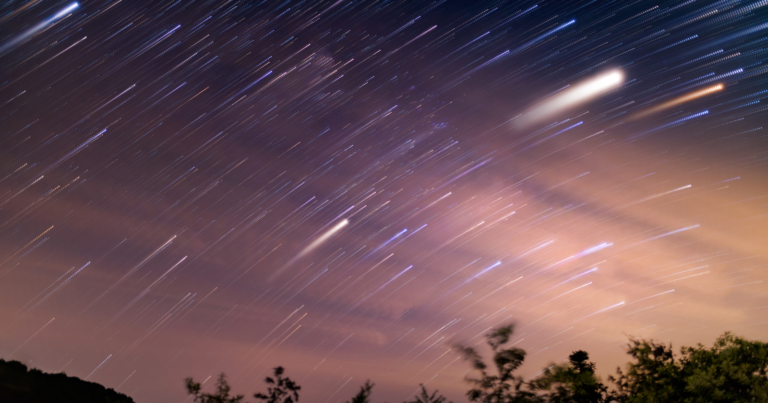
• The Leonid meteor shower peaks on the night of November 17, exactly 60 years after the 1966 storm, when some observers reported meteors falling at up to 40 a second, though this year’s show should be closer to 15 an hour

    In the early hours of November 17, 1966, a small group of amateur astronomers stood on Kitt Peak in Arizona, watching the sky. As the night went on, the number of meteors kept climbing. Then it exploded. At the peak, they estimated meteors were streaking across the sky at around 40 per second. It was…
  • Researchers identify South Atlantic fireball as likely interstellar meteor

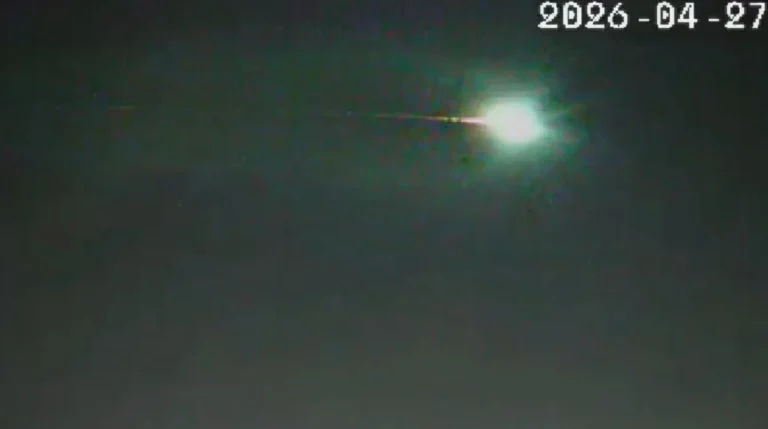
    A fireball detected over the South Atlantic Ocean at 02:13:14 UTC on April 1, 2026, has emerged as a candidate interstellar meteor following an orbital analysis by Avi Loeb and Richard Cloete, who argue that its trajectory is inconsistent with an origin within the Solar System. The object, designated Polar-IM, is described by Loeb and Cloete as the strongest interstellar meteor candidate yet identified in the NASA Center for Near Earth Object Studies (CNEOS) fireball database, with a confidence level above 99.9997% under the researchers’ uncertainty model.

  • Lyrid meteor shower peaks April 22 under favorable skies

    Earth will intersect the Lyrid meteor stream on April 22, 2026, marking the peak of this annual celestial event, with meteor rates averaging 10–20 per hour under optimal conditions. The event is best observed during the pre-dawn hours when the radiant in the constellation Lyra reaches a higher elevation.