
El Niño strengthens as positive Indian Ocean Dipole raises warm, dry risk across Australia
El Niño has become established across the tropical Pacific, while seasonal forecast models favor the development of a positive Indian Ocean Dipole (IOD) during the Southern Hemisphere winter and spring, according to the Australian Bureau of Meteorology (BoM). If both climate drivers persist, they would increase the probability of warmer and drier conditions across much of Australia during the second half of 2026.
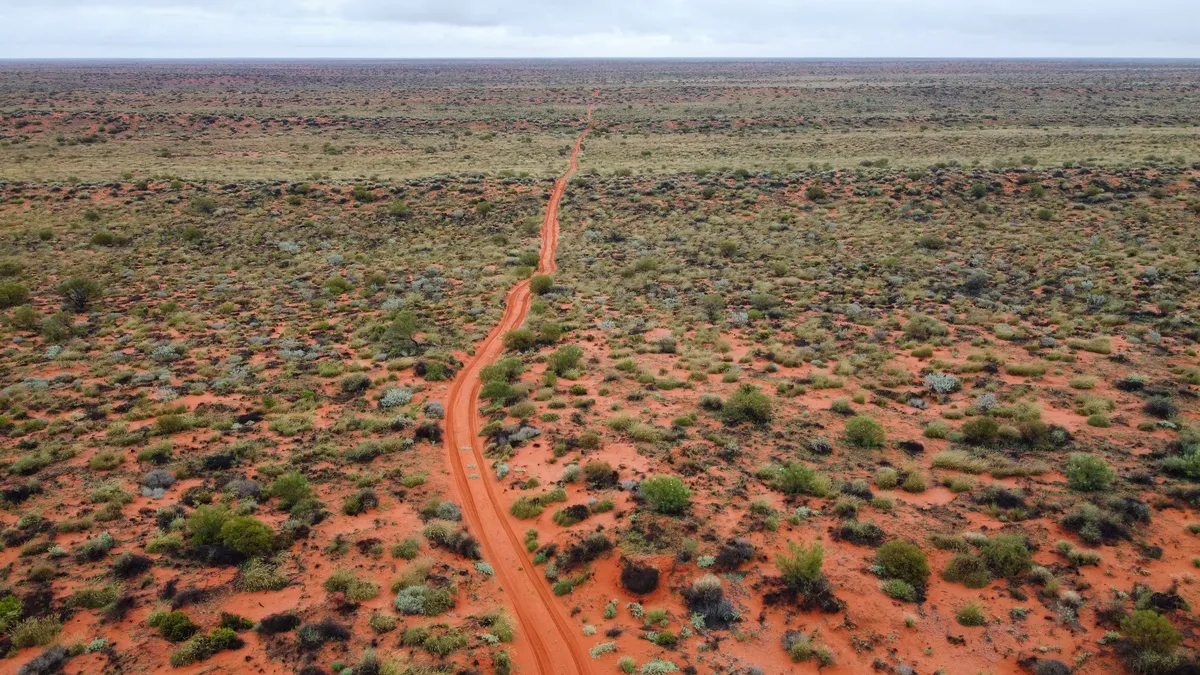
Image credit: Mark Direen2H
The Australian Bureau of Meteorology has confirmed that El Niño is established across the tropical Pacific after both oceanic and atmospheric indicators strengthened during June 2026. At the same time, the Indian Ocean Dipole remains in a neutral phase, although most seasonal forecast models favor a transition toward a positive phase later this winter or during spring.
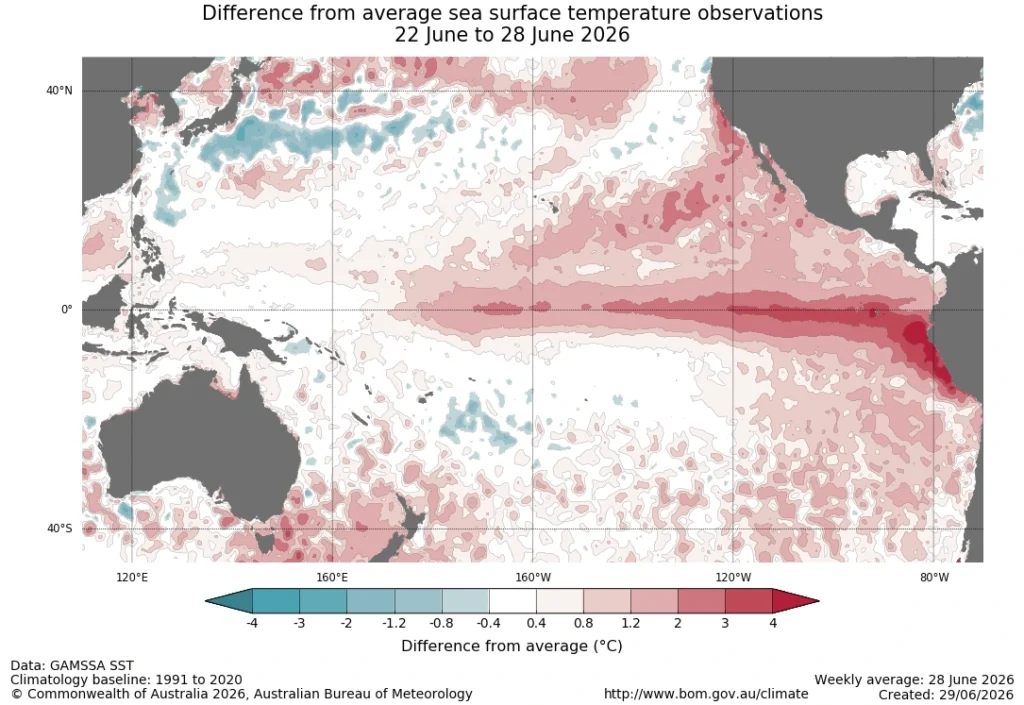
The Bureau reported a weekly relative Niño3.4 index of +1.24°C (+2.23°F) for the w566eek ending June 28, 2026, exceeding its El Niño threshold of +0.80°C (+1.44°F). The index increased by approximately 0.3 °C (0.5 °F) over the previous fortnight, reflecting continued warming in the central tropical Pacific. Atmospheric conditions have also shifted into an El Niño pattern, with weakened or reversed trade winds across much of the tropical Pacific, enhanced cloud near the Date Line, and a strongly negative Southern Oscillation Index (SOI). The 30-day SOI stood at -25.2 for the period ending June 27.
Ocean-atmosphere coupling is expected to strengthen further, supporting El Niño through at least the end of 2026. All forecast models assessed by the Bureau, including its own seasonal prediction system, project additional warming across the tropical Pacific during the coming months. Around half of the climate models indicate the event could peak among the strongest El Niño events observed since 1950.
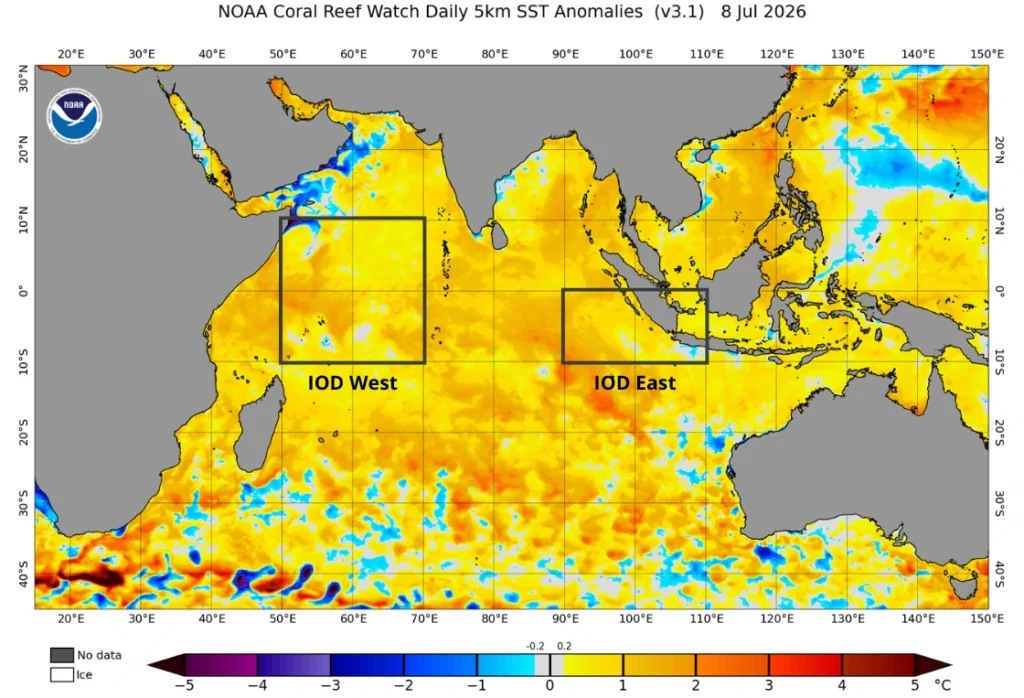
Across the Indian Ocean, the IOD index measured -0.02°C (-0.04°F) on June 27, remaining within the neutral range. Most seasonal forecast models favor the development of a positive IOD during late winter or spring, although the Bureau said there remains considerable variation between models regarding both the timing and eventual strength of any event.
A positive IOD develops when sea surface temperatures near Indonesia become cooler than those in the western tropical Indian Ocean near the Horn of Africa. The resulting shift in tropical convection typically reduces the transport of moisture toward Australia, increasing the probability of below-average rainfall and above-average daytime temperatures across much of the country during winter and spring. Positive IOD events generally weaken rapidly once the Southern Hemisphere monsoon becomes established toward the end of spring.
Sea surface temperatures remain average to above average around most of Australia. The largest positive anomalies are present along the New South Wales coast and eastern Tasmania, where sea surface temperatures are approximately 3 to 4°C (5.4 to 7.2°F) above average. The Bureau expects above-average sea surface temperatures around much of Australia to persist over the coming months.
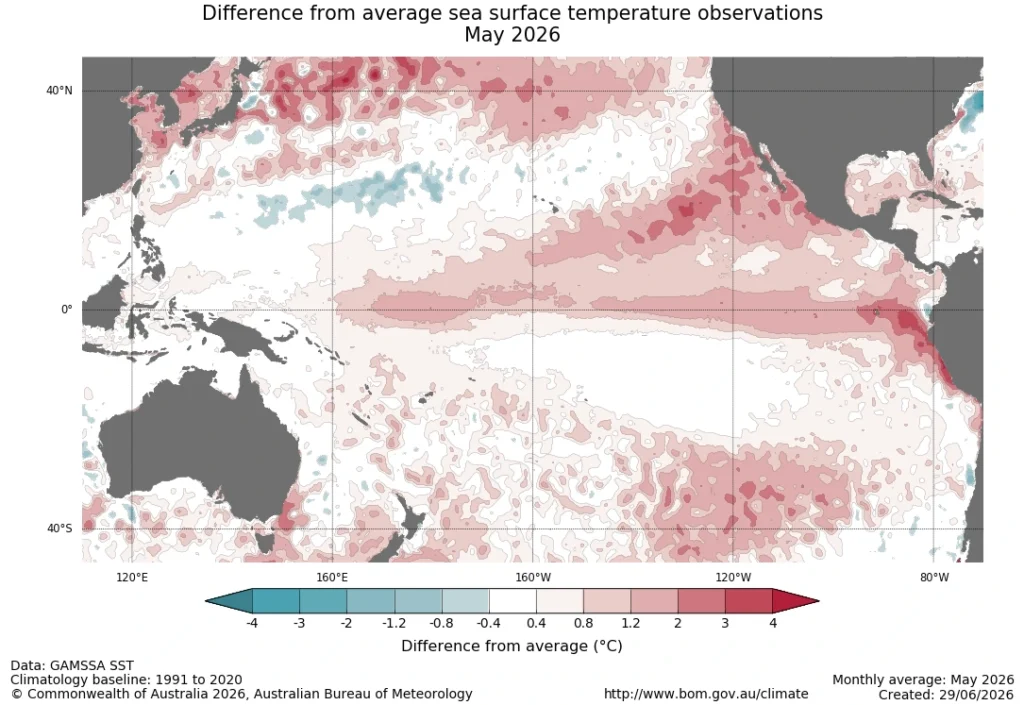
Globally, May 2026 recorded the warmest May sea surface temperatures since observations began in 1900.
Another major climate driver has also strengthened. The Southern Annular Mode (SAM) has remained positive since late May and intensified to near-record levels during the final week of June. The daily SAM index reached +5.03 on June 27. Using long-term NOAA data, the Bureau reported that the June-to-date average is tracking as the second-highest June value on record and the seventh-highest monthly value since observations began in 1979.
A positive SAM shifts the belt of westerly winds and associated frontal systems farther south. During winter, this pattern generally reduces the passage of cold fronts across southern Australia while influencing rainfall distribution differently across the country, depending on the region.
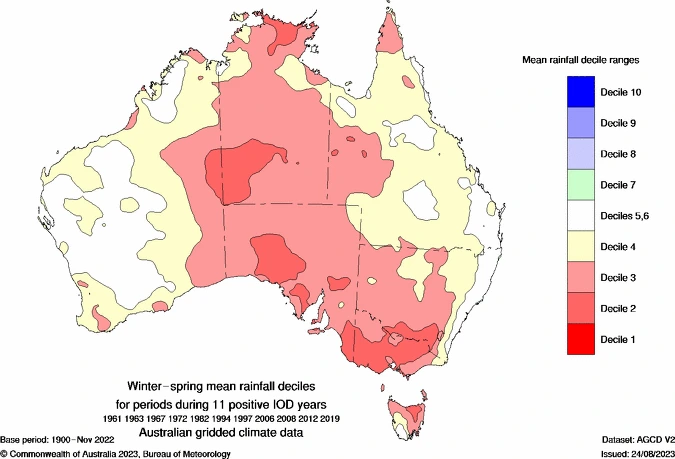
Weatherzone said that, if a positive IOD develops while El Niño remains established, the two climate drivers would reinforce the tendency toward warmer and drier conditions across much of Australia during late winter and spring. The analysis also noted that the evolving phase of the Southern Annular Mode and other climate drivers will continue to influence regional weather patterns.
The World Meteorological Organization (WMO) likewise expects El Niño to persist through the second half of 2026. Its latest outlook places the probability of El Niño at around 80% during June through August, increasing to approximately 90% during September through December, broadly consistent with forecasts from major international climate centers.
Despite increasingly consistent climate signals, uncertainty remains regarding the timing and intensity of any positive IOD development. The Bureau emphasized that a strong El Niño signal in the Niño3.4 region does not necessarily translate into equally strong impacts across Australia because ENSO is only one of several climate drivers affecting the country’s seasonal climate. It also said official long-range forecasts provide the most comprehensive assessment of expected rainfall and temperature patterns in the months ahead.
References:
1 Southern hemisphere monitoring – BoM – June 30, 2026
2 Positive Indian Ocean Dipole possible in 2026 – what this means for Australia – WeatherZone – July 10, 2026
3 Global Seasonal Climate Update for July-August-September 2026 – WMO – July 3, 2026

I’m a science journalist and researcher at The Watchers, contributing to the Epicenter edition, where I cover peer-reviewed scientific research and emerging discoveries across Earth and space sciences. With a background in astronomy and a passion for environmental science, I’ve worked in shark and coral conservation in Fiji, conducting reef and shark-behavior research, contributing to mangrove restoration, and earning PADI Open Water and Coral Reef Certifications. I bring a blend of scientific rigor and storytelling to illuminate the discoveries shaping our planet and beyond.

Commenting rules and guidelines
We value the thoughts and opinions of our readers and welcome healthy discussions on our website. In order to maintain a respectful and positive community, we ask that all commenters follow these rules.