
20 reported dead, 16 missing as Bavi-enhanced monsoon triggers floods and landslides, Philippines
The combined effects of Typhoon Bavi, locally named Inday, and the enhanced southwest monsoon left 20 people reported dead and 16 missing across the Philippines as of 08:00 LT (00:00 UTC) on Monday, July 13, 2026, while the National Disaster Risk Reduction and Management Council (NDRRMC) continued validating most casualty reports. About 654 000 people were affected nationwide, with flooding, landslides, damaged houses, disrupted roads, bridges and seaports, and about 20 100 people in evacuation centers.
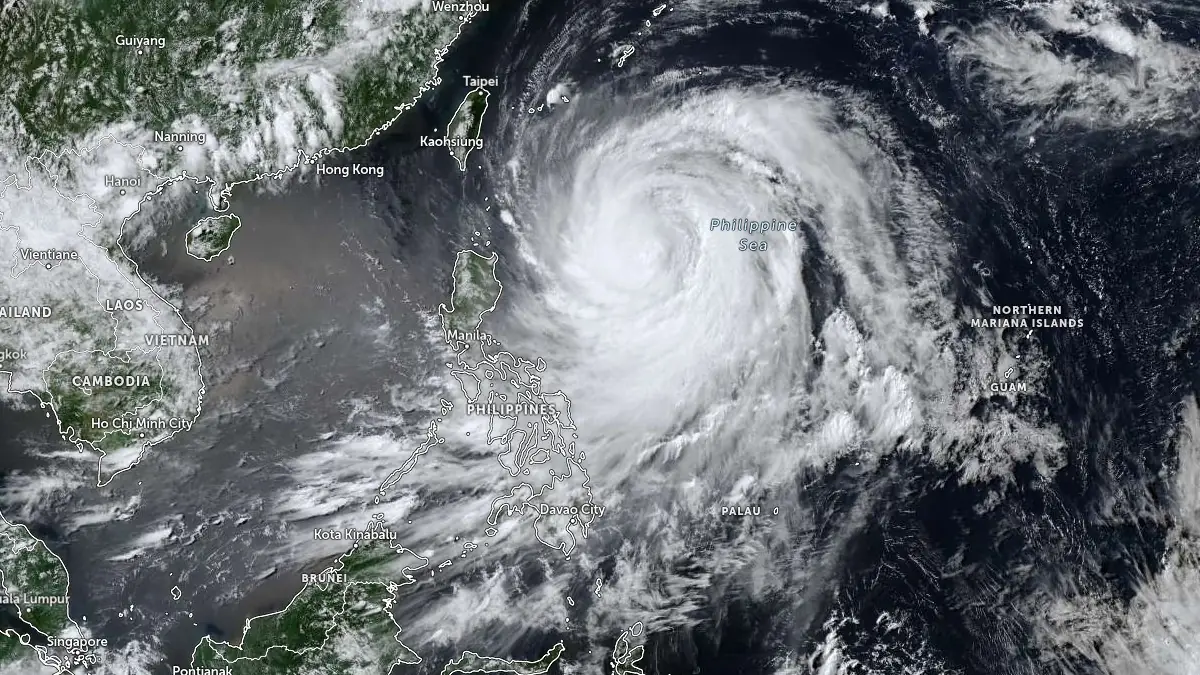
Satellite image of Typhoon Bavi at 06:50 UTC on July 9, 2026. Credit: JMA/Himawari-9, Zoom Earth, The Watchers
Typhoon Bavi, locally named Inday, remained offshore after entering the Philippine Area of Responsibility on July 8, but its broad circulation strengthened the southwest monsoon and drove days of heavy rain, flooding, and landslides across the Philippines before moving toward Taiwan and eastern China.
By 08:00 LT (00:00 UTC) on Monday, July 13, the combined effects of Bavi and the enhanced southwest monsoon had left 20 people reported dead and 16 missing in the Philippines, while homes, roads, bridges and seaports were damaged or disrupted. About 146 000 families, or 654 000 people, were affected across 683 barangays, according to NDRRMC figures.
The casualties were still undergoing official validation. Only one of the 20 reported fatalities had been validated by the National Disaster Risk Reduction and Management Council: a 70-year-old man who drowned in Barangay Kipaypayon, Quezon, Bukidnon. The remaining 19 reported deaths were still under review, including 10 in Sarangani, six in Lanao del Sur, two in Bukidnon, and one each in Iloilo and Davao Occidental.
The highest reported fatality count was in Malapatan, Sarangani, where a landslide struck after prolonged heavy rain. Six other deaths were reported in Calanogas, Lanao del Sur, while individual fatalities were reported in Tubungan, Iloilo; Malaybalay City and Quezon in Bukidnon; and Jose Abad Santos, Davao Occidental.
Search-and-rescue operations continued for 16 missing people. Eight were reported missing in Jose Abad Santos, five in Calanogas, two in Glan, Sarangani, and one in Talayan, Maguindanao del Sur. Nine people were reported injured, with two cases already validated.
More than 5 100 families, or 20 100 people, were staying in 162 evacuation centers, while 635 families, or 2 453 people, were receiving assistance outside evacuation centers. At least 890 houses were damaged, including 277 destroyed and 613 partially damaged.
Authorities also reported 67 affected road sections and 13 bridges, while 46 seaports remained non-operational, stranding 437 passengers, 231 rolling cargo units, and one vessel. Classes were suspended in 413 cities and municipalities, work was suspended in 48 local government units, and government assistance had reached PHP 43.38 million.
Late Sunday, the Department of Social Welfare and Development (DSWD) reported there are at least 1 108 damaged houses, including 291 totally damaged and 817 partially damaged. PHP 47.79 million in humanitarian assistance was provided to affected families.
The heaviest Philippine impacts were tied to the enhanced southwest monsoon rather than a direct cyclone landfall. Bavi passed over the Philippine Sea and moved north of Luzon, but its circulation fed monsoon rain bands over parts of the country, including areas far from the cyclone’s center.
In Bukidnon, continuous heavy rain triggered flooding and landslide incidents in Malaybalay City, Valencia City, and Quezon, damaging houses, agricultural areas, roads, bridges, and other infrastructure.
In Barangay Dapok, Kiblawan, Davao del Sur, floodwater washed out about 30 m (98 feet) of concrete road at around 16:00 LT (08:00 UTC) on July 8, leaving the section unsafe for vehicles. Flooding and landslides were also reported in parts of Cotabato, Sarangani, Sultan Kudarat, Antique, Maguindanao del Norte, and Maguindanao del Sur.
Bavi made landfall in eastern China’s Zhejiang Province late Saturday, July 11, after passing north of Taiwan. Chinese authorities said the storm made two landfalls along the Zhejiang coast, first at 23:20 LT (15:20 UTC) on Saturday and again around midnight, before moving inland and gradually weakening.
China’s National Meteorological Center renewed an orange rainstorm alert and a blue typhoon alert on Monday, July 13. At 08:00 LT (00:00 UTC), Bavi was inland over Sixian County, Suzhou City, Anhui Province, with maximum peripheral winds of 72 km/h (45 mph). The system was forecast to move northeast at 10 to 15 km/h (6 to 9 mph), cross the Shandong Peninsula and enter the northern Yellow Sea on Tuesday, then transition into an extratropical cyclone after Wednesday.
Chinese officials described Bavi as the strongest July typhoon to strike Zhejiang since 1949, citing its size, coastal waves, inland reach, and elevated risk of flash floods, geological disasters, and urban waterlogging.
In Zhejiang, authorities relocated 2.68 million people before landfall and opened more than 19 000 emergency shelters. Schools and training institutions suspended classes, 830 construction sites were shut down, more than 400 scenic areas were closed, and more than 200 high-risk amusement facilities were closed.
Bavi’s inland moisture field continued to affect a wide area after landfall. China’s Ministry of Water Resources upgraded its flood warning to yellow on Sunday as heavy rainfall spread across eastern, central, and northeastern China, with forecast accumulations of 40 to 90 mm (1.6 to 3.5 inches) and more than 260 mm (10.2 inches) possible in some areas.
Authorities warned of flash floods, mountain torrents, and urban waterlogging, while several rivers in the Haihe River basin had already recorded their first floods of 2026.
Red alerts were also issued for flash floods and geological hazards in parts of Liaoning, Jilin, and Anhui, with very high risks of flash flooding, landslides, and ground collapses. Central authorities said a national Level-IV emergency response remained in effect for affected regions, and 70 000 disaster-relief items, including folding beds, blankets, summer quilts, and family emergency kits, were dispatched to Zhejiang, Tianjin, and Anhui.
By Monday, severe flooding was also affecting parts of northern and northeastern China. In Kuancheng County, Hebei Province, water rose more than 2 m (6.6 feet) on roads, swept away vehicles, and stranded about 1 800 villagers, according to state media cited by Reuters.
In Liaoning, authorities raised a red alert for flash floods, while many train services in Shenyang were suspended and more than 30 railway sections were affected. Schools were also closed across many areas, including Jilin Province.
China’s Ministry of Water Resources reported that 46 rivers nationwide were above warning levels as Bavi’s remnants continued moving northward.
References:
1 DSWD DROMIC Report #9 on the Effects of Enhanced Southwest Monsoon and Tropical Cyclone “Inday” – DSWD – July 13, 2026
2 NDRRMC: 20 reported dead due to Typhoon Inday, Southwest Monsoon – GMA – July 13, 2026
3 China steps up flood control, disaster relief efforts as Typhoon Bavi moves inland – Xinhua – July 13, 2026

I'm a dedicated researcher, journalist, and editor at The Watchers. With over 20 years of experience in the media industry, I specialize in hard science news, focusing on extreme weather, seismic and volcanic activity, space weather, and astronomy, including near-Earth objects and planetary defense strategies. You can reach me at teo /at/ watchers.news.

Commenting rules and guidelines
We value the thoughts and opinions of our readers and welcome healthy discussions on our website. In order to maintain a respectful and positive community, we ask that all commenters follow these rules.