
Ahyi Seamount unrest raises potential for activity to breach ocean surface, Northern Mariana Islands
USGS raised Ahyi Seamount in the Northern Mariana Islands to Aviation Color Code Yellow and Volcano Alert Level Advisory at 10:13 ChST (00:13 UTC) on July 16, 2026, after repeated satellite detections of discolored-water plumes near the shallow submarine volcano indicated increased unrest and a potential for activity to breach the ocean surface.
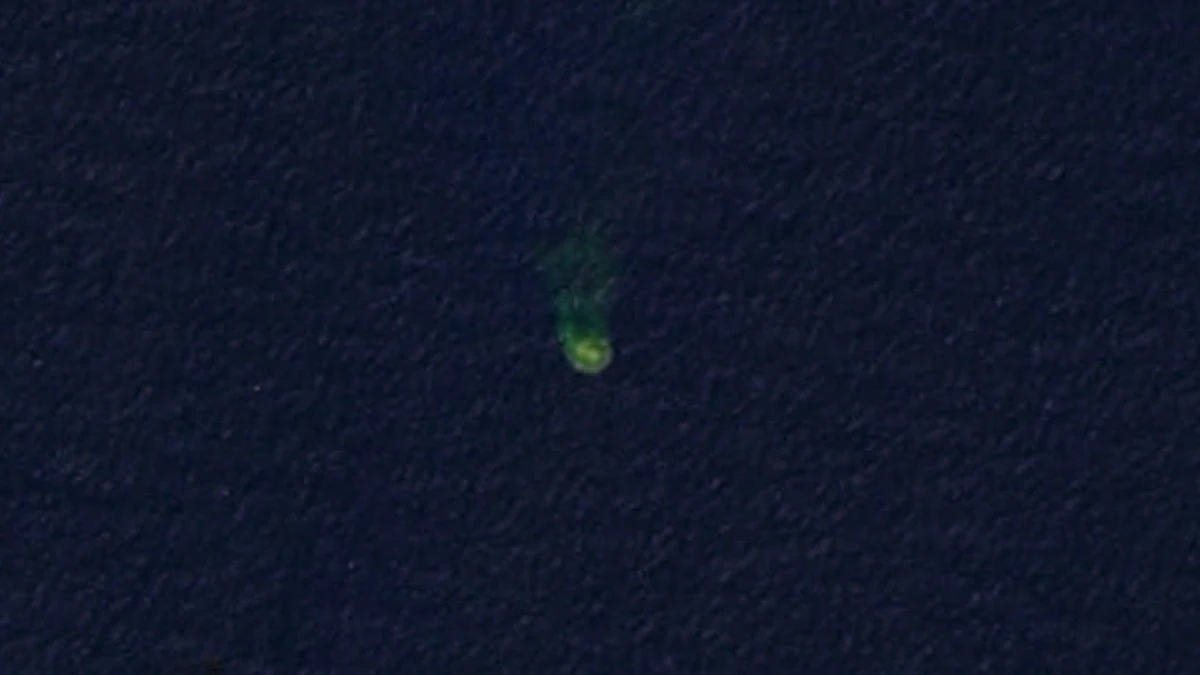
Submarine eruption at Ahyi Seamount on November 27, 2022. Credit: USGS/Landsat-8
USGS volcanologists said submarine plumes seen in satellite data suggest volcanic unrest or an undersea eruption, with small plumes of discolored water observed drifting less than 0.5 km (0.3 miles) from the volcano in satellite images on July 1, 7, and 11.
Recent images showed more discrete plume shapes than earlier intermittent observations over the past few months, which USGS said suggested more vigorous activity.
No significant activity has been detected from the direction of Ahyi Seamount in hydroacoustic array data at Wake Island. According to USGS, the plumes are probably the result of gas release into the water column and could reflect vigorous hydrothermal degassing or be associated with an ongoing effusive eruption. In either case, observations indicate increased volcanic unrest and potential for activity to breach the ocean surface.
No volcanic ash cloud was produced at this time. USGS cautioned that eruptive activity at Ahyi Seamount may present a hazard to mariners in the water above and near the volcano.
The summit has shallowed during previous eruptions to 55 m (180 feet) below sea level, and the lack of local real-time monitoring data means the agency cannot forecast or warn of impending eruptions at the seamount.
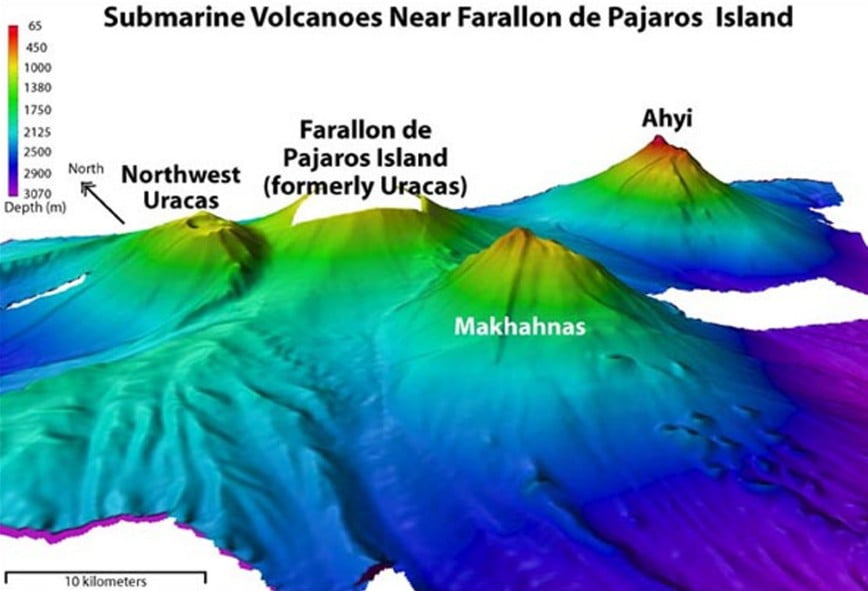
Image courtesy of NOAA, 2003
Ahyi Seamount is a large conical submarine volcano about 18 km (11 miles) southeast of Farallon de Pajaros, also known as Uracas, in the Northern Mariana Islands, about 600 km (370 miles) north of Saipan.
Water discoloration has been observed over the volcano during previous periods of activity, and in 1979, a fishing boat crew reported shocks over the summit area followed by upwelling of sulfur-bearing water.
An explosive submarine eruption was detected near Ahyi from April 24 to 25, 2001, and another eruption was detected from April 24 to May 17, 2014, using data from seismometers on subaerial volcanoes in the Northern Mariana Islands and hydrophone arrays at Wake Island. NOAA divers conducting coral reef research near Farallon de Pajaros heard explosions during the 2014 eruption, which formed a new crater near the summit and a large landslide chute on the southeast flank. The most recent eruptive activity began in 2022.
The Smithsonian Global Volcanism Program records previous Ahyi activity characterized by discolored-water plumes and intermittent hydroacoustic signals, including the 2022–2023 episode and renewed unrest during January–March 2024.
During January–March 2024 unrest, plumes drifted as far as 10 km (6.2 miles) from the vent, and the Aviation Color Code and Volcano Alert Level were later lowered to Unassigned due to the absence of activity and the lack of local monitoring stations.
References:
1 Newest Volcano Notice Including Ahyi Seamount – USGS/NMI – July 16, 2026

I'm a dedicated researcher, journalist, and editor at The Watchers. With over 20 years of experience in the media industry, I specialize in hard science news, focusing on extreme weather, seismic and volcanic activity, space weather, and astronomy, including near-Earth objects and planetary defense strategies. You can reach me at teo /at/ watchers.news.

Commenting rules and guidelines
We value the thoughts and opinions of our readers and welcome healthy discussions on our website. In order to maintain a respectful and positive community, we ask that all commenters follow these rules.