
Volcanic tremor reaches high levels, lava flow and Voragine activity continue at Etna, Italy
Effusive activity at Italy’s Etna volcano continued from a vent at 3 030 m (9 940 feet) elevation on July 2, 2026, feeding overlapping lava flows on the volcano’s eastern flank. Meanwhile, strombolian activity persisted at Voragine crater as volcanic tremor remained in the high range and a new infrasonic source developed beneath the crater.
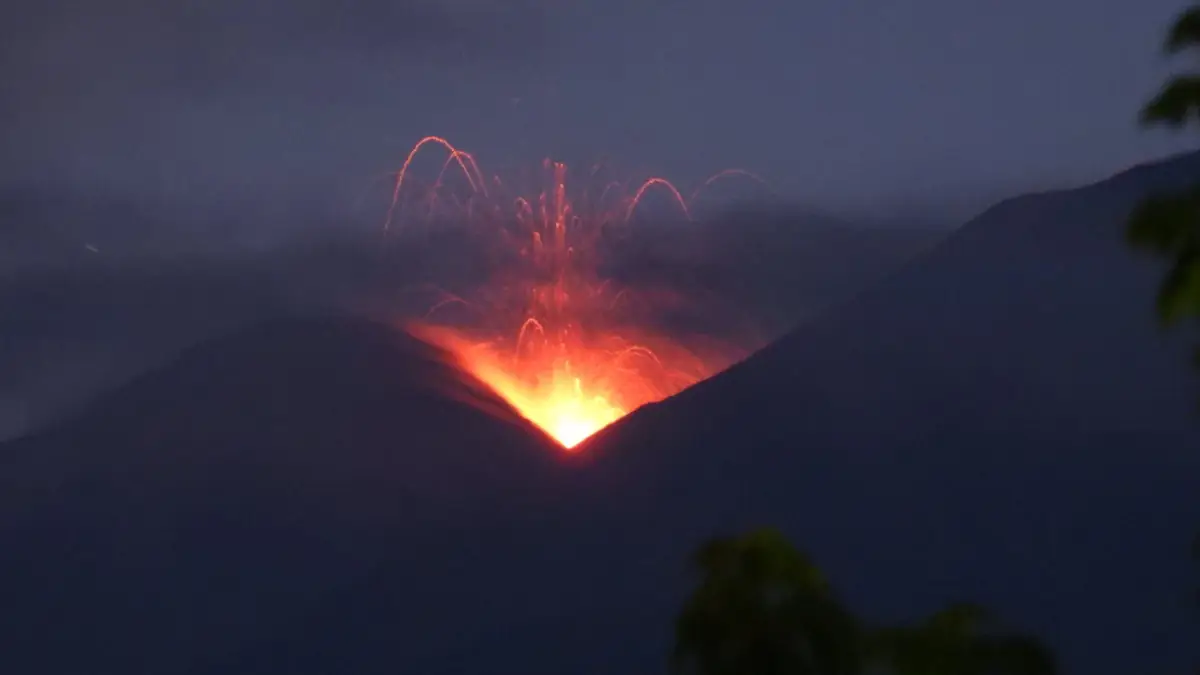
Volcanic activity at Etna, Italy on July 2, 2026. Credit: Boris Behncke/INGV
The National Institute of Geophysics and Volcanology’s Etna Observatory (INGV-OE) said the vent was feeding a lava field composed of several overlapping flows. The most advanced lava front was estimated at about 2 620 m (8 600 feet) elevation.
Volcanic tremor showed a slow but steady increase and had remained in the high range since July 1. The centroid of the tremor sources remained in the Voragine area at approximately 3 000 m (9 840 feet) elevation.
Strombolian activity from the Voragine pit continued at variable intensity while infrasonic activity was at a medium level in terms of both event frequency and released energy.
Infrasonic sources continued to be located at Northeast Crater, while an additional source associated with Strombolian activity was detected at Voragine from the afternoon of July 1. INGV-OE reported no significant changes in ground-deformation monitoring data.
INGV volcanologist Boris Behncke said activity at Voragine had increased over the preceding days, while lava continued to flow east from the vent at about 3 000 m (9 840 feet) elevation. A video and photograph taken from Nicolosi on the evening of July 2 showed activity at the summit crater, although the lava flow was not visible from that location.
The current effusive phase began on June 26, when lava emerged from the lower end of a fracture system on Voragine’s eastern flank at about 3 030 m (9 940 feet) elevation. The flow entered Valle del Leone, in the upper Valle del Bove.
By June 27, the lava flow was about 630 m (2 070 feet) long and covered approximately 18 000 m² (4.4 acres). INGV-OE estimated its volume at about 45 000 m3 (1.6 million ft3), with an uncertainty of about 40%.
The most advanced lava front had reached approximately 2 700–2 750 m (8 860–9 020 feet) elevation by June 29. Strombolian activity from the Voragine pit was then discontinuous and variable in intensity.
In its weekly report issued on June 30, INGV-OE reported sporadic ash emissions from the pit on Voragine’s upper eastern flank from June 10 and weak, irregular Strombolian activity from June 26. The volcanic tremor has increased gradually since June 3, while generally remaining at medium levels through June 28.
References:
1 ETNA BOLLETTINO SETTIMANALE SETTIMANA DI RIFERIMENTO 22/06/2026 – 28/06/2026 – INGV-OE – June 30, 2026
2 COMUNICATO ETNA – INGV-OE – July 3, 2026

I'm a dedicated researcher, journalist, and editor at The Watchers. With over 20 years of experience in the media industry, I specialize in hard science news, focusing on extreme weather, seismic and volcanic activity, space weather, and astronomy, including near-Earth objects and planetary defense strategies. You can reach me at teo /at/ watchers.news.

Commenting rules and guidelines
We value the thoughts and opinions of our readers and welcome healthy discussions on our website. In order to maintain a respectful and positive community, we ask that all commenters follow these rules.