
Western Europe records hottest June on record as heatwave drives widespread temperature extremes
Western Europe recorded its warmest June on record in 2026, with an average temperature of 20.74°C (69.3°F), 3.06°C (5.51°F) above the 1991–2020 average, according to the Copernicus Climate Change Service (C3S). The record-breaking month coincided with widespread heatwaves across western and central Europe that set national and local temperature records, while June ranked as the second-warmest globally in the ERA5 dataset.
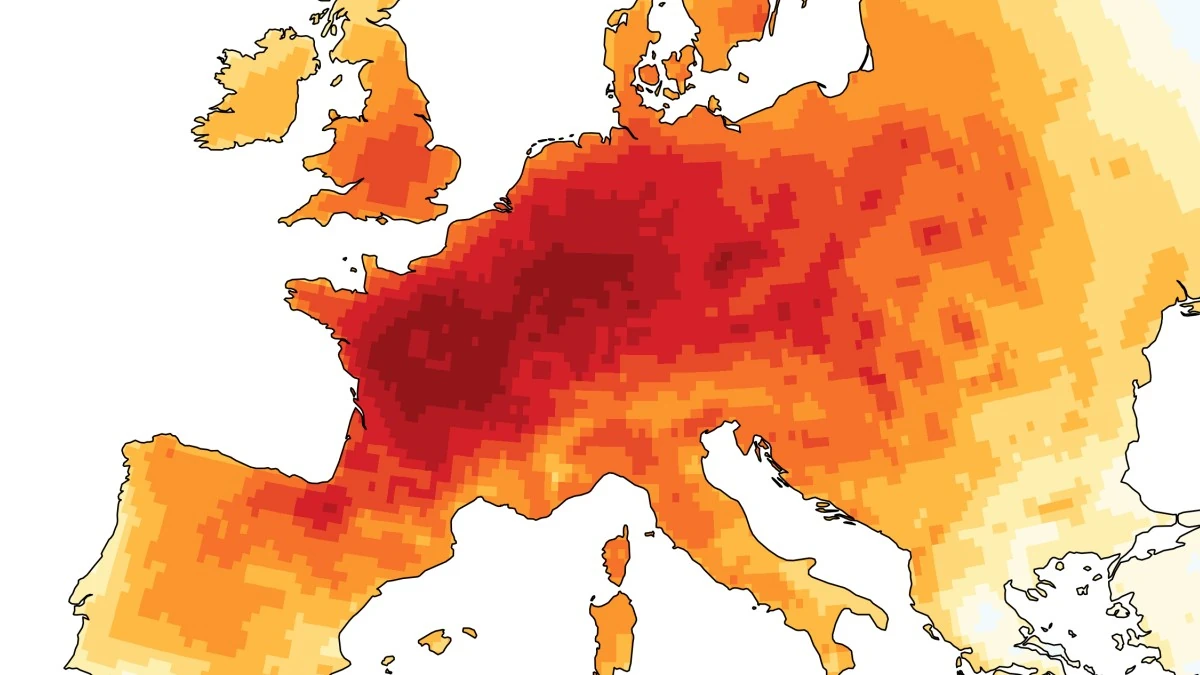
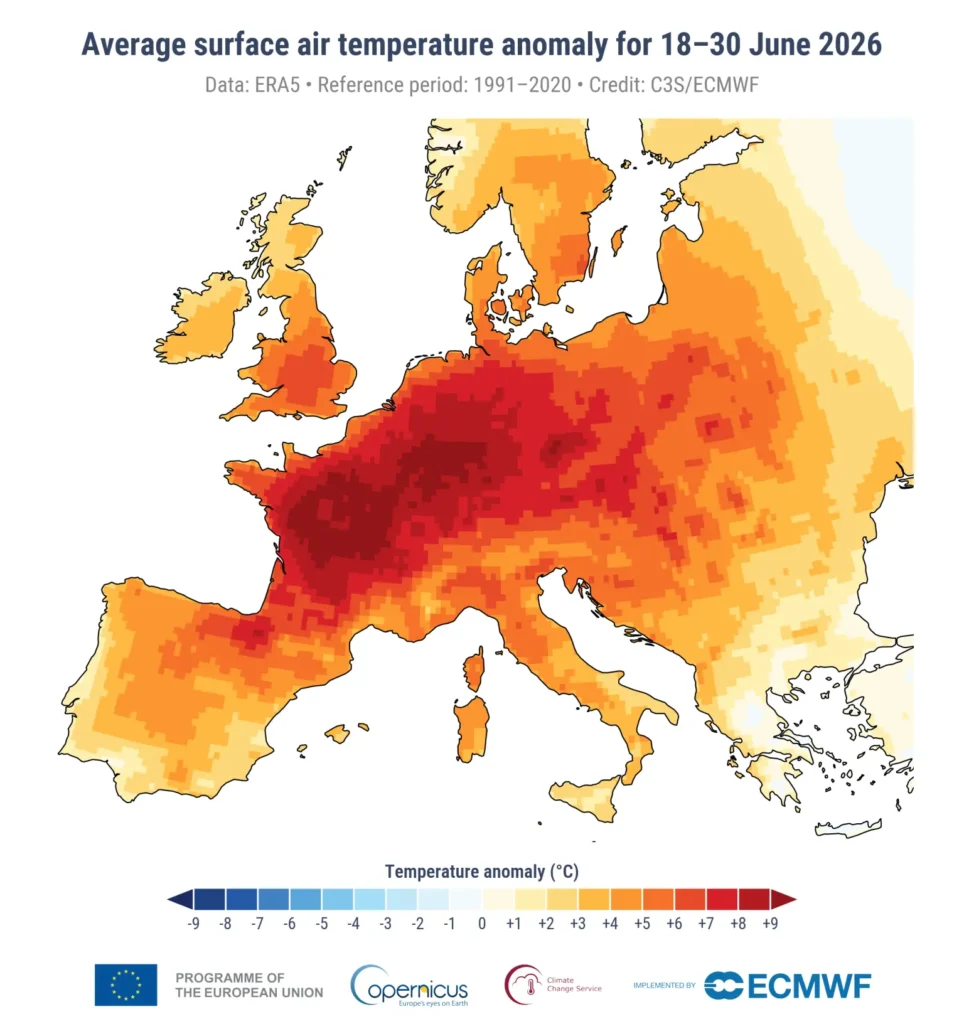
Average anomalies in surface air temperature during the heatwave from June 18 to 30, 2026 relative to the average temperature for the 1991–2020 reference period. Data source: ERA5. Credit: C3S/ECMWF
Western Europe recorded its warmest June on record in 2026, with an average temperature of 20.74°C (69.3°F), or 3.06°C (5.51°F) above the 1991–2020 average, according to C3S, implemented by the European Centre for Medium-Range Weather Forecasts (ECMWF). The previous regional June record was set in 2025.
Europe as a whole experienced its second-warmest June in the ERA5 record, while globally June ranked as the second-warmest on record, with an average surface air temperature of 16.54°C (61.8°F), 0.56°C (1.01°F) above the 1991–2020 average.
The heatwave intensified during the second half of June, breaking monthly and all-time temperature records across much of western and central Europe. Germany reported one of the most extensive national records, with 252 weather stations registering new all-time temperature highs.
Forty-six stations exceeded 40°C (104°F) before 27 June, prompting the German Weather Service (DWD) to describe the event as “historic.” Overnight temperatures also remained exceptionally high, with a station in eastern Saxony recording a minimum of 29.4°C (84.9°F).
France recorded its hottest day on record on 24 June, when the national average temperature reached 30°C (86°F), exceeding previous records set in 2019 and 2003. Temperatures climbed to 43.8°C (110.8°F) in Pulluau, while overnight temperatures also established a new national record. Météo-France issued its highest-level Red Alert across a record 58 departments and warned of very high fire danger as drought, low humidity and persistent heat affected much of the country.
In Spain, temperatures exceeded 40°C (104°F) across many locations, with Bilbao reaching 42.7°C (108.9°F), its highest June temperature on record. Barcelona’s Fabra Observatory measured 40.5°C (104.9°F) on 8 July, the highest temperature recorded there in more than 100 years of observations.
The United Kingdom issued Red Warnings for Extreme Heat on three consecutive days, the first time this has occurred since the current warning system was introduced. The Netherlands issued its first Red Alert for extreme heat covering eight provinces, while Austria, Denmark, Hungary, Poland, Switzerland, and Czechia also reported new June or all-time temperature records.
The prolonged heat was accompanied by significant societal impacts. French authorities reported that 40 people died in drowning accidents during the hot weather as many sought relief in rivers, lakes, and coastal waters. WMO said the heatwave also contributed to severe heat-related health impacts across several European countries.
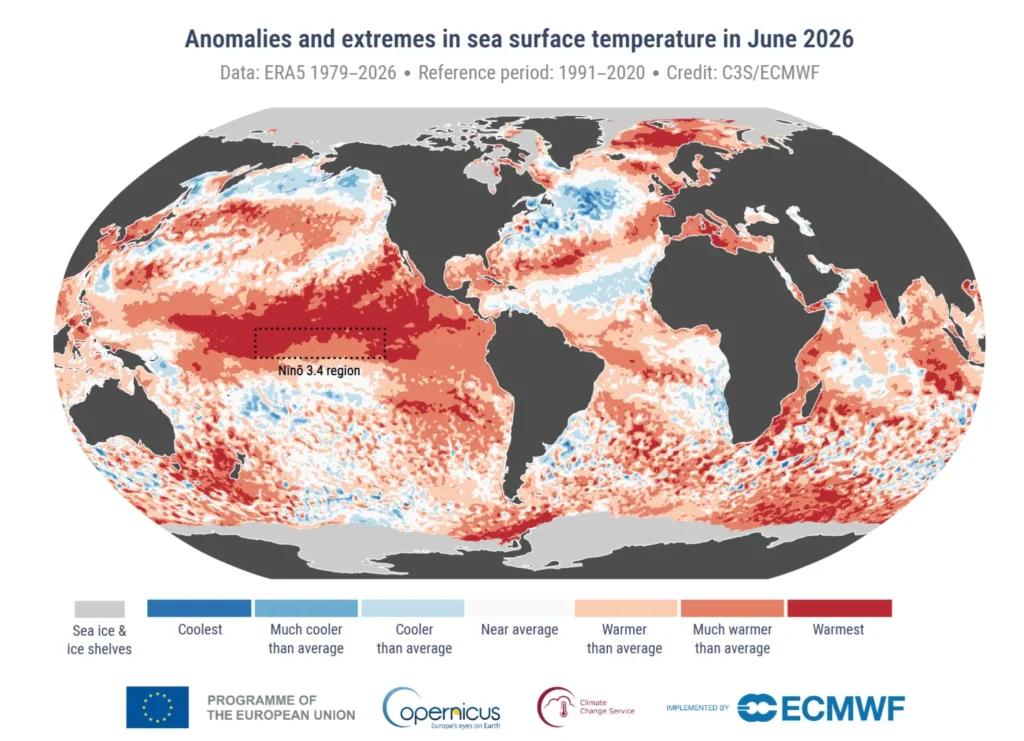
C3S reported that the average sea surface temperature across the extra-polar oceans reached 20.86°C (69.5°F) in June, the highest value on record for the month and 0.01°C (0.02°F) above the previous record set in June 2024. Marine heatwaves developed across the western Mediterranean and parts of the eastern Atlantic, while sea surface temperatures remained exceptionally high across large areas of the tropical Pacific as El Niño conditions continued to develop.
Dry conditions that had emerged during May persisted into June across large parts of western and central Europe. Combined with prolonged heat, they increased drought risk, reduced river flows, and contributed to wildfire activity, particularly in the Iberian Peninsula and southern France. Localized flooding also occurred in parts of northern and southeastern Europe, where heavy rainfall affected areas outside the main heatwave.
According to WMO, prolonged periods of high daytime temperatures combined with unusually warm nights increase the risk of heat stress because the human body has less opportunity to recover. Older adults, young children, pregnant women, outdoor workers, and people with chronic illnesses remain among the groups most vulnerable to prolonged extreme heat.
WMO said it continues to support national meteorological and health services through the Early Warnings for All initiative, heat-health warning systems and the Global Heat Health Information Network to improve preparedness and reduce the impacts of extreme heat.
“June 2026 underscored how profoundly the climate is changing. Western Europe recorded its warmest June on record, and continued record warmth in the global ocean. Together, these records reflect a climate system continuing to accumulate heat. The result is increasingly intense heatwaves, a persistently warm ocean, and growing risks for people, ecosystems and infrastructure across Europe and beyond,” said Samantha Burgess, Strategic Lead for Climate at ECMWF.
The extreme heat formed the backdrop to an address by United Nations Secretary-General António Guterres during London Climate Week on June 23.
“We have just lived through the eleven hottest years ever recorded. Climate disasters are becoming more frequent, more destructive, and more costly… El Niño is not just knocking on the door. It risks blowing the house down,” Guterres said.
WMO expects El Niño conditions to strengthen during the coming months. While their strongest impacts are typically felt outside Europe, the organization said episodes of extreme heat are expected to become more frequent, more intense, and longer-lasting as the climate continues to warm.
References:
1 Western Europe has hottest June on record – WMO – July 9, 2026
2 Copernicus: Record heatwave brings hottest June for western Europe during second-warmest June globally – C3S/ECMWF – July 9, 2026
3 Surface air temperature for June 2026 – C3S/ECMWF – Accessed on July 10, 2026

I’m a science journalist and researcher at The Watchers, contributing to the Epicenter edition, where I cover peer-reviewed scientific research and emerging discoveries across Earth and space sciences. With a background in astronomy and a passion for environmental science, I’ve worked in shark and coral conservation in Fiji, conducting reef and shark-behavior research, contributing to mangrove restoration, and earning PADI Open Water and Coral Reef Certifications. I bring a blend of scientific rigor and storytelling to illuminate the discoveries shaping our planet and beyond.

Commenting rules and guidelines
We value the thoughts and opinions of our readers and welcome healthy discussions on our website. In order to maintain a respectful and positive community, we ask that all commenters follow these rules.