
Record-high temperatures at the Potomac River linked to localized fish kill in Maryland
Record-breaking water temperatures at the Potomac River on July 4, 2026, are being linked to a localized fish kill in Maryland. The water temperatures reached a record high of 34.7°C (94.4°F) near Little Falls amid a record-breaking heatwave. Significant fish mortality was reported along a stretch of the river between White’s Ferry and Violette’s Lock soon after.
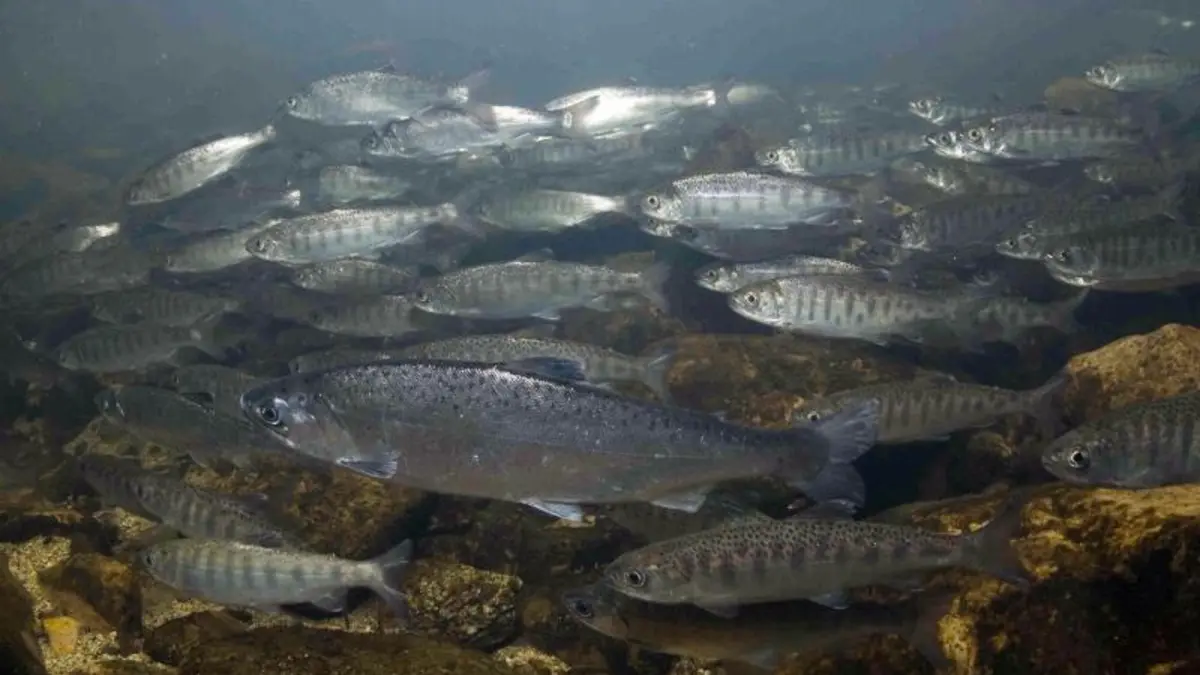
Image credit: NOAA Fisheries
Environmental officials are investigating a localized fish kill along approximately 23 km (14 miles) of the Potomac River after the water broke the all-time temperature record. The affected reach extends between White’s Ferry and Violette’s Lock, where investigators documented widespread fish mortality.
The Maryland Department of the Environment (MDE) reported water temperatures of approximately 34.4°C (94°F) near Little Falls on July 4. Meanwhile, USGS data shows water temperature peaked at 34.7°C (94.4°F). This was the highest water temperature recorded in the area since 1988, according to FOX Weather.
“Our working hypothesis is the cause is not just the record-breaking 34.4°C (94°F) water temperature, but a combination of heat stress, drought conditions (river flow is at half the typical July median), and potential underlying bacterial infections or parasites,” MDE said.
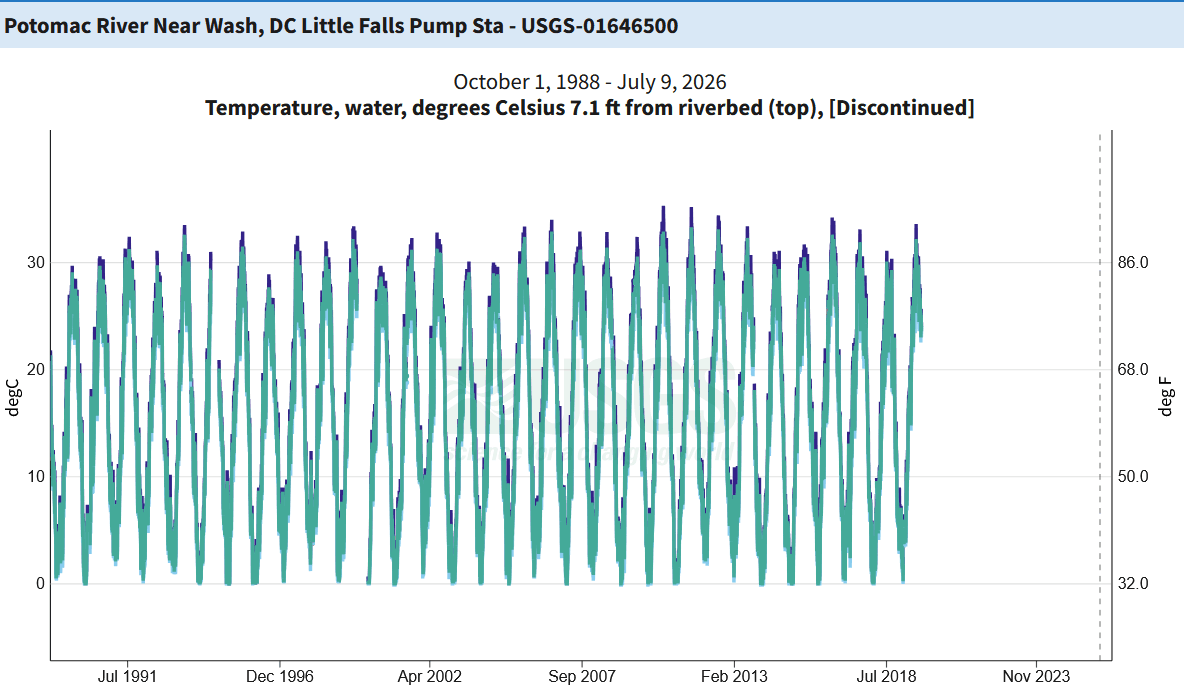
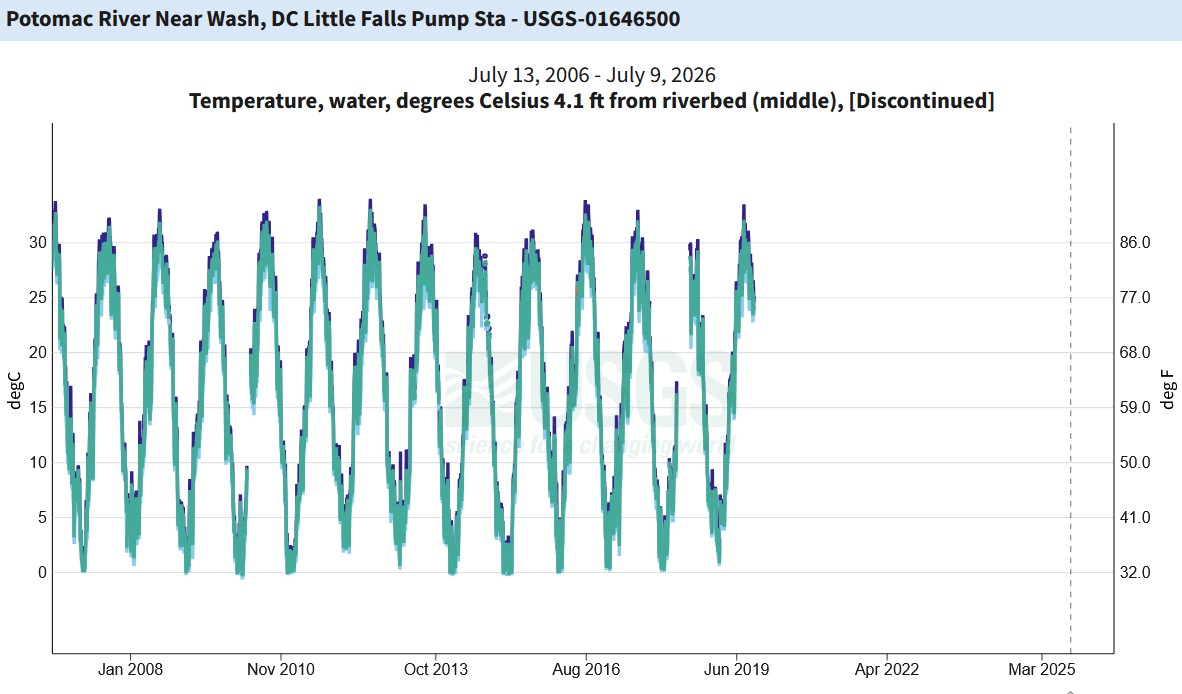
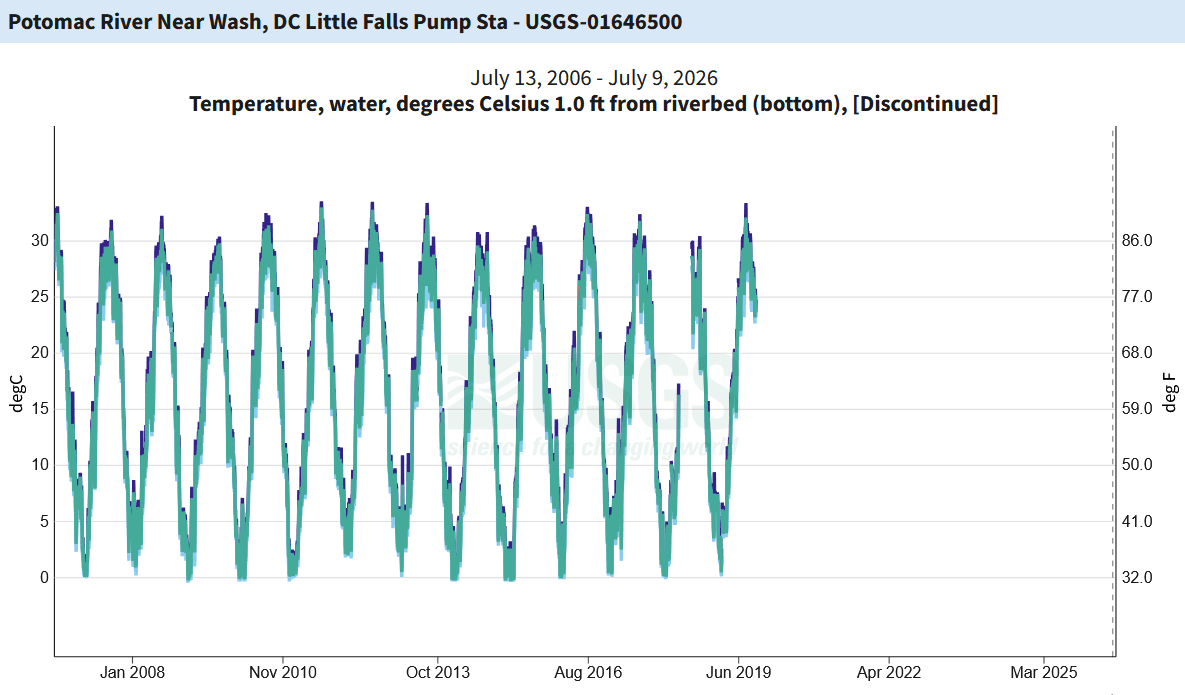
USGS collects water temperature data at three levels, with the lowest sensor located 0.3 m (1 foot) above the riverbed. The middle level lies 1.2 m (4.1 feet) above the riverbed, while the highest level lies 2.2 m (7.1 feet) above the riverbed.
The 2.2 m (7.1 feet) level is the only one that has been monitored since 1988, while the other two levels have only been monitored since 2006.
Most of the fish identified during the initial investigation were golden redhorse suckers, although officials continue surveying the river to determine the full extent of species affected. Environmental personnel are collecting biological samples while evaluating water-quality conditions throughout the impacted section of the river.
Warm water naturally contains less dissolved oxygen than cooler water, increasing physiological stress on aquatic organisms.
During prolonged periods of high heat, oxygen depletion can become severe enough to trigger fish mortality, particularly in slower-moving or thermally stressed sections of rivers. Maryland officials reported that current evidence supports this mechanism while laboratory testing continues to rule out other contributing factors.
The investigation remains ongoing, and officials have not reported evidence of a hazardous chemical release associated with the event. Additional laboratory results are expected to refine the assessment of the mortality event and determine whether other environmental factors contributed alongside the extreme heat.
The department was also investigating a reported fish kill in the Inner Harbor, with impacts observed along the Canton Waterfront Park to South Ann Street, as well as across the harbor near Domino Sugar.
However, these are being linked to the low oxygen levels caused by a localized “Pistachio Tide” event—a sulfur bacteria bloom that creates a green surface sheen and produces a sulfur odor as it decomposes, depleting oxygen in the water.
Initial observations documented approximately 1 000 dead menhaden, 126 dead blue crabs, and a small number of other fish species at the surface.
“This differs from the Potomac River fish kill over the weekend, which was likely driven by high water temperatures and reduced river flow rather than low dissolved oxygen,” MDE said.
The high water temperatures were the result of a record-breaking heatwave that affected much of the eastern U.S. through the July 4 weekend. New Jersey reported 29 suspected heat deaths due to the event.
References:
1 Potomac River Near Wash, DC Little Falls Pump Sta – USGS – accessed on July 10, 2026
2 Fish kill triggered in Potomac River as water temperatures surge to record 94 degrees due to extreme heat wave – FOX Weather – July 10, 2026

Rishav Kothari is Editor-in-Chief of The Watchers, where he runs the newsroom and covers earthquakes, volcanoes, severe weather and space weather.
Published in the last 24 hours
- The Leonid meteor shower peaks on the night of November 17, exactly 60 years after the 1966 storm, when some observers reported meteors falling at up to 40 a second, though this year’s show should be closer to 15 an hour
- When Arctic air reached South Florida in January 2020, Miami fell to 40°F and the National Weather Service warned residents to watch for cold-stunned iguanas dropping out of the trees Epicenter
- In May 2024, the strongest solar storm in 20 years put northern lights over the southern US, and across the Plains, GPS-guided tractors built to plant within an inch drifted about 10 feet off their rows Epicenter
- In 1943, a flight instructor in Texas flew a two-seat training plane into the eye of a hurricane because he was curious, then landed and took the base weatherman up for a second pass Epicenter
