
Tropical Cyclone Maila triggers deadly landslides and severe flooding in Bougainville and eastern Papua New Guinea
Tropical Cyclone Maila left at least 11 people dead in Bougainville and eastern Papua New Guinea by April 13, 2026, after days of heavy rain, landslides, flooding, and coastal impacts. Eight people were killed when a landslide buried a house in Asiko Village in Central Bougainville, the deadliest single incident reported during the storm. Local media are reporting that entire coastal villages were destroyed during the passage of the cyclone.
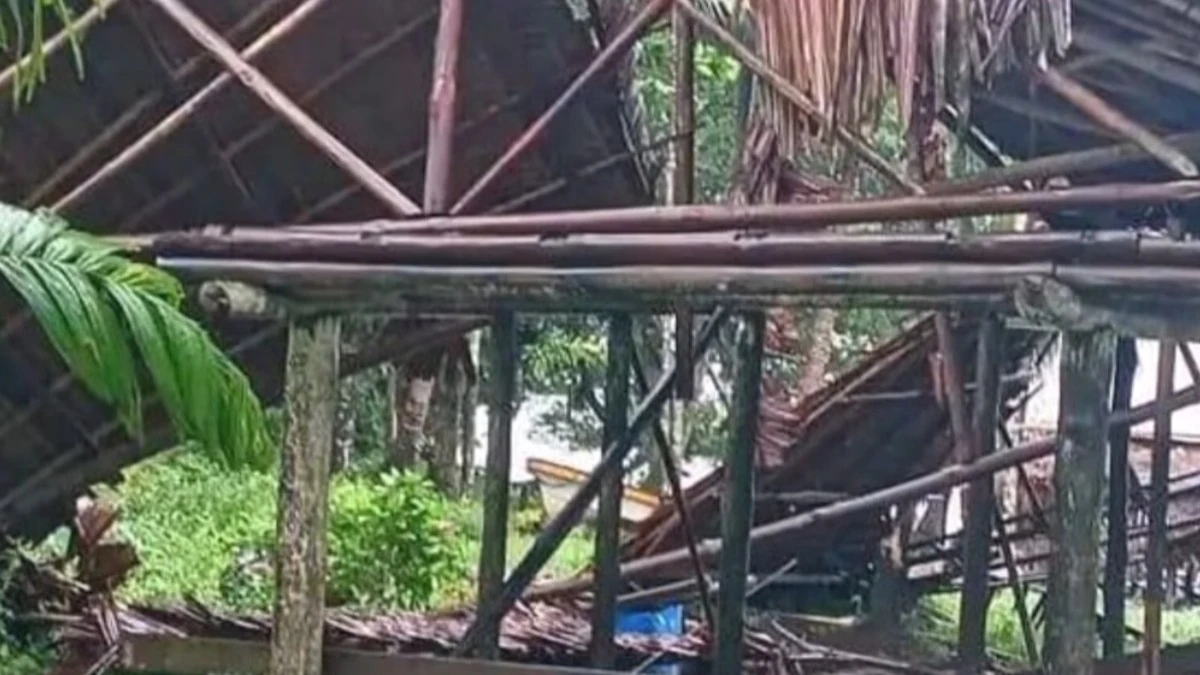
Damage caused by Tropical Cyclone Maila in Papua New Guinea - April 2026. Credit: Albert Yarebah
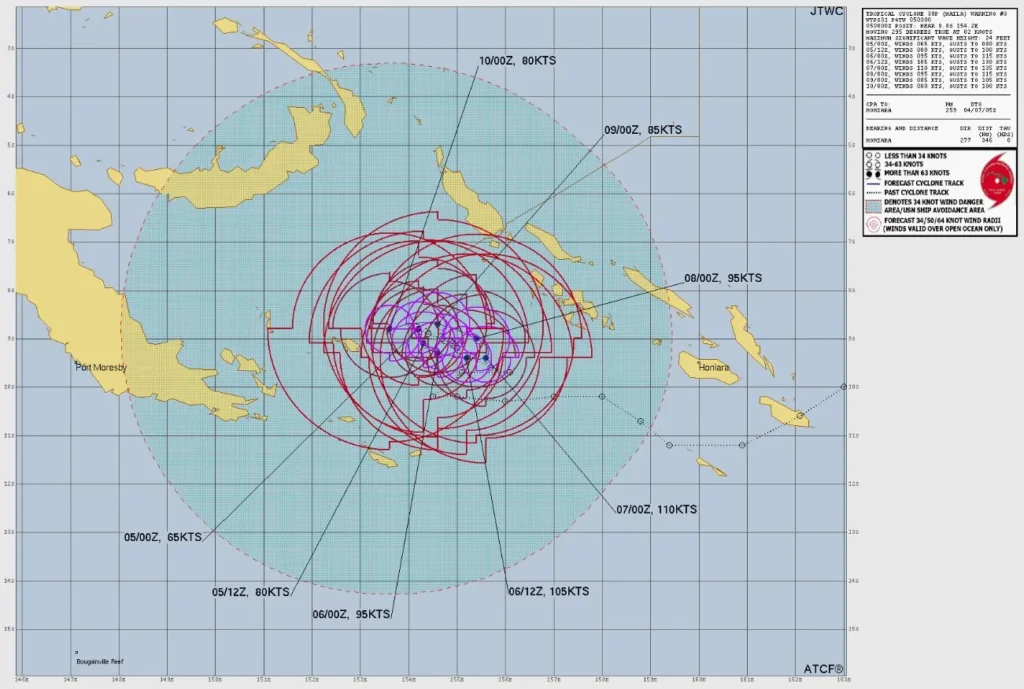
Tropical Cyclone Maila formed as Tropical Low 37U in the northeastern Coral Sea on April 2, between Papua New Guinea and the Solomon Islands. The system crossed 155°E into the area of responsibility of the Tropical Cyclone Warning Centre (TCWC) Port Moresby on April 4 and was named Maila, making it the first tropical cyclone named by TCWC Port Moresby since Cyclone Guba in 2007.
Maila intensified rapidly after naming while moving slowly through the Solomon Sea under weak steering conditions. By April 5, the system reached Category 3 strength on the Australian tropical cyclone intensity scale, with the Australian Bureau of Meteorology (BOM) reporting sustained winds near the center of 130 km/h (81 mph) and wind gusts to 185 km/h (115 mph) as it affected the Solomon Islands’ Western Province.
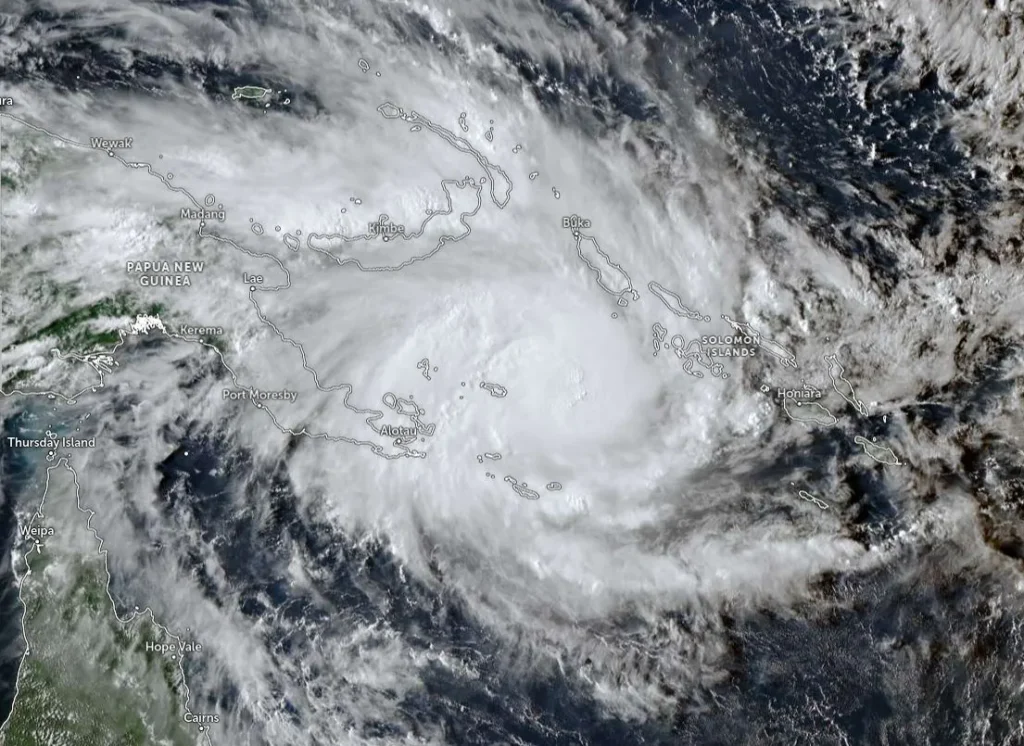
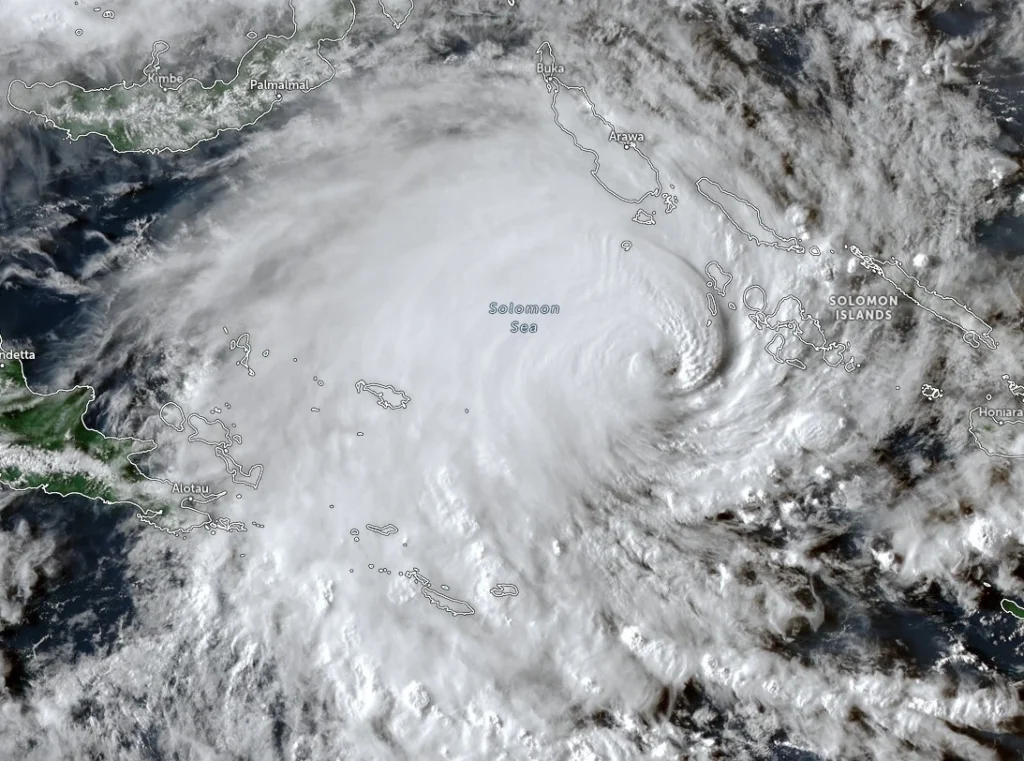
Maila then stalled over the Solomon Sea for several days as competing ridges limited its movement. Its slow forward speed prolonged exposure to heavy rain, rough seas, and storm surge across the Solomon Islands and nearby island communities in Papua New Guinea.
The system intensified further on April 7, reaching Category 4 strength before peaking at Category 5 on April 8, with sustained winds near the center of 215 km/h (134 mph) and gusts to 295 km/h (183 mph).
TCWC Port Moresby issued a Tropical Cyclone Advisory at 15:00 local time on April 3, followed by a Tropical Cyclone Warning at 00:00 local time on April 5 as Maila approached populated island areas. Forecast agencies warned of dangerous marine conditions, prolonged heavy rain, flooding, and damaging winds across the Solomon Sea region.
The storm’s slow movement and prolonged rainfall had severe consequences in Bougainville and other parts of eastern Papua New Guinea, where at least 11 people had been confirmed dead by April 13, with the highest toll reported in Bougainville.
The Star is reporting that entire villages were destroyed in the storm.
Eight people were killed when a night-time landslide buried a house in Asiko Village in Central Bougainville, making it the deadliest single incident linked to the cyclone.
Two women were also killed by falling trees in Bougainville, and around 12 other people were being treated in hospital for storm-related injuries. Roads and bridges were damaged in several parts of Bougainville, disrupting food supply routes and delaying access to remote communities as authorities worked to assess the full extent of the damage.
In Milne Bay Province, including affected islands identified by Australian officials, authorities were still working on April 13 to determine the scale of storm damage in remote island communities.
The country’s public broadcaster reported on April 13 that initial estimates suggest more than 10 000 people were affected and nearly 20 000 are in need of immediate assistance across Bougainville.
Local media reported that many residents have been left homeless, while roads and bridges have been destroyed, disrupting food supplies. Additionally, schools are expected to remain closed for the week.
Although Maila weakened as it interacted with southeastern Papua New Guinea and moved toward the Coral Sea, flood, landslide, and access risks remained elevated in saturated areas.
Papua New Guinea Prime Minister James Marape said the national government was organizing food, clean water, and temporary shelter for affected communities, while Australia announced AUD 2.5 million in humanitarian support for Papua New Guinea and the Solomon Islands.
“Reports are still coming in and are scattered, but we will make sure we reach every place, every island, and every community that has been affected,” Marape said in a statement on Sunday, April 12. He announced his plan to travel to the Milne Bay province, where there were reports of widespread damage.
Recovery operations were expected to continue over the coming days as access gradually improved and damage assessments expanded.
The Solomon Islands also sustained severe damage, particularly in Western and Choiseul provinces, where storm surge, flooding, and destructive winds affected remote communities. Prime Minister Jeremiah Manele said the Government has activated national disaster response arrangements under the National Disaster Management Plan 2018 to ensure a coordinated and timely response.
In his national address to the nation on April 10, Manele confirmed that the Cabinet has approved the allocation to support immediate humanitarian relief, including emergency food supplies, safe drinking water, and essential non-food items such as shelter and hygiene kits.
Maila has since weakened into a tropical low. It may track through the Coral Sea toward the Far North Queensland coast but BOM meteorologists expect it to be far less dangerous before it reaches Australian waters. BOM’s Senior forecaster Felim Hanniffy said while the system will be weakening, flash flooding and river rises were still likely.
BOM’s forecast for Tuesday, April 14, calls for an increase in rainfall moving onshore associated with Maila’s remnants.
The heaviest falls are likely to be along the north tropical coast between Cairns and Townsville, and then up towards the Cape York Peninsula as well. In these areas, BOM expects a few days of moderate to locally heavy falls, increasing the risk of some flash and riverine flooding over the coming days.
References:
1 Severe Tropical Cyclone Maila tracks toward Papua New Guinea and Queensland, Australia – The Watchers – April 8, 2026
2 Cyclone Maila kills at least 11 in Papua New Guinea – The Star – April 13, 2026
3 National weather forecast: Rain in northern Qld, storms in the west – BOM – April 13, 2026
4 Tropical Cyclone Maila falls to tropical low ahead of Qld landfall this week – ABC – April 12, 2026

I'm a dedicated researcher, journalist, and editor at The Watchers. With over 20 years of experience in the media industry, I specialize in hard science news, focusing on extreme weather, seismic and volcanic activity, space weather, and astronomy, including near-Earth objects and planetary defense strategies. You can reach me at teo /at/ watchers.news.

Commenting rules and guidelines
We value the thoughts and opinions of our readers and welcome healthy discussions on our website. In order to maintain a respectful and positive community, we ask that all commenters follow these rules.