
Tropical Storm Amanda forms as the first named storm of the 2026 eastern Pacific hurricane season
Tropical Storm Amanda formed as the first tropical storm of the 2026 Eastern Pacific Hurricane Season on June 3, 2026. At 08:00 PDT (15:00 UTC), the storm was located 2 375 km (1 475 miles) west-southwest of the southern tip of Baja California, and was moving northwestward.
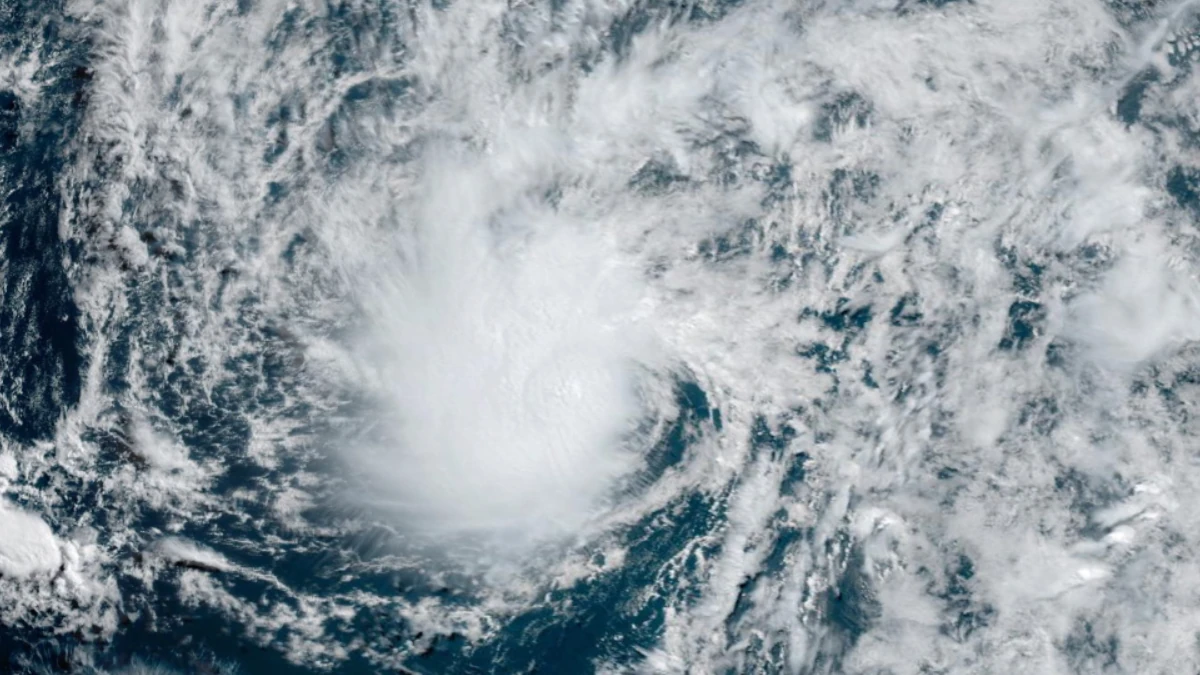
Satellite image of Tropical Storm Amanda at 16:40 UTC on June 3, 2026. Credit: NOAA/GOES-19, Zoom Earth
The first tropical storm of the 2026 Eastern Pacific Hurricane Season formed from tropical depression One-E at 08:00 PDT (15:00 UTC) on June 3 and was named Amanda. At the time, the system was located roughly 2 375 km (1 475 miles) west-southwest of the southern tip of Baja California.
Maximum sustained winds reached 65 km/h (40 mph), and Amanda was moving northwest at 13 km/h (8 mph). The estimated minimum central pressure was 1 006 hPa. Tropical storm force winds extended outward up to 95 km (60 miles).
The system is flanked by a mid-level ridge to the northeast and an upper-level low to the northwest, supporting a northwestward to west-northwestward motion through June 5.
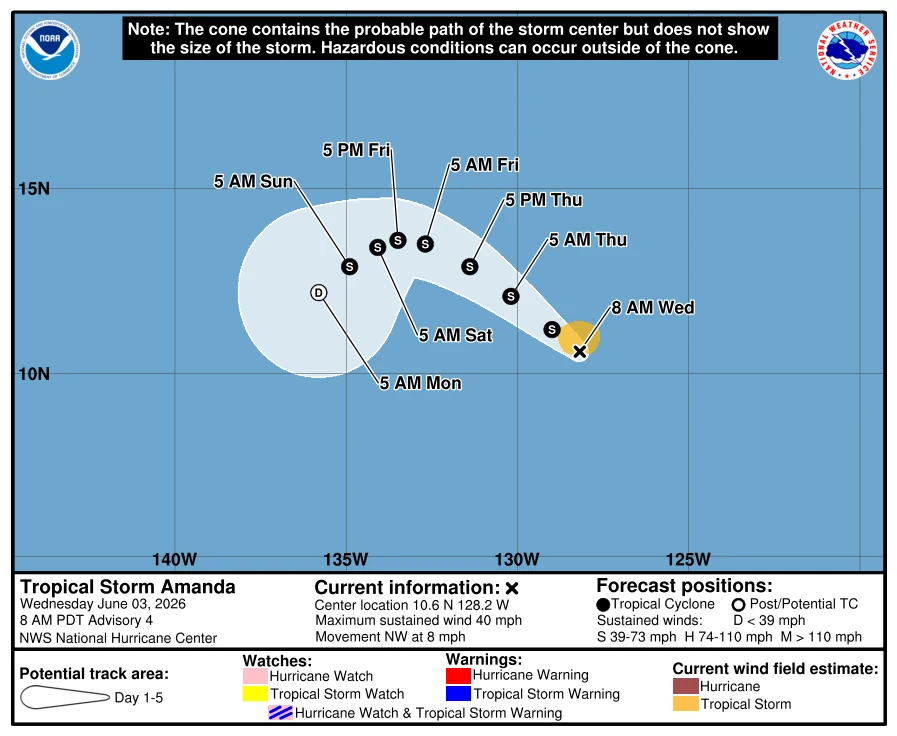
A turn toward the west, then west-southwest, with a slower forward motion is forecast over the weekend as the ridge strengthens. It is forecast to continue strengthening during the next 36 hours.
“It is noted that GFS and EC SHIPS RI model guidance are showing a 20 to 30 percent chance of rapid intensification during the next 24 to 36 hours,” the NHC said.
After 36-48 hours, Amanda will move into a less-favorable environment with increasing shear and a drier mid-level airmass, supporting steady weakening through this weekend.
The storm currently poses no threat to land.
References:
1 Tropical Storm Amanda Advisory Number 4 – NWS/NHC – June 3, 2026
2 Tropical Storm Amanda Discussion Number 4 – NWS/NHC – June 3, 2026

Rishav Kothari is Editor-in-Chief of The Watchers, where he runs the newsroom and covers earthquakes, volcanoes, severe weather and space weather.
Published in the last 24 hours
- The Leonid meteor shower peaks on the night of November 17, exactly 60 years after the 1966 storm, when some observers reported meteors falling at up to 40 a second, though this year’s show should be closer to 15 an hour
- When Arctic air reached South Florida in January 2020, Miami fell to 40°F and the National Weather Service warned residents to watch for cold-stunned iguanas dropping out of the trees Epicenter
- In May 2024, the strongest solar storm in 20 years put northern lights over the southern US, and across the Plains, GPS-guided tractors built to plant within an inch drifted about 10 feet off their rows Epicenter
- In 1943, a flight instructor in Texas flew a two-seat training plane into the eye of a hurricane because he was curious, then landed and took the base weatherman up for a second pass Epicenter
