
Strong and shallow M6.0 earthquake hits western Turkey
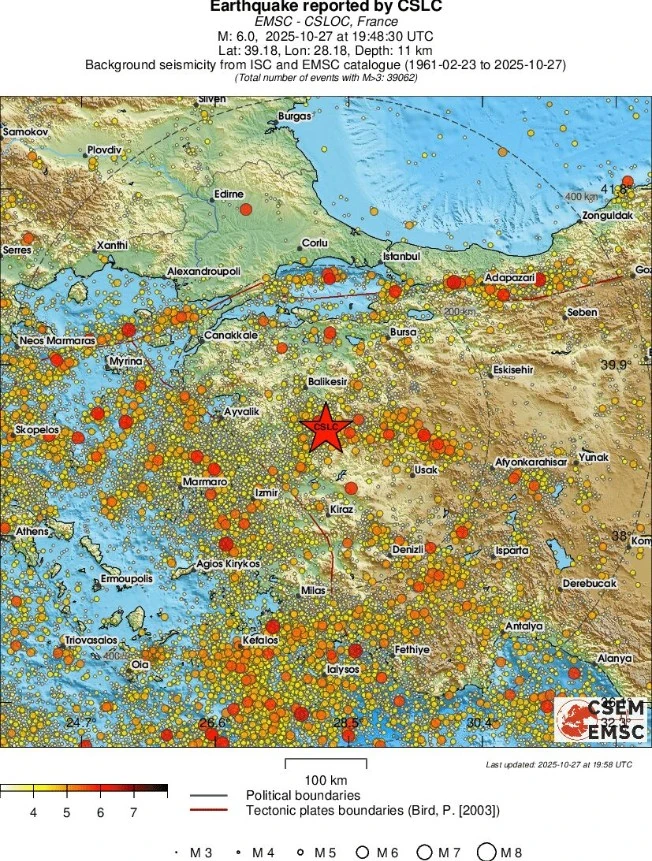
A strong and shallow earthquake registered by the USGS as M6.0 struck near Sındırgı, Balıkesir Province, western Turkey at 19:48 UTC (22:48 local time) on October 27, 2025. The agency is reporting a depth of 10 km (6.2 miles). EMSC is reporting M6.1 at a depth of 6 km (3.7 miles). The USGS issued a Yellow alert for shaking-related fatalities and economic losses.
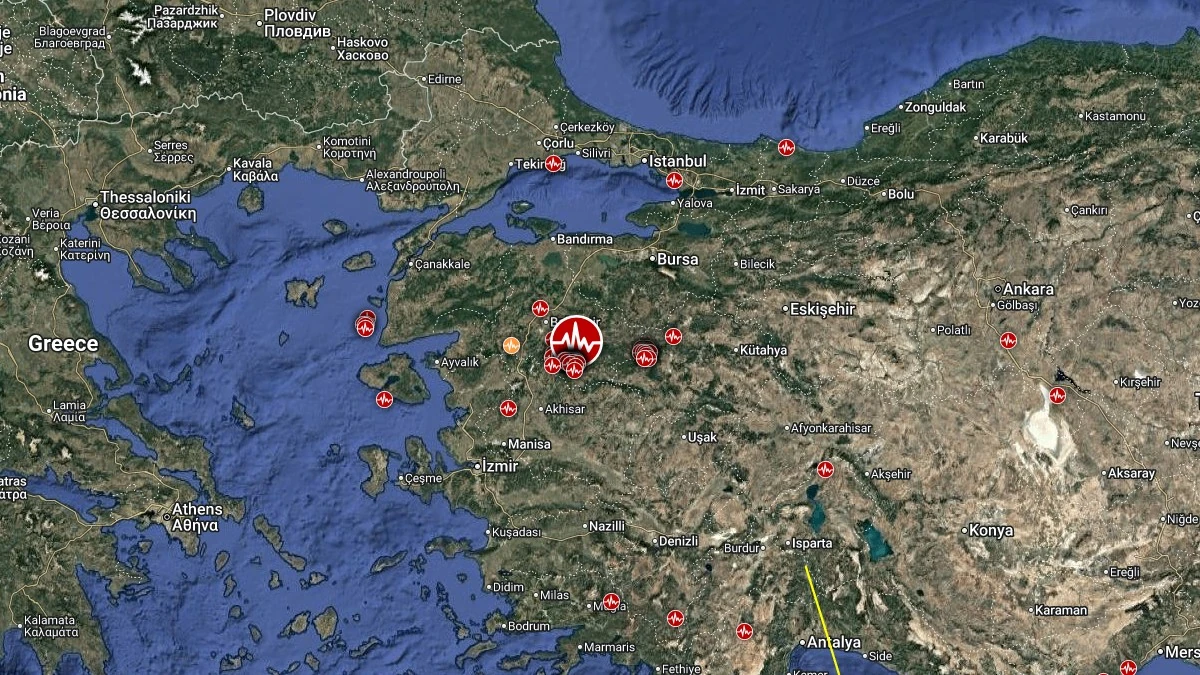
Epicenter of M6.0 earthquake in Sındırgı, Turkey on October 27, 2025. Credit: TW/SAM, Google
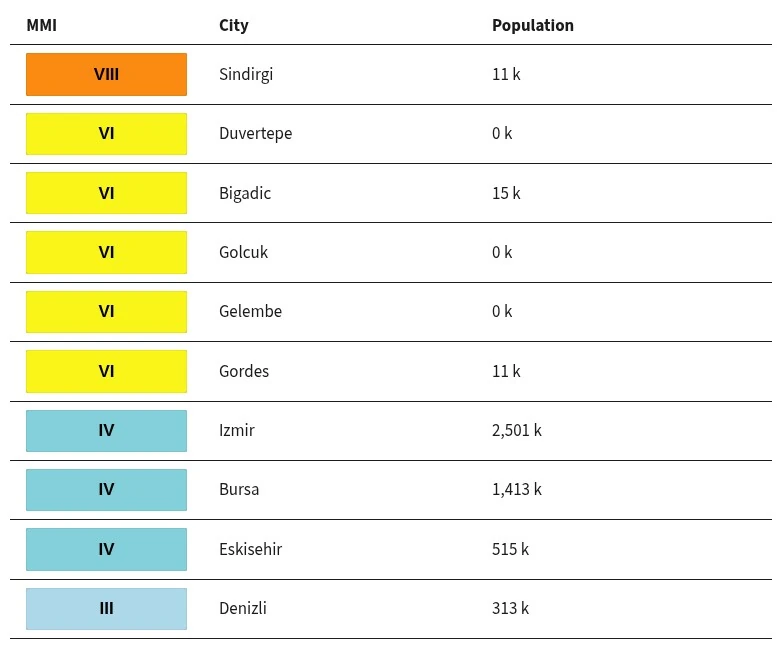
The epicenter was located 8 km (5 miles) SE of Sındırgı (population 10 907), 24 km (15 miles) SSE of Bigadiç (population 15 242), 29 km (18 miles) N of Gördes (population 11 168), 39 km (24 miles) WNW of Demirci (population 21 378), and 59 km (37 miles) SSE of Balıkesir (population 238 151), Turkey.
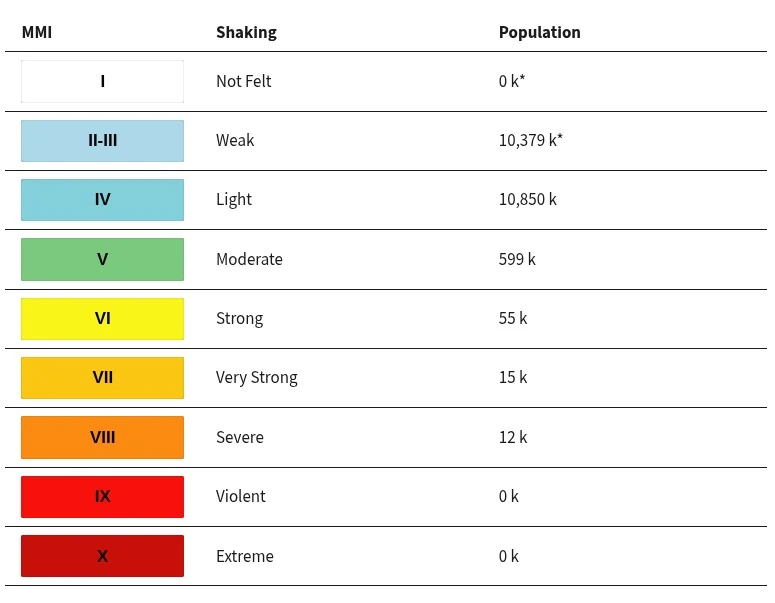
12 000 people are estimated to have felt severe shaking, 15 000 very strong, 55 000 strong, 599 000 moderate, 10 850 000 light, and 10 379 000 weak.
The USGS issued a Yellow alert for shaking-related fatalities and economic losses. Some casualties and damage are possible, and the impact should be relatively localized. Estimated economic losses are less than 1% of GDP of Turkey.
Overall, the population in this region resides in structures that are a mix of vulnerable and earthquake-resistant construction. The predominant vulnerable building types are adobe block and dressed stone/block masonry construction.
Recent earthquakes in this area have caused secondary hazards, such as landslides, that might have contributed to losses.
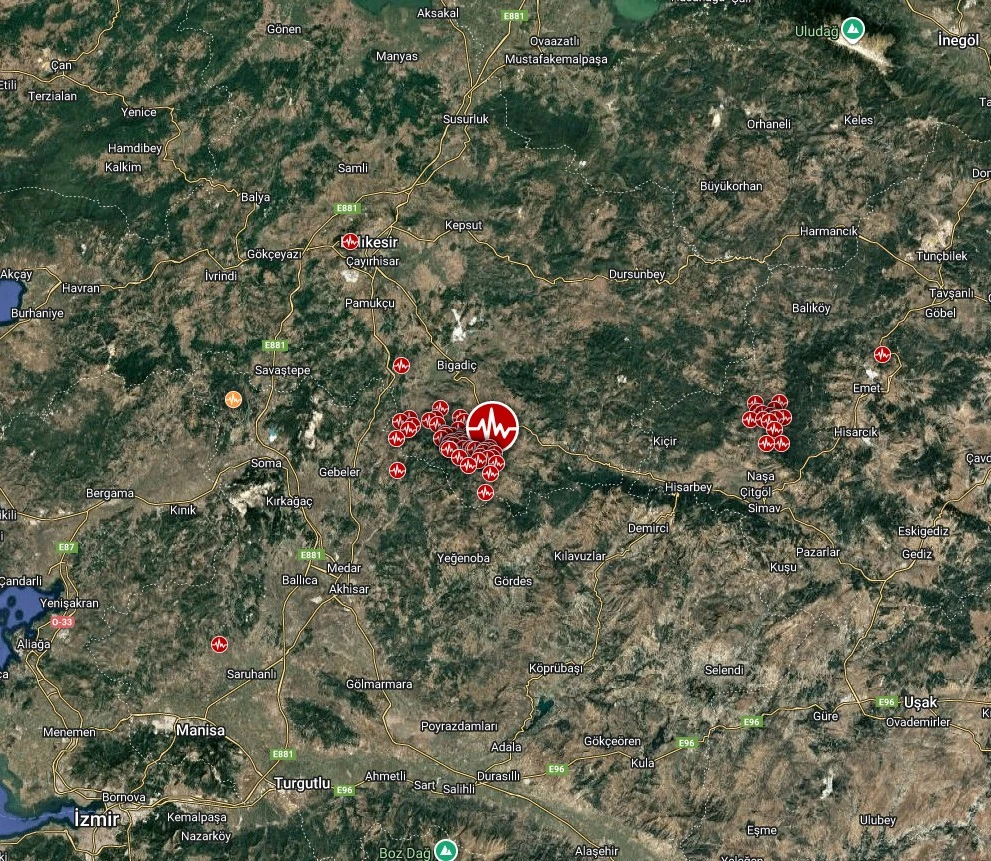
The earthquake was felt across a wide area of western and north-western Turkey, including İzmir, Manisa, Bursa, and Istanbul, with shaking lasting several seconds.
Several buildings collapsed in Sındırgı, including three previously classified as heavily damaged and one two-storey commercial building. Most of the structural failures occurred in older, weakened structures. Light to moderate damage was reported in Balıkesir city and nearby districts, with cracked walls and partial façade failures in some buildings.
Governor İsmail Ustaoğlu said 22 people sought hospital treatment, mostly for minor injuries sustained while fleeing buildings. Four of them were treated and released. No fatalities were confirmed.
Interior Minister Ali Yerlikaya stated that search and assessment teams were deployed immediately and that there was “no loss of life so far.”
The Disaster and Emergency Management Authority (AFAD) reported several aftershocks following the main event, the largest of which were felt locally but did not cause new collapses. Damage-assessment work began early on October 28, focusing on structures already marked as unsafe following the August 2025 earthquakes.
As a precaution, schools in Balıkesir Province were closed on October 28 to allow inspection of public buildings. Electricity and communications were briefly disrupted in the Sındırgı district but restored within hours.
Estimated population exposure to earthquake shaking
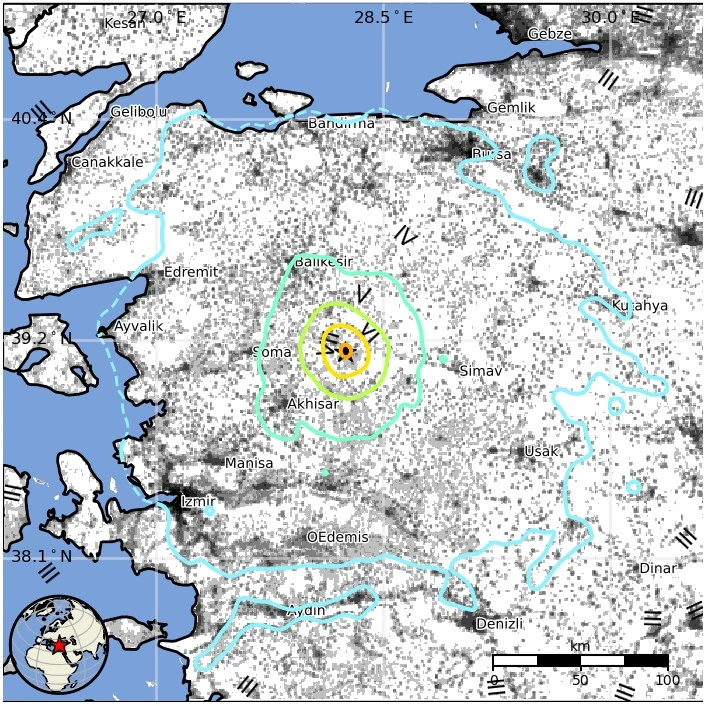
Selected cities exposed
Regional seismicity
References:
1 M6.0 earthquake western Turkey — USGS — October 27, 2025
2 M6.1 earthquake western Turkey — EMSC — October 27, 2025

Teo Blašković founded The Watchers in 2011 and edited it until 2026, covering seismic and volcanic activity, extreme weather, space weather and near-Earth objects. Articles on this page are his archive.
Published in the last 24 hours
- In September 1859, a solar storm lit up the night sky so brightly that gold miners in the Rocky Mountains woke up after midnight and started cooking breakfast, convinced the aurora glowing over their camp was the sunrise Epicenter
- A patch of warm Pacific water that could become the strongest El Niño in more than 70 years sits thousands of miles from any American town, yet it is already the main reason NOAA expects a wetter winter across the South and a milder one across the North
- A 19-year-old Nebraska teacher reportedly tied her pupils together with twine and led them to safety through a blizzard in January 1888 Epicenter
- NASA built the Opportunity rover to last 90 days on Mars, and Martian winds helped keep it alive for nearly 15 years by blowing dust off its solar panels, until a planet-wide dust storm in 2018 blocked sunlight and silenced the rover Epicenter
