
Kīlauea sets lava-fountaining record with episode 48, Hawaii
Kīlauea’s ongoing summit eruption reached its 48th lava-fountaining episode in Halemaʻumaʻu crater, Hawaii, at 04:40 HST (14:40 UTC) on June 1, 2026, setting a written-record benchmark for episodic lava fountaining during a single Kīlauea eruption, according to the USGS Hawaiian Volcano Observatory (HVO). The episode ended abruptly at 13:37 HST (23:37 UTC) after just under 9 hours of continuous fountaining from the north vent, and the eruption was paused afterward.
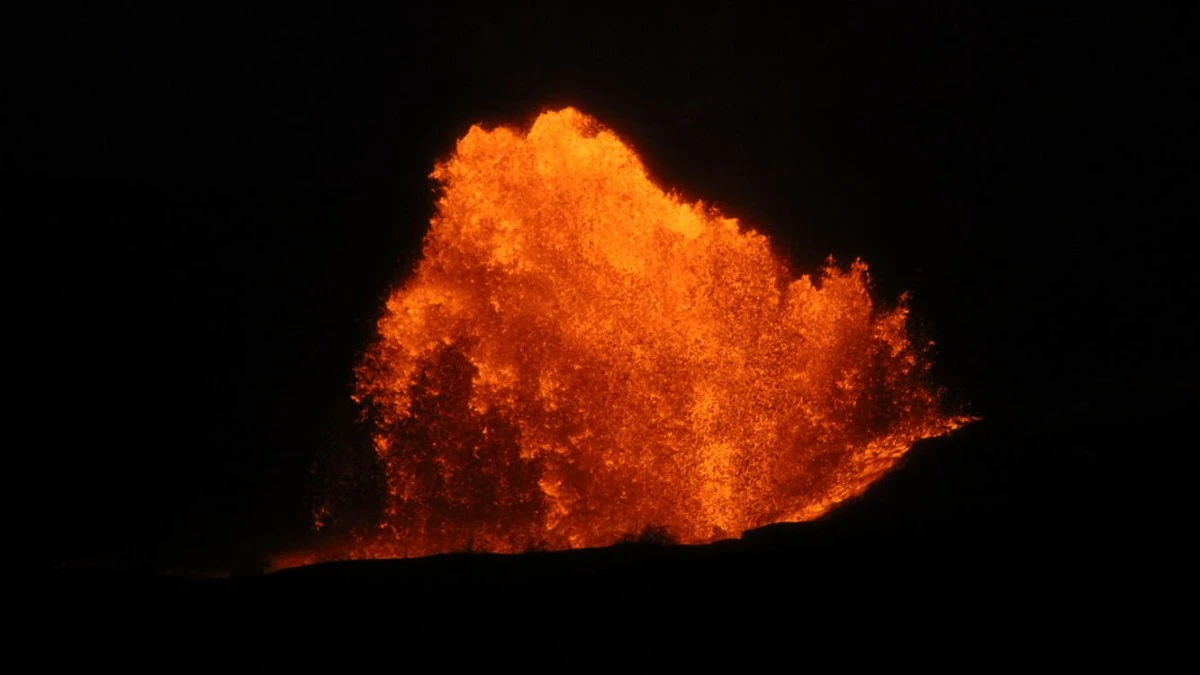
In the early morning hours of June 1, 2026, USGS Hawaiian Volcano Observatory scientists reported to Uēkahuna to watch the beginning of Kīlauea summit eruption fountaining episode 48. The fountaining episode began at 04:40 HST, and by the time the scientists arrived around 05:00 HST, the Halemaʻumaʻu north vent already hosted a lava fountain reaching more than 100 m (330 feet) high. Credit: USGS/M. Zoeller.
Episode 48 began from the north vent in Halemaʻumaʻu and ended abruptly at 13:37 HST (23:37 UTC) after just under 9 hours of continuous lava fountaining. HVO said the eruption has surpassed the 47 fountaining episodes recorded during the opening years of the Puʻuʻōʻō eruption from 1983 to 1986, establishing a new record for episodic lava fountaining during a single Kīlauea eruption in the written record.
The episode began about 35 hours after precursory lava overflows started from the south vent at 17:41 HST on May 30. HVO recorded 95 overflows, each lasting 5 to 10 minutes and recurring every 15 to 30 minutes, before sustained fountaining became established at the north vent on June 1.
The north vent fountain reached about 200 m (650 feet) by 05:50 HST, then gradually declined through the morning. HVO estimated peak effusion near 320 m3/s (415 yd3/s) shortly before 06:00 HST, with an average rate of 185 m3/s (245 yd3/s) during the episode.
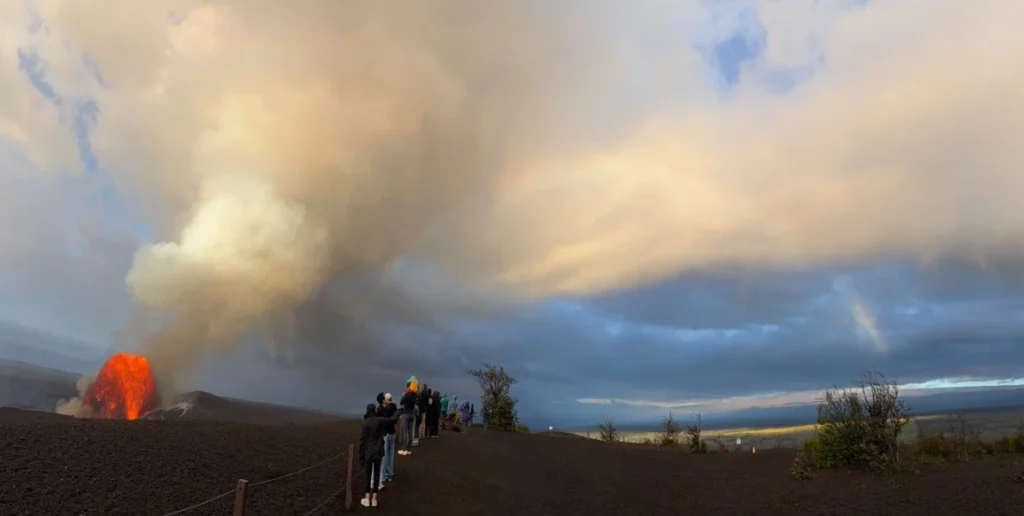
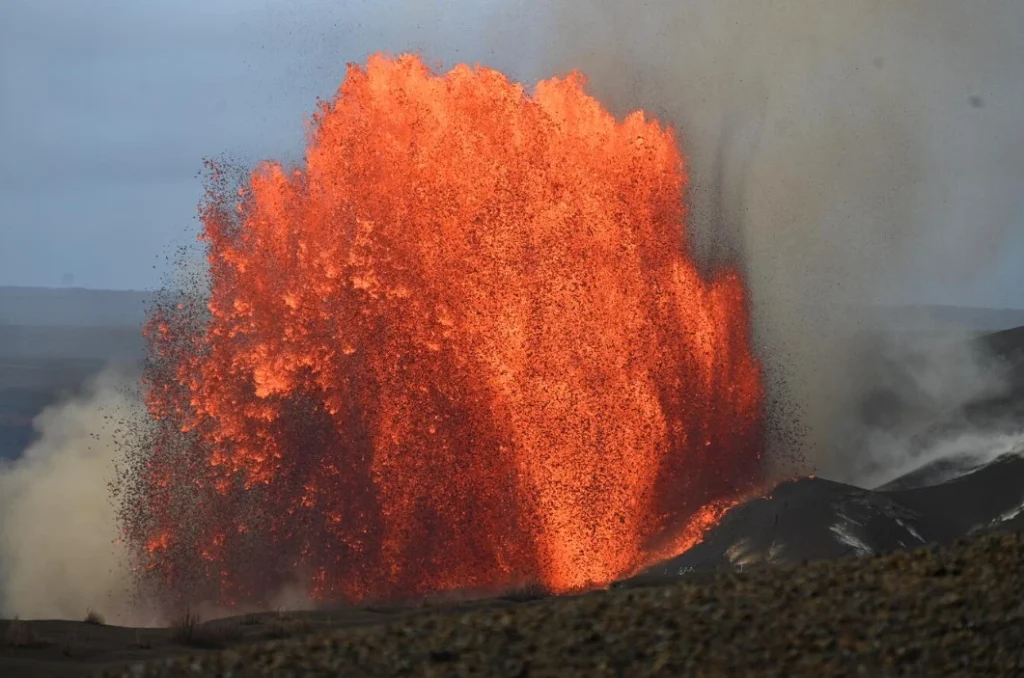
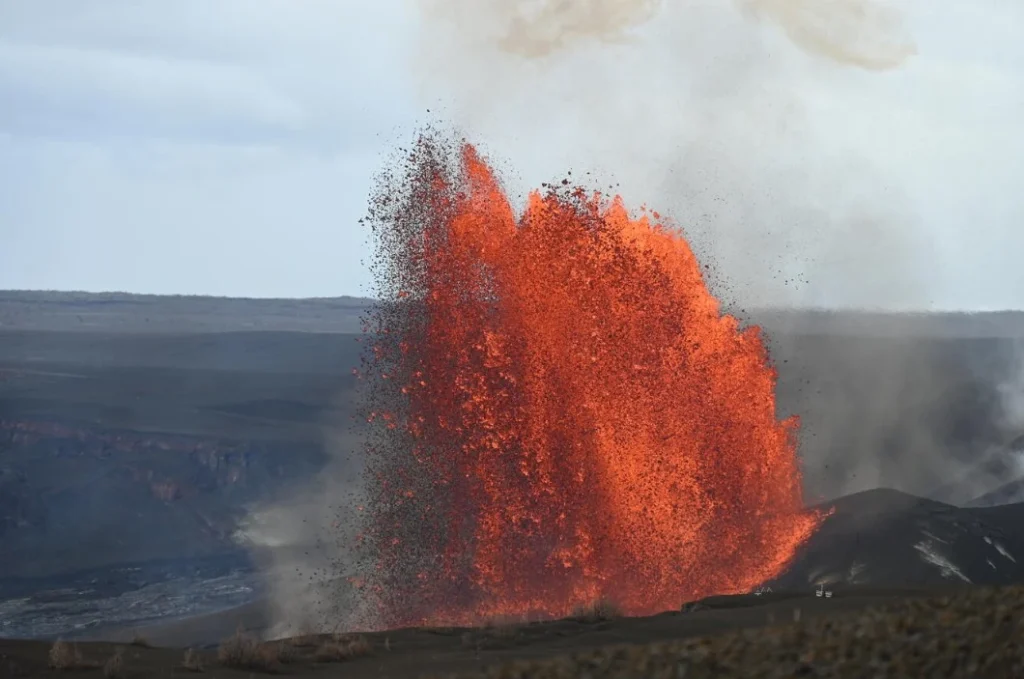
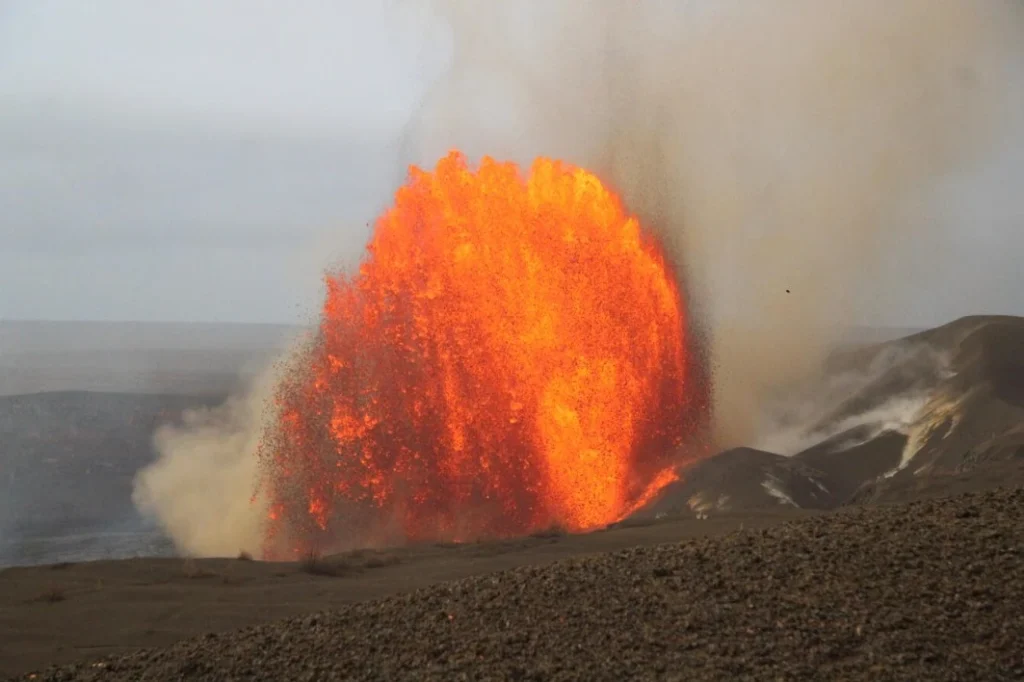
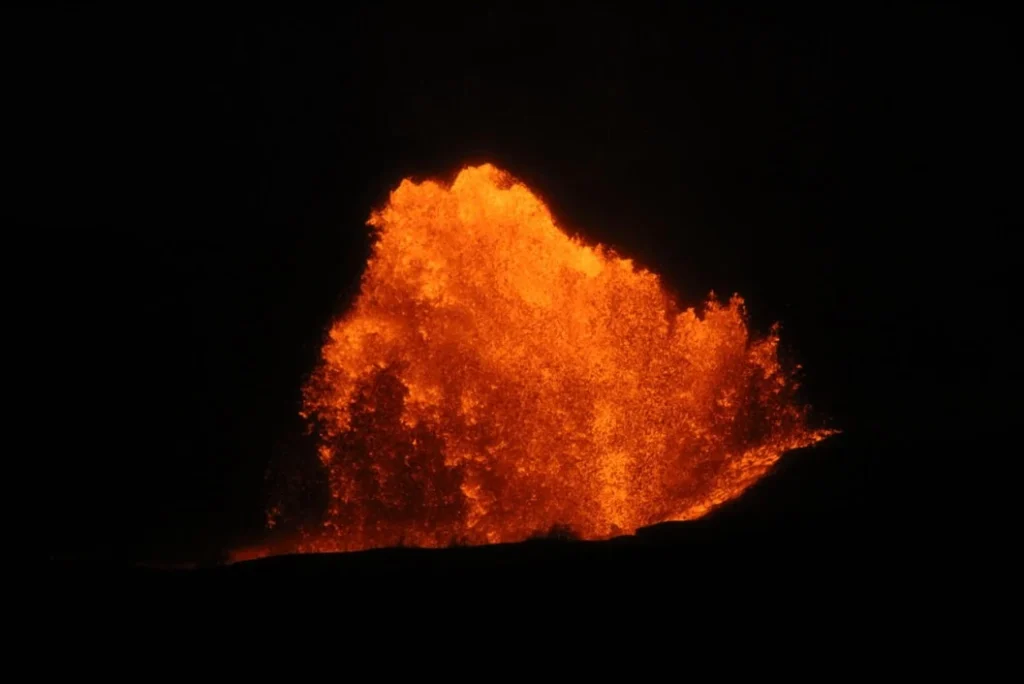
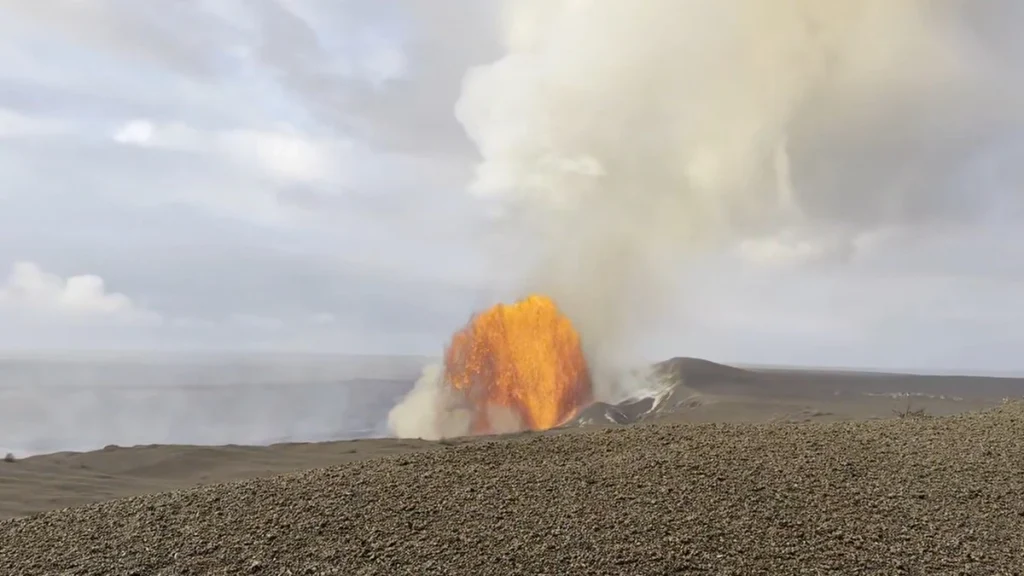
Episode 48 erupted an estimated 5.6 million m3 (7.3 million yd3) of lava and covered about 40% of the Halemaʻumaʻu crater floor. The south vent did not produce lava fountains during the episode, although HVO reported periodic spattering and several jetting episodes there.
Most tephra fell inside the closed area of Hawaiʻi Volcanoes National Park, but sparse reticulite up to 2 cm (1 inch) was reported at Uēkahuna overlook and on Highway 11 west of Nāmakanipaio Campground. Fine ash and Pele’s hair were reported from the park into Mauna Loa Estates, Ohia Estates, Volcano village, Royal Hawaiian Estates, and as far as Mountain View.
The plume reached about 7 600 m (25 000 feet) above sea level based on radar data reported by the National Weather Service and the Washington Volcanic Ash Advisory Center. A commercial pilot reported a sulfur and ash cloud off Laupāhoehoe, resulting in cancellations and diversions of several morning flights serving Hilo.
Episode 48 ended after a small earthquake swarm along the southwest side of Halemaʻumaʻu. About 15 earthquakes were located, ranging from below magnitude 1 to M2.2, HVO said, adding the seismic activity had no visible effect on the eruption or crater.
References:
1 Episode 48 at Kīlauea summit, a new record – USGS/HVO – June 1, 2026

I'm a dedicated researcher, journalist, and editor at The Watchers. With over 20 years of experience in the media industry, I specialize in hard science news, focusing on extreme weather, seismic and volcanic activity, space weather, and astronomy, including near-Earth objects and planetary defense strategies. You can reach me at teo /at/ watchers.news.

Commenting rules and guidelines
We value the thoughts and opinions of our readers and welcome healthy discussions on our website. In order to maintain a respectful and positive community, we ask that all commenters follow these rules.