
Record rainfall triggers flooding and evacuations in Wellington, New Zealand, one person missing
Severe flooding and landslides struck Wellington, New Zealand, between April 20 and 21, 2026, after 77 mm (3 inches) of rain fell in less than 1 hour, prompting evacuations across multiple suburbs and leaving one person missing. A state of emergency remains in place as saturated ground and additional rainfall maintain the risk of further flooding and landslides.
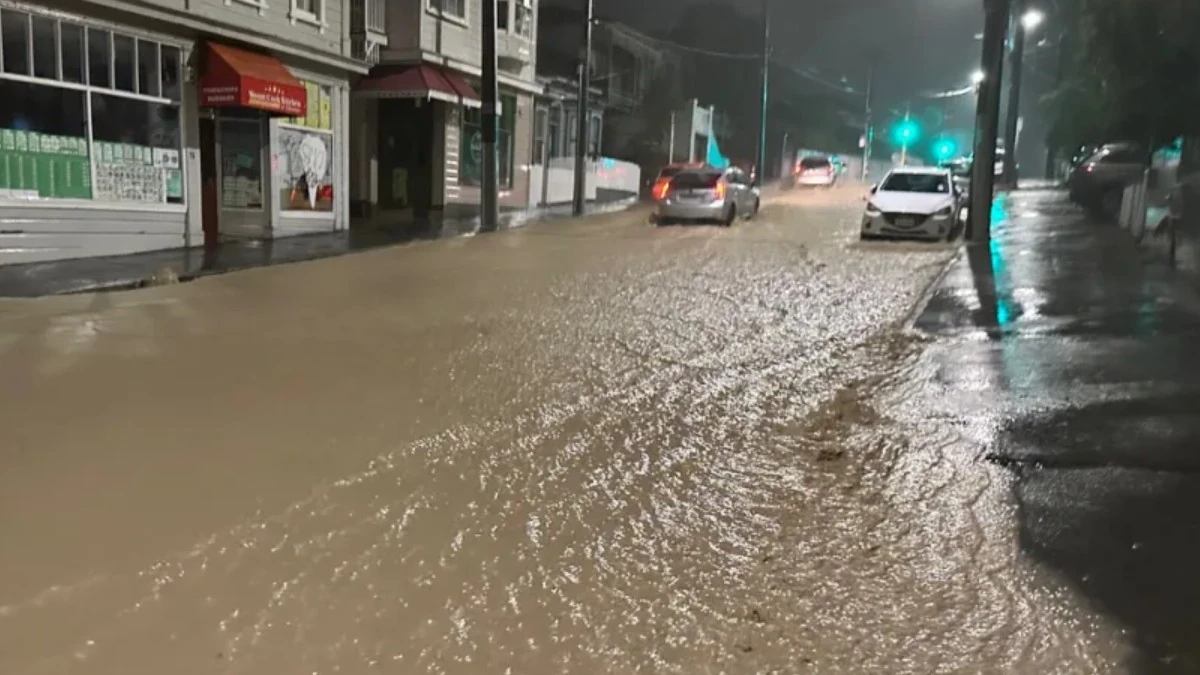
Flooding at Wallace Street, Hargreaves Street and Wright Street in Mt Cook, Wellington, New Zealand, after 04:00 LT on April 20, 2026. Credit: RNZ / Supplied
Severe flooding and landslides impacted Wellington (population about 210 000), the capital of New Zealand, after a multi-day rainfall event culminated in an extreme short-duration downpour on April 20. The event prompted evacuations across multiple suburbs, disrupted transport infrastructure, and led authorities to declare a state of emergency that remains in place.
Wellington mayor Andrew Little reported that 77 mm (3 inches) of rain fell in less than 1 hour at one location, describing it as the most intense rainfall observed in the city during the event.
MetService reported that more than 70 mm (2.8 inches) fell within 1 hour in parts of southern Wellington, exceeding half of the city’s average April rainfall of 127 mm (5 inches) recorded at the Botanical Gardens. Over a 24-48 hour period, rainfall totals across the region ranged from approximately 12 mm (0.5 inches) to 150 mm (5.9 inches), falling on already saturated ground.
The most intense rainfall was produced by a slow-moving convective cell that remained nearly stationary for about 1 hour during the early morning, allowing precipitation to accumulate rapidly over a limited area.
According to MetService, the event was driven by high atmospheric moisture combined with localized uplift, where strong southerly winds along the south coast converged with weaker inland flows, forcing air upward and enhancing rainfall intensity.
One person remains missing after floodwaters struck a residential property in the Karori area of Wellington. Police initiated a search and rescue operation, but efforts were suspended due to hazardous weather conditions. The property was heavily impacted by floodwater and debris, and no trace of the individual was found during the initial search.
Daily life across the capital was disrupted as schools, early learning services, and transport networks were all affected by the flooding. According to the Ministry of Education, 120 schools and kura across Greater Wellington were closed, affecting 42 762 students, while 161 early learning services were shut, affecting about 6 228 children.
Massey University’s Pukeahu Wellington campus shut immediately and remained closed the following day, while Victoria University of Wellington closed all campuses until Wednesday morning.
Wellington City Council also closed public facilities and civic venues, including libraries, parks, gardens, sports fields, community centers, recreation centers, pools, museums, and performance venues, as authorities worked to limit movement and manage safety risks.
Key transport links, including the Mount Victoria tunnel, were temporarily closed, while sections of the state highway network were impacted by flooding and slips. Public transport services were sevrely disrupted, with Metlink reporting significant disruption across bus and rail networks and the cancellation of all ferry services. Wellington Airport reported multiple flight disruptions during the peak of the event.
Emergency services responded to approximately 150 calls for assistance overnight as floodwaters entered homes, roads became impassable, and debris accumulated across urban areas.
Residents in low-lying and landslide-prone zones were advised to evacuate or relocate to higher ground, with multiple streets cleared as a precaution.
Emergency assistance centers were opened across the Wellington region for residents forced to leave their homes, while authorities issued post-flood safety guidance as clean-up operations began.
Wellington Region Emergency Management Office warned that floodwater should be treated as contaminated and advised residents not to enter damaged buildings until they had been declared safe.
Landslides were reported across multiple suburbs, including Kingston, Brooklyn, Vogeltown, and Miramar, where slips blocked roads, damaged property, and, in some cases, isolated homes. In Kingston, a landslide blocked a residential street, cutting off access to several properties.
Authorities said that prolonged rainfall had saturated soils across the region, reducing slope stability and increasing the likelihood of further failures, particularly in Wellington’s steep urban terrain.
The state of emergency remained in place for much of the Wellington region, although it was lifted in some surrounding areas as conditions began to improve.
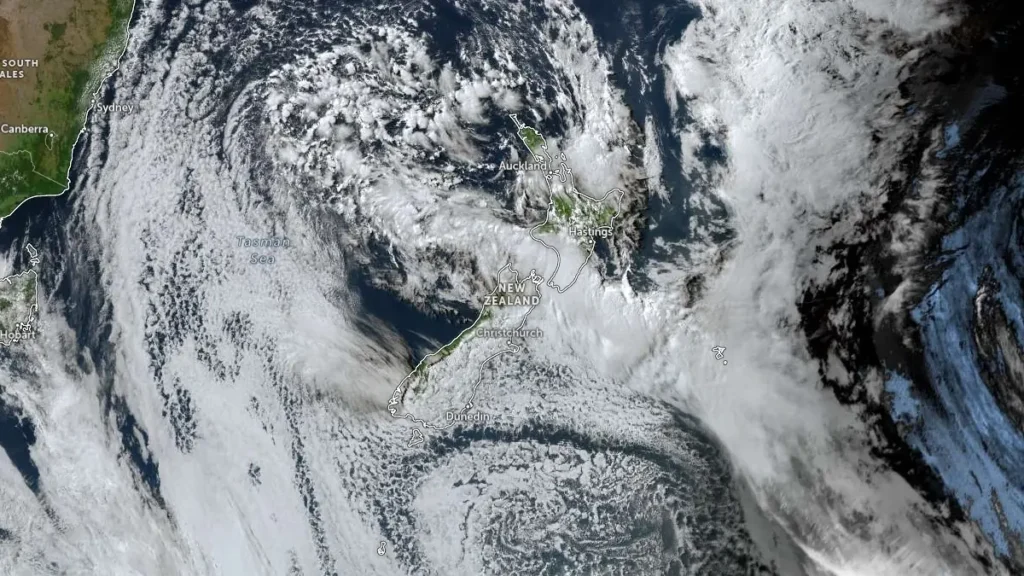
The event developed under a slow-moving low-pressure system affecting central New Zealand, producing sustained rainfall followed by embedded convective activity. Forecast peak rainfall rates reached 15–25 mm/h (0.6–1 inches/h), with localized intensities up to 40 mm/h (1.6 inches/h) during thunderstorms.
Red Heavy Rain Warnings issued for Wellington and Wairarapa were later downgraded to Orange warnings on April 21. Despite the downgrade, authorities emphasized that hazard conditions remain elevated, noting that even small additional rainfall on already saturated ground could trigger further landslides and flooding.
Updated forecasts show additional rainfall across central regions, including 50–70 mm (2–2.8 inches) in Wairarapa and up to 80–110 mm (3.1–4.3 inches) in parts of Hawke’s Bay. Strong south to southeast winds approaching gale force are also expected in exposed areas, adding to the overall hazard environment.
References:
1 Severe Weather Warnings – MetService – April 21, 2026
2 Wellington regional emergency updates – WREMO – April 21, 2026
3 An ‘ordinary’ storm with extraordinary impacts: what made Wellington’s deluge so intense? – RNZ – April 20, 2026
4 Wild weather: Schools closed, roads out, and travel disrupted – 1 News – April 20, 2026

I'm a dedicated researcher, journalist, and editor at The Watchers. With over 20 years of experience in the media industry, I specialize in hard science news, focusing on extreme weather, seismic and volcanic activity, space weather, and astronomy, including near-Earth objects and planetary defense strategies. You can reach me at teo /at/ watchers.news.

Commenting rules and guidelines
We value the thoughts and opinions of our readers and welcome healthy discussions on our website. In order to maintain a respectful and positive community, we ask that all commenters follow these rules.