
• Winds high above the Arctic broke a 68-year record by collapsing in early November, and while the eastern US has already had a taste of the cold it shook loose, forecasters say a second wave could arrive around Thanksgiving weekend

    About 20 miles above the North Pole, a vast ring of wind normally spins faster and faster as winter approaches. This November, it did the opposite. Around November 10, the winds slowed, stopped and then reversed direction. It’s the earliest event of its kind since reliable records began in 1958. Now forecasters are watching to…


  • The Leonid meteor shower peaks on the night of November 17, exactly 60 years after the 1966 storm, when some observers reported meteors falling at up to 40 a second, though this year’s show should be closer to 15 an hour

    In the early hours of November 17, 1966, a small group of amateur astronomers stood on Kitt Peak in Arizona, watching the sky. As the night went on, the number of meteors kept climbing. Then it exploded. At the peak, they estimated meteors were streaking across the sky at around 40 per second. It was…

  • When Arctic air reached South Florida in January 2020, Miami fell to 40°F and the National Weather Service warned residents to watch for cold-stunned iguanas dropping out of the trees

    On the evening of January 21, 2020, the National Weather Service office in Miami posted a warning it admitted it didn’t usually issue. As temperatures dropped into the 30s and 40s overnight, residents shouldn’t be surprised to see iguanas falling from the trees. By the next morning, social media was full of photos: green lizards…

  • In May 2024, the strongest solar storm in 20 years put northern lights over the southern US, and across the Plains, GPS-guided tractors built to plant within an inch drifted about 10 feet off their rows

    It was the height of planting season in May 2024. Across the Great Plains and the Midwest, farmers were working long days to get corn and soybeans into the ground, many of them in tractors that steer themselves using satellite navigation. Then, on the evening of May 10, the machines started behaving strangely. Tractors that…

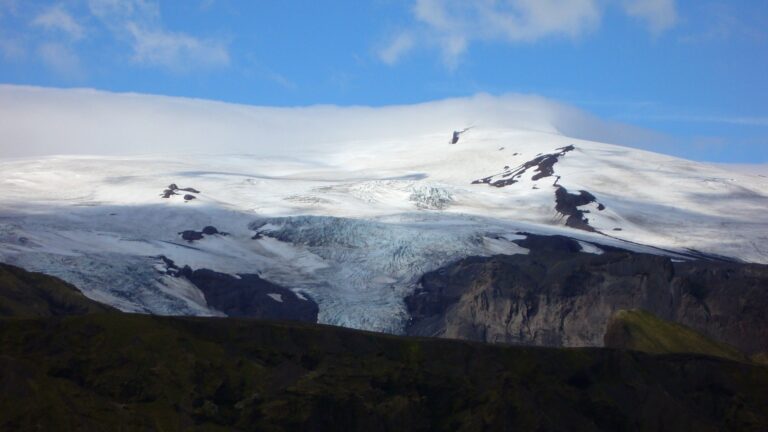
  • In 2013 a landslide fell onto Svínafellsjökull in southeast Iceland, leaving thicker ice at the foot of the slope; that ice is now moving away and the mountainside has shifted 1 to 3 cm.

    Renewed movement at Svínafellsheiði above Svínafellsjökull in southeast Iceland remained relatively steady through November 13 after GNSS instruments measured about 2–4 cm (0.8–1.6 inches) of total displacement over recent weeks. The Icelandic Meteorological Office says the hazard to inhabited areas is currently low; one possible explanation is that a thicker mass of glacier ice preserved beneath debris from a 2013 landslide is now moving down-glacier and gradually away from the foot of the unstable slope.

  • Mount Pinatubo in the Philippines sits about 7,000 miles from California, yet after it erupted in 1991 the whole planet cooled by about 1°F for nearly two years, because the sulfur it blasted into the sky formed a thin haze that bounced sunlight back into space

    On June 15, 1991, a mountain on the Philippine island of Luzon tore itself open. Mount Pinatubo, which had been quiet for about 500 years, sent a column of ash and gas more than 20 miles into the sky. Within weeks, part of that eruption had spread around the world. Over the following two years,…

  • A tangled sunspot cluster about 93 million miles away doubled in size in a single weekend earlier this month and fired 20 solar flares in one day, and forecasters gave it a small chance of producing an X-class flare, the most powerful kind the Sun is known to unleash

    In early November, a dark, tangled patch appeared on the face of the Sun. It grew quickly, doubling in size over a single weekend, and turned to face Earth. Within days, it had become the most active spot on the Sun. Over one 24-hour stretch, it fired off 20 solar flares, including three M-class flares,…

  • A ring of wind spinning about 19 miles above the Arctic, far higher than any passenger jet flies, has started breaking apart weeks earlier than ever recorded, and forecasters say the cold it was holding in place could spill into the US and Europe within weeks

    Every winter, a vast ring of wind forms high above the North Pole. It circles the Arctic about 19 miles up, roughly three times higher than a passenger jet cruises, and it helps keep the coldest air of the season locked over the far north. This November, that ring has faltered. Its winds slowed almost…

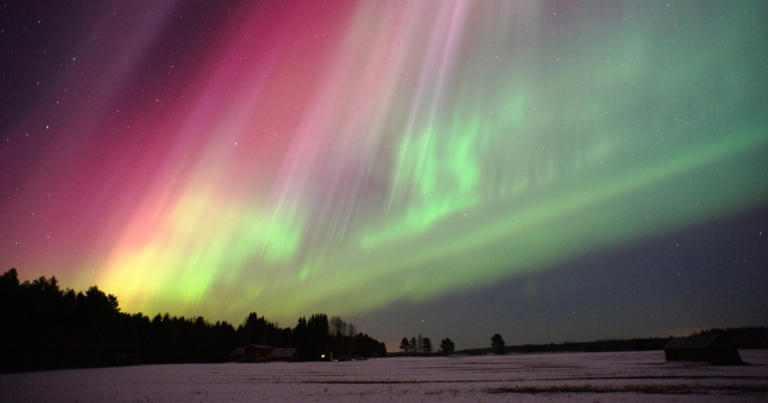
  • In September 1859, a solar storm lit up the night sky so brightly that gold miners in the Rocky Mountains woke up after midnight and started cooking breakfast, convinced the aurora glowing over their camp was the sunrise

    A little after midnight in early September 1859, a group camping in the Colorado Rockies woke to a sky full of light. It was bright enough to read by. Some of them were so sure morning had arrived that they got up and began making breakfast. It wasn’t dawn. It was an aurora, created by…

  • A patch of warm Pacific water that could become the strongest El Niño in more than 70 years sits thousands of miles from any American town, yet it is already the main reason NOAA expects a wetter winter across the South and a milder one across the North

    Far out in the tropical Pacific, along the equator, the ocean surface is running unusually hot. Across a band of water thousands of miles long, temperatures are well above normal, in some areas by more than 4°F. Nobody in Texas, Florida or Minnesota can see it or feel it. Yet according to NOAA, this distant…