
In May 2024, the strongest solar storm in 20 years put northern lights over the southern US, and across the Plains, GPS-guided tractors built to plant within an inch drifted about 10 feet off their rows
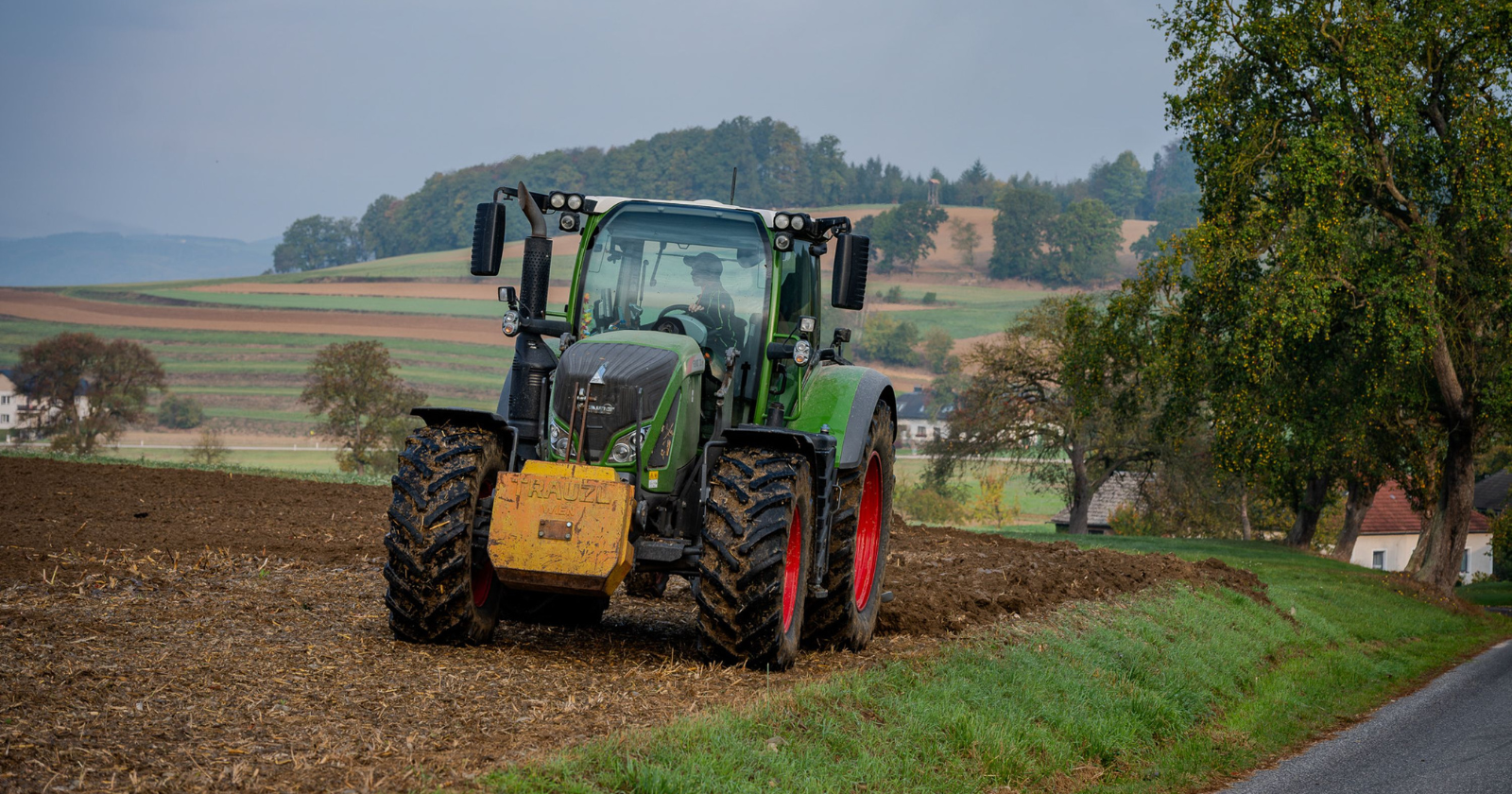
It was the height of planting season in May 2024. Across the Great Plains and the Midwest, farmers were working long days to get corn and soybeans into the ground, many of them in tractors that steer themselves using satellite navigation.
Then, on the evening of May 10, the machines started behaving strangely. Tractors that normally hold a line to within an inch began wandering off course. Some farmers said their equipment acted as if it were possessed.
The cause was 93 million miles away.
The strongest storm in two decades
In early May 2024, a huge cluster of sunspots on the Sun fired a series of powerful X-class flares and launched several clouds of charged particles, called coronal mass ejections, toward Earth. When they arrived on May 10, they triggered the first G5, or extreme, geomagnetic storm since the Halloween storms of October 2003.
The storm became known as the Gannon storm, after space weather scientist Jennifer Gannon. It produced spectacular northern lights across much of the world, visible as far south as Florida, Texas and Mexico in North America, and in parts of southern Europe.
Why GPS went wrong
GPS works by timing signals sent from satellites to receivers on the ground. On their way down, those signals pass through the ionosphere, a layer of electrically charged gas that begins about 30 miles above Earth.
During a strong geomagnetic storm, the ionosphere becomes turbulent and uneven. GPS signals passing through it are delayed and distorted, which throws off the position calculated by receivers on the ground. A study published in 2025 found that during the Gannon storm, GPS errors reached up to 230 feet in central US states, and that disruptions continued for up to two days.
Tractors off course
Modern precision farming depends on extremely accurate positioning. Many tractors use systems that combine satellite signals with local correction data to steer within about a centimeter, or less than half an inch. That accuracy lets farmers plant straight rows, avoid overlapping and apply seed and fertilizer precisely.
During the storm, that accuracy collapsed. Shawn Dahl of NOAA’s Space Weather Prediction Center said he heard in real time from farmers in North Dakota whose tractors were off by about 10 feet and driving in circles. John Deere told customers the problem affected all brands of GPS equipment.
Many farmers had to stop work or switch to steering manually until the storm passed. Even after it ended, the disturbed ionosphere kept disrupting signals at certain times of day for a night or two.
The cost of a solar storm
Planting delays can be expensive. Kansas State University agricultural economist Terry Griffin has estimated that the disruption cost Midwest farmers more than $500 million, largely through delayed corn planting and lost yields.
Farming wasn’t the only industry affected. Satellite operators had to make extra adjustments to keep spacecraft in their proper orbits as the upper atmosphere expanded, and some radio communications were disrupted. Power grids, however, came through largely unscathed, partly because operators had warnings in advance.
A small taste of what the Sun can do
As strong as it was, the Gannon storm was far weaker than the most powerful storm on record, the Carrington Event of 1859. Researchers say a storm of that size today could make GPS signals unusable across a whole continent, not just in central regions.
The Sun is still in an active phase of its 11-year cycle. Strong sunspot regions continue to appear, including one this month that fired 20 flares in a single day. Most produce only minor effects, but forecasters watch every one closely.
How to stay ahead of space weather
NOAA’s Space Weather Prediction Center issues free watches and warnings for geomagnetic storms, rated G1, minor, to G5, extreme. Farmers and anyone else who depends on precise GPS can sign up for alerts and plan sensitive work around strong storms.
For everyone else, the same alerts can be a chance to see the northern lights. If a strong storm is forecast, look north after dark, away from city lights. Phone cameras often capture colors that are hard to see with the naked eye.

The Watchers Staff covers earthquakes, volcanoes, severe weather, space weather and other natural events. Published since 2011, The Watchers reports on a changing planet and the science behind it.
Published in the last 24 hours
- In 1943, a flight instructor in Texas flew a two-seat training plane into the eye of a hurricane because he was curious, then landed and took the base weatherman up for a second pass Epicenter
- A soy sauce maker used fire to guide villagers through Japan’s 1854 tsunami, then funded a seawall that protected most of Hiro in 1946 Epicenter
- In 2013 a landslide fell onto Svínafellsjökull in southeast Iceland, leaving thicker ice at the foot of the slope; that ice is now moving away and the mountainside has shifted 1 to 3 cm. Epicenter
- Kīlauea's north vent threw lava about 660 feet (200 m) high for six hours on 5 November 2026; the summit is now reinflating, with the next episode forecast for 16 to 21 November. Epicenter
