
A tangled sunspot cluster about 93 million miles away doubled in size in a single weekend earlier this month and fired 20 solar flares in one day, and forecasters gave it a small chance of producing an X-class flare, the most powerful kind the Sun is known to unleash
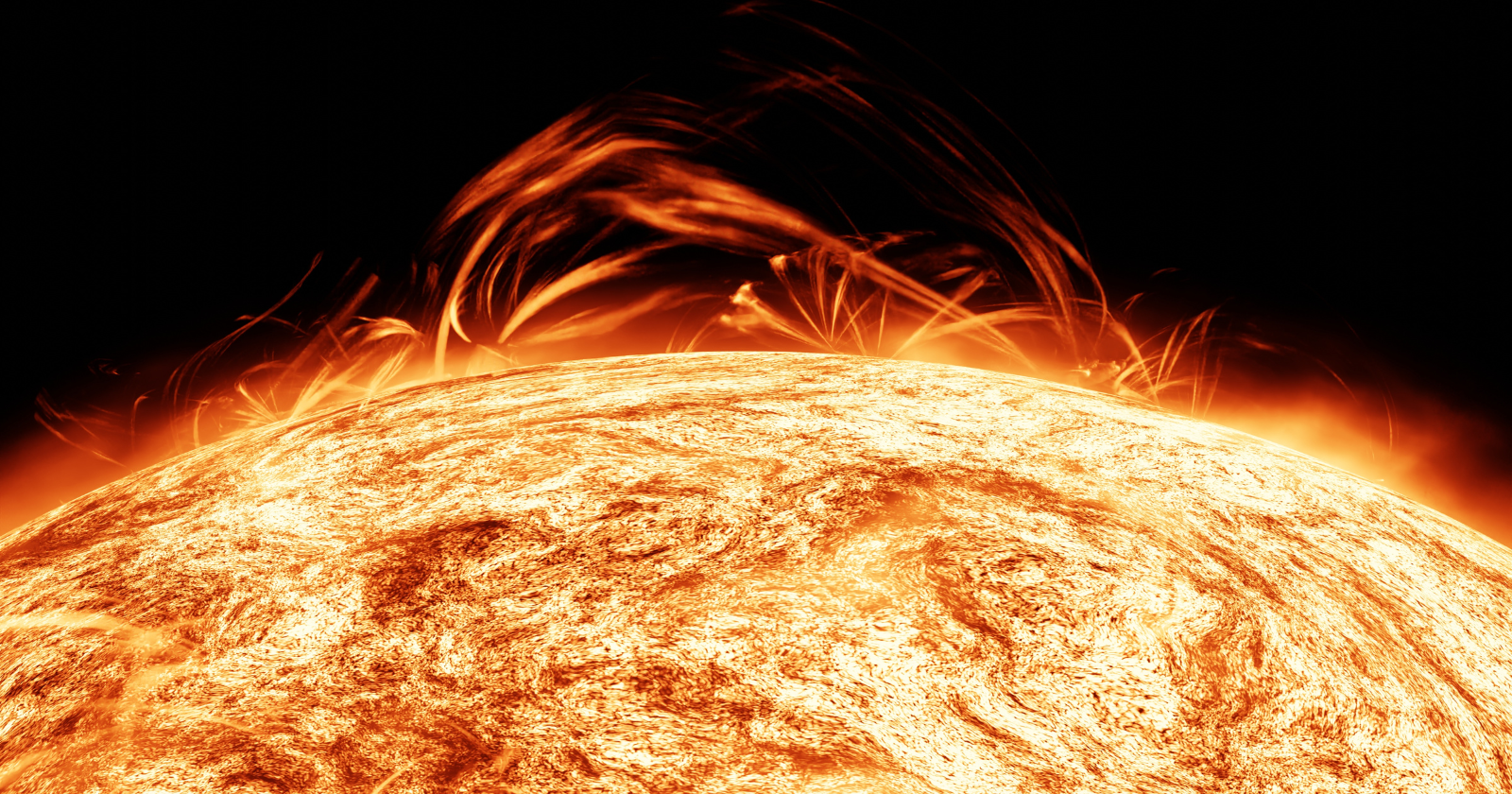
In early November, a dark, tangled patch appeared on the face of the Sun. It grew quickly, doubling in size over a single weekend, and turned to face Earth.
Within days, it had become the most active spot on the Sun. Over one 24-hour stretch, it fired off 20 solar flares, including three M-class flares, and space weather forecasters began warning of a small chance of something bigger.
What sunspots are
Sunspots are darker, cooler areas on the Sun’s surface, often larger than Earth. They form where intense magnetic fields poke through the surface and block some of the heat rising from below.
The magnetic fields in and around sunspots can become twisted and tangled, especially in complex groups. When those fields suddenly snap and reconnect, they release enormous amounts of energy as a solar flare, a burst of light and radiation that reaches Earth in about eight minutes.
Meet AR4566
The region behind this month’s activity is called AR4566, short for Active Region 4566, the number NOAA gave it when it appeared on November 2. Within a week, it had grown into the largest and most complex sunspot group on the visible Sun.
Forecasters classified it as a “delta” region, a magnetic arrangement where opposite magnetic fields are packed closely together. Delta regions are the type most likely to produce strong flares.
How flares are rated
Solar flares are graded by the strength of the X-rays they produce. The scale runs from A and B, the weakest, through C and M to X, the most powerful. Each letter is ten times stronger than the one before it.
M-class flares are classed as moderate. They can cause brief radio blackouts on the sunlit side of Earth. X-class flares are the strongest category, and the biggest ones can disrupt radio communications, navigation systems and satellites.
The forecast
Between November 8 and 11, NOAA’s Space Weather Prediction Center gave AR4566 a 60% daily chance of M-class flares and a 15% daily chance of an X-class flare. Earlier in the weekend, the X-class chance had briefly been put at 20%.
No X-class flare had been reported by the time the region began rotating toward the Sun’s western edge. As its magnetic structure became simpler, forecasters cut its X-class odds to around 5%.
Why the timing matters
When a flare happens on the side of the Sun facing Earth, any eruption of material that comes with it, called a coronal mass ejection, is more likely to head our way. These clouds of charged particles can trigger geomagnetic storms when they reach Earth, usually one to three days later.
Those storms can disturb power grids and satellites and push the northern lights much farther south than usual. Earlier this month, unsettled solar conditions already brought auroras to parts of the northern United States, including northern Minnesota.
The Sun is still busy
The Sun runs on a cycle of about 11 years, swinging between quiet periods and active ones. The current cycle, Solar Cycle 25, peaked around 2024 and 2025. But activity often stays high for a while after the peak, and some of the strongest storms in history came after the official maximum.
In May 2024, a single sunspot region fired a series of X-class flares and triggered the strongest geomagnetic storm in more than 20 years, with auroras seen as far south as Florida and northern India.
How to keep an eye on the Sun
NOAA’s Space Weather Prediction Center publishes free daily forecasts and alerts, including the chances of flares and geomagnetic storms. Many aurora apps use the same data to send alerts when the northern lights might be visible near you.
If an alert goes out, look north after dark, away from city lights. Phone cameras often pick up auroras that look faint to the naked eye.

The Watchers Staff covers earthquakes, volcanoes, severe weather, space weather and other natural events. Published since 2011, The Watchers reports on a changing planet and the science behind it.
Published in the last 24 hours
- A ring of wind spinning about 19 miles above the Arctic, far higher than any passenger jet flies, has started breaking apart weeks earlier than ever recorded, and forecasters say the cold it was holding in place could spill into the US and Europe within weeks
- US flights resume after FAA lifts nationwide ground stop that lasted more than four hours
- Second nationwide US flight halt since 9/11: how the November 13 FAA ground stop compares with September 2001 and January 2023 Epicenter
- FAA grounds all departing flights across the US after communications outage hits air traffic control centers nationwide
