
In September 1859, a solar storm lit up the night sky so brightly that gold miners in the Rocky Mountains woke up after midnight and started cooking breakfast, convinced the aurora glowing over their camp was the sunrise
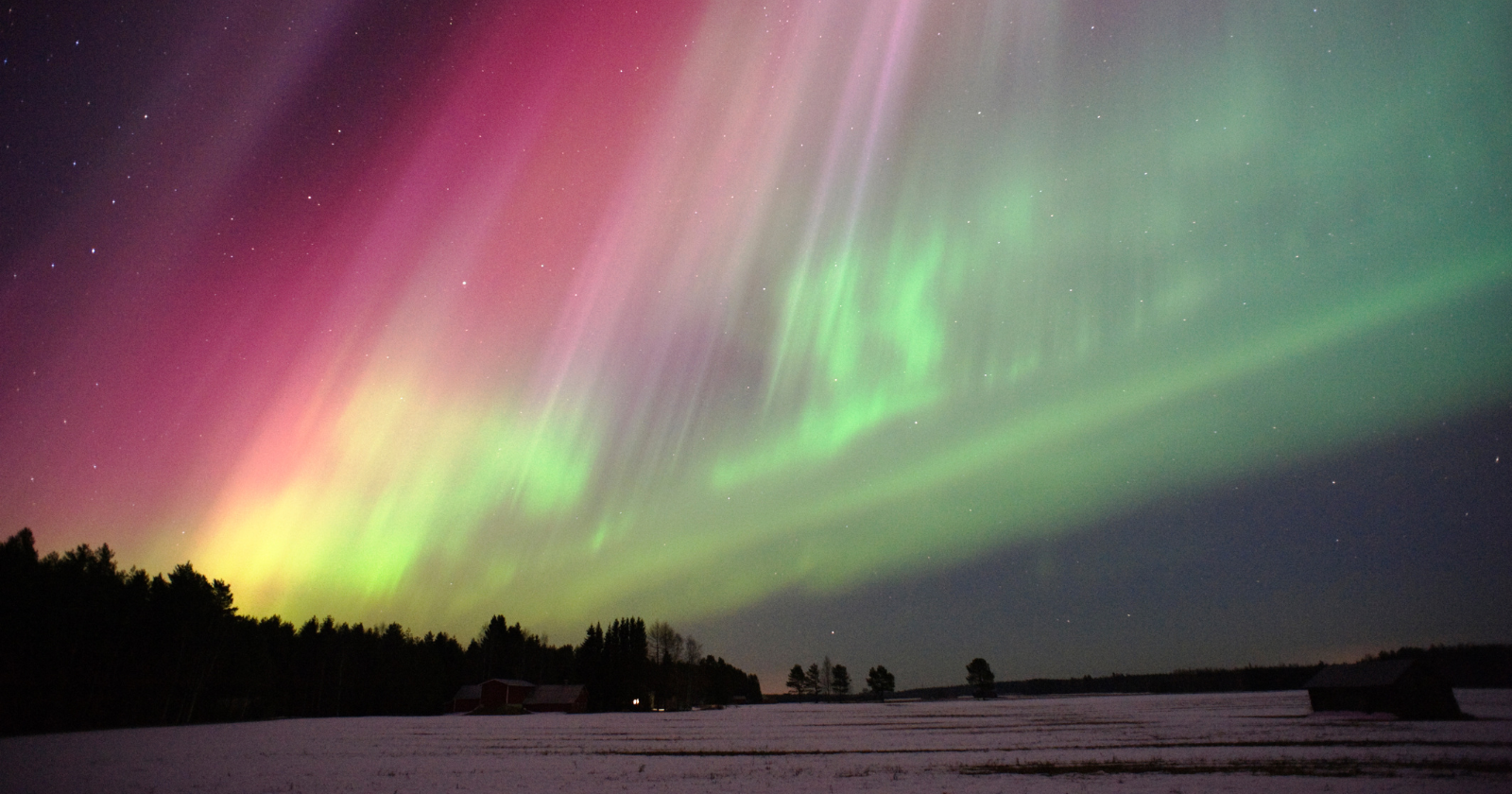
A little after midnight in early September 1859, a group camping in the Colorado Rockies woke to a sky full of light. It was bright enough to read by. Some of them were so sure morning had arrived that they got up and began making breakfast.
It wasn’t dawn. It was an aurora, created by the most powerful solar storm in recorded history. Scientists call it the Carrington Event, and it remains the benchmark for the worst space weather Earth has experienced in modern times.
What an astronomer saw
On the morning of September 1, 1859, the English amateur astronomer Richard Carrington was sketching sunspots at his private observatory in Surrey. He projected an image of the Sun onto a screen and was tracing a large group of dark spots.
Suddenly, two patches of intensely bright white light flared up within the sunspot group. They lasted about five minutes, then faded. Another British astronomer, Richard Hodgson, saw the same thing independently. They had witnessed the first solar flare ever recorded.
A storm that crossed in under a day
A flare like that is often accompanied by a coronal mass ejection, a huge cloud of charged particles and magnetic field blasted out from the Sun. Most take two to four days to reach Earth. This one arrived in about 17.6 hours.
Scientists think an earlier eruption, a few days before, had cleared a path through space and allowed it to travel unusually fast. When it struck Earth’s magnetic field, it set off a geomagnetic storm on a scale never seen before or since.
Auroras almost to the equator
Normally, the northern lights are seen only at high latitudes, in places like Alaska, northern Canada and Scandinavia. In 1859, they spread much farther south.
The aurora was reported in places as far south as Cuba, Hawaii and south-central Mexico, and in the southern hemisphere, as far north as Queensland in Australia. In the northeastern United States, people said the sky was bright enough to read a newspaper. Some witnesses thought cities were on fire, while others feared the end of the world.
Telegraph wires came alive
The most dramatic effects were on the era’s most advanced technology, the telegraph. As Earth’s magnetic field shifted violently, it induced powerful electric currents in long telegraph lines.
Some operators reported sparks and electric shocks, and some telegraph paper caught fire. On September 2, operators in Boston and Portland, Maine, disconnected their batteries entirely and still sent messages for about two hours, using only the current the storm was pushing through the wires.
What if it happened today?
In 1859, the world had little electrical infrastructure, so the damage was limited. Today, we depend on power grids, satellites, GPS and long-distance communications, all of which are vulnerable to severe space weather.
A storm of this size could damage large power transformers, which can take many months to replace, and cause long blackouts. In 2013, a study by Lloyd’s of London estimated that a Carrington-level storm could cost the United States between $0.6 trillion and $2.6 trillion.
Smaller storms give a glimpse of the risk. In March 1989, a geomagnetic storm left millions of people in Quebec without power for about nine hours. In July 2012, a Carrington-class eruption from the Sun narrowly missed Earth.
How to prepare and what to watch for
Space weather is now monitored around the clock. In the US, NOAA’s Space Weather Prediction Center issues alerts and rates storms from G1, minor, to G5, extreme. The UK’s Met Office runs a similar service. Following them can tell you when strong auroras might be visible near you.
For severe storms, the advice is similar to preparing for any long power cut. Keep a battery-powered radio, torches or flashlights, spare batteries, some stored water and a way to charge your phone. Keep printed copies of important contacts in case digital systems fail.
Why 1859 still matters
The Carrington Event is more than a historical curiosity. It shows what the Sun is capable of, and it’s the standard scientists use when planning for worst-case space weather.
For the campers in the Rockies, it was simply a strange and beautiful night that tricked them into breakfast. For us, it’s a reminder that a storm 93 million miles away can still reach right into everyday life.

The Watchers Staff covers earthquakes, volcanoes, severe weather, space weather and other natural events. Published since 2011, The Watchers reports on a changing planet and the science behind it.
Published in the last 24 hours
- A patch of warm Pacific water that could become the strongest El Niño in more than 70 years sits thousands of miles from any American town, yet it is already the main reason NOAA expects a wetter winter across the South and a milder one across the North
- A 19-year-old Nebraska teacher reportedly tied her pupils together with twine and led them to safety through a blizzard in January 1888 Epicenter
- NASA built the Opportunity rover to last 90 days on Mars, and Martian winds helped keep it alive for nearly 15 years by blowing dust off its solar panels, until a planet-wide dust storm in 2018 blocked sunlight and silenced the rover Epicenter
- In the winter of 1811–12, earthquakes near New Madrid, Missouri, shook so hard that witnesses saw the Mississippi River flow backward, and the shaking left a brand-new lake in Tennessee Epicenter
