• Hydrothermal unrest persists at El Chichón volcano, Mexico

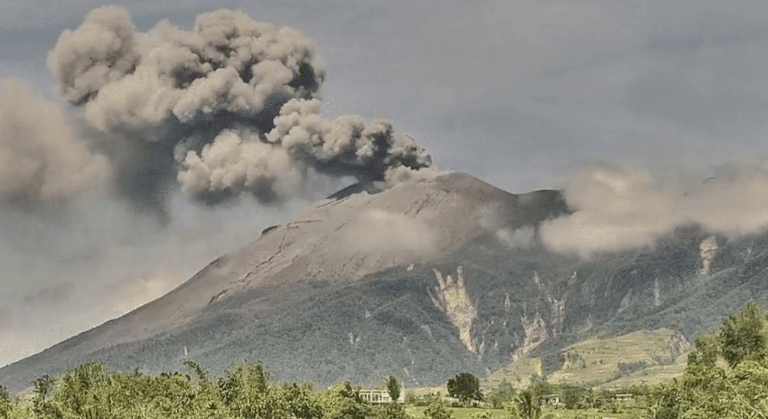
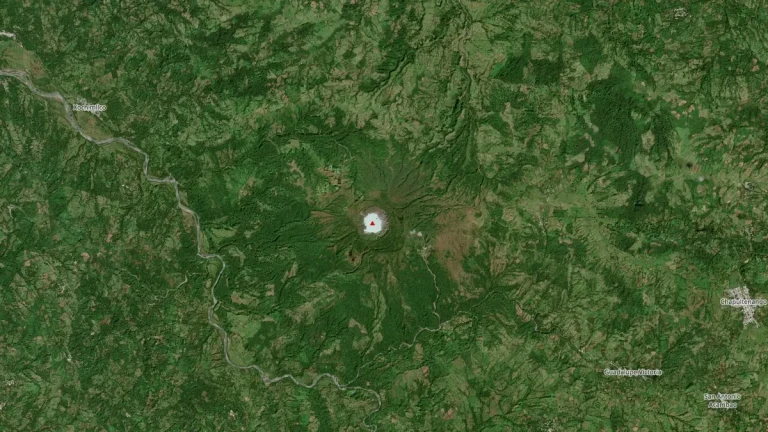
    Hydrothermal unrest at El Chichón volcano in northern Chiapas, Mexico, has persisted since mid-2025, characterized by elevated seismicity, chemical-physical changes in the crater lake, and increased gas emissions. National and academic monitoring institutions report no evidence of magma ascent, and current conditions do not indicate an imminent eruption. The volcano remains at Yellow Alert.

  • At least 12 dead, 2 000 homes destroyed as Tropical Cyclone Fytia hits Madagascar

    At least 12 people were killed and more than 77 000 affected after Tropical Cyclone Fytia struck northwestern Madagascar at 01:40 UTC on January 31, 2026. Winds of 185 km/h (115 mph) and intense rainfall caused severe damage across 35 districts, with Soalala and Mitsinjo among the hardest hit. Fytia is the 7th named storm of the 2025/26 South-West Indian Ocean cyclone season.

  • NWS data show heavy snow and significant ice from the January 2026 U.S. winter storm

    Official data from the National Weather Service Weather Prediction Center (WPC) confirms widespread snow, sleet, and freezing rain accumulations across large portions of the United States during the January 23–26, 2026, winter storm. Preliminary data show snowfall exceeded 50 cm (20 inches) in parts of New England and the interior Northeast, while ice accretions reached 25 mm (1 inch) across portions of the Carolinas and northern Georgia. The system’s departure early on January 26 ended four days of significant winter weather affecting more than a dozen states.

  • Moscow sends heavy equipment to deal with historic snow emergency in Kamchatka

    Moscow sent two military cargo planes to deliver heavy snow-clearing equipment to Kamchatka on January 22, 2026, after historic snowfall claimed two lives last week. More than 2 m (7 feet) of snow fell in the first half of January, followed by another 3.7 m (12.1 feet) in December, burying entire homes and paralyzing the region.

  • Nuclear-linked iodine-129 detected in the West Philippine Sea

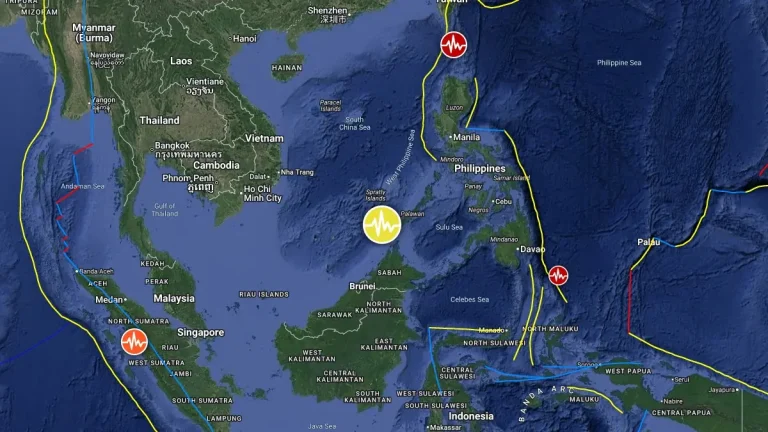
    Elevated concentrations of iodine-129 were detected in seawater samples collected recently from the West Philippine Sea during a nationwide marine radioisotope survey conducted by the University of the Philippines Marine Science Institute. The concentrations were higher than those measured in other Philippine marine areas, despite the Philippines having no active nuclear power plant or nuclear weapons program.

  • Piton de la Fournaise enters new effusive phase inside Enclos Fouqué caldera, La Réunion

    Piton de la Fournaise volcano on La Réunion entered a new eruptive phase at 19:42 LT (16:42 UTC) on January 18, 2026, after a strong seismic crisis and rapid ground deformation. The eruption is effusive, producing lava flows from fissures on the northern flank inside the Enclos Fouqué caldera. This is the first eruption at Piton de la Fournaise since August 2023.

  • Weak La Niña supports wet north-dry south pattern across the western U.S. through March 2026

    Experimental seasonal forecasts from the Center for Western Weather and Water Extremes (CW3E) suggest that a weak La Niña is reinforcing a wet–north, dry–south precipitation pattern across the western United States during January–March 2026. The outlook shows high-confidence signals for below-normal precipitation in Southern California, while model uncertainty remains higher across central and northern California.

  • Strong and shallow M6.0 earthquake hits off the coast of Oregon

    A strong and shallow earthquake registered by the USGS as M6.0 struck off the coast of Oregon, United States, at 03:25 UTC on January 16, 2026 (19:25 LT, January 15). The agency is reporting a depth of 10 km (6.2 miles). EMSC is reporting the same magnitude and depth.

  • La Niña breakdown underway as models point to ENSO-neutral conditions in early 2026

    La Niña conditions in the equatorial Pacific show signs of a transition toward ENSO-neutral conditions, with potential for El Niño development later in 2026. Observations from the National Oceanic and Atmospheric Administration (NOAA) and the European Centre for Medium-Range Weather Forecasts (ECMWF) show subsurface ocean warming and westerly wind anomalies across the central Pacific, indicating the breakdown of the three-year La Niña phase.