
Kīlauea episode 49 ends after 7.5 hours of lava fountaining, Hawaii
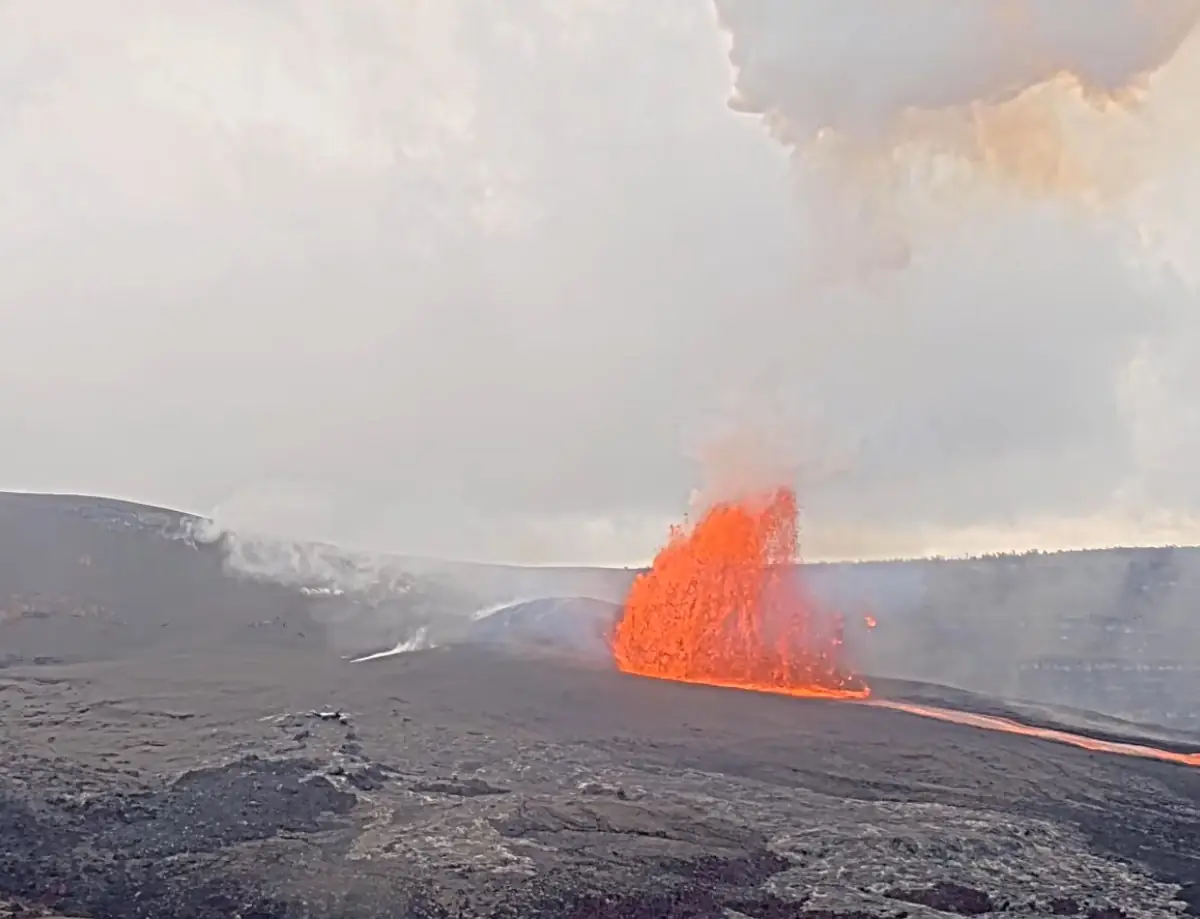
Kīlauea’s episode 49 eruption began at 09:36 HST (19:36 UTC) on June 14, 2026, at Halemaʻumaʻu crater and ended abruptly at 17:05 HST (03:05 UTC on June 15) after 7.5 hours of continuous lava fountaining.
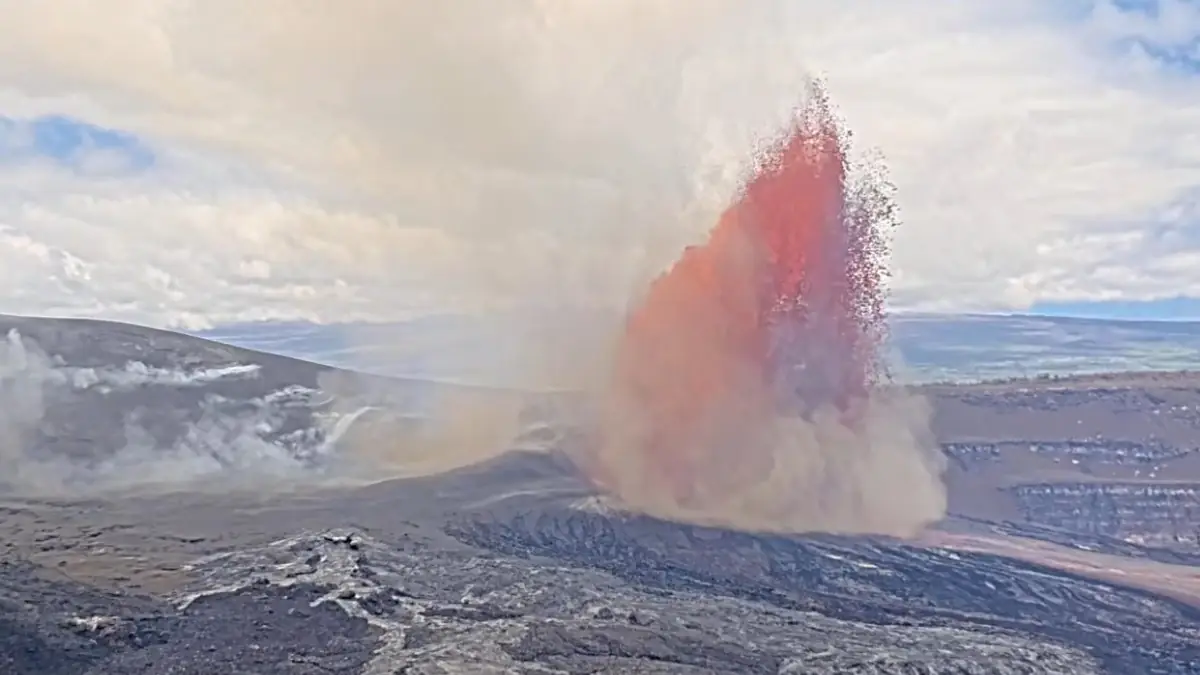
Kilauea volcano eruptive episode 49 on June 14, 2026. Credit: USGS/HVO
Kīlauea’s episode 49 eruption began at 09:36 HST (19:36 UTC) on June 14, inside Halemaʻumaʻu crater at the summit of the volcano, producing lava fountains up to 213 m (700 feet) above ground level.
Fountains during this episode exceeded the roughly 198 m (650 feet) reached during episode 48 on June 1, but remained well below the approximately 365 m (1 200 feet) reached during episode 23, the highest fountains in the current eruptive sequence.
The National Weather Service (NWS) reported the plume reaching 5 500 m (18 000 feet) above sea level, while ground-level sensors near the vents showed winds from the northeast, sending volcanic gas emissions and volcanic material toward the southwest.
Hawaiian Volcano Observatory (HVO) said tephra fall from volcanic ash clouds was greatest within 5 km (3 miles) of the vents, while lighter ash and Pele’s hair could remain suspended and travel farther from the eruption site.
 Kilauea volcano eruptive episode 49 on June 14, 2026. Credit: USGS/HVO
- Kilauea volcano eruptive episode 49 on June 14, 2026. Credit: USGS/HVO
- Kilauea volcano eruptive episode 49 on June 14, 2026. Credit: USGS/HVO
- Kilauea volcano eruptive episode 49 on June 14, 2026. Credit: USGS/HVO
- Kilauea volcano eruptive episode 49 on June 14, 2026. Credit: USGS/HVO
- Kilauea volcano eruptive episode 49 on June 14, 2026. Credit: USGS/HVO
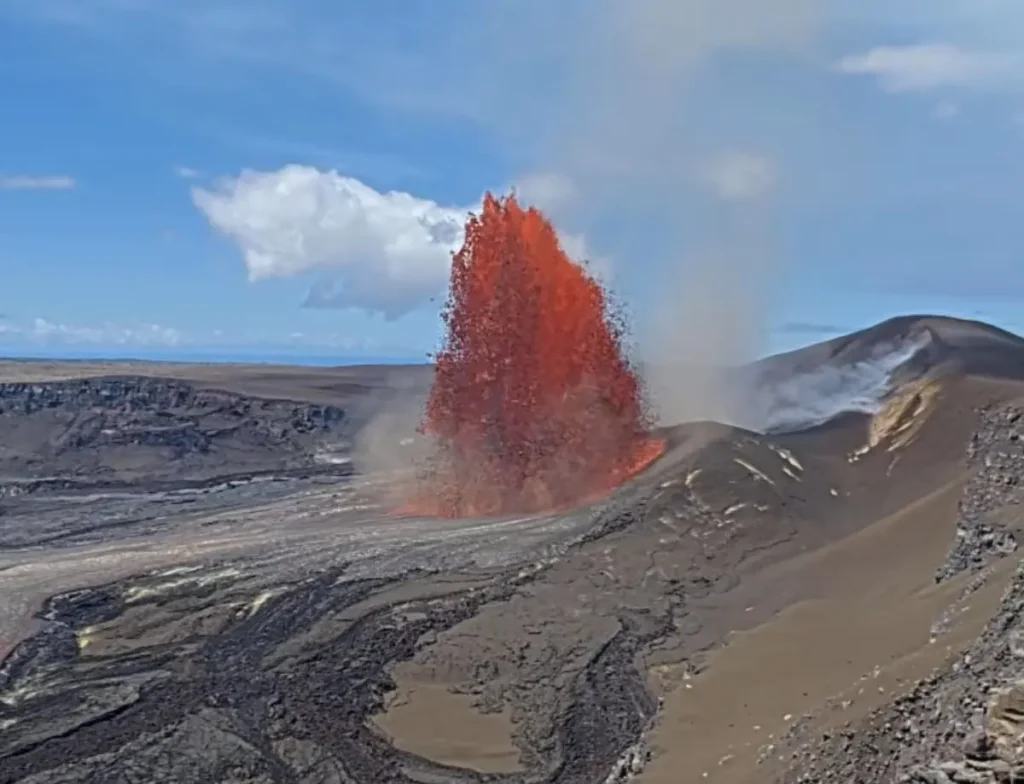
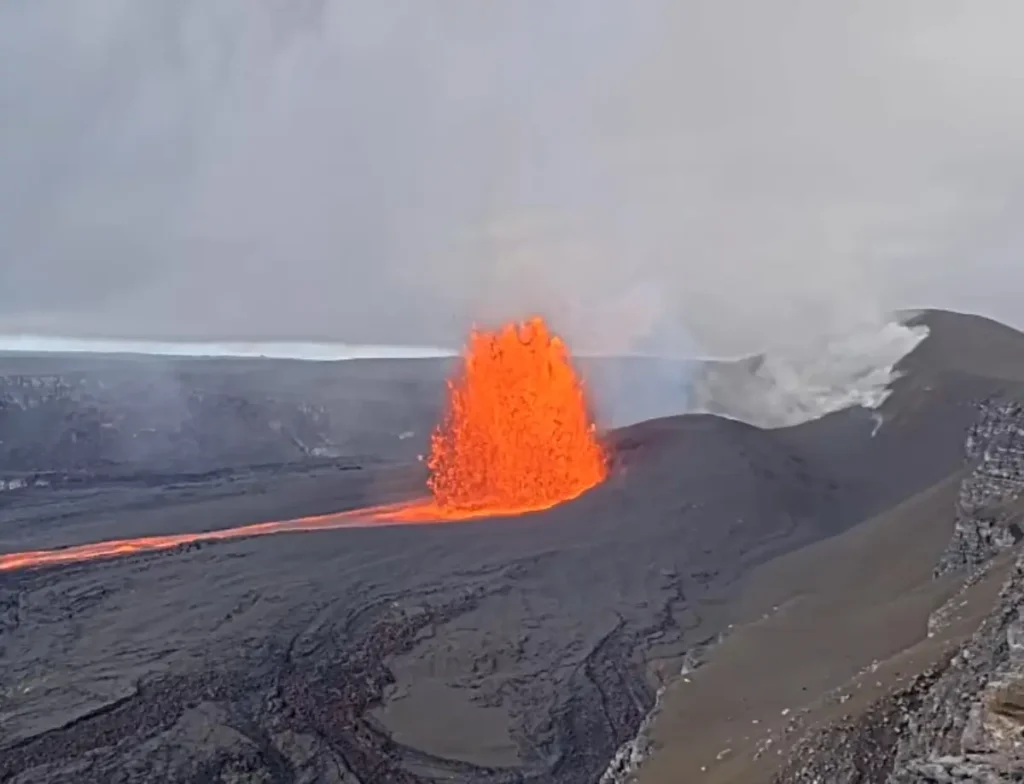
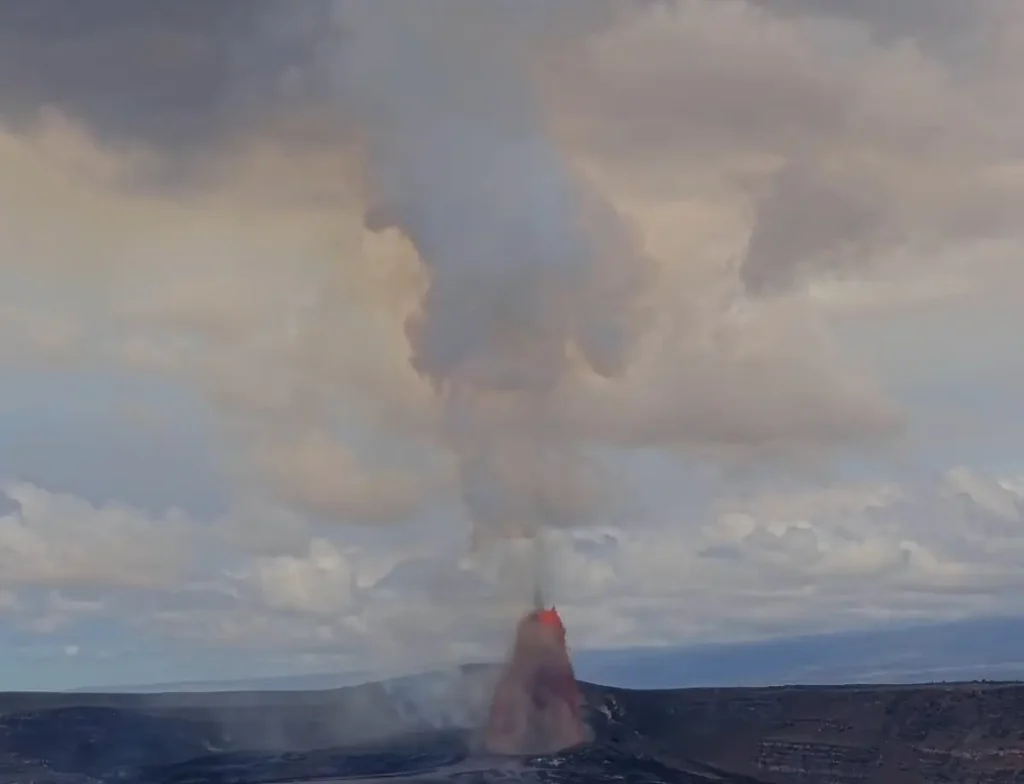
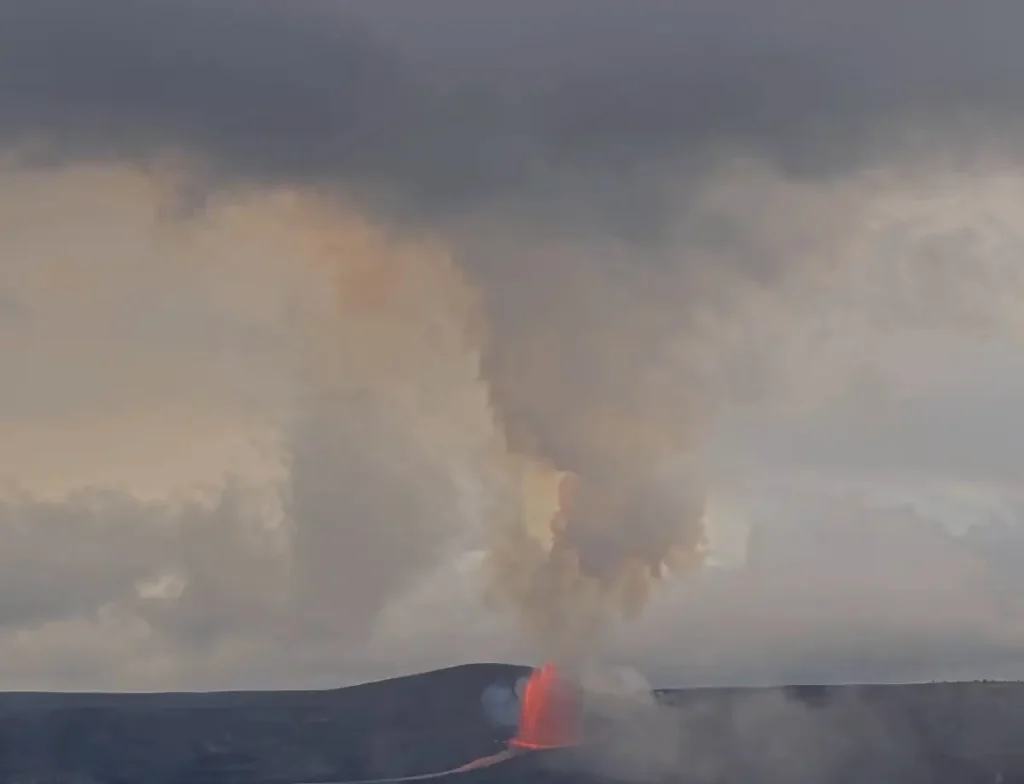
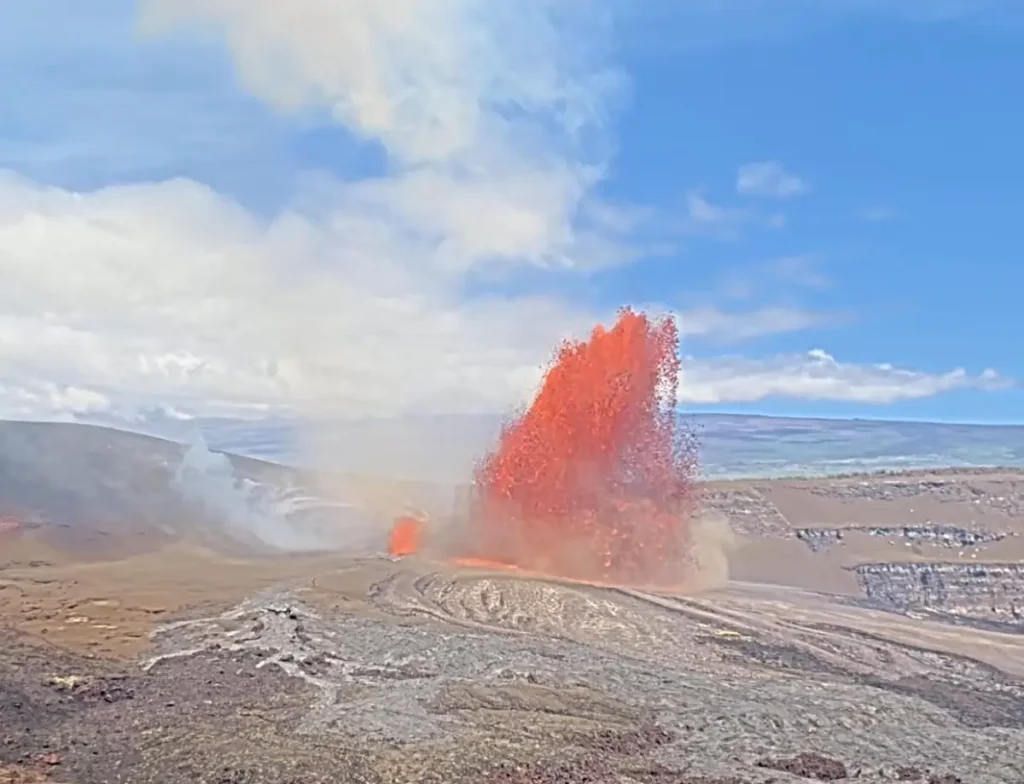
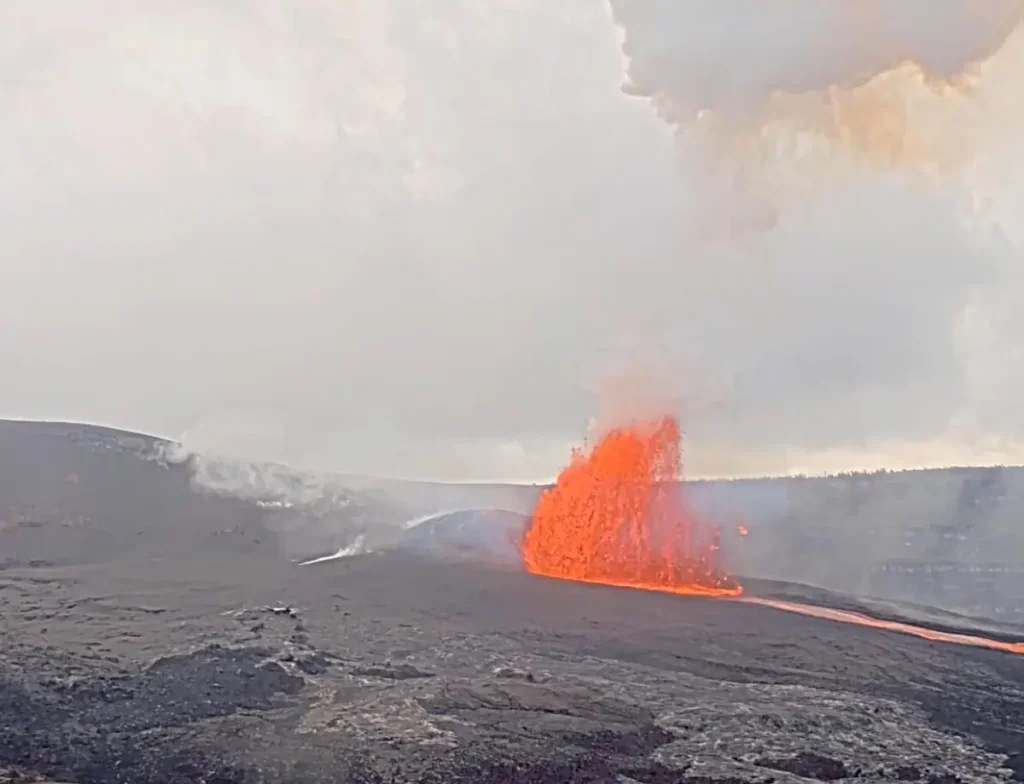
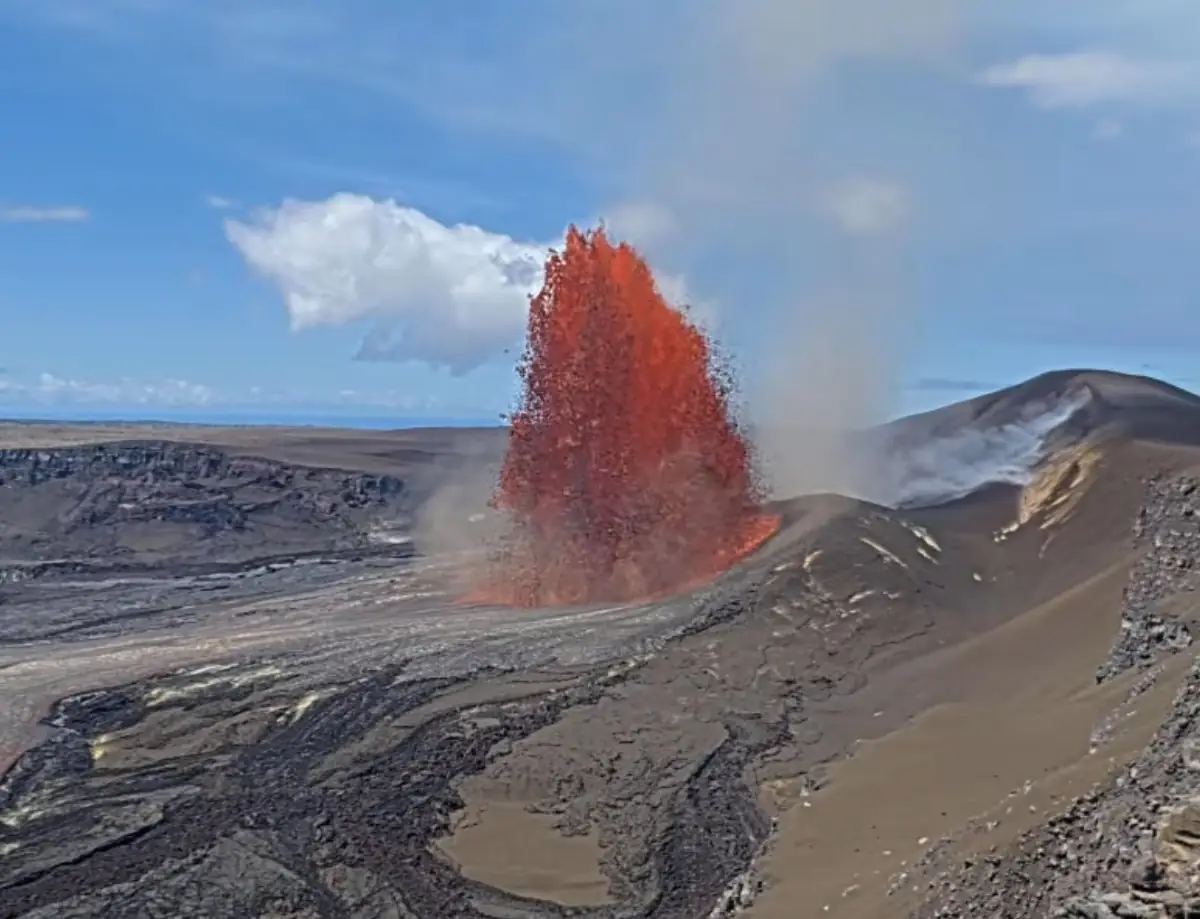
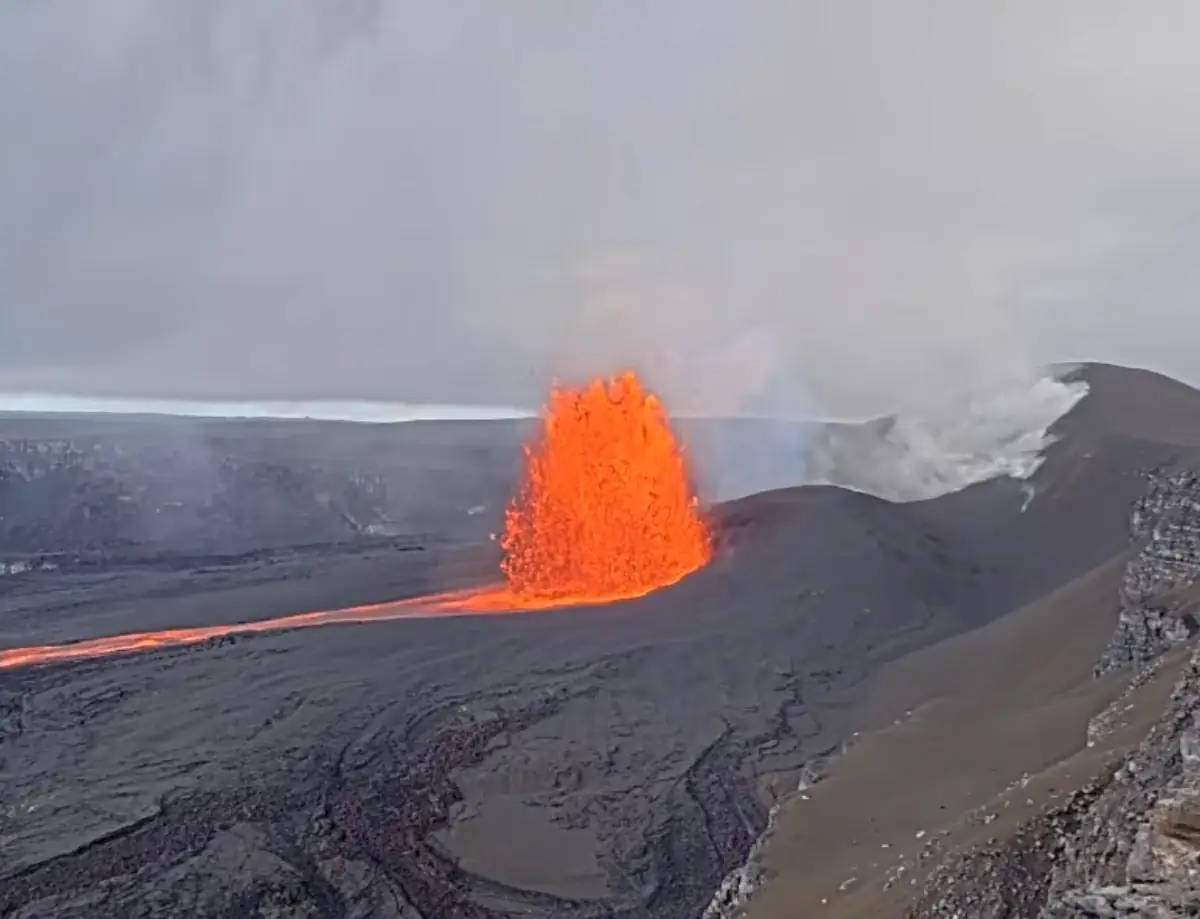
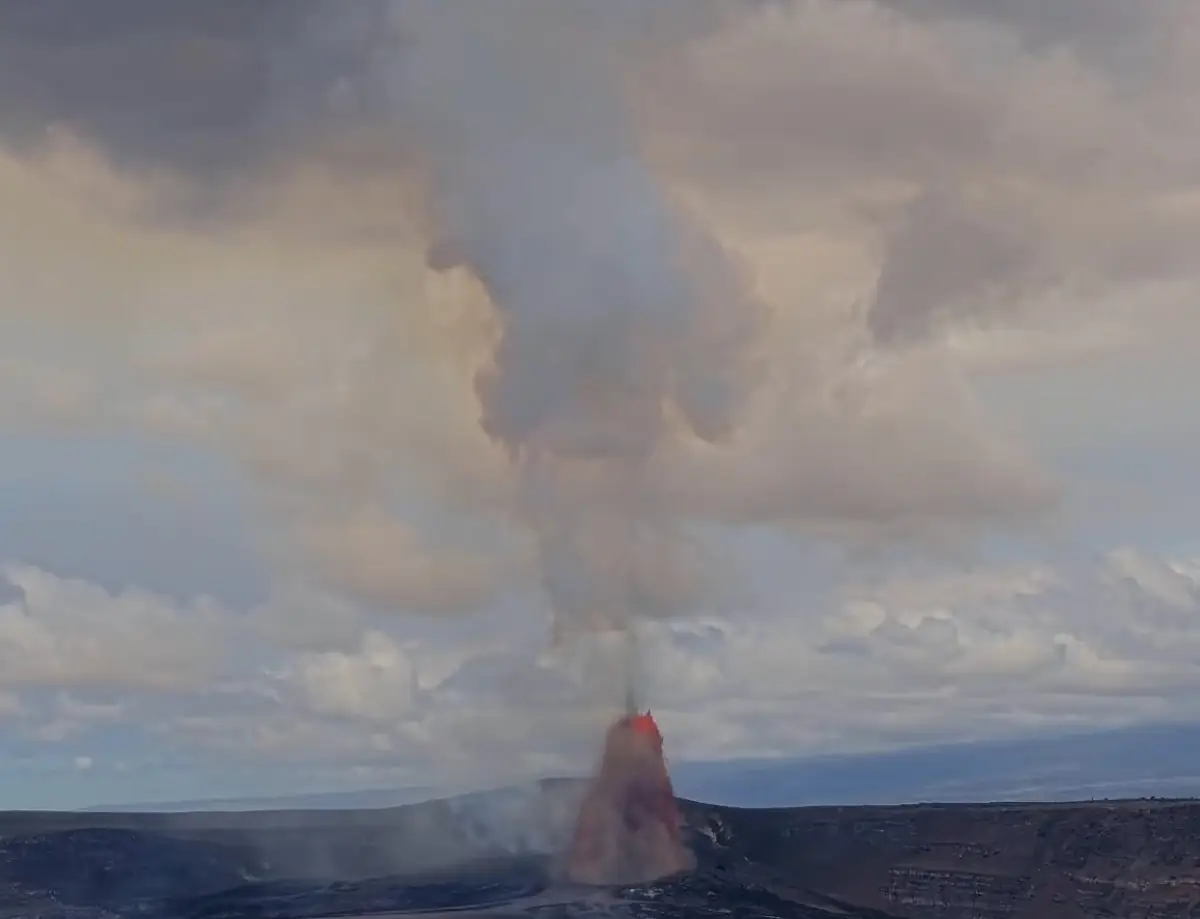
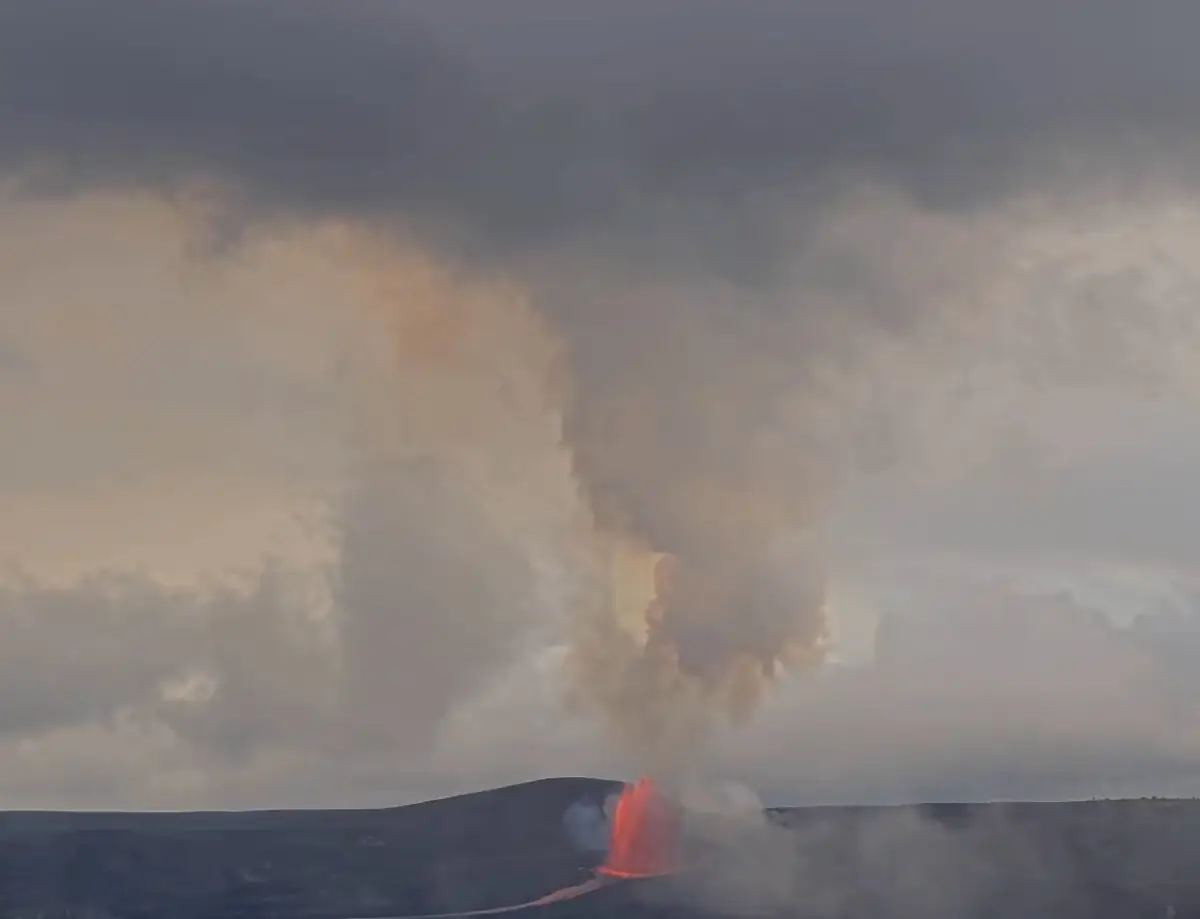
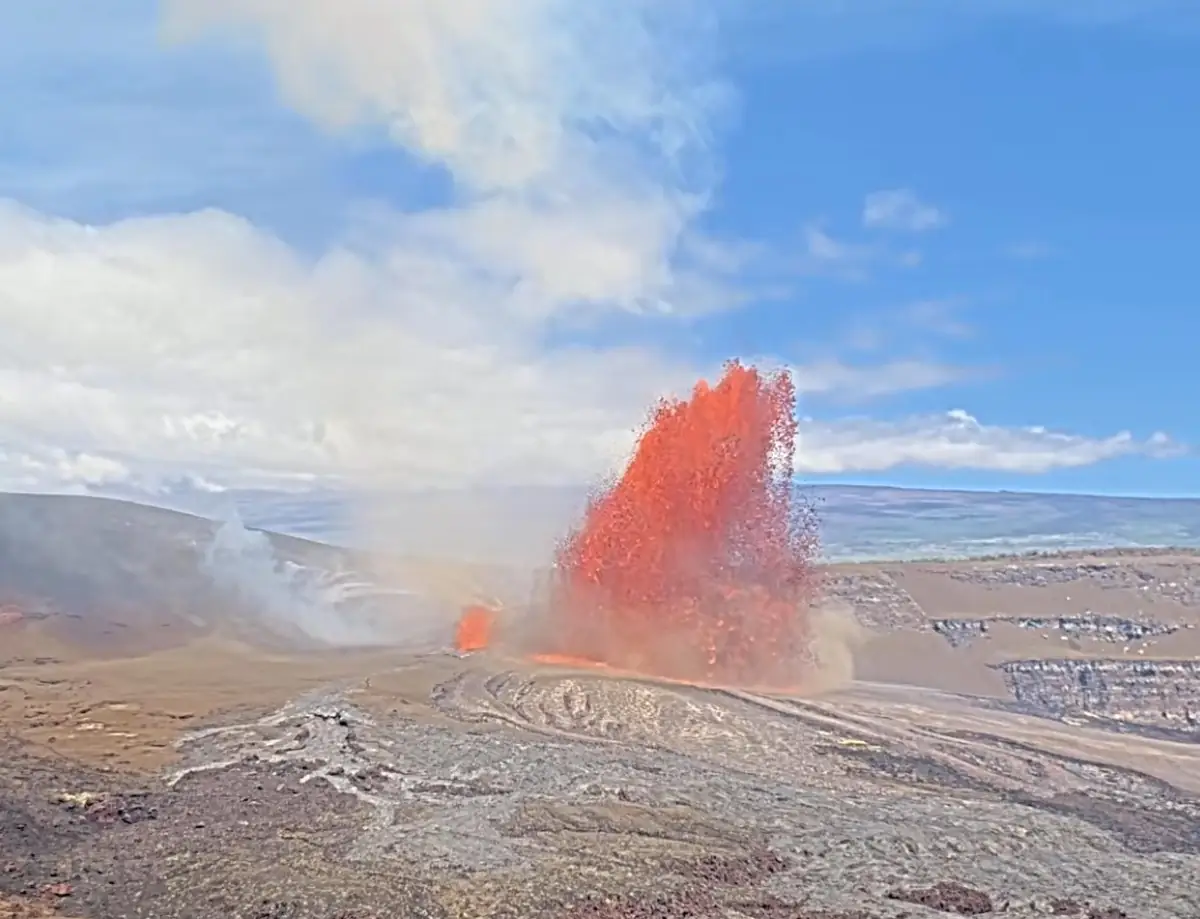
A notable event took place at 14:07 HST (00:07 UTC on June 15), when a whirlwind, known locally as puahiohio, struck HVO’s V3 livestream camera. “These whirlwinds are a variety of dust devils that form in the presence of heat, which causes upward air flow and strong windshear,” HVO volcanologists said.
During Episode 49, at about 2:07 p.m. on June 14, a whirlwind hit the V3 live streaming camera.
— USGS Volcanoes🌋 (@USGSVolcanoes) June 15, 2026
These whirlwinds are a variety of dust devil that form in the presence of heat, which causes upward air flow, and strong windshear.
The Hawaiian Volcano Observatory maintains three… pic.twitter.com/cKmSruILUv
While no damage to the V3 camera was reported during this event, a V3 summit camera was destroyed during episode 38 in December 2025 after tephra from an inclined lava fountain buried the instrument during one of the strongest eruptive episodes of the current sequence.
You can see the V3 camera getting destroyed in the video below:

Episode 49 ended abruptly at 17:05 HST (03:05 UTC on June 15) after 7.5 hours of continuous lava fountaining.
References:
1 Volcanic Activity Notice for Kilauea – HVO/USGS – June 14, 2026

Teo Blašković founded The Watchers in 2011 and edited it until 2026, covering seismic and volcanic activity, extreme weather, space weather and near-Earth objects. Articles on this page are his archive.
Published in the last 24 hours
- The Leonid meteor shower peaks on the night of November 17, exactly 60 years after the 1966 storm, when some observers reported meteors falling at up to 40 a second, though this year’s show should be closer to 15 an hour
- When Arctic air reached South Florida in January 2020, Miami fell to 40°F and the National Weather Service warned residents to watch for cold-stunned iguanas dropping out of the trees Epicenter
- In May 2024, the strongest solar storm in 20 years put northern lights over the southern US, and across the Plains, GPS-guided tractors built to plant within an inch drifted about 10 feet off their rows Epicenter
- In 1943, a flight instructor in Texas flew a two-seat training plane into the eye of a hurricane because he was curious, then landed and took the base weatherman up for a second pass Epicenter
