
X1.3 solar flare erupts from Region 4482 on SE limb
A major solar flare measuring X1.3 erupted from newly numbered Active Region 4482 on the southeast limb at 20:41 UTC on July 4, 2026. While a coronal mass ejection (CME) was produced, an Earth-directed component is unlikely.
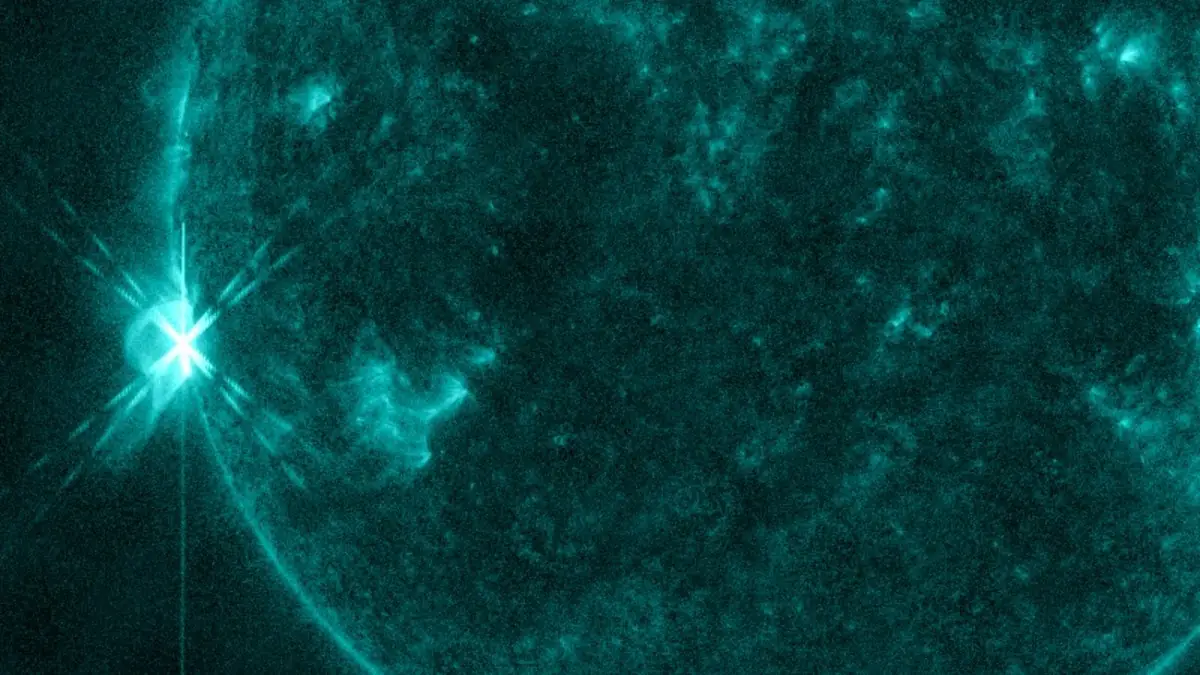
X1.3 solar flare on July 4, 2026. Credit: NASA SDO/AIA 131, The Watchers
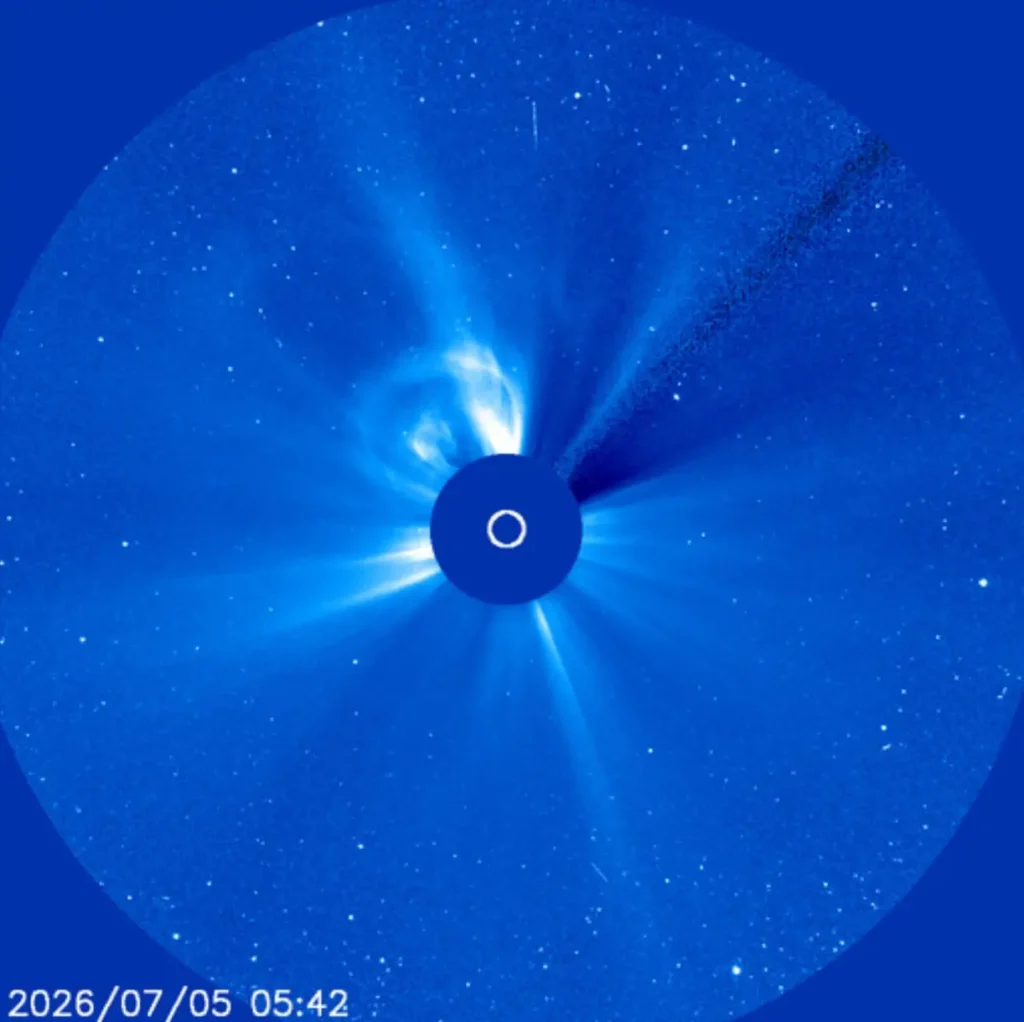
The eruption was accompanied by a Type II radio sweep with an estimated speed of 2 714 km/s and a 10 cm radio burst reaching 890 sfu. A CME associated with the flare became visible in GOES CCOR1 at roughly 22:30 UTC, which is during SOHO LASCO and STEREO data gaps.
Radio frequencies were forecast to be most degraded over North America and the Pacific Ocean at the time of the flare.
The location of this region does not favor Earth-directed CMEs, but this will change in the days ahead as it rotates toward the center of the solar disk.
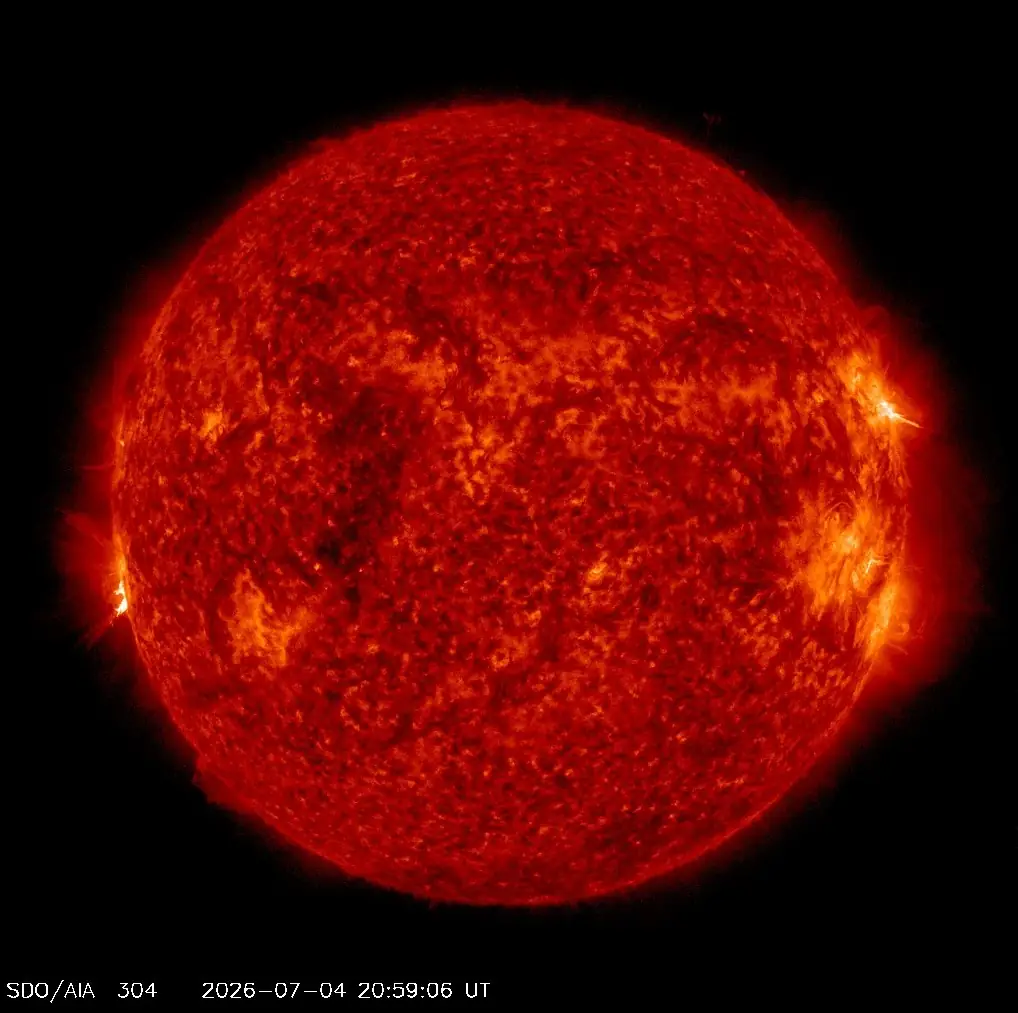
The primary contributor to flare activity on July 4 was Region 4479 (beta-delta-gamma), which produced 12 M-class and multiple C-class flares in 24 hours to 00:30 UTC today.
Solar activity is expected to remain at moderate levels with a slight chance for X-class flares through July 5, according to NOAA’s Space Weather Prediction Center (SWPC). Activity is likely to be at moderate levels as Regions 4479 and 4480 rotate around the west limb by July 6, decreasing to a slight chance on July 7 as chances for M-flares begin to decrease.
The greater than 2 MeV electron flux at geosynchronous orbit was at normal to moderate levels in 24 hours to 00:30 UTC today. The greater than 10 MeV proton flux was slightly elevated, reaching a peak just under 2 pfu early on July 4.
Looking ahead, the greater than 2 MeV electron flux is expected to increase to moderate to high levels through July 7, and there is a slight chance for a greater than 10 MeV proton event (S1 – Minor) due to the recent and potential flare activity of Regions 4478 and 4479 today and tomorrow.
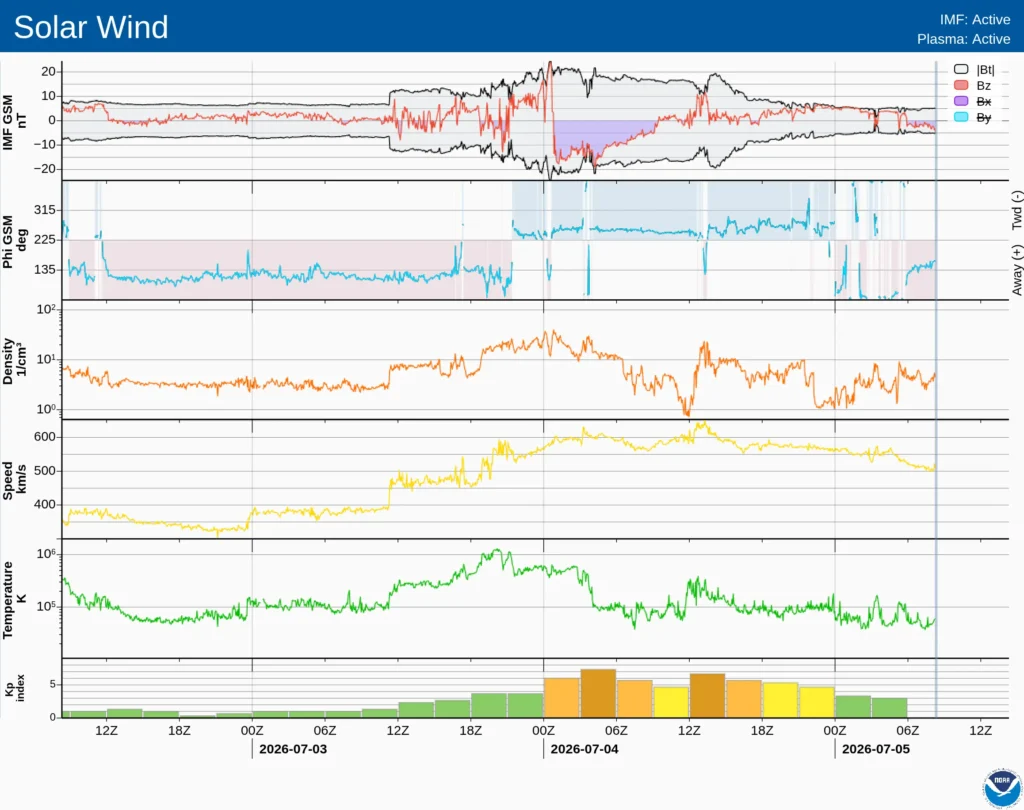
Solar wind parameters were enhanced on July 4 in response to the likely arrival of the June 30 CME shock. Total field strength (Bt) reached a maximum of 24 nT at 00:33 UTC on July 4, while the Bz component reached a maximum southward extent of -19 nT at 01:05 UTC. Wind speeds varied between 550 km/s to about 642 km/s during the period. Phi was in a mostly negative orientation.
Possible influence from +CH72, combined with additional CME activity from the July 1 and 2 events, is likely later on July 5, eventually tapering off throughout July 6. Mostly quiet conditions are expected for July 7.
G1 – Minor to G3 – Strong geomagnetic storm conditions were observed on July 4. Active to G1 – Minor levels are expected on July 5 and 6, with an isolated period of G2 – Moderate possible. Barring additional CME activity, July 6 is likely to see lessened activity as influences wane, becoming mostly quiet to unsettled on July 7.
References:
1 Forecast Discussion – NOAA/SWPC – Issued at 00:30 UTC on July 5, 2026

I'm a dedicated researcher, journalist, and editor at The Watchers. With over 20 years of experience in the media industry, I specialize in hard science news, focusing on extreme weather, seismic and volcanic activity, space weather, and astronomy, including near-Earth objects and planetary defense strategies. You can reach me at teo /at/ watchers.news.

Commenting rules and guidelines
We value the thoughts and opinions of our readers and welcome healthy discussions on our website. In order to maintain a respectful and positive community, we ask that all commenters follow these rules.