
France expands evacuation orders as Gironde wildfire spreads across Cap-Ferret peninsula
French authorities expanded evacuation orders across the Cap-Ferret peninsula on July 24, 2026, after a rapidly spreading wildfire in Gironde breached a containment line overnight, prompting the activation of the national FR-Alert emergency warning system. More than 20 000 residents and tourists were initially evacuated before authorities ordered the evacuation of the entire peninsula as firefighters, supported by European assistance, continued efforts to contain the blaze.
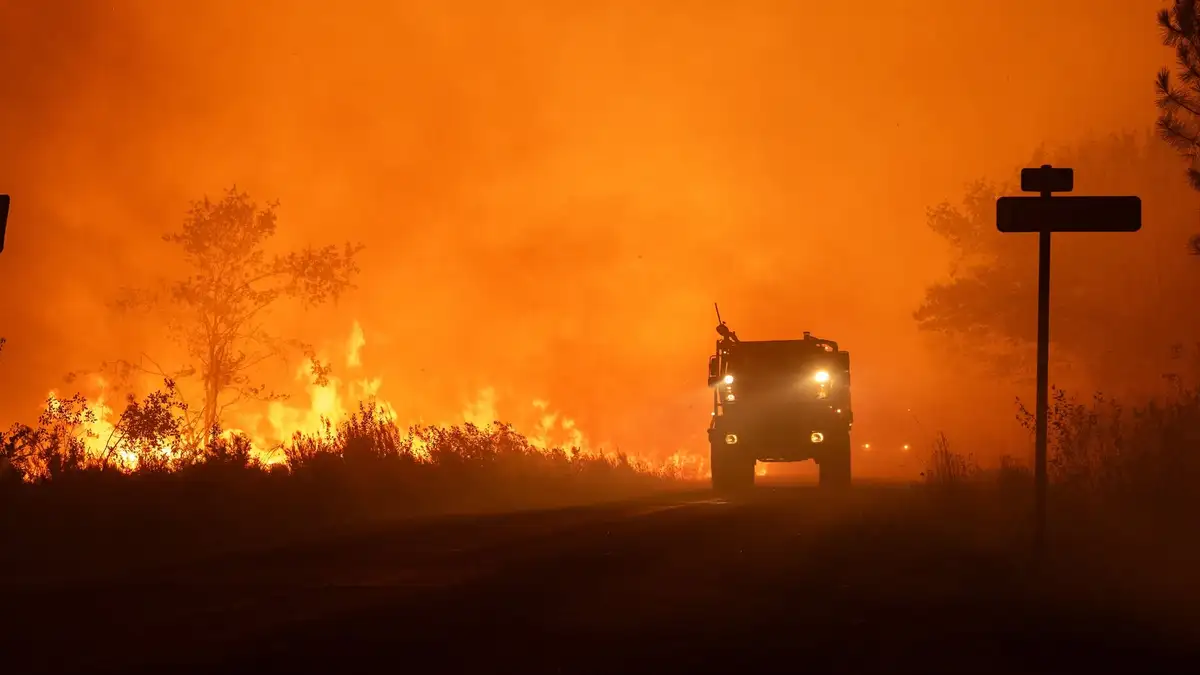
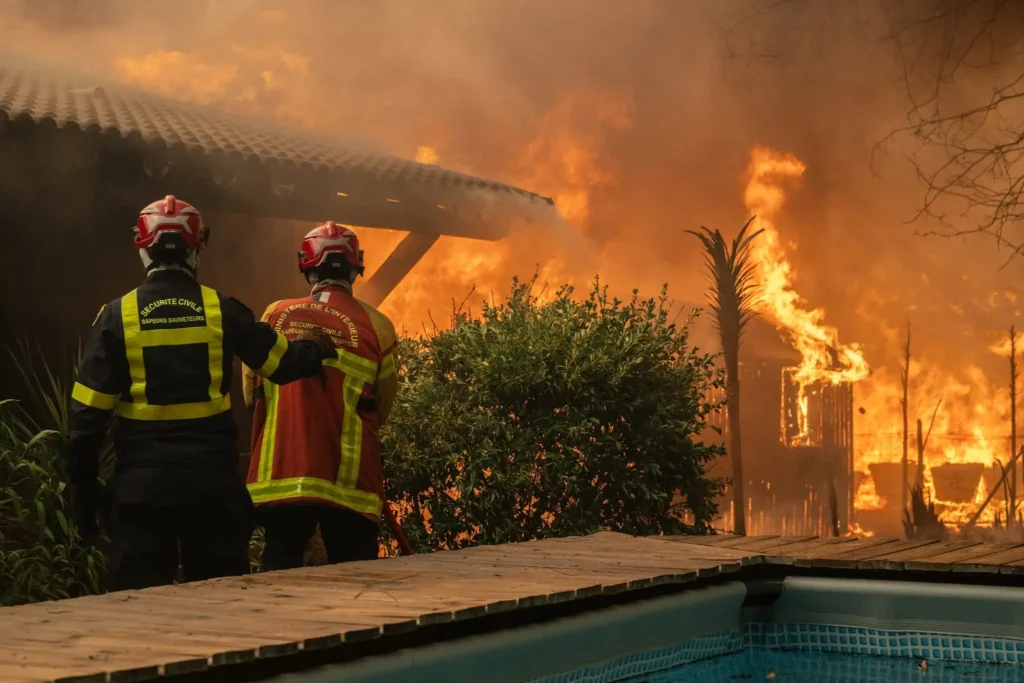
Firefighters battle a rapidly spreading wildfire near Lège-Cap-Ferret, Gironde, France, on July 24, 2026. Credit: SDIS 33/Damien Rembert
French authorities expanded evacuation orders across the Cap-Ferret peninsula in southwest France on July 24, as a rapidly spreading wildfire continued to advance through Gironde under extreme fire weather conditions. The emergency prompted the activation of the national FR-Alert warning system after the fire crossed a containment line established by firefighters at around 01:00 local time (LT).
According to Gironde Prefect Sophie Brocas, the fire’s rapid progression in the Nord Bassin sector required the immediate evacuation of the villages of Claouey, Le Four, Les Jacquets, Petit Piquey and Grand Piquey. Residents and tourists were instructed to leave exclusively via the D106 road toward Bordeaux, follow routes designated by authorities, avoid returning until officially authorised, and keep roads clear for emergency vehicles.
The evacuation order followed earlier precautionary evacuations in affected parts of Gironde, where more than 20 000 residents and holidaymakers had already been moved to safety. As conditions deteriorated, authorities subsequently ordered the evacuation of the entire Cap-Ferret peninsula while emergency services continued operations to protect communities threatened by the advancing wildfire.
 Firefighters battle a rapidly spreading wildfire near Lège-Cap-Ferret, Gironde, France, on July 24, 2026. Credit: SDIS 33/Damien Rembert
- Firefighters battle a rapidly spreading wildfire near Lège-Cap-Ferret, Gironde, France, on July 24, 2026. Credit: SDIS 33/Damien Rembert
- Firefighters battle a rapidly spreading wildfire near Lège-Cap-Ferret, Gironde, France, on July 24, 2026. Credit: SDIS 33/Damien Rembert
- Firefighters battle a rapidly spreading wildfire near Lège-Cap-Ferret, Gironde, France, on July 24, 2026. Credit: SDIS 33/Damien Rembert
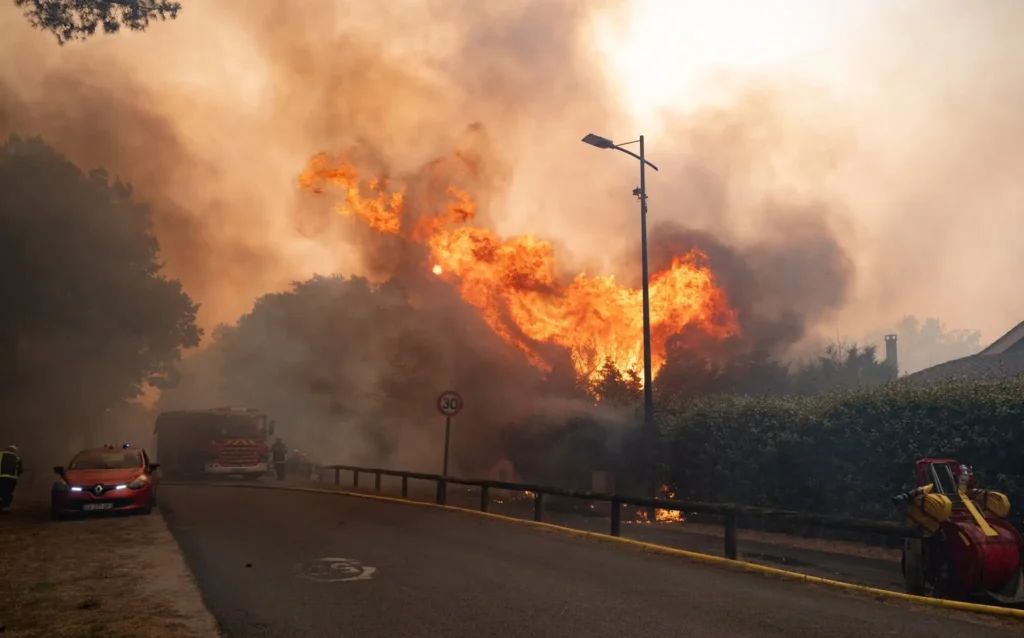
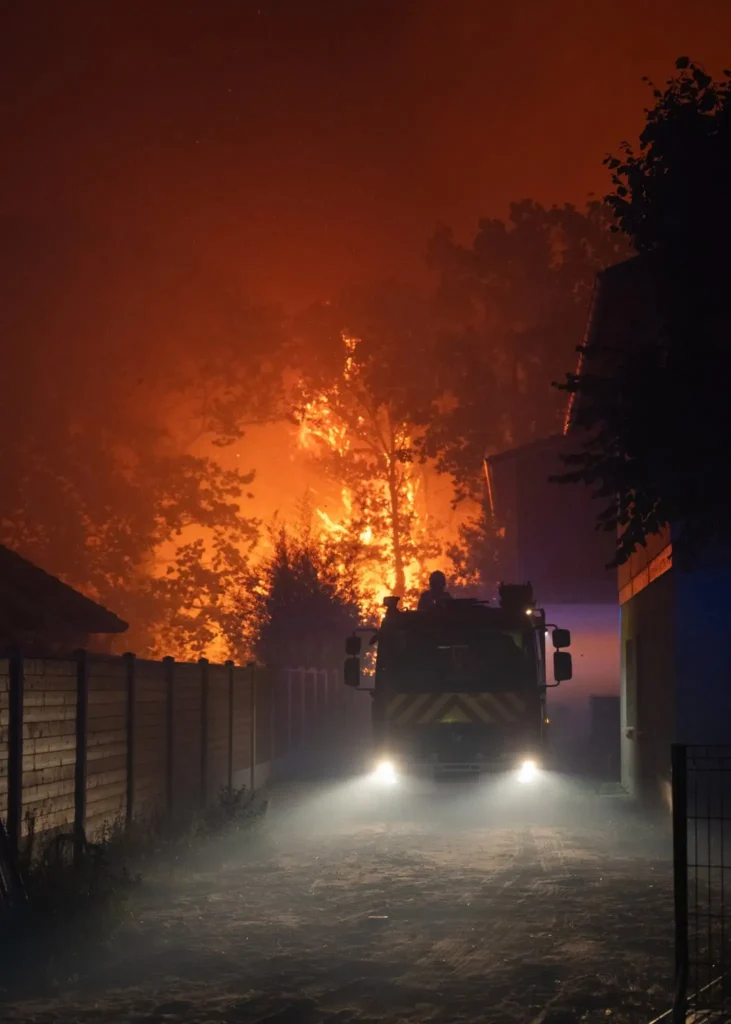
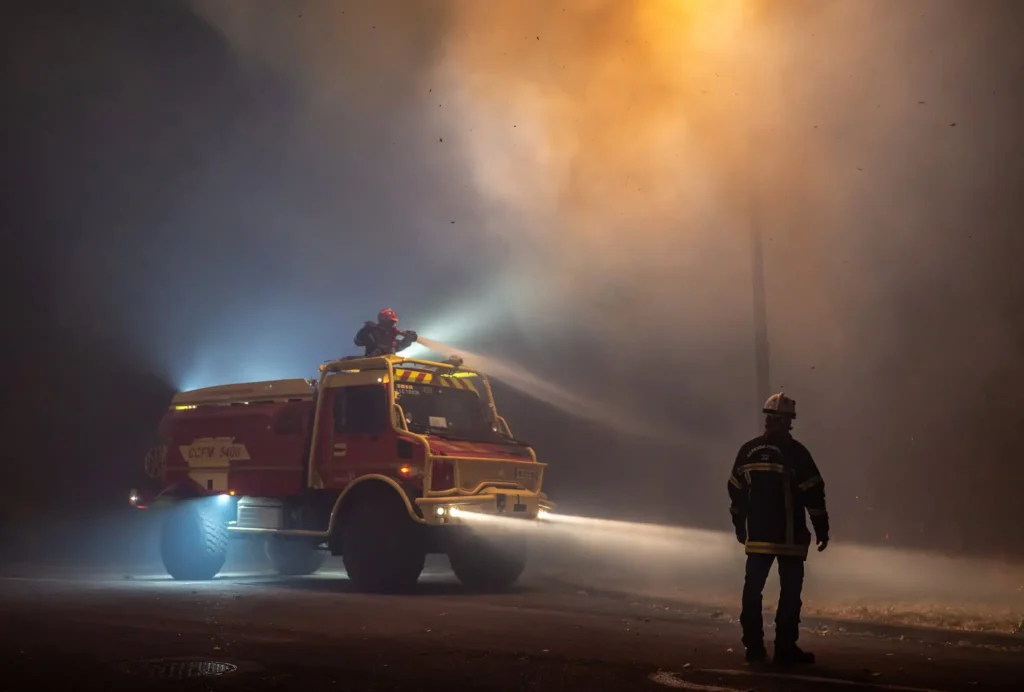
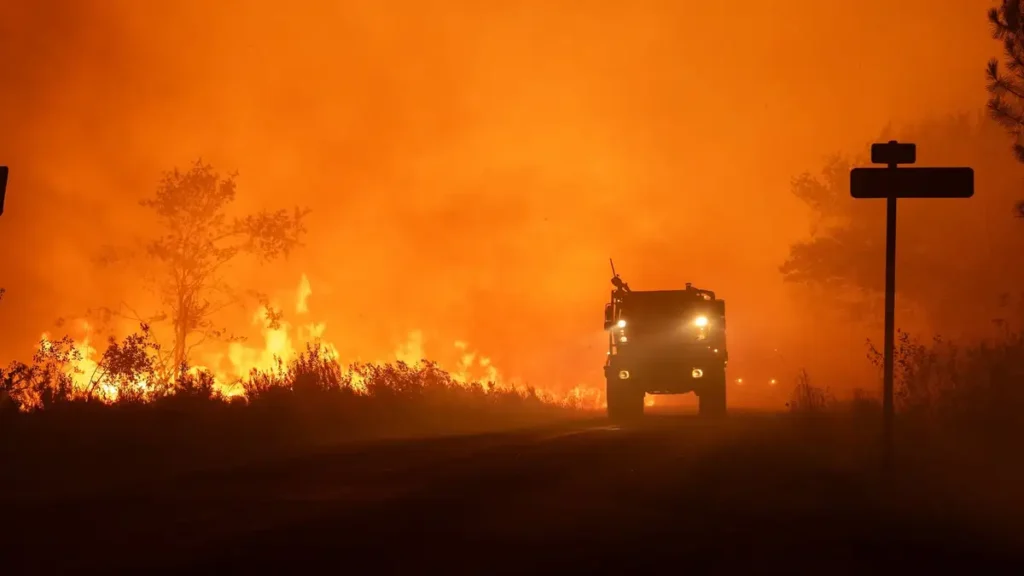
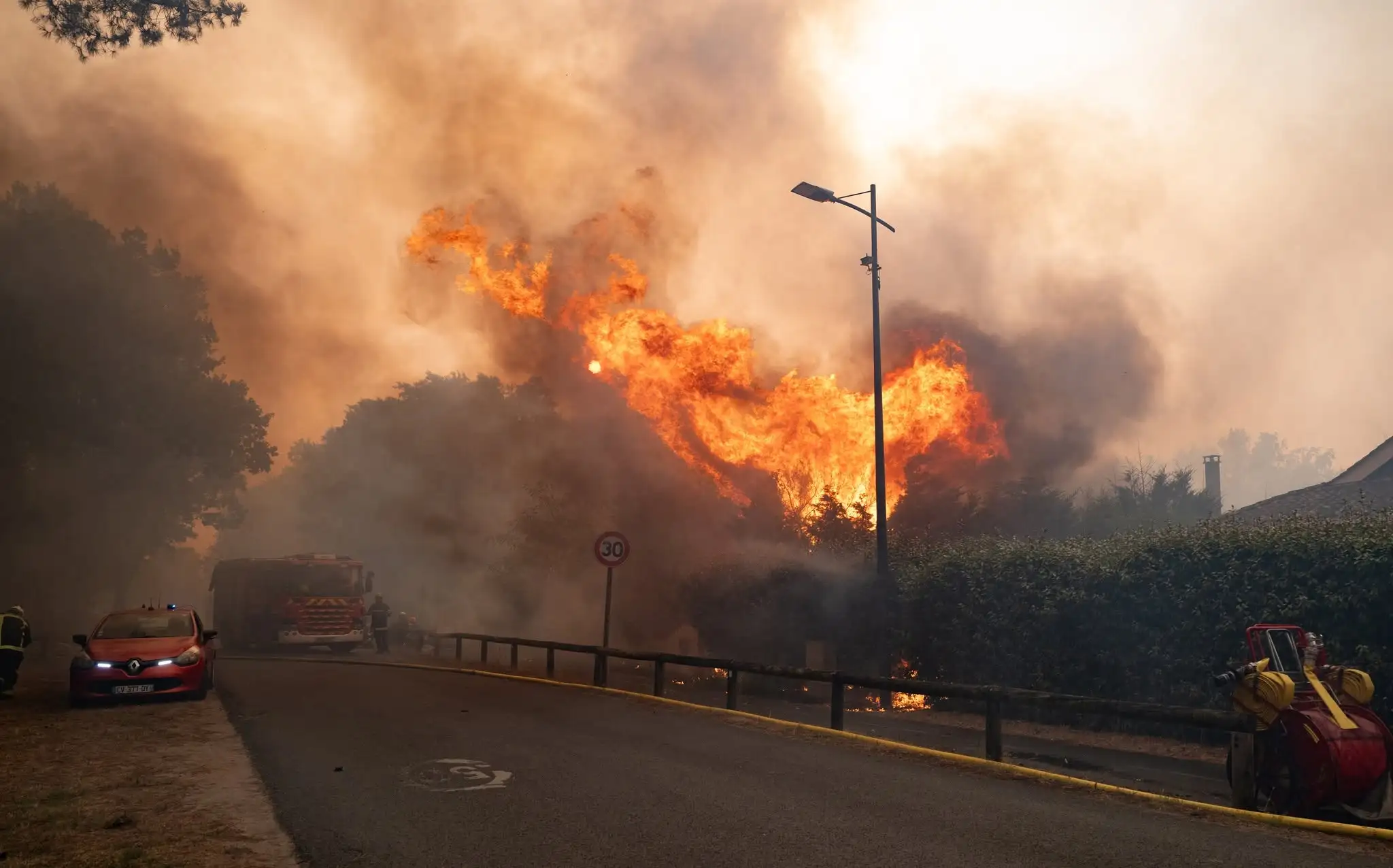
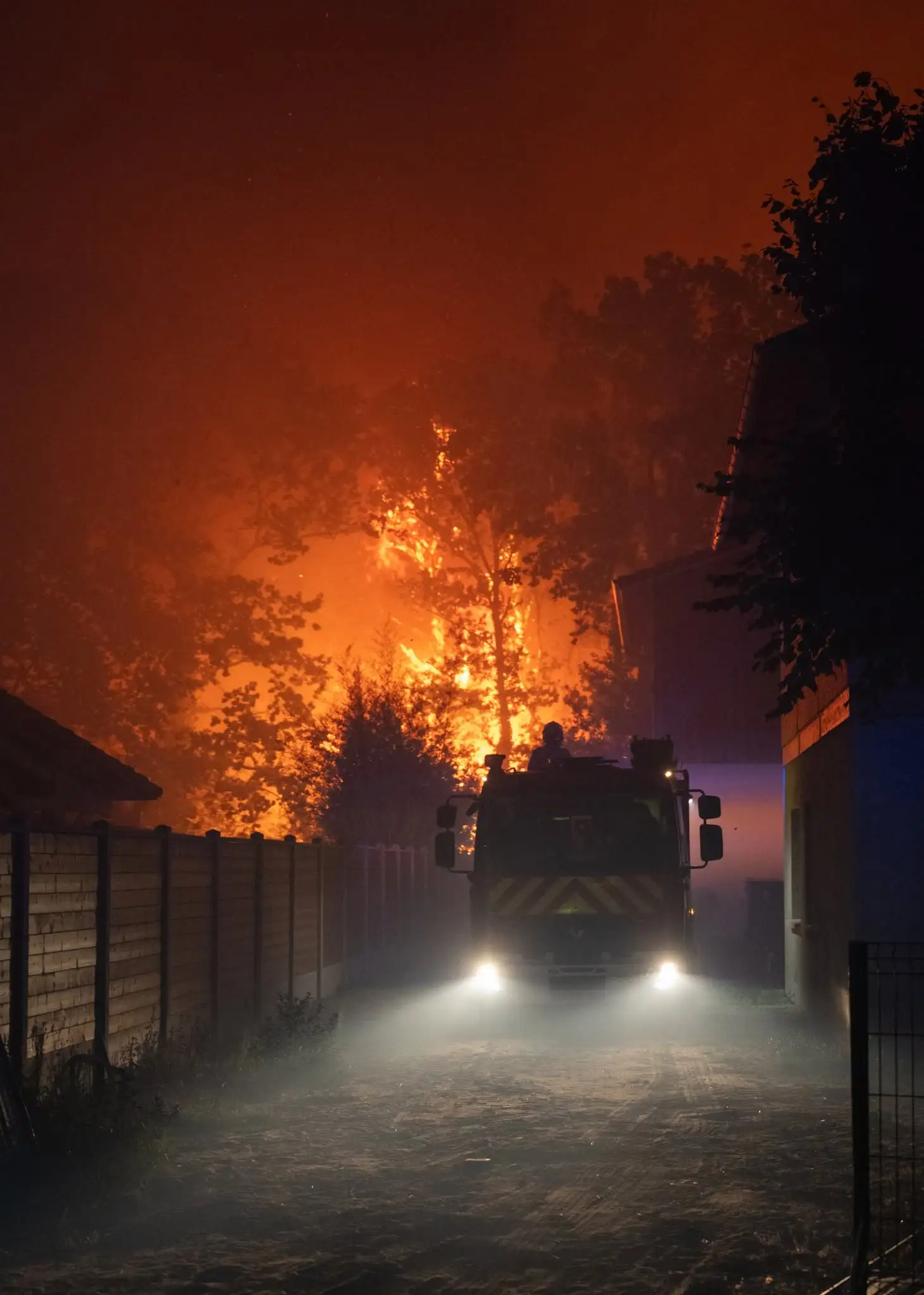
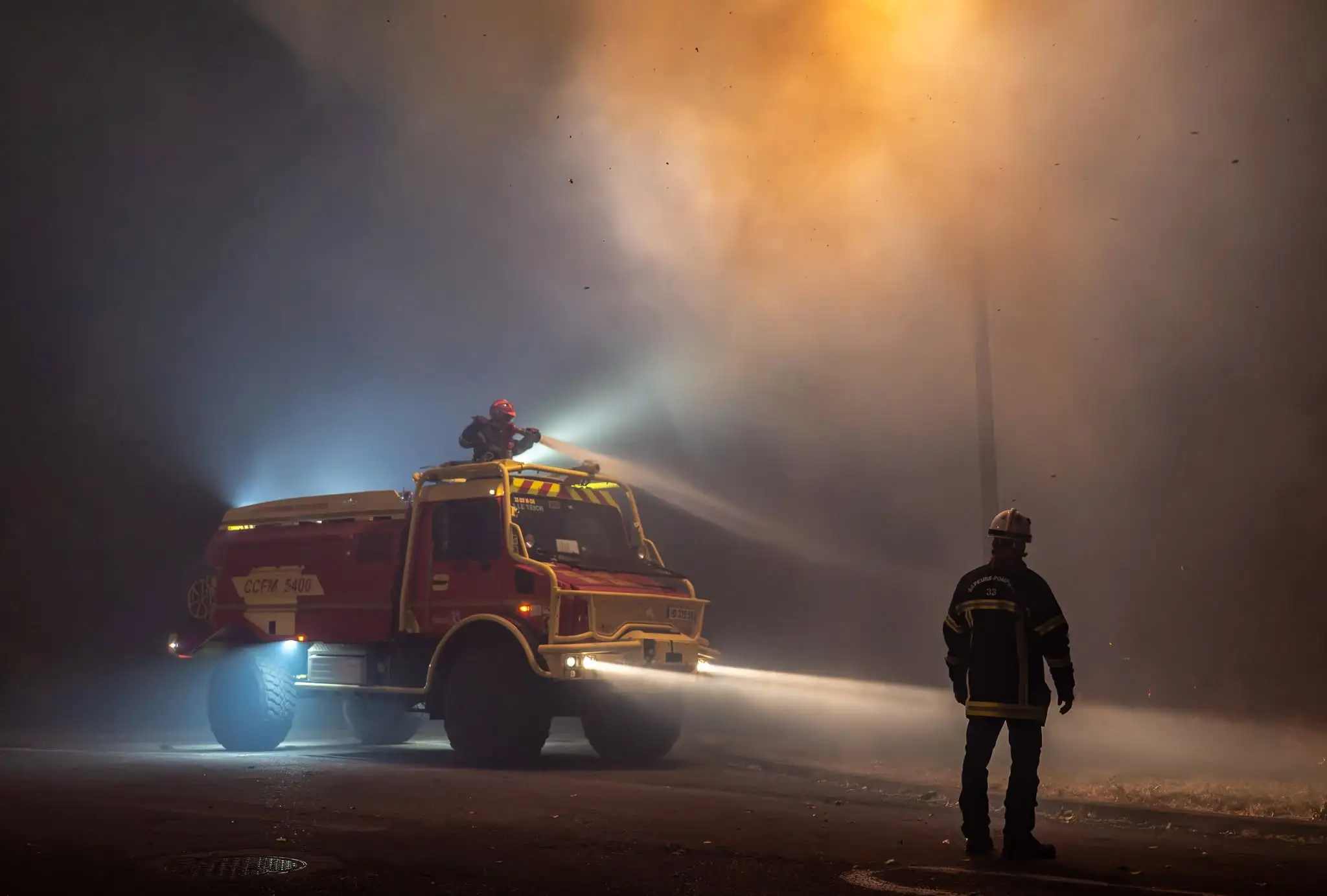
The wildfire began near Saumos on July 22 before spreading through pine forests toward Le Porge and Lège-Cap-Ferret. French authorities deployed approximately 1 000 firefighters supported by water-bombing aircraft, helicopters, gendarmes and military personnel. France also activated the European Union Civil Protection Mechanism to obtain additional aerial firefighting assistance from partner countries.
By July 24, the wildfire had burned more than 10 000 ha (24 710 acres), according to French authorities, making it one of the country’s largest active wildfires. Firefighting operations continued as crews worked to protect populated areas and prevent further spread under challenging weather conditions.
Gironde remains under red forest fire alert. In a statement accompanying the FR-Alert activation, Prefect Brocas urged residents and visitors to comply strictly with official instructions, saying adherence to evacuation orders was essential to ensure public safety and allow emergency services to operate under the safest possible conditions.
The wildfire developed following an exceptionally hot and dry start to the summer.
According to Météo-France, June 2026 was the hottest June ever recorded in France, with a national average temperature of 22.7°C (72.9°F), or 3.8°C (6.8°F) above the 1991-2020 normal. The agency said France experienced an exceptionally intense heatwave from June 17 to 30, with average national temperatures on June 24–25 reaching 30°C (86°F), the highest daily national averages ever recorded in the country.
Météo-France also reported that 72 departments were simultaneously placed under red heatwave alert during the event, the highest number since the alert system was introduced in 2004. The country recorded a rainfall deficit of nearly 50% during June, while widespread drought left vegetation exceptionally dry, significantly increasing the risk of vegetation and forest fires across mainland France and Corsica.
References:
1 Incendie de forêt : déclenchement de FR-Alert – Préfecture de la Gironde – July 24, 2026
2 France requests help from EU as Gironde wildfire forces mass evacuations – Reuters – July 24, 2026

I’m a science journalist and researcher at The Watchers, contributing to the Epicenter edition, where I cover peer-reviewed scientific research and emerging discoveries across Earth and space sciences. With a background in astronomy and a passion for environmental science, I’ve worked in shark and coral conservation in Fiji, conducting reef and shark-behavior research, contributing to mangrove restoration, and earning PADI Open Water and Coral Reef Certifications. I bring a blend of scientific rigor and storytelling to illuminate the discoveries shaping our planet and beyond.

Commenting rules and guidelines
We value the thoughts and opinions of our readers and welcome healthy discussions on our website. In order to maintain a respectful and positive community, we ask that all commenters follow these rules.