• Polar vortex disrupted as major sudden stratospheric warming develops over the Arctic

    Multiple atmospheric diagnostics show that a major sudden stratospheric warming is underway over the Arctic, with strong planetary wave activity, rapid polar warming, and reversal of the stratospheric jet indicating a significant disruption of the polar vortex circulation. This type of stratospheric disruption can influence atmospheric circulation patterns in the coming weeks, sometimes increasing the likelihood of cold air outbreaks across parts of North America, Europe, and Asia.

  • Two subtropical systems active simultaneously in South Atlantic, first such overlap documented in modern monitoring era

    Subtropical Storm Caiobá formed off southern Brazil on March 2, 2026, after two subtropical depressions developed simultaneously in the South Atlantic. According to Metsul Meteorologia and available South Atlantic cyclone records, no previous instance of simultaneous subtropical depressions has been documented since formal monitoring and classification began. Caiobá moved away from the coast of Brazil without any major impacts.

  • Desert rainfall anomaly triggers major flooding across central Australia

    A near-stationary tropical low has triggered one of the most significant inland rainfall events in recent decades, inundating vast areas of central Australia and prompting disaster declarations across the Northern Territory. More than 600 mm (24 inches) of rain has been recorded at some remote stations, with additional heavy rainfall forecast to expand south into South Australia and Victoria through early next week, increasing the risk of further flooding. Meteorologists described it as a remarkable and highly unusual meteorological event.

  • Kanlaon eruption sends ballistics 1.5 km high, triggers PDCs, forest fires and ashfall across 121 barangays

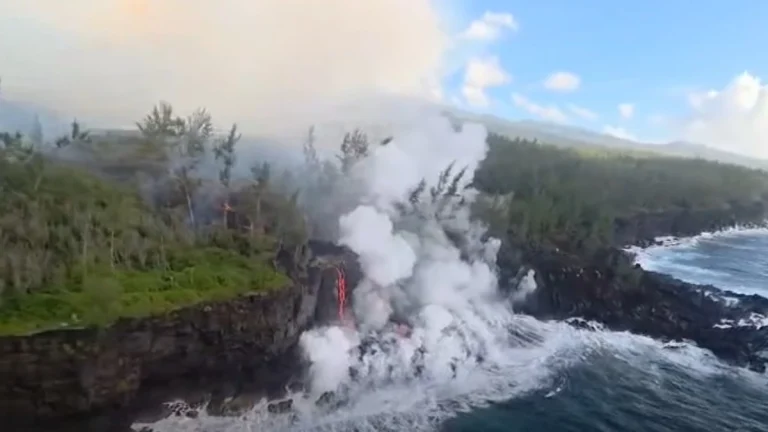
    A significant explosive eruption occurred at Kanlaon Volcano, Philippines, at 19:04 local time (LT) on February 26, 2026, sending a dense ash plume 2.5 km (1.6 miles) above the crater and producing pyroclastic density currents (PDCs) that descended its upper slopes. The eruption lasted two minutes and was followed by 77 minutes of continuous ash emission dispersed over southern Negros Island.

  • Extreme drought fuels rapid wildfire growth in South Florida’s Big Cypress Preserve

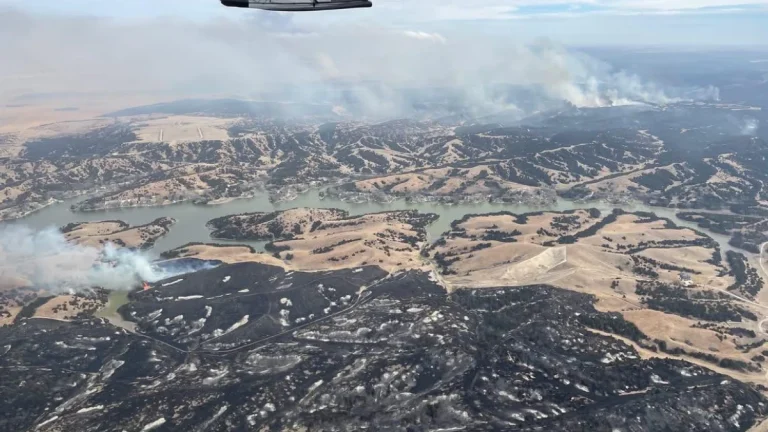
    A fast-moving wildfire known as the National Fire burned approximately 10 117 ha (25 000 acres) in Big Cypress National Preserve, Collier County, Florida, between February 22 and 25, 2026, expanding from about 405 ha (1 000 acres) and remaining at 0% containment. The fire spread under extreme drought conditions, affecting nearly all of Florida. Smoke reduced visibility along Interstate 75 (Alligator Alley), State Road 29, and U.S. 41, prompting transportation advisories and area closures.

  • Rare deep M7.1 earthquake hits beneath the Sulu Sea near Sabah, Malaysia

    A powerful and deep earthquake registered by the USGS as M7.1 struck off the coast of Kota Belud, Malaysia, at 16:57 UTC on February 22, 2026. The agency reported a depth of 620 km (385 miles). EMSC is reporting the same magnitude and depth. Due to the great depth, no tsunami was generated, and damage is unlikely. This is the largest earthquake recorded near Malaysia since the M6.6 quake in Lahad Datu in 1923.

  • WorkSafe launches investigation into fatal Mauao landslide as 42 landslides remain under assessment, New Zealand

    WorkSafe New Zealand confirmed on February 20, 2026, that it has launched a formal investigation into the January 22 landslide on Mauao (Mount Maunganui) in Tauranga, Bay of Plenty, that killed six people at the Mount Maunganui Beachside Holiday Park. The investigation will examine work-related health and safety matters under the Health and Safety at Work Act 2015, following the completion of Police recovery operations on February 1.

  • France records highest soil moisture since 1959 amid nationwide flood alerts

    France’s national flood monitoring service reports that soil moisture in the country has reached its highest level since records began in 1959. The prolonged rainfall of the past two months, intensified by Storm Nils, left soils fully saturated and reduced infiltration capacity, sustaining elevated flood risk nationwide. Evacuations, infrastructure closures, and power outages were reported in several regions.

  • Potomac Interceptor collapse among largest municipal wastewater spills in U.S. history

    A section of the Potomac Interceptor sewer line failed on January 19, 2026, in Montgomery County, Maryland, releasing more than 920 million liters (243 million gallons) of untreated wastewater into the Potomac River. By volume, the incident ranks among the largest documented municipal wastewater spills in U.S. history. Elevated bacterial concentrations prompted recreational advisories and shellfish closures while emergency bypass operations continued into mid-February.