
Florida reports USD 3.17 billion in agricultural losses after early 2026 freeze
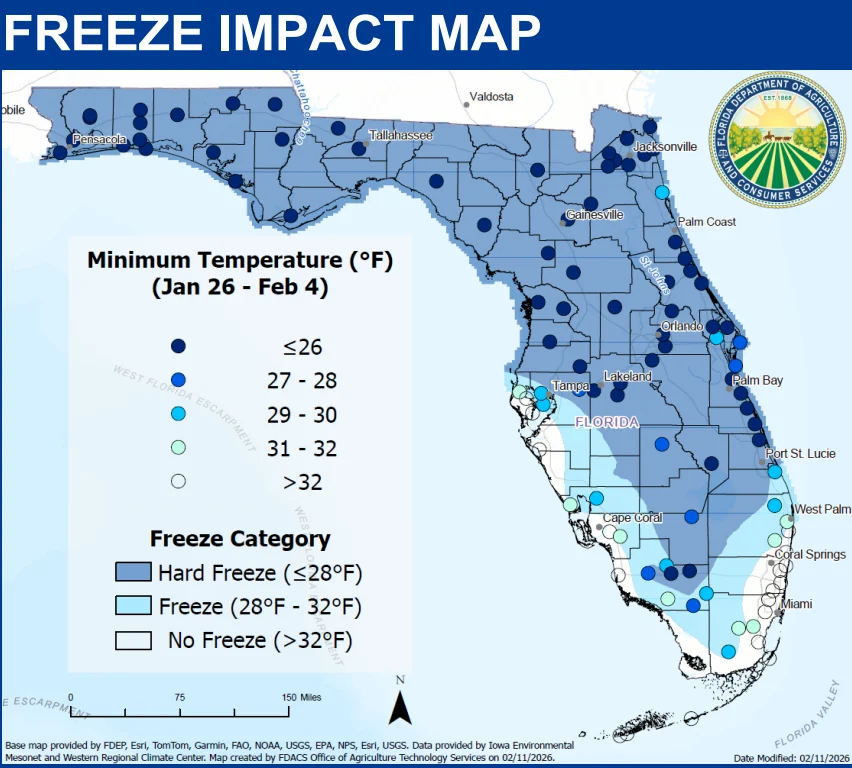
Over USD 3 billion worth of crop losses were reported across Florida due to freeze conditions triggered by severe winter storms between December 30, 2025, and February 4, 2026. The freeze affected 66 of the state’s 67 counties and impacted multiple agricultural sectors during peak production periods.
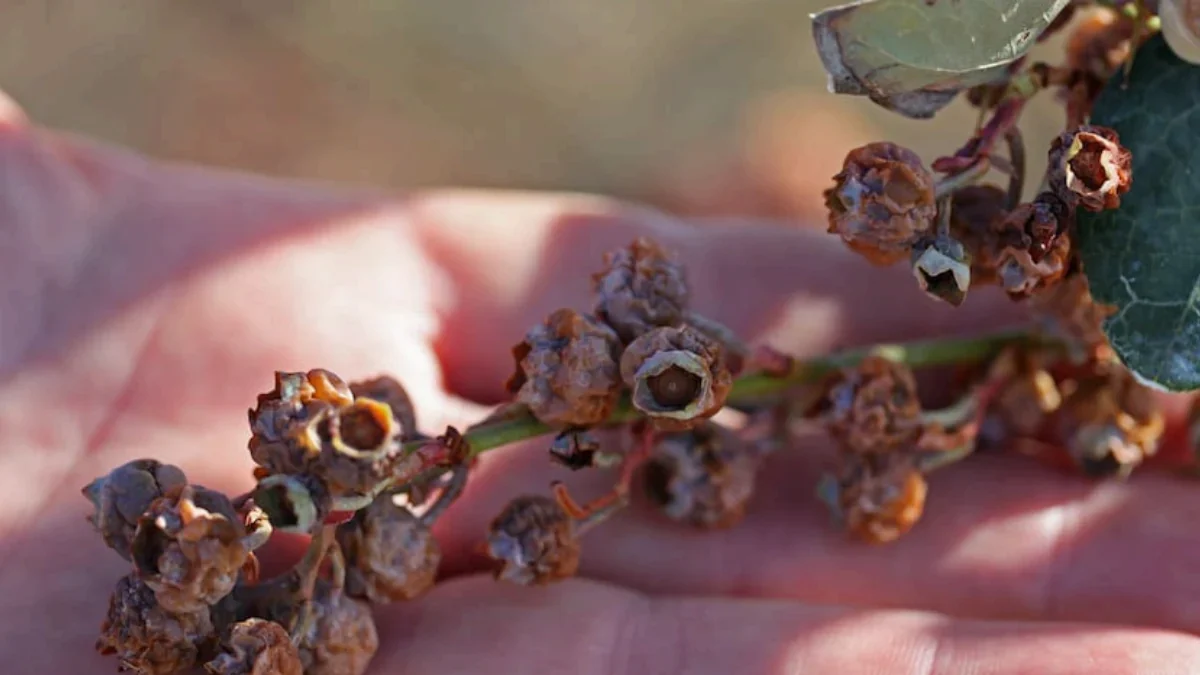
Freeze damage to blueberries in Florida in 2026. Credit: FDACS
Severe freeze events since late December 2025 caused widespread agricultural losses across Florida, with preliminary estimates of USD 3.17 billion, according to the Florida Department of Agriculture and Consumer Services (FDACS).
The freezes occurred between December 30, 2025, and January 1, 2026, and again from January 26 to February 4, with subfreezing temperatures being reported across the state during the period for crop development and harvest.
Local authorities described it as one of the most damaging freeze events in Florida’s history. A total of 66 out of Florida’s 67 counties saw freezing conditions for multiple hours, affecting nearly all major agricultural regions, with hard freeze thresholds at or below −3.3°C (26°F) reported in some areas.
Sugarcane accounted for the largest share of losses, with total damages estimated at around USD 1.15 billion. Producers reported production losses of about 35% across roughly 162 280 ha (401 000 acres), resulting in approximately USD 576 million in losses for the current season and an additional USD 576 million in expected future production losses.
Citrus losses were estimated at USD 674.66 million, including damage to fruit, trees, and protective infrastructure. About 80% of the state’s citrus acreage was significantly affected, and FDACS said future productivity may remain reduced for several years before recovery to pre-event levels.
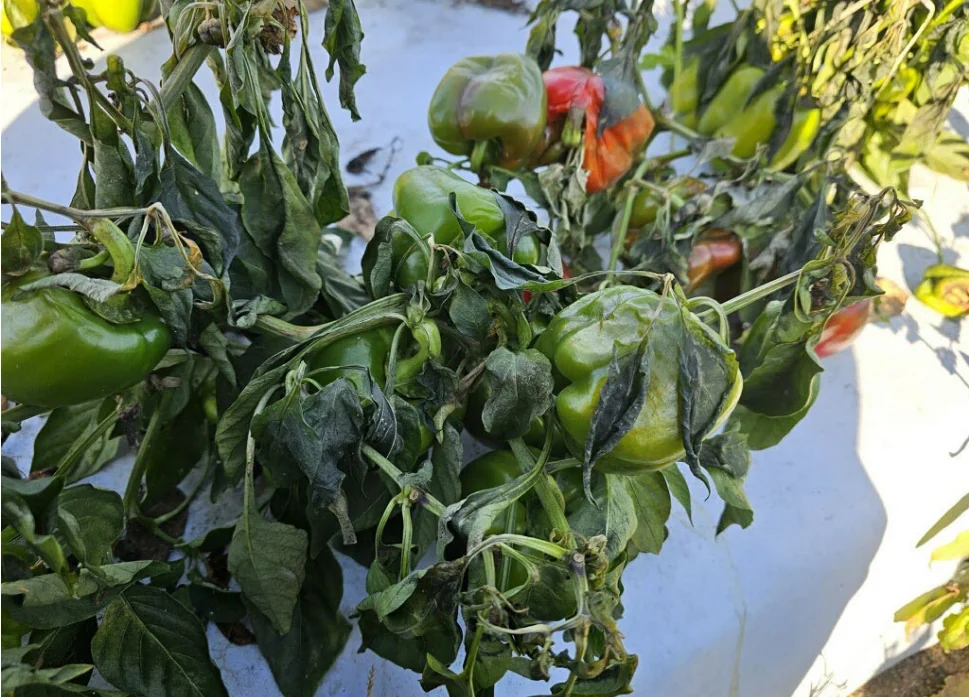
Vegetables and melons suffered combined losses of approximately USD 718.84 million. Sweet corn was among the worst-hit crops, with estimated production losses reaching 100% in impacted areas and total losses being estimated at USD 255.36 million. Tomato losses were estimated at USD 164.27 million, with production reductions of about 80%, while bell peppers, potatoes, and watermelons also recorded significant losses.
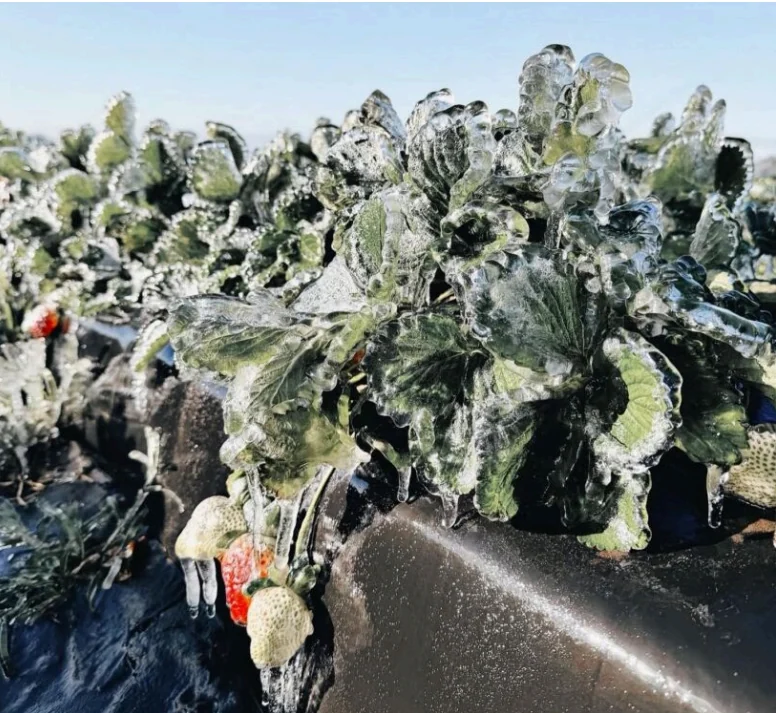
Non-citrus fruits also suffered total losses of around USD 385 million. Strawberries sustained losses of about USD 306.9 million, accounting for 80% of the remaining harvest, while blueberries experienced losses of about USD 78.5 million, accounting for roughly 90% of the crop.
Greenhouse and nursery operations reported losses of approximately USD 240 million, with freeze-related damage affecting around 20% of the total value of horticultural crops.
Aquaculture facilities also reported significant losses, with some producers reporting losses of up to 75% per facility due to prolonged exposure to low temperatures. Cold stress and freezing water conditions contributed to high mortality rates in ornamental and tropical fish, as well as shellfish systems.
The timing of the freeze significantly amplified the overall impact, as it coincided with peak production and harvesting periods for many of Florida’s key agricultural commodities. In several cases, crops were either not yet ready for harvest or could not be harvested due to operational constraints, including labor shortages, limited storage capacity, and adverse weather conditions during the freeze period.
Freeze-related damage extended beyond immediate yield losses, affecting plant structures, including fruit, foliage, limbs, and developing blooms. These impacts are expected to contribute to reduced productivity in subsequent growing seasons, particularly in perennial crops such as citrus and sugarcane.
References:
1 Commissioner Wilton Simpson Announces Recent Freezes Caused Over $3 Billion in Estimated Losses to Florida Agriculture – FDACS – February 21, 2026
2 Winter Storms Ezra and Gianna–Preliminary Estimates of Damage to Florida Agriculture – FDACS – February 26

I am an Assistant Editor and Severe Weather & Science Journalist at The Watchers, specializing in real-time severe weather coverage, geophysical event reporting, and research-driven scientific analysis. You can reach me at rishav(at)watchers(.)news.

Commenting rules and guidelines
We value the thoughts and opinions of our readers and welcome healthy discussions on our website. In order to maintain a respectful and positive community, we ask that all commenters follow these rules.