
Wildfires caused record losses in 2025 despite having the second-lowest burn area since 2002
A new study found that 335 million ha (828 million ha) burned worldwide in 2025, the second-lowest global wildfire total since 2002 and 16% below the long-term average. Despite that, 2025 became the costliest year on record for insured wildfire losses globally, with more than 300 000 evacuations and over 90 fatalities linked to major fires in Canada, the United States, Europe, and South Korea.
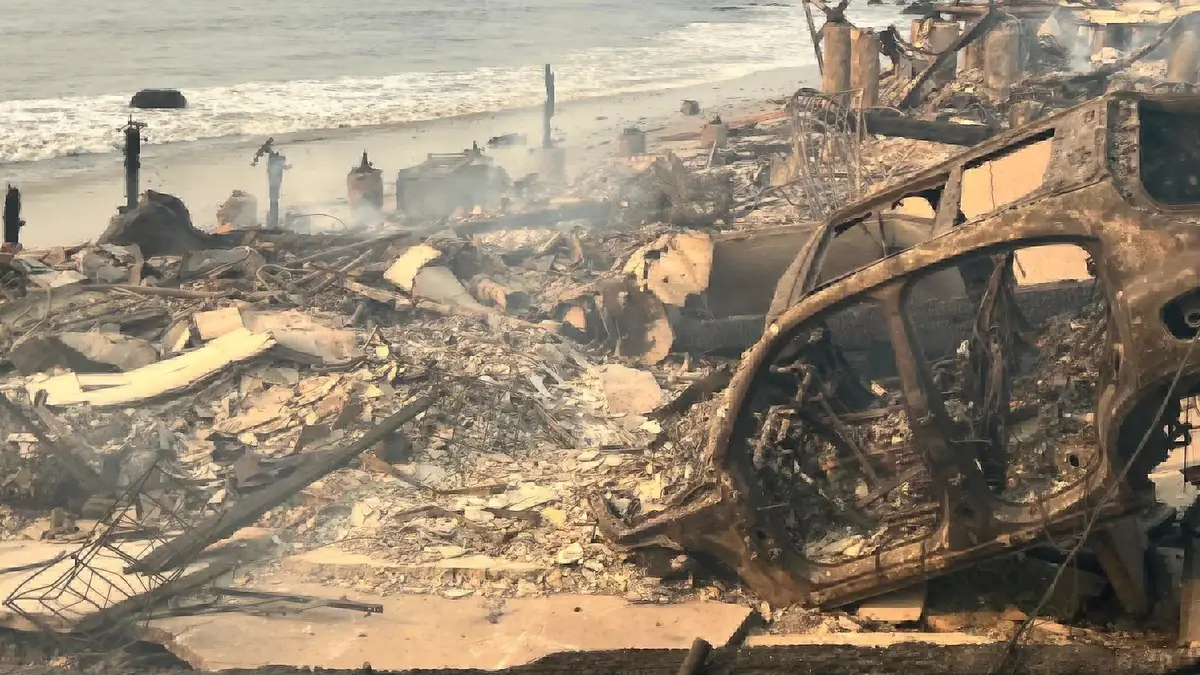
Damage caused by Palisades Fire, California in January 2025. Credit: CalFire
The study, led by researchers at the University of East Anglia (UEA), examined global wildfire activity and its human, environmental, and economic impacts.
It found that 335 million ha (828 million acres) burned worldwide in 2025, the second-lowest global wildfire total since 2002 and 16% below the long-term average.
Meanwhile, wildfire-related CO2 emissions reached 11 billion tonnes in 2025, making it the third-lowest emissions year since 2002. Together with the low burned area total, the figures show that global fire activity remained below average compared to most years of the past two decades.

However, the impacts on people and economies were far greater than the burned area figures alone would suggest.
According to the study, catastrophic wildfires in Canada, the United States, Europe, and South Korea forced more than 300 000 people to evacuate and caused more than 90 deaths. The authors found that wildfires accounted for 38% of all insured natural hazard losses worldwide during 2025.
The Los Angeles fires were the most expensive wildfire disaster highlighted in the review. Researchers reported insured losses of USD 40 billion and total losses of approximately USD 140 billion. The event ranked as the fifth-costliest natural disaster in history in terms of insured losses.

The findings show a growing disconnect between traditional wildfire measures and real-world impacts. While global burned area and fire emissions remained relatively low, some fires occurred in regions with large populations, valuable infrastructure, and high concentrations of economic assets.
As a result, wildfire risk is increasingly determined by where fires occur, how intensely they burn, and how much development lies in their path. Under those conditions, even a year with relatively low burned area can produce severe economic and human consequences.

“2025 shows that a ‘quiet’ fire year globally can still be devastating. We are seeing a growing disconnect between total area burned and real-world impacts, with risk increasingly determined by fire location, intensity, and exposure,” Dr. Matthew Jones of the Tyndall Center for Climate Change Research at the University of East Anglia said.
“The wildfires of 2025 demonstrate that without decisive action, societies will continue to face escalating human, economic, and environmental risks in an era of more extreme fires,” Jones said.
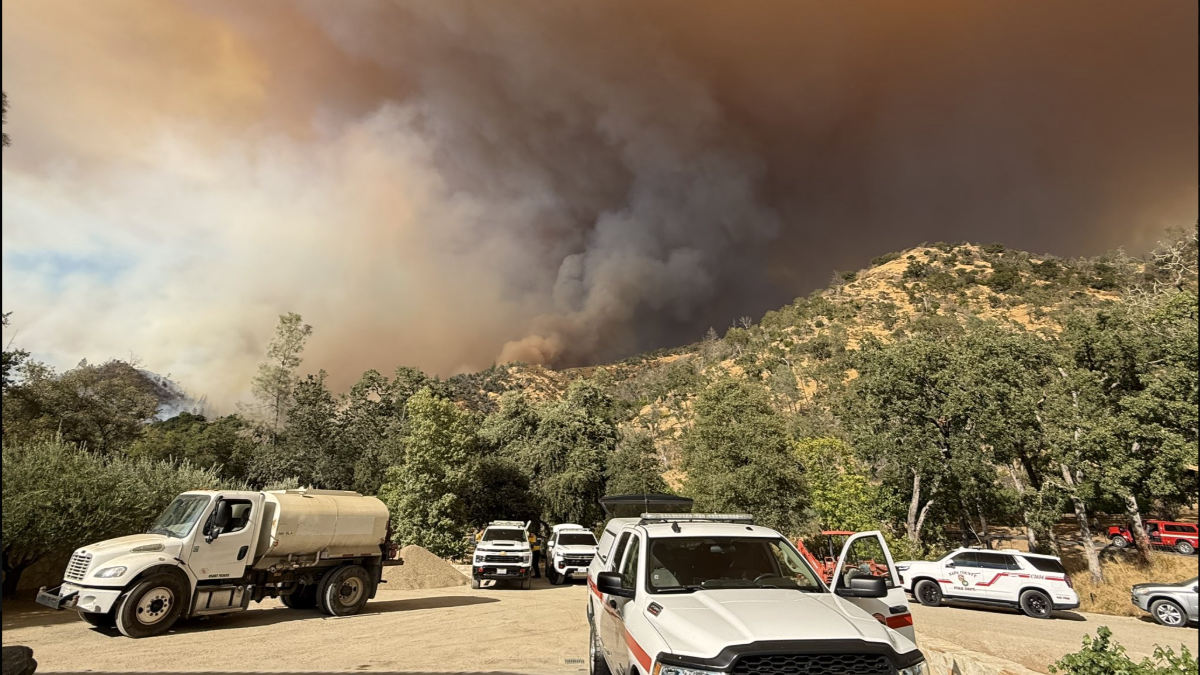
The authors concluded that reducing future wildfire risk will require both rapid reductions in fossil fuel emissions and stronger adaptation measures. They identified proactive vegetation management as one of the measures needed to help communities better cope with increasingly destructive wildfire events.
The research involved scientists from the University of East Anglia, the University of California, Merced, the Met Office Hadley Centre, Universidade de Trás-os-Montes e Alto Douro, the Canadian Forest Service, Imperial College London, and Kasetsart University.
References:
1 Record damages from wildfires in 2025, despite global area burned among lowest – UEA – June 1, 2026

I am an Assistant Editor and Severe Weather & Science Journalist at The Watchers, specializing in real-time severe weather coverage, geophysical event reporting, and research-driven scientific analysis. You can reach me at rishav(at)watchers(.)news.

UEA Tyndall and Hadley Centre, both caught red-handed and had to admit they falsified data to an AGW agenda, this was historic but do check rigorously anything these places publish, and if they do, be alert for a belief/religiosity bias with key-messaging push. ‘2025 RECORD…since 2002 WILDFIRE…LOSSES’ You see it, just in that? Their job done, reposted along with armageddon pictures to trigger the doom-manipulable fraction, maintain the distraction and narrative.
What was not included or not said along with absent context logically expected? Where was the measured, scientific wording from them?
That said, Rishav, thank you for thoroughly and carefully taking your time to give us such a rich window on our world including this, you truly keep us readers informed and engaged with your critical mind and pen. We appreciate you.