
Lava from Piton de la Fournaise crosses RN2 coastal road, Réunion Island
Lava from an ongoing eruption at Piton de la Fournaise crossed the RN2 coastal road in the Grand Brûlé sector of Réunion Island early March 13, 2026, cutting a key transport link between the island’s southern and eastern regions.
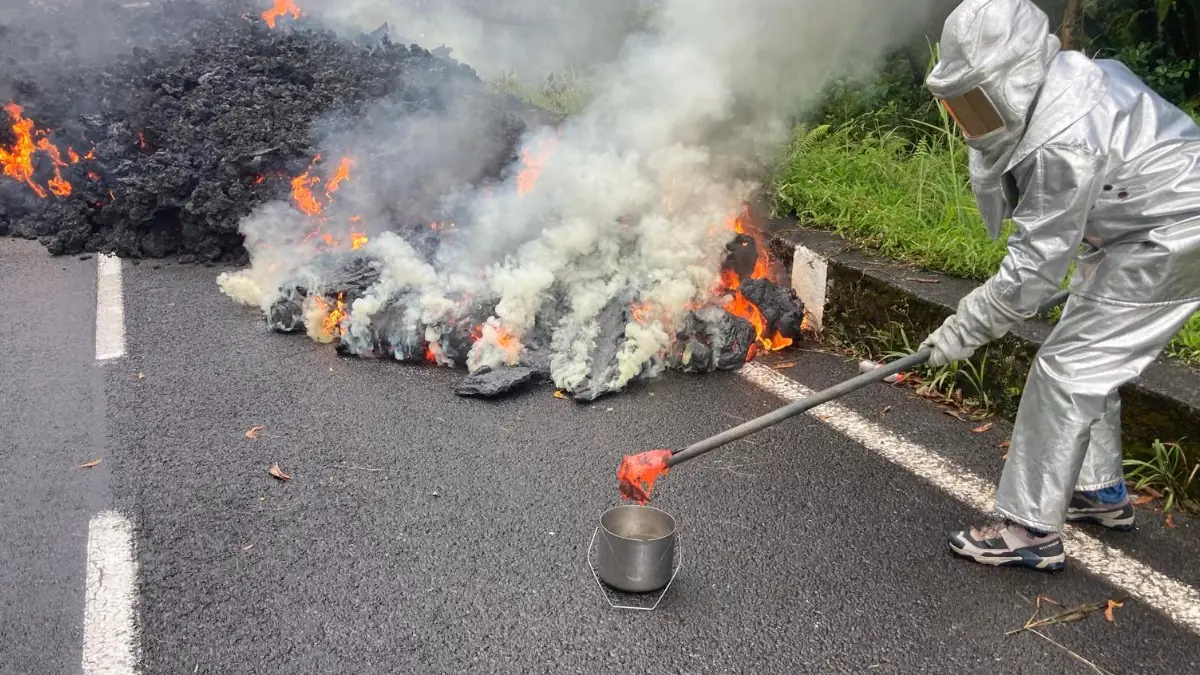
Lava from Piton de la Fournaise crosses RN2 coastal road on Réunion Island - March 13, 2026. Credit: OVPF
Lava from the ongoing eruption of Piton de la Fournaise crossed the RN2 coastal road in the Grand Brûlé sector of Réunion Island early March 13, interrupting one of the island’s main coastal transport routes.
Authorities had closed the RN2 in advance after monitoring indicated that the advancing lava flow was approaching the coastal road corridor. The closure was implemented after the active flow front moved steadily downslope toward the coast during the previous day.
Volcanologists at the Piton de la Fournaise Volcano Observatory (OVPF-IPGP) reported lava reached the road surface and began crossing the RN2 at 08:00 local time (LT), covering sections of the roadway. The second arm of the flow crossed RN2 at 09:27 LT.
At the time, the front was about 670 m (2 200 feet) from the ocean.
“The progression of the flows remains very irregular, especially due to the topography of the Grand Brûlé and the vegetation encountered along its path, which can slow down or channel outflow,” OVPF volcanologists said.
The RN2 is the primary coastal route connecting communities along Réunion Island’s southeastern coastline. When the road is cut in the Grand Brûlé sector, traffic between the south and east of the island must be rerouted through longer inland routes.
C'est finalement ce vendredi matin que la coulée de lave a commencé à dévorer le bitume de la RN2. Ambiance sur place. pic.twitter.com/WBPDrpHjmL
— Réunion la 1ère (@reunionla1ere) March 13, 2026
Quelques images d'hier matin de l'éruption avant que la lave traverse la route. pic.twitter.com/6SUdZrEVZs
— Luc Perrot (@LucPerrot_Photo) March 13, 2026
The eruption began on February 13, 2026, shortly after 10:00 local time on the southeast flank of Piton de la Fournaise. Monitoring by the OVPF identified an eruptive fissure producing lava flows advancing downslope toward the coastal plain.
As the eruption progressed, lava descended the slopes within the Enclos Fouqué caldera and advanced into the Grand Brûlé lava field, a coastal sector historically affected by lava flows from previous eruptions of the volcano.
The prefecture of Réunion raised the volcano alert level to phase 2.2 on March 12 after monitoring confirmed that the active flow front was approaching the RN2 corridor. Authorities subsequently closed the road to traffic as a precaution before lava reached the roadway.
Lava flows from Piton de la Fournaise occasionally reach the coastal road corridor during eruptions occurring on the volcano’s southeast flank. The RN2 passes through the Grand Brûlé lava field, an area formed by successive lava flows produced during historical eruptions.
The last time lava crossed this road was during the April–May 2007 eruption, one of the largest at Piton de la Fournaise in recent decades. Lava flows descended through the Grand Brûlé sector, buried sections of the RN2 coastal road, and eventually entered the Indian Ocean, creating new land along the southeastern coast of Réunion Island. The eruption followed the collapse of the Dolomieu crater and produced sustained effusive activity as large volumes of basaltic lava advanced downslope across the coastal plain.
Piton de la Fournaise is one of the world’s most active shield volcanoes. Its eruptions are characterized by effusive lava flows rather than explosive activity, with hazards primarily associated with advancing lava, volcanic gas emissions, and unstable ground near active flow fields.
References:
1 [MODIFIE A 18H30] Piton de la Fournaise la RN2 est fermée depuis 15h dans le secteur de l’enclos – Préfet de La Réunion – March 12, 2026
2 Eruption bulletin – OVPF – March 13, 2026

I'm a dedicated researcher, journalist, and editor at The Watchers. With over 20 years of experience in the media industry, I specialize in hard science news, focusing on extreme weather, seismic and volcanic activity, space weather, and astronomy, including near-Earth objects and planetary defense strategies. You can reach me at teo /at/ watchers.news.

Commenting rules and guidelines
We value the thoughts and opinions of our readers and welcome healthy discussions on our website. In order to maintain a respectful and positive community, we ask that all commenters follow these rules.