• Asteroid 2026 JM2 passed Earth at 0.1 lunar distance

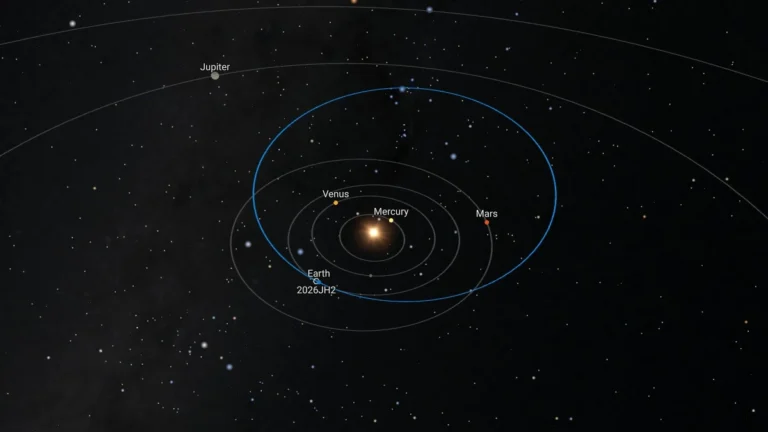
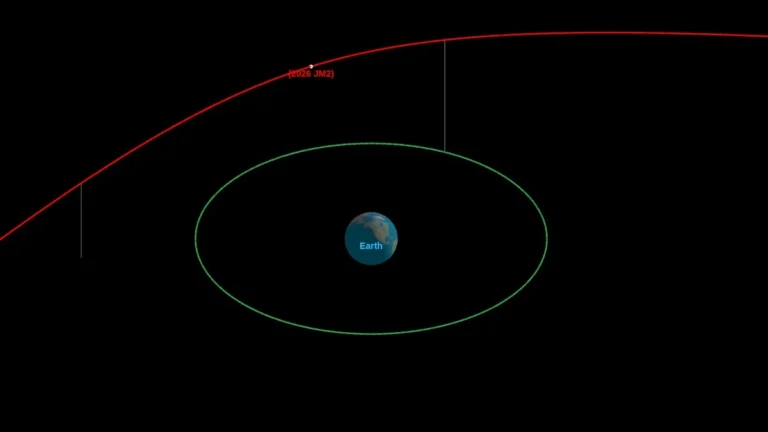
    Asteroid 2026 JM2 passed Earth at a distance of 0.114 LD (0.00029 AU / 43 800 km / 27 200 miles), from the center of our planet at 13:06 UTC on May 7, 2026, becoming the 4th closest known asteroid flyby within 1 lunar distance recorded so far this year. At its closest, the object was about 37 400 km (23 200 miles) above Earth’s surface, about 1 600 km (1 000 miles) outside the altitude used by geostationary satellites.

  • Increased seismicity and gas emissions at Kupreanof volcano, Alaska

    Seismic activity and sulfur dioxide emissions have increased at Kupreanof volcano in Alaska over recent months, likely due to magmatic intrusion beneath the volcano. Kupreanof is a heavily glaciated stratovolcano on the Alaska Peninsula with no known historical eruptions. Current data do not indicate an eruption is imminent.

  • Multiple tornadoes reported in southeastern Türkiye during deadly severe weather outbreak

    The European Severe Weather Database (ESWD) listed multiple tornado reports across southeastern Türkiye on May 3, 2026, during a severe storm episode that caused casualties, injuries, widespread damage, power disruption, and localized flooding. The Şanlıurfa Governorate confirmed 1 death and 40 injuries in Birecik and Viranşehir during the outbreak, while a later report quoted Governor Hasan Şıldak as saying the death toll had risen to 2.

  • Monster 18 cm (7.1 inch) hailstone sets new state record in Texas

    What initially looked like a discarded gallon jug in a roadside ditch turned out to be a record-breaking hailstone, now confirmed as the largest ever documented in Texas at roughly 18 cm (7.1 inches). It was discovered near Vigo Park in Swisher County by storm chaser Val Castor and his associates on June 2, 2024. They clicked several pictures of the hailstone alongside objects to provide a visual reference of size and submitted them to the Insurance Institute for Business and Home Safety (IBHS). The size of the hailstone was determined using photogrammetry and AI analysis along with the estimates from the storm chasers.

  • Magma accumulation exceeds 25 million m³ beneath Svartsengi, Iceland

    More than 25 million m³ (883 million ft³) of magma has accumulated beneath Svartsengi, Iceland, since the last eruption in July 2025, the Icelandic Meteorological Office (IMO) reported on April 28, 2026. IMO said ground uplift continues at up to 2 cm (0.8 inches) per month, while magmatic dike propagation toward the Sundhnúkur crater row remains the most likely scenario and could lead to an eruption.

  • Asteroid 2026 HZ4 passed Earth at 0.072 lunar distances, the second closest of the year

    Asteroid 2026 HZ4 passed Earth at a distance of 0.077 LD (0.00020 AU / 29 709 km / 18 460 miles) from the center of our planet at 12:13 UTC on April 24, 2026, becoming the second-closest known asteroid flyby within 1 lunar distance recorded so far this year. Its closest point was about 23 338 km (14 501 miles) above Earth’s surface, placing it inside the orbit of geostationary satellites.

  • Damaging ice shoves push into homes in Cheboygan County, Michigan

    Wind-driven ice shoves struck multiple lakes in Cheboygan County, Michigan, during an ongoing flooding event in April 2026, pushing onshore and into residential structures. The event is unfolding as elevated water levels from snowmelt and recent rainfall continue to drive flooding and evacuations across northern Michigan.

  • Severe hailstorm damages hundreds of homes in Bắc Hà, Lào Cai Province, Vietnam

    A severe hailstorm struck Bắc Hà Commune, Lào Cai Province, Vietnam, in the early hours of April 16, 2026, damaging 338 homes, injuring four people, and affecting 485.5 ha (1 200 acres) of crops. The storm, which lasted about 20–30 minutes, produced large hail and strong winds that caused structural damage and economic losses exceeding VND 30 billion (USD 1.1–1.2 million).

  • Landslide crisis intensifies in Dagestan with widespread damage in Dakhadayevsky and Levashinsky districts, Russia

    Multiple landslides struck mountainous districts of Dagestan, Russia, between April 12 and 16, 2026, destroying at least 17 homes, damaging dozens more, and forcing the evacuation of 178 residents in Dakhadayevsky district, while a separate very large landslide in Levashinsky district raised concerns over potential localized flooding. The events occurred amid an ongoing regional emergency driven by prolonged rainfall since late March.

  • Multiple tornadoes hit Kansas, Minnesota, Iowa and Wisconsin during April 13 severe weather outbreak

    A severe weather outbreak on April 13, 2026, produced at least 14 preliminary tornado reports across Kansas, Minnesota, Iowa, and Wisconsin, with the most serious reported damage in and near Ottawa. No fatalities were immediately reported, but storm surveys were still underway as forecasters warned of additional rounds of severe weather through at least April 16.