• Tropical Cyclone Maila triggers deadly landslides and severe flooding in Bougainville and eastern Papua New Guinea

    Tropical Cyclone Maila left at least 11 people dead in Bougainville and eastern Papua New Guinea by April 13, 2026, after days of heavy rain, landslides, flooding, and coastal impacts. Eight people were killed when a landslide buried a house in Asiko Village in Central Bougainville, the deadliest single incident reported during the storm.

  • Rare tornado touches down near Devipur in Akhnoor, Jammu and Kashmir

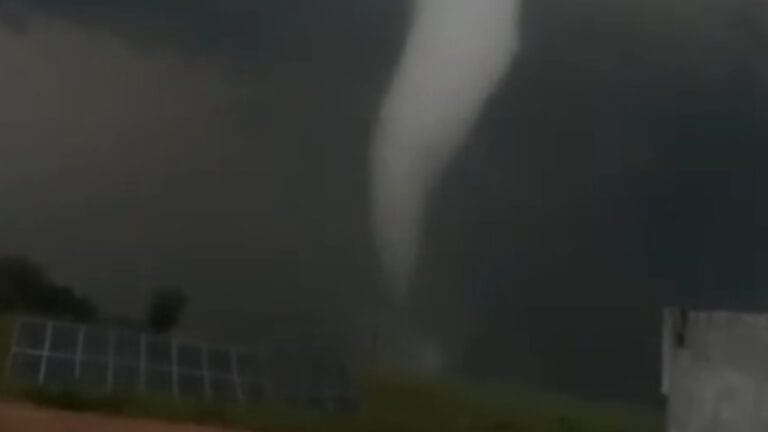
    A rare tornado was reported near Devipur in the Akhnoor area of Jammu district, Jammu and Kashmir, India, on April 11, 2026, during scattered afternoon thundershowers. Eyewitness videos showed a narrow funnel extending from the cloud base to a rotating dust plume at the surface, while preliminary reports indicated no damage, injuries, or casualties. Faizan Arif, a Kashmir-based weather analyst, described the Akhnoor tornado as a “never-before-witnessed” event in Jammu’s Akhnoor area.

  • Daylight fireball seen from New Jersey, New York, and Pennsylvania

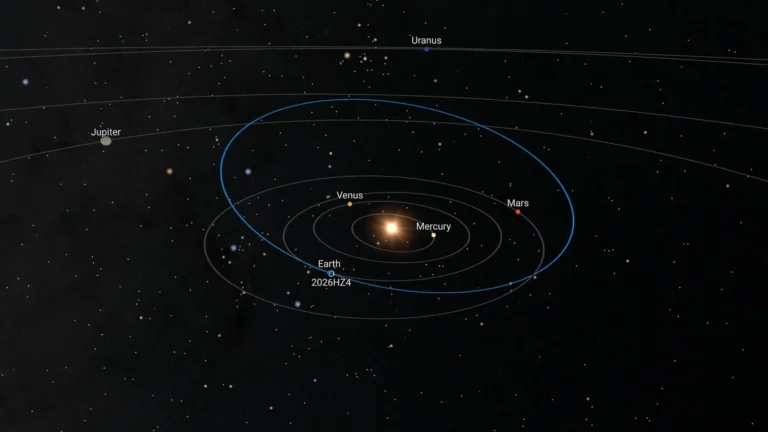
    A daylight fireball was observed across multiple northeastern U.S. states at 18:34 UTC on April 7, 2026, producing 260 eyewitness reports and multiple videos and photographs. The object entered the atmosphere above the Atlantic Ocean and disintegrated over New Jersey after traveling more than 180 km (112 miles).

  • Severe drought triggers water restrictions in Southwest Florida

    Modified Phase III “Extreme” Water Shortage restrictions will take effect across the Southwest Florida Water Management District region on April 3, 2026, following severe drought conditions and declining water supplies. The order imposes one-day-per-week irrigation limits and additional conservation measures, with stricter enforcement and localized rules implemented by utilities such as Pinellas County.

  • Bright fireball seen over California, Arizona and Nevada

    A bright fireball was observed over California, Arizona, and Nevada at 03:18 UTC on March 23, 2026. NASA data shows the meteor traveled approximately 93 km (58 miles) through the atmosphere before disintegrating, with no damage or meteorite recovery reported.

  • Kona low brings extreme rainfall to Maui and Oʻahu, causing flooding and landslides across Hawaiʻi

    A slow-moving Kona low brought extreme rainfall to the Hawaiian Islands between March 10–16, 2026, producing record-breaking totals at multiple long-term stations, particularly on Maui and Oʻahu. Honolulu and Kahului both set new daily rainfall records on March 13, while multi-day accumulations on Maui reached up to about 1 170 mm (46 inches), triggering flooding, landslides, and widespread disruption.

  • Lava from Piton de la Fournaise enters the Indian Ocean after crossing RN2 coastal road, Réunion Island

    Lava from an ongoing eruption at Piton de la Fournaise entered the Indian Ocean along the southeastern coast of Réunion Island at about 00:20 local time on March 16, 2026, after advancing downslope through the Grand Brûlé lava field and crossing the RN2 coastal road several days earlier, producing steam plumes and localized hazards where molten rock met seawater.

  • Morrill Fire becomes largest in Nebraska history as statewide fires top 243 000 ha (600 000 acres)

    A wildfire outbreak in western and central Nebraska has burned more than 243 000 ha (600 000 acres) since March 12, 2026, according to state officials, including the Morrill Fire, which Gov. Jim Pillen described as the largest wildfire in Nebraska history. One fatality has been confirmed as strong winds and critically dry vegetation fueled a rapid fire spread across the Nebraska Sandhills. The fires have also burned parts of Crescent Lake National Wildlife Refuge within the Sandhills, a region regarded as the world’s most intact temperate grassland.