• 3I/ATLAS displays complex jet morphology, live stream scheduled for November 19

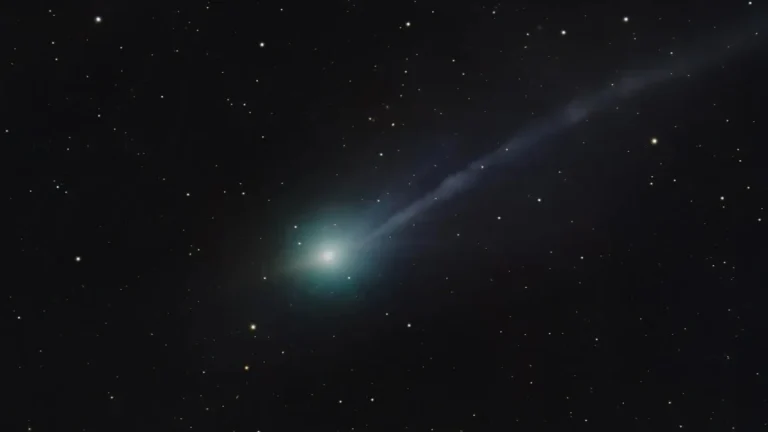
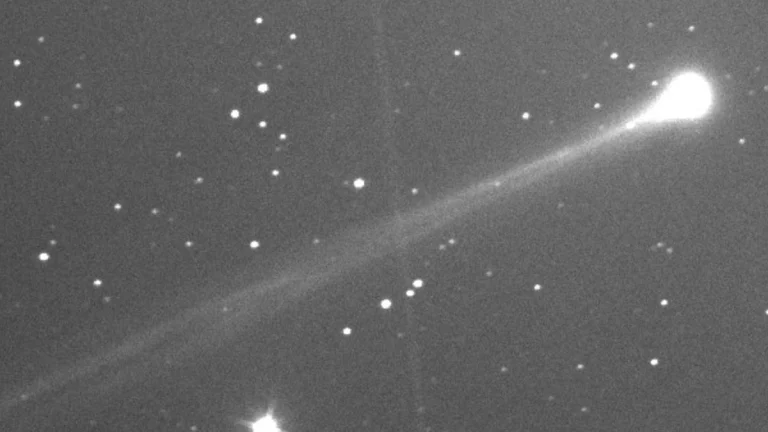
    Ground-based observations on November 16 and 17, 2025 captured multiple jets on the interstellar object 3I/ATLAS, including sunward jets and an extended anti-tail. The images were obtained from telescopes in New Mexico, USA and France. A public online observation by the Virtual Telescope Project is scheduled at 04:15 UTC on November 19, 2025.

  • 3I/ATLAS completes inbound leg of its Solar System passage on October 29

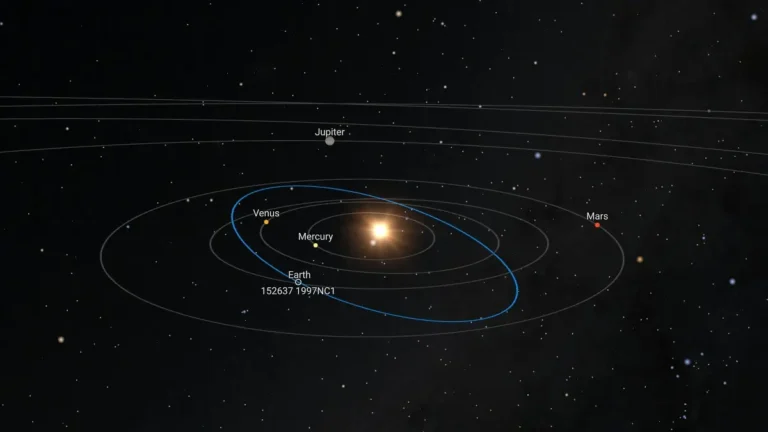
    Interstellar object 3I/ATLAS (C/2025 N1 ATLAS) will reach its perihelion distance of about 1.36 AU from the Sun on October 29, 2025, marking the midpoint of its one-time passage through the Solar System. The hyperbolic object will be unobservable from Earth during the event but will later pass within 97 million km (60 million miles) of Venus and 54 million km (34 million miles) of Jupiter on its way out of the system.

  • Unusual nickel and cyanide emissions detected around interstellar object 3I/ATLAS

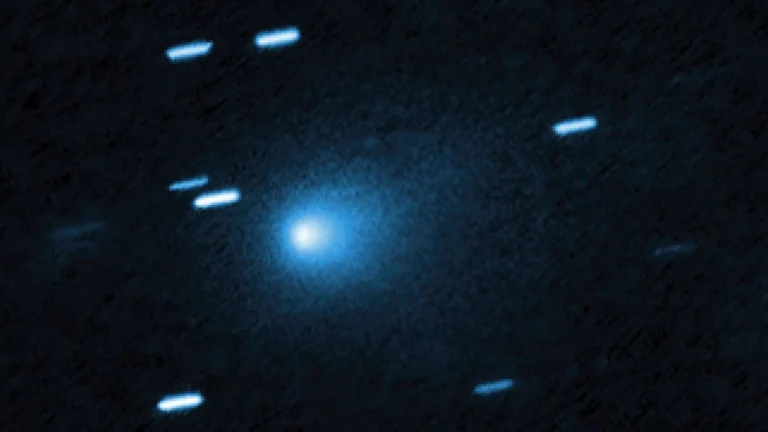
    Spectroscopic observations with the Keck II telescope in Hawaii revealed distinct nickel and cyanide emissions surrounding the interstellar object 3I/ATLAS, extending several hundred kilometers from its nucleus. The data, presented by Hoogendam et al. (2025) and summarized by astrophysicist Avi Loeb, show an anomalous concentration of nickel and an absence of iron lines—behavior unseen in known comets. These results, together with earlier Hubble images showing an anti-tail oriented toward the Sun, further reinforce the object’s unusual nature.

  • CME forecast to strike interstellar Comet 3I/ATLAS on September 24-25

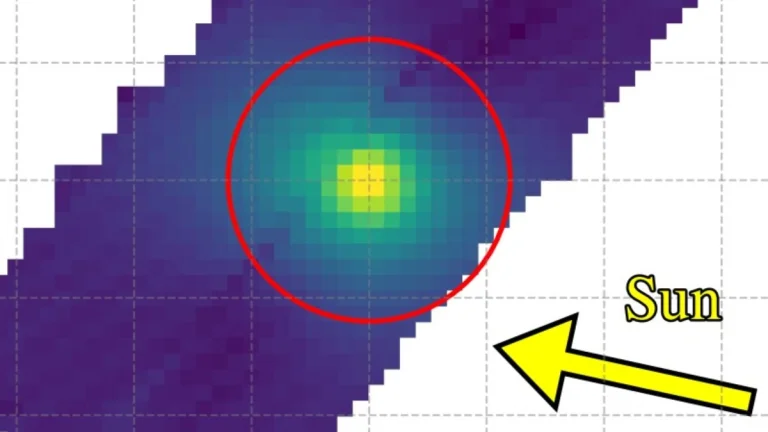
    A coronal mass ejection (CME) launched from the Sun on September 19 is forecast by NASA’s ENLIL model to strike interstellar Comet 3I/ATLAS on September 24 or 25, an extremely rare event that comes as the comet brightens 40-fold and prepares to disappear into the Sun’s glare.

  • Comet SWAN25B surprises astronomers after perihelion outburst

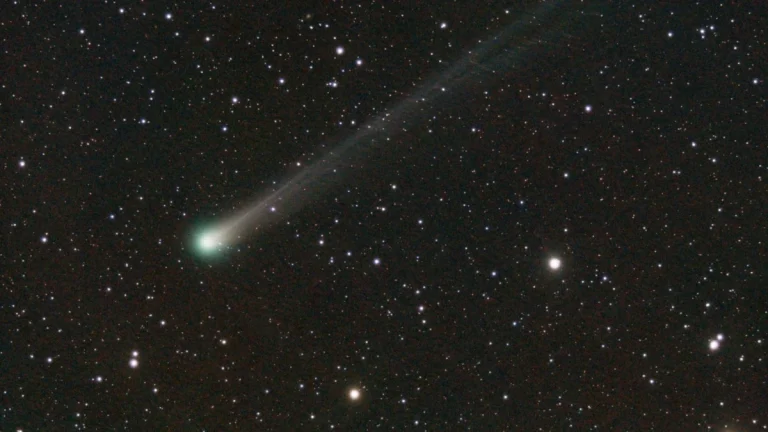
    A newly discovered comet, designated SWAN25B, emerged from behind the Sun in early September 2025 and was added to the Minor Planet Center’s Possible Comet Confirmation Page on September 12. The object is currently reported at magnitude 8.3 in MPC data, with independent amateur estimates placing it slightly brighter at magnitude 7.4–7.5. Orbit calculations are still in progress.