• Ancient interstellar object 3I/ATLAS offers first glimpse into thick disk comet chemistry

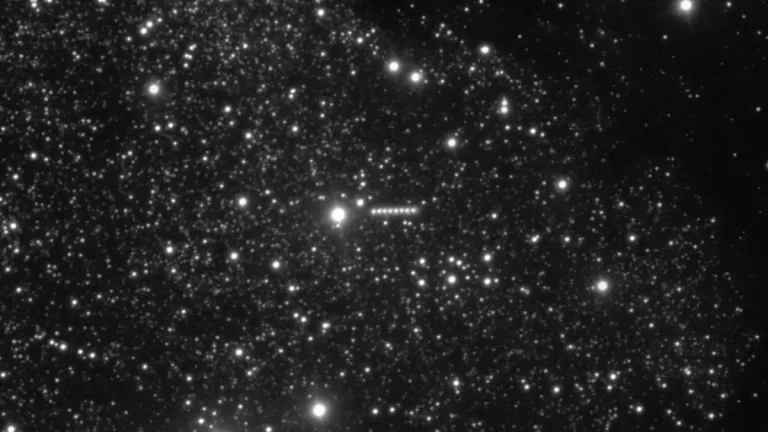
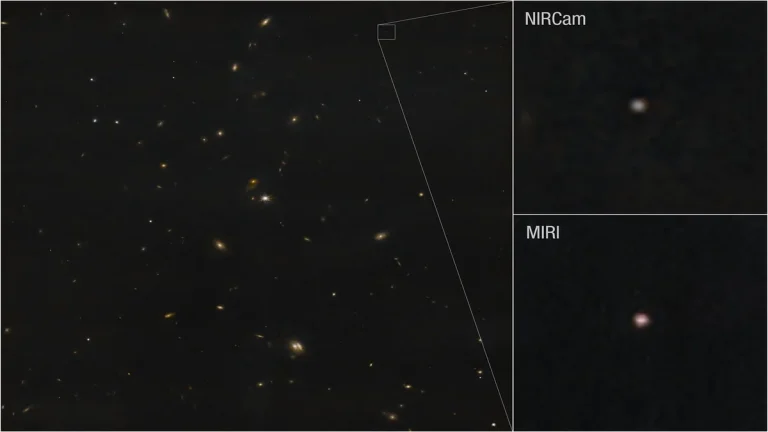
    Interstellar comet 3I/ATLAS, first observed by the ATLAS survey in Chile on July 1, 2025, is the third confirmed object of its kind to enter the solar system. Analysis of its hyperbolic trajectory and inbound velocity of ~58 km/s confirms its extrasolar origin, while kinematic modeling suggests it formed in the Milky Way’s ancient thick disk, offering a rare opportunity to study early galactic comet chemistry.

  • New studies suggest smaller impactors could be a better planetary defense strategy against asteroids

    Two studies published in Nature Communications explore and provide insights into efficient planetary defense strategies. These studies came out during the period when 2024 YR4 made headlines with its potential for impact in 2032. The results provide valuable insights into how to create better planetary defense procedures based on the behavior of asteroid Dimorphos ejecta produced by NASA’s Double Asteroid Redirection Test (DART) mission.

  • Comet C/2024 G3 (ATLAS) puts on spectacular show in Southern Hemisphere skies

    Comet C/2024 G3 (Atlas), which made its closest approach to Earth on January 14, 2025, and reached perihelion a day later, is creating spectacular photographic opportunities as it brightens in the night sky. Astronomers and skywatchers in the Southern Hemisphere have reported a visible coma and an extended tail, making it one of the most striking comets of recent years.

  • Asteroid COWEPC5 to impact Earth over Russia on December 3

    A newly-discovered asteroid currently designated COWEPC5 is expected to impact Earth’s atmosphere over Siberia, Russia at around 16:15 UTC (08:15 PST) on December 3, 2024. This is the 11th predicted Earth impactor on record – and the 4th so far this year.