
Polar vortex disrupted as major sudden stratospheric warming develops over the Arctic
Multiple atmospheric diagnostics show that a major sudden stratospheric warming is underway over the Arctic, with strong planetary wave activity, rapid polar warming, and reversal of the stratospheric jet indicating a significant disruption of the polar vortex circulation. This type of stratospheric disruption can influence atmospheric circulation patterns in the coming weeks, sometimes increasing the likelihood of cold air outbreaks across parts of North America, Europe, and Asia.
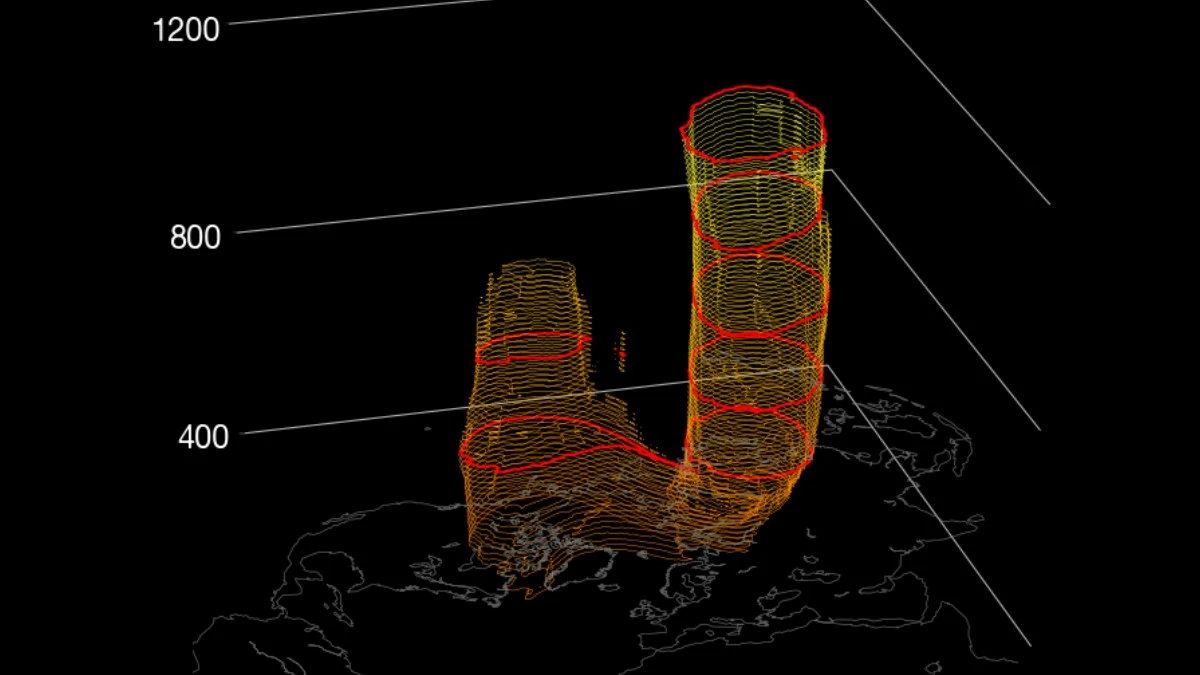
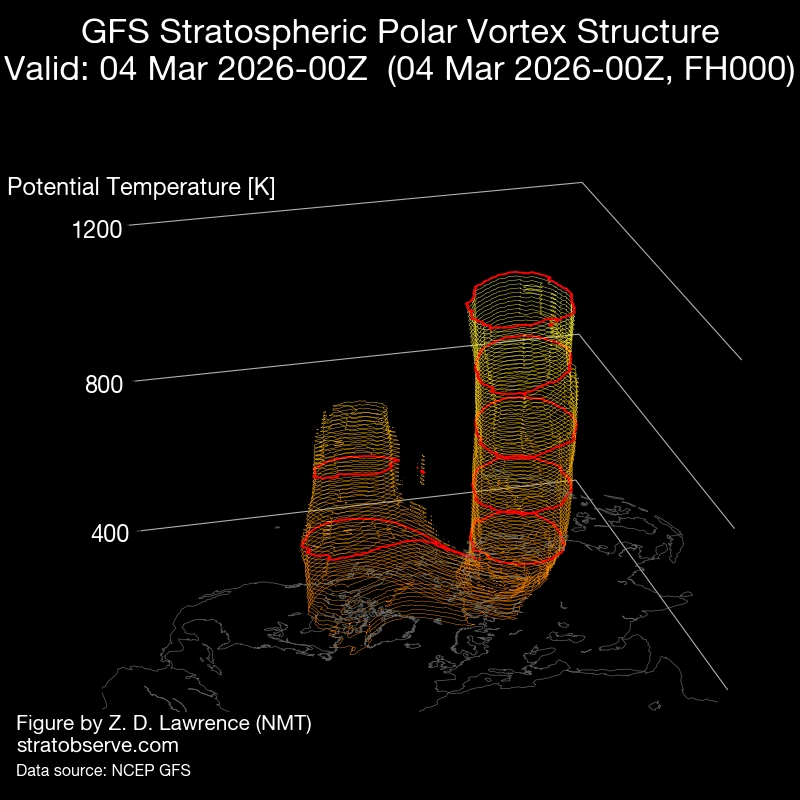
Three-dimensional visualization of the Arctic stratospheric polar vortex on March 4, 2026, showing the circulation split into two lobes as the sudden stratospheric warming disrupts the vortex structure. Credit: Z. D. Lawrence / stratobserve.com / NCEP GFS
Sudden stratospheric warming events occur when large-scale atmospheric waves generated in the troposphere propagate upward into the stratosphere and disrupt the normal circulation of the polar vortex.
Diagnostics of Eliassen–Palm flux show strong upward propagation of planetary wave activity from mid-latitudes into the Arctic stratosphere during late February and early March, implying enhanced deposition of wave energy into the polar vortex region.
Although sudden stratospheric warming occurs high in the atmosphere, such disruptions can sometimes propagate downward and influence surface weather patterns over the following one to three weeks. This process may increase the likelihood of a more amplified jet stream and episodic cold air outbreaks across parts of North America, Europe, and Asia.
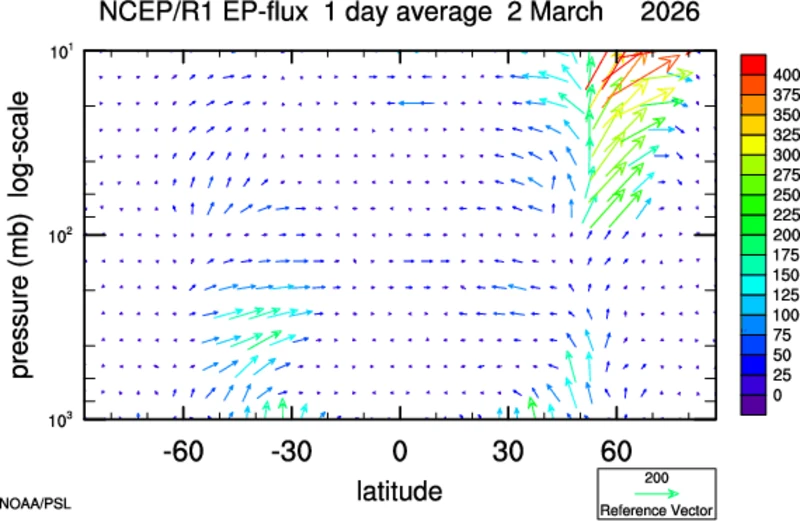
This process slows the normally strong westerly winds that circulate around the Arctic during winter and can eventually reverse them.
Temperature measurements in the polar stratosphere show rapid warming during the same period. Data at 10 hPa over the Arctic indicate that temperatures increased sharply from typical mid-winter values near 205 K (-68°C) to around 230 K (-43°C) in early March.
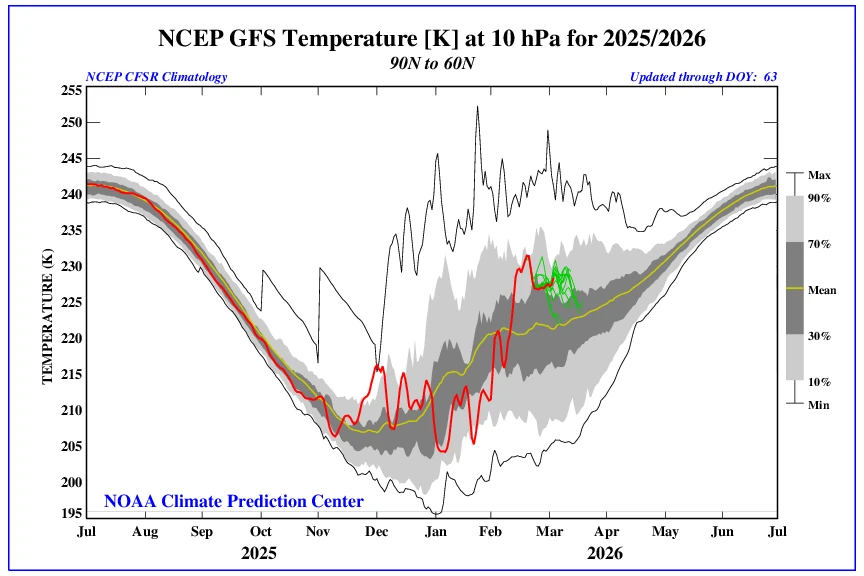
Such rapid warming of the polar stratosphere is a defining characteristic of sudden stratospheric warming events and shows the breakdown of the cold, stable vortex that normally dominates the region during winter.
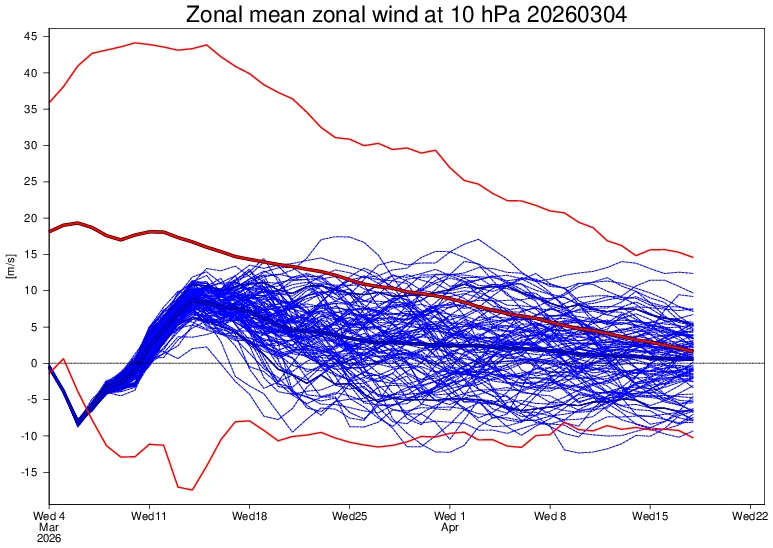
Zonal wind diagnostics confirm that the stratospheric jet associated with the polar vortex has weakened substantially and reversed direction at 60°N and 10 hPa, meeting the meteorological definition of a major sudden stratospheric warming.
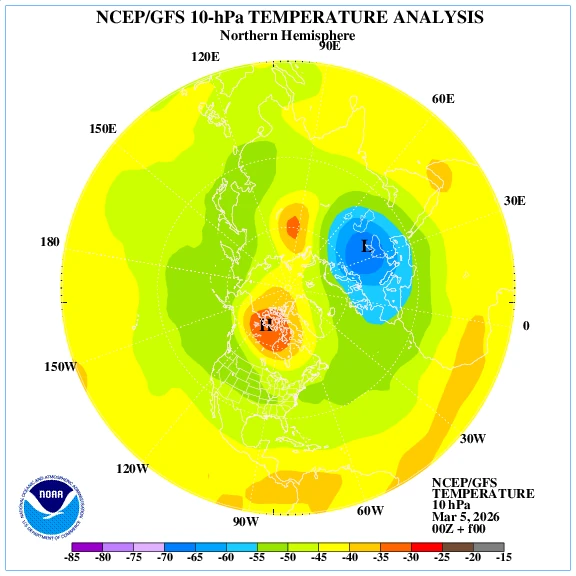
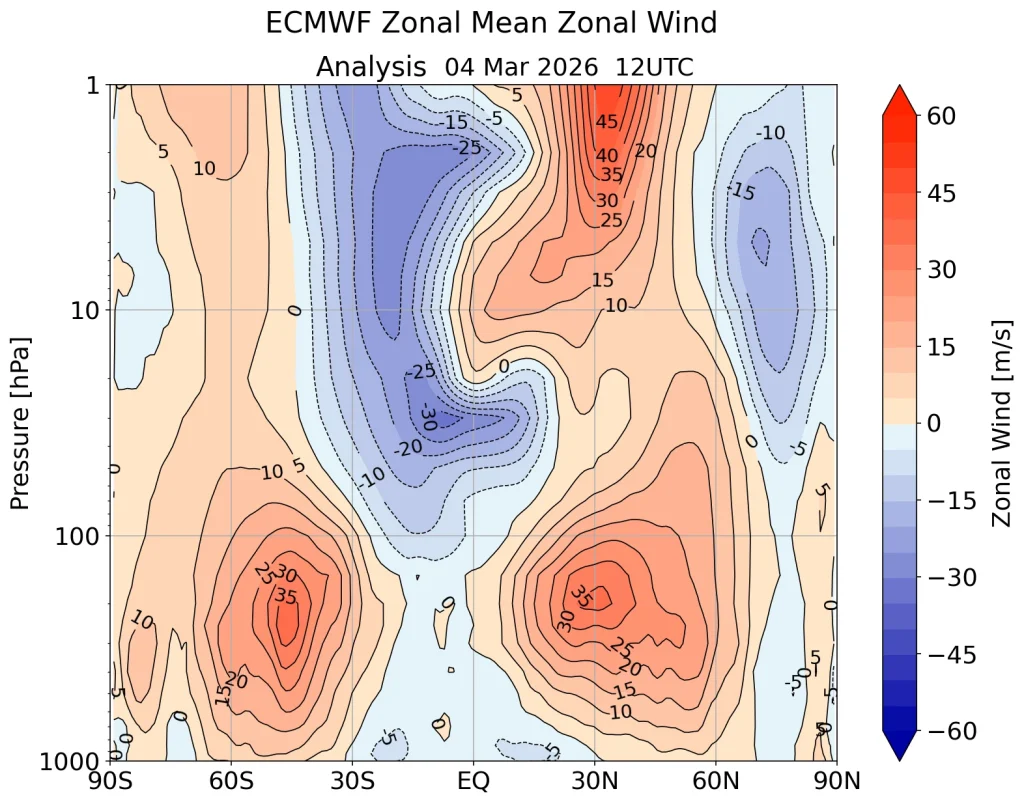
Latitude–height analyses of the atmospheric circulation show strong easterly winds in the middle stratosphere over the Arctic, while the core of the vortex circulation has been displaced away from the pole.
Ensemble forecasts indicate that the vortex is likely to remain weak through at least the first half of March. Many model members simulate continued easterly winds in the polar stratosphere, suggesting that the disruption of the vortex circulation may persist for several weeks.
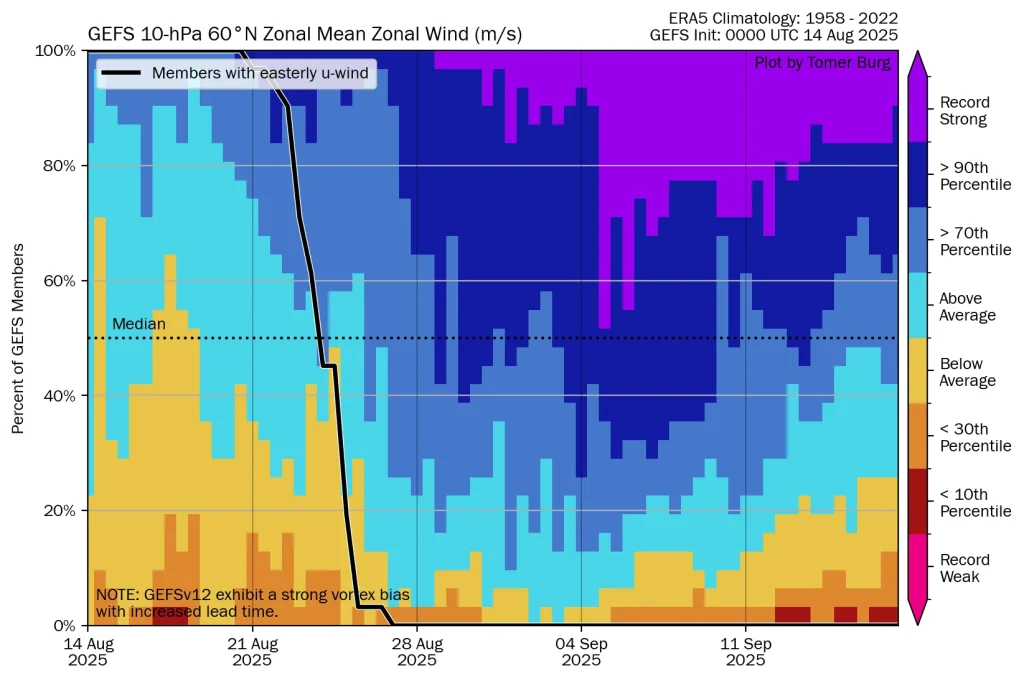
The exact evolution remains uncertain, however, as late-winter events can sometimes transition into the seasonal final breakdown of the polar vortex as spring approaches.
While sudden stratospheric warming occurs high in the atmosphere, such events can influence weather patterns at the surface if the disturbance propagates downward into the troposphere.
When this coupling occurs, the jet stream can become more amplified and allow cold Arctic air to spill farther south than usual. Such responses typically develop over the following one to three weeks, although not every stratospheric warming produces a clear or strong impact at the surface.
References:
1 Baldwin, M. P., & Dunkerton, T. J. (2001). Stratospheric harbingers of anomalous weather regimes. Science, 294(5542), 581–584. https://doi.org/10.1126/science.1063315
2 Sudden Stratospheric Warming Monitoring – NWS/CPC – Accessed March 5, 2026

I'm a dedicated researcher, journalist, and editor at The Watchers. With over 20 years of experience in the media industry, I specialize in hard science news, focusing on extreme weather, seismic and volcanic activity, space weather, and astronomy, including near-Earth objects and planetary defense strategies. You can reach me at teo /at/ watchers.news.

Commenting rules and guidelines
We value the thoughts and opinions of our readers and welcome healthy discussions on our website. In order to maintain a respectful and positive community, we ask that all commenters follow these rules.