
Heavy snowfall damages orchards and raises concerns for Japan’s 2026 apple harvest
Heavy snowfall affecting Japan since late January 2026 has left at least 46 people dead and more than 550 injured while causing widespread agricultural damage across the Tohoku region and Niigata Prefecture. Snowfall reached 148 cm (58 inches) in Hirosaki, Aomori Prefecture, in January, breaking branches in apple orchards, collapsing vinyl greenhouses, and burying farm roads that remain inaccessible in some areas. Authorities say the full extent of agricultural losses may not be known until snow cover recedes.
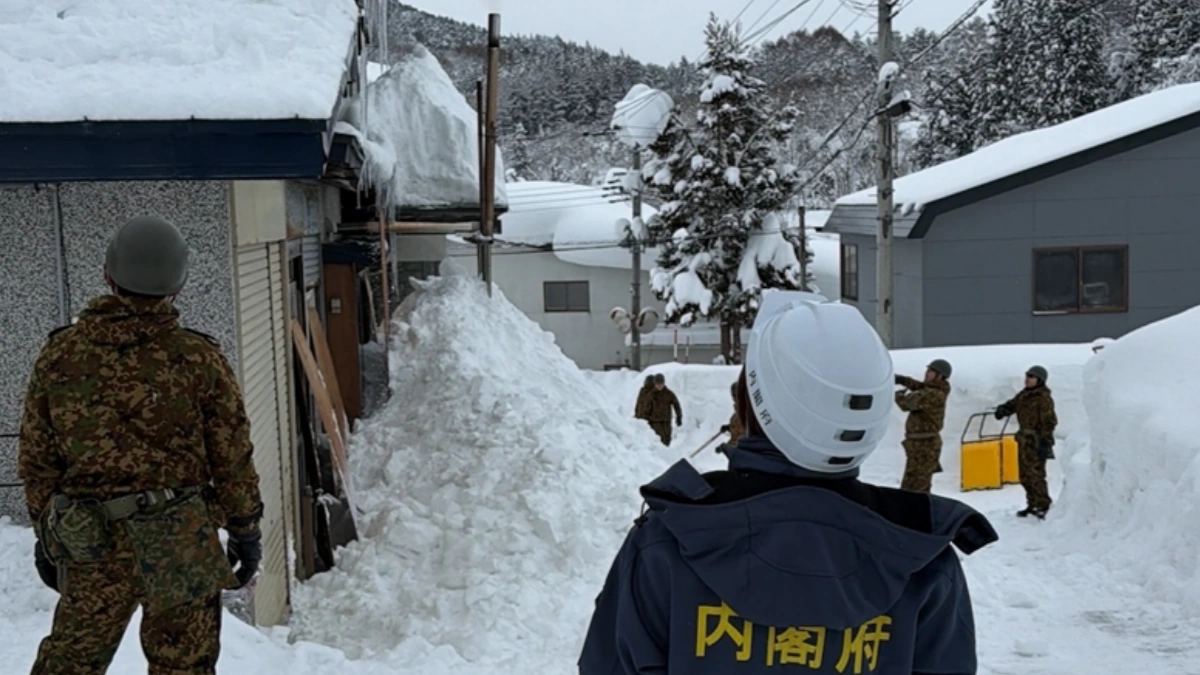
Heavy snow accumulations in Aomori, Japan, on February 3, 2026. Credit: CAO_Bousai
Heavy snowfall affecting Japan since late January 2026 has caused widespread disruption across northern regions of the country, leaving at least 46 people dead and more than 550 injured, according to Japan’s Fire and Disaster Management Agency, while damaging agricultural infrastructure across the Tohoku region and Niigata Prefecture.
Most fatalities occurred during snow removal operations, including falls while clearing snow from rooftops and incidents involving falling snow or ice. Authorities have also reported hundreds of injuries linked to snow-clearing activities and accidents on snow-covered or icy surfaces.
The prolonged winter storms affected multiple prefectures along the Sea of Japan coast, where deep snow accumulation has disrupted transportation, damaged buildings, and buried farmland.
Northern Japan is one of the snowiest populated regions in the world. Cold air masses moving from Siberia pick up moisture while crossing the relatively warm waters of the Sea of Japan, producing heavy snow when the air reaches Japan’s mountainous coastline.
This process, known as the “sea-effect snow” mechanism, frequently produces deep snowfall across prefectures including Aomori, Akita, Yamagata, and Niigata.
In Hirosaki, Aomori Prefecture, snowfall reached 148 cm (58 inches) in January, setting a monthly record for the city, according to Japanese media reports.
The weight of accumulated snow broke branches across apple orchards, forcing farmers to dig out damaged trees buried beneath snow. Aomori produces about 60% of Japan’s apples, making orchards extremely vulnerable to snow load.
“I can only sigh because more branches have been broken than last year,” said a farmer working in an apple orchard in Hirosaki in mid-February.
During the previous winter season, broken branches on apple trees alone caused more than JPY 20 billion in damage across Aomori Prefecture. One farmer reported that the yield from his 5 ha (12 acres) orchard dropped by nearly 10 tonnes, more than 10% below typical production levels.
Farmers say branch damage has been reported across wide orchard areas this winter as well, raising concerns that the 2026 apple harvest may decline if trees fail to recover from structural damage caused by snow load.
Heavy snowfall also damaged agricultural infrastructure in neighboring prefectures. In Kita-Akita, Akita Prefecture, approximately 160 cm (63 inches) of snow accumulated in the downtown area during January. Municipal authorities reported that about 70 agricultural structures, including vinyl greenhouses and poultry facilities used for raising Hinai Jidori chickens, were damaged.
A vegetable farmer said 10 of his greenhouses, nearly half of the total, were damaged by the weight of accumulated snow. Crops, including spinach and kogomi ostrich fern, remained buried beneath snow and could not be harvested, while farm equipment, such as tractors, remained snowbound.
“I’ve never seen snow like this before, and the surge in material prices makes it difficult to rebuild my greenhouses,” the farmer said, estimating his losses at approximately JPY 40 million.
Niigata Prefecture also reported agricultural damage following heavy snowfall. As of February 26, authorities confirmed damage to approximately 190 agricultural facilities across nine municipalities in the prefecture.
Deep snow accumulation has also disrupted infrastructure across northern Japan. Snow depth exceeded 2 m (6.5 feet) in some areas, contributing to road closures, transport disruption, and localized power outages.
Snow removal operations have become a major challenge for local governments. In Hirosaki, farm road snow clearing normally begins in February, but authorities moved the start of operations to late January this winter due to unusually heavy snowfall.
Municipal resources have been insufficient to manage the volume of snow, prompting the city to allocate an additional JPY 17.6 million to outsource part of the snow removal work to private construction companies.
In Aomori, snow clearing on approximately 84 km (52 miles) of farm roads was also moved forward to early January. However, progress has been slow because priority must be given to clearing roads used for daily transportation.
Officials say the full extent of agricultural damage may not be known until snow cover recedes later in the spring.
“It has been snowing for a long period this season, and the damage from the snowfall may be greater than the previous year,” said an official from the Japan Agricultural Cooperative (JA) Aomori. Agricultural specialists are advising farmers to remove snow from tree branches to prevent breakage under the weight of compacted snow.
Takahisa Kudo, an engineer with the Aomori Apple Association, said repeated cycles of snowfall and melting compress snow layers and increase the likelihood of branch failure. He recommended prioritizing snow removal on farm roads and using snow-melting agents quickly to reduce snow accumulation around orchards.
Tomoyoshi Hirota, a professor of agricultural meteorology at Kyushu University, said rising sea surface temperatures linked to global warming may create atmospheric conditions that allow heavy snowfall events to occur more easily.
Because predicting the timing and location of heavy snowfall remains difficult, he said, reinforcing greenhouses and improving damage mitigation measures will be necessary, while government support programs may be needed to compensate farmers for losses.
References:
1 Record Snowfall in Japan Causes Serious Agricultural Damage in Tohoku Region, Could Be Worse Than in Typical Years – The Japan Times – March 3, 2026

I’m a science journalist and researcher at The Watchers, contributing to the Epicenter edition, where I cover peer-reviewed scientific research and emerging discoveries across Earth and space sciences. With a background in astronomy and a passion for environmental science, I’ve worked in shark and coral conservation in Fiji, conducting reef and shark-behavior research, contributing to mangrove restoration, and earning PADI Open Water and Coral Reef Certifications. I bring a blend of scientific rigor and storytelling to illuminate the discoveries shaping our planet and beyond.

Commenting rules and guidelines
We value the thoughts and opinions of our readers and welcome healthy discussions on our website. In order to maintain a respectful and positive community, we ask that all commenters follow these rules.