
New bee parasite “Tropilaelaps mercedesae” spreading across Europe could soon be deadlier than Varroa destructor
A new threat to bees is on the move in Europe. Tropilaelaps mercedesae, a parasitic mite, is emerging as potentially even more devastating than the “worst bee killer,” the Varroa destructor. Parasitic mite infestations are now threatening economies worldwide as they wipe out massive bee populations, sending ripples of losses across multiple sectors.
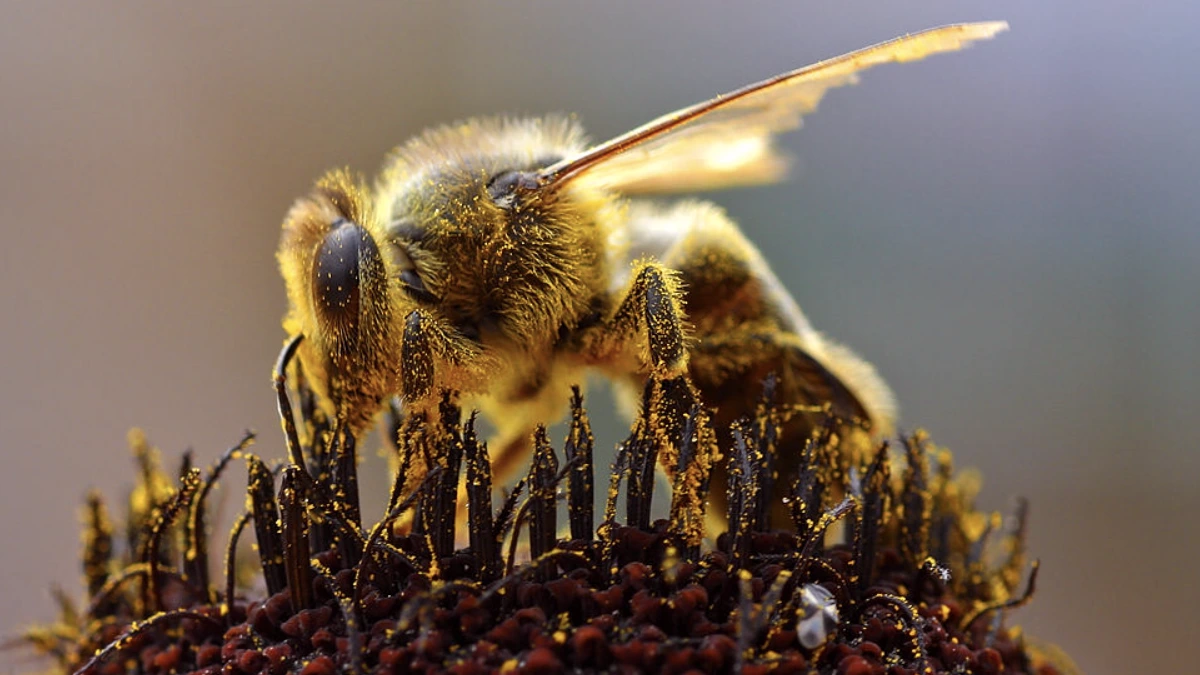
Bee collecting Pollen. Credit: Jon Sullivan
Beekeepers around the world could soon be facing a greater threat than the Varroa destructor, according to a report by Jean-Pierre Scheerlinck of The University of Melbourne.
The threat in question is Tropilaelaps mercedesae or “Tropi,” a deadly bee parasite that has been common across South and Southeast Asia and has now reached parts of Europe.
Scheerlinck is an Honorary Professor Fellow at the Melbourne Veterinary School, Faculty of Science, The University of Melbourne. In his report, he claims that Tropi infestations in Europe could turn out to be deadlier than Varroa, which is widely considered the worst bee parasite in the world.
Robert Owen, a beekeeper who completed a PhD on the Varroa mite at the University of Melbourne in 2022, also contributed to the report.

Tropi’s natural host is the giant honeybee (Apis dorsata), native to southern and southeastern Asia. However, in 2021, they were found in bee populations in the Krasnodar region of western Russia. Beekeepers in the region suffered a loss of around 53% of colonies that year.
A study of the infestation in Krasnodar confirmed the first reports of Tropi populations in Europe. The paper was published in 2024 in the Journal of Apicultural Research.
Since then, Tropi has been detected in Ukraine, Georgia, and southern Russia, and is suspected to be present in Iran and Turkey. From there, it is expected to spread into Eastern Europe and eventually across the continent. Australia and North America are also expected to be the next victims of Tropi.

Tropi, like Varroa, thrives within the capped brood cells of a hive. These cells are where honeybee larvae and pupae mature, sealed under a wax layer. The Tropi mite feeds on these bee pupae while spreading deadly bee viruses like deformed wing virus.
Scheerlinck points out some key differences between Varroa and Tropi. While Varroa can survive on adult bees for long periods, Tropi cannot. It lives only for a few days outside brood cells while searching for new larvae.
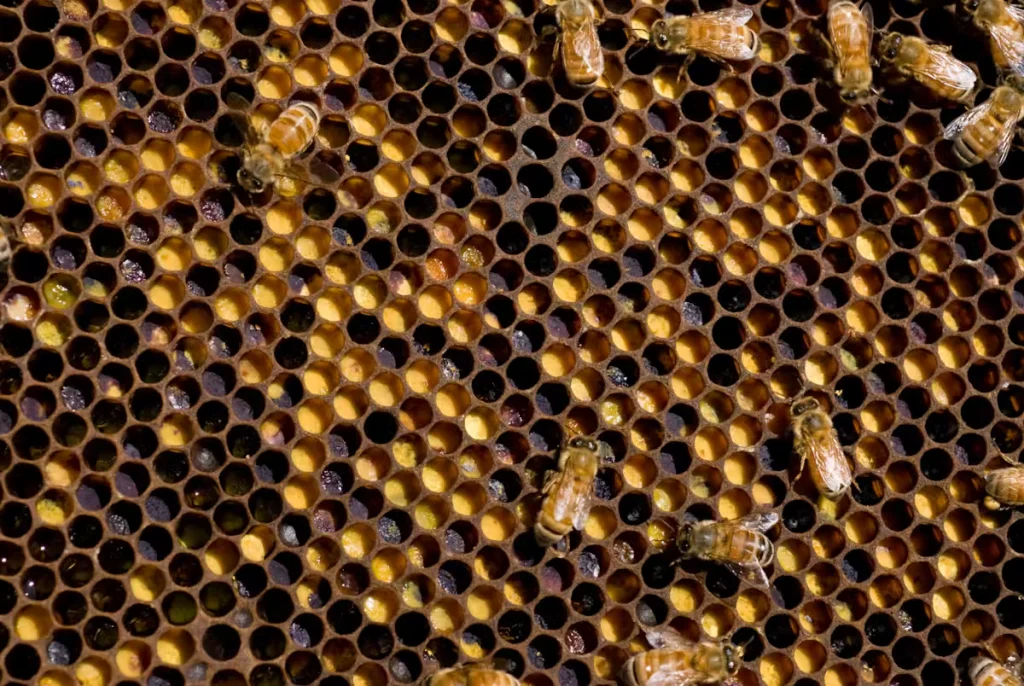
Since Tropi spends more time inside capped cells, it can reproduce at a much faster rate than Varroa, which clings to adult bees and moves in and out of cells. In addition, Tropi offspring develop more quickly inside the capped cells than Varroa. This allows female Tropi to produce offspring at a greater rate.
These factors combined could lead to faster collapses of bee colonies. This is just one of many challenges in store for Western beekeepers who have so far only had to manage Varroa.
A common question is whether chemicals used against Varroa can also be used against Tropi.
According to Scheerlinck, the answer is generally no.
Small-scale beekeepers in parts of Asia deal with Tropi by caging the queen of the hive for around five weeks. This prevents her from laying eggs, depriving the mites of food. Once the mites have starved, the queen can resume laying eggs.
While this method works for Asian beekeepers who manage a few dozen hives, it is impractical for European beekeepers who manage thousands.
A more practical alternative for European beekeepers could be formic acid, which seeps into brood cell caps, killing mites without necessarily harming developing bees—if concentrations are kept low.

Varroa spends much of its time clinging to adult bees as they leave and re-enter the hive, exposing them to miticides (mite-killing chemicals) spread throughout the colony.
Tropi, on the other hand, rarely clings to adult bees. Instead, it mostly feeds on pupae and spends most of its time in the hive, crawling over the comb’s surface in search of food.
Another issue is that most chemicals have been designed to target Varroa and are largely ineffective against Tropi, which reproduces at a much higher rate.
Managing both the species together would be especially problematic in Europe, as each requires different treatments.
Combining treatments risks harming colonies and contaminating honey. For example, formic acid for Tropi and insecticides such as amitraz for Varroa might interact even at low levels, killing bees as well as the parasites.

Overuse of chemical treatments also leads to the development of resistant strains, which can render previously effective methods useless. Numerous cases of resistant Varroa strains have already been detected, making many traditional treatments ineffective.
We must keep in mind that this is not just an issue for beekeepers and the honey industry. Bees are among the most important pollinators of crops worldwide. From fruits to flowers, farmers depend on bee populations to ensure proper pollination and good yields.
A decline in bee populations will ripple across the economy. Losses of fruit and vegetable crops would be severe, leading to significant financial losses. Prices would rise across the market, not just in the produce section but across all sectors of the supermarket.
From almond milk to grape juice—anything that depends on agricultural produce as raw material—would see price hikes.

According to the European Environment Agency (EEA), the economic value of pollination within the European Union (EU) is estimated at between EUR 5 and 15 billion annually. Crops such as apples, tomatoes, almonds, and sunflowers depend heavily on insect pollination, with around 80% of EU crops and wildflower species currently relying on it.
Europe is already experiencing a serious decline in wild pollinators, including wild bees, hoverflies, butterflies, and moths. Nearly 40% of hoverfly species, 20% of butterflies, and 9% of bees are threatened with extinction. While various causes have contributed to this decline, the arrival of Tropi is bound to make it worse.
Turkey is one of the countries where Tropi is suspected to be present as of now. The country recently lost crops worth millions of dollars due to a three-day cold spell in April.
These massive losses and reduced yields that usually occur once in a few years could become the norm due to Tropi infestations in these countries.
“Research is underway in countries such as Thailand and China to develop better management strategies for the Tropi. But unless effective and practical treatments are found soon, the spread of this new mite around the world could be catastrophic,” says Scheerlinck
Mite infestation could alter the agro-economic landscape of the world. Countries like turkey which bring in billions in revenue from exports of fruits, vegetables, and dry fruits could see unprecedented losses if there is a major decline in bee population.
The Americas and Australia are expected to be the next victims of the Tropi. Australia, which has only begun dealing with Varroa in recent years, could soon see another blow of bee losses due to Tropi in the coming years.
The first case of the Varroa Destructor in Australian state of South Australia was confirmed recently.
Read more on that here:
References:
1 Deadlier than varroa, a new honey-bee parasite is spreading around the world – The Conversation – September 10, 2025.
2 Reversing pollinator decline: why Europe must act now – EEA – June 18, 2025

I am an Assistant Editor and Severe Weather & Science Journalist at The Watchers, specializing in real-time severe weather coverage, geophysical event reporting, and research-driven scientific analysis. You can reach me at rishav(at)watchers(.)news.

Commenting rules and guidelines
We value the thoughts and opinions of our readers and welcome healthy discussions on our website. In order to maintain a respectful and positive community, we ask that all commenters follow these rules.