
Strong M6.9 earthquake hits near the east coast of Honshu, Japan
A strong earthquake registered by the USGS as M6.9 struck near the east coast of Honshu, Japan, at 22:30 UTC on June 24, 2026 (07:30 LT on June 25). The agency is reporting a depth of 51 km (32 miles). EMSC is reporting M6.9 at a depth of 53 km (33 miles). According to the Pacific Tsunami Warning Center (PTWC), there is no tsunami threat from this event.
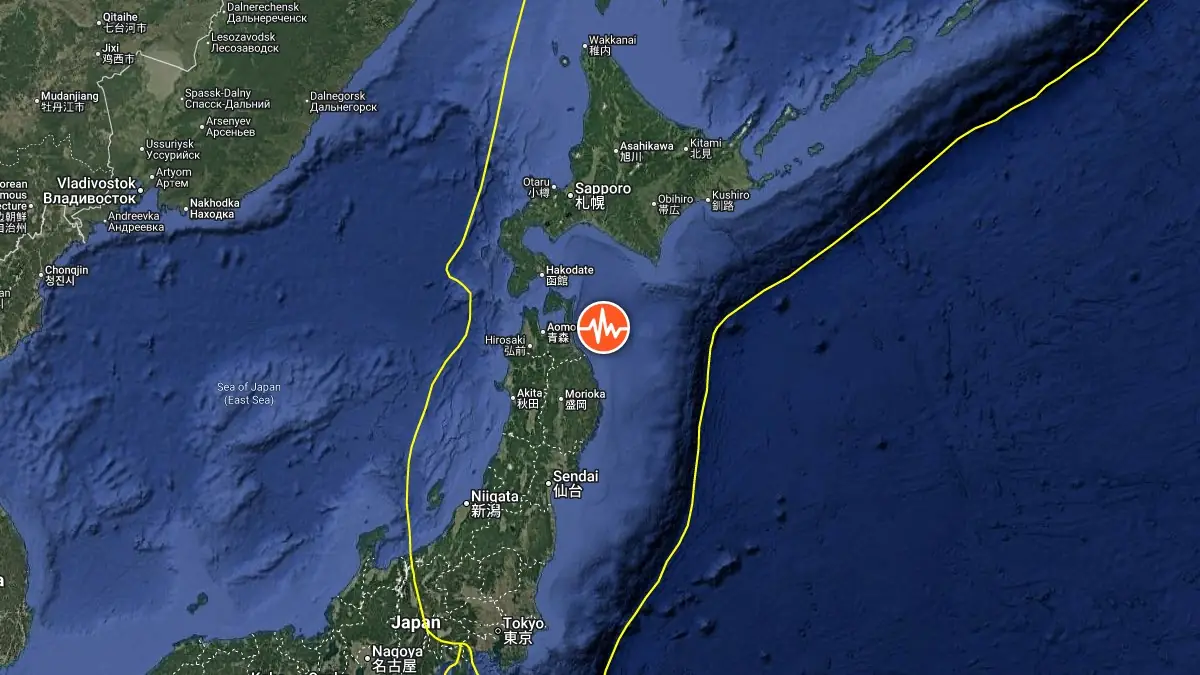
Epicenter of M6.9 earthquake near the east coast of Honshu, Japan on June 24, 2026. Credit: TW/SAM, Google
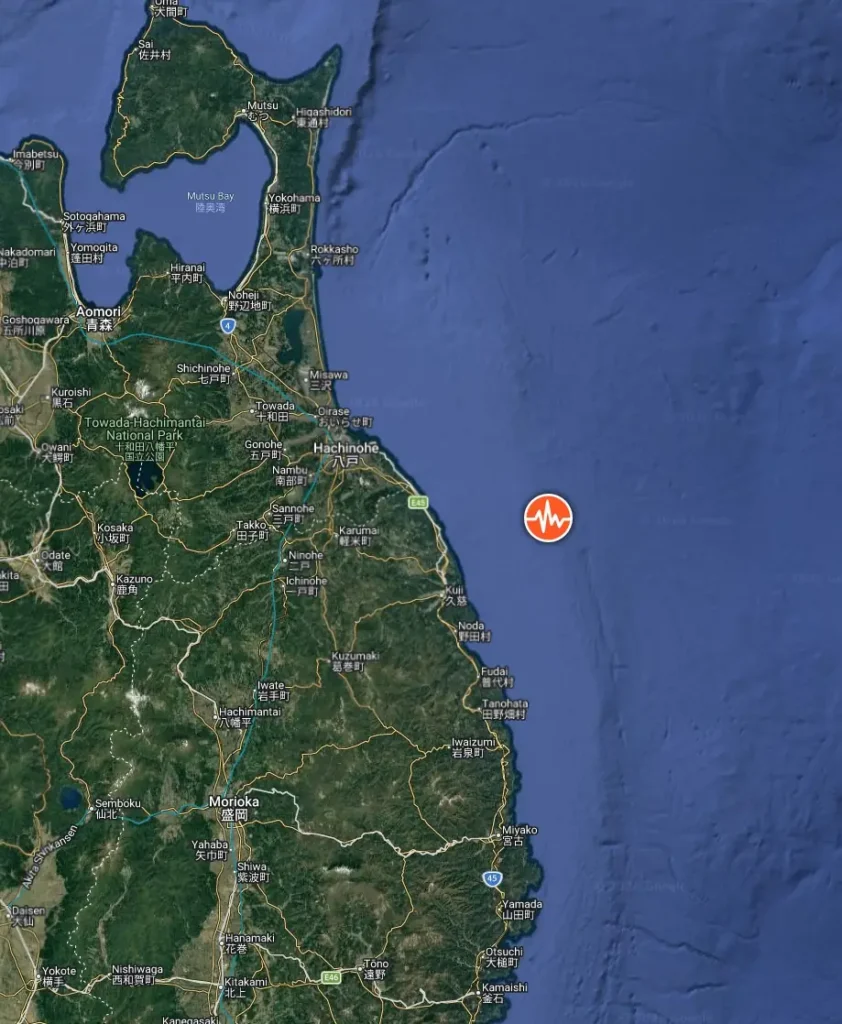
The epicenter was located 30 km (19 miles) ESE of Kuji (population 34 418), 56 km (35 miles) ESE of Hachinohe (population 239 046), 70 km (43 miles) E of Ichinohe (population 12 053), 73 km (45 miles) N of Miyako (population 51 150), and 104 km (65 miles) SW of Morioka (population 290 700), Japan.
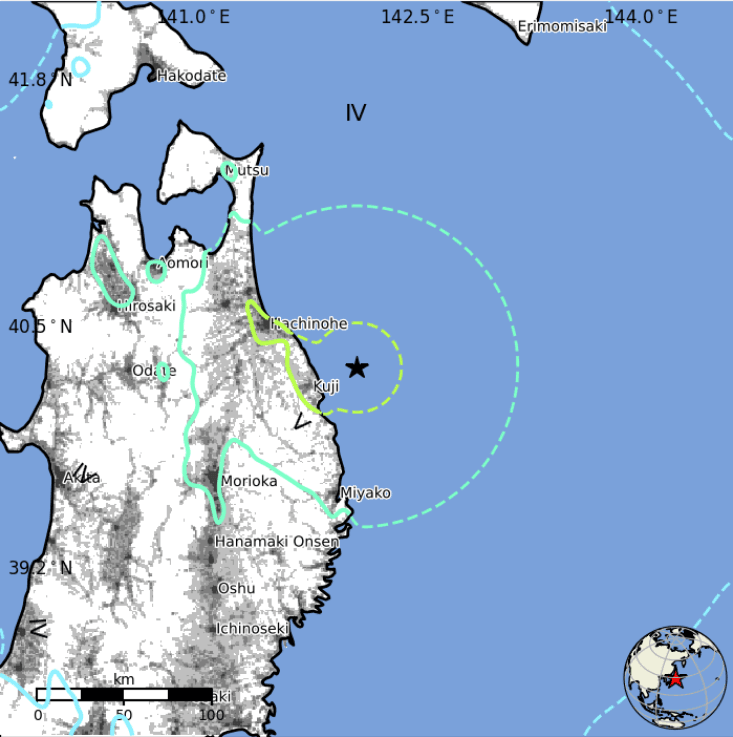
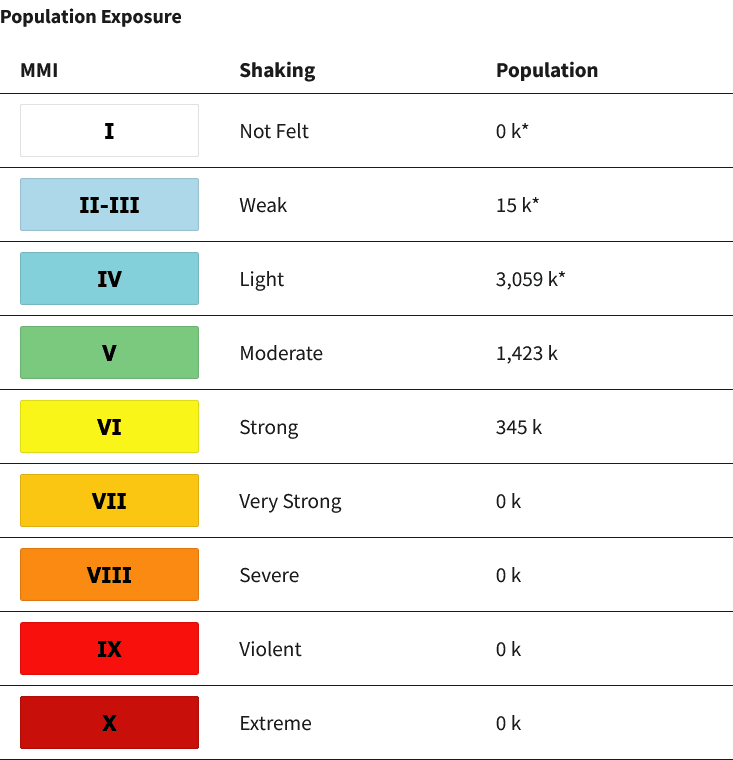
345 000 people are estimated to have felt strong shaking, 1.4 million moderate, and 3 million light.
Based on all available data, there is no tsunami danger from this earthquake. NWS Pacific Tsunami Warning Center (PTWC) reported that no tsunami impacts are expected.
The USGS issued a Green alert for shaking-related fatalities and economic losses. There is a low likelihood of casualties and damage.
Overall, the population in this region resides in structures that are resistant to earthquake shaking, though vulnerable structures exist. The predominant vulnerable building types are heavy wood frame and reinforced/confined masonry construction.
Recent earthquakes in this area have caused secondary hazards such as landslides and fires that might have contributed to losses.
Estimated population exposure to earthquake shaking
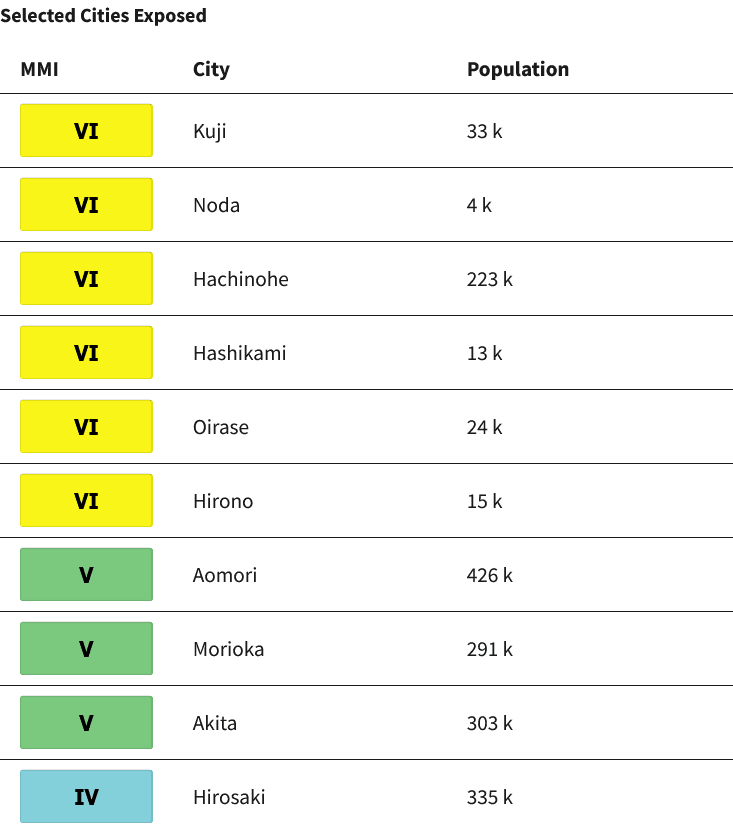
Selected cities exposed
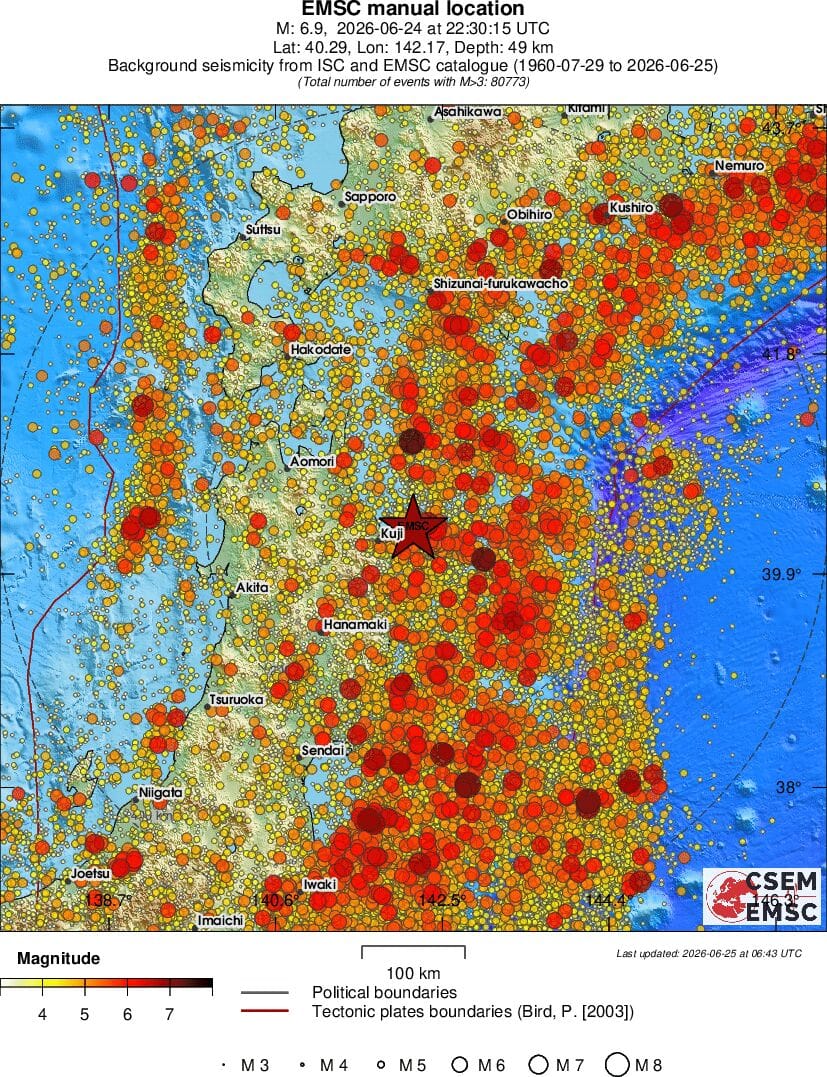
Regional seismicity
References:
1 M6.9 earthquake near east coast of Honshu, Japan – USGS – June 25, 2026
2 M6.9 earthquake near east coast of Honshu, Japan – EMSC – June 25, 2026

Rishav Kothari is Editor-in-Chief of The Watchers, where he runs the newsroom and covers earthquakes, volcanoes, severe weather and space weather.
Published in the last 24 hours
- Scientists directly observe how submarine landslides unfold in western Canada Epicenter
- Odisha evacuated 983,642 people before Phailin crossed near Gopalpur on 12 October 2013 with winds of 200-210 km/h gusting to 220, and 44 died, against 9,885 in the 1999 super cyclone. Cyclone Akvan crossed the same coast on 20 November 2026. Epicenter
- Lava fountains reached 1,900 feet (580 m) at Kīlauea Iki in 1959, the highest ever recorded at Kīlauea, as USGS forecasts episode 57 fountaining at Halemaʻumaʻu for November 22-26. Epicenter
- Novarupta in Alaska erupted about 3 cubic miles of magma in roughly 60 hours from 6 June 1912, 30 times Mount St. Helens in 1980, and strong northwesterly winds lifted that same loose ash on 16 November 2026, prompting an NWS SIGMET. Epicenter
