
Earthquake swarm with 90 events detected at Teide volcano, Tenerife, Canary Islands
A new seismic swarm with 90 tremors was recorded beneath Mount Teide on the island of Tenerife, Canary Islands, Spain, on August 30, 2025.
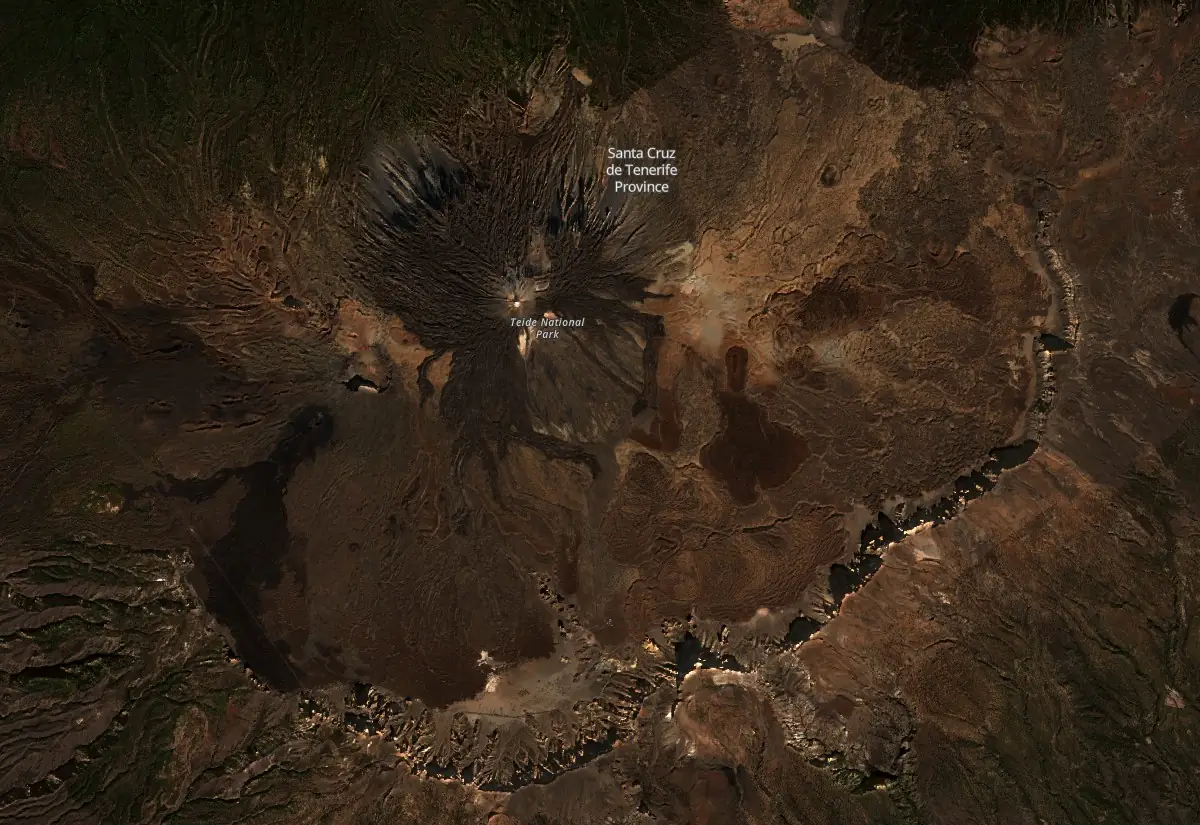
Satellite image of Teide volcano, Tenerife, Spain on December 20, 2024. Credit: CopernicusEU/Sentinel-2, EO Browser, The Watchers
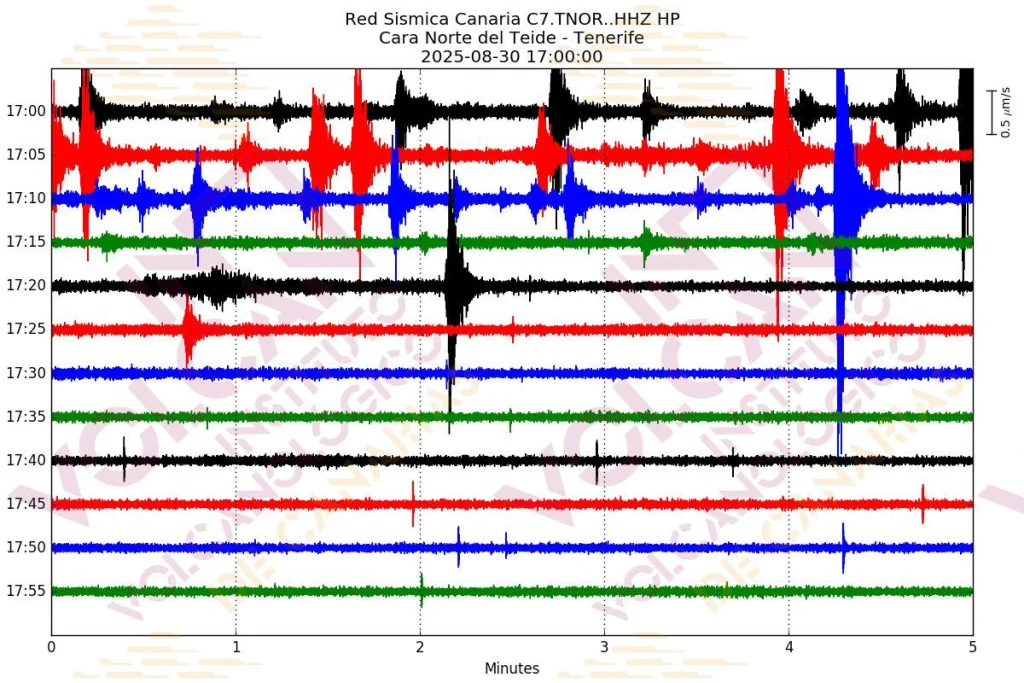
At least 90 very low-magnitude earthquakes were detected by the Canary Islands Seismic Network, operated by the Volcanological Institute of the Canary Islands (INVOLCAN), at Teide volcano in Tenerife on Saturday, August 30. The events were picked up by the TNOR seismic station, located on the northern slope of Teide, and occurred between 17:14 and 18:26 local time.
Despite describing the activity as “anomalous”, INVOLCAN said there are no signs that the probability of a volcanic eruption has increased in the short or medium term.
The National Geographic Institute (IGN) also detected 15 of Saturday’s earthquakes, with magnitudes ranging from 0.2 to 0.8 on the Richter Scale.
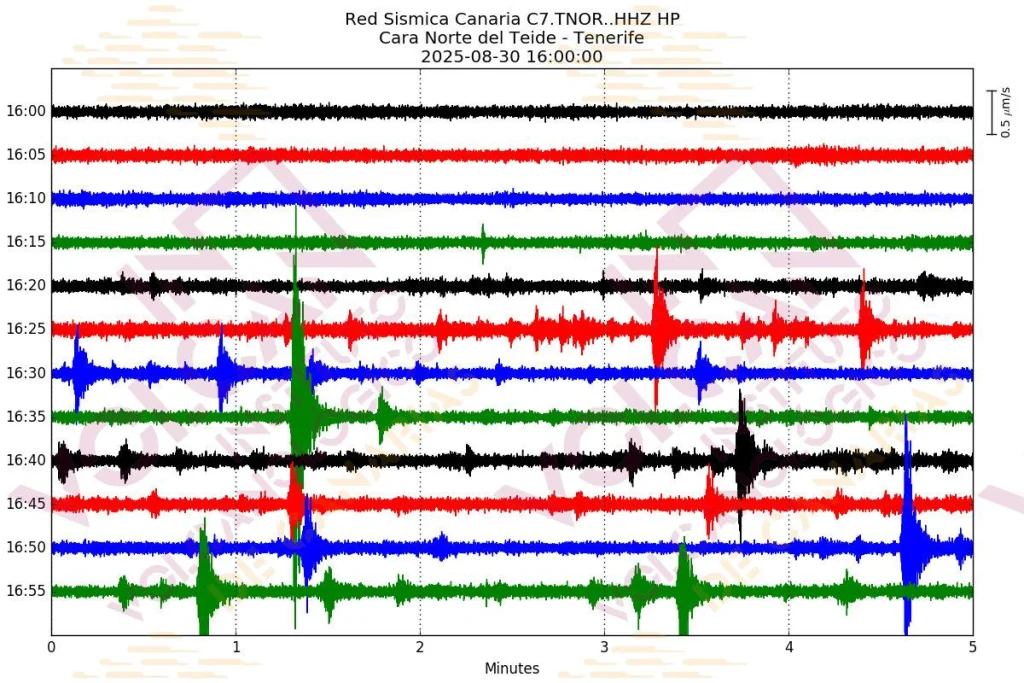
According to INVOLCAN, the swarm is part of a recurrent seismic pattern observed beneath the island since June 2017. More than 120 similar swarms have been documented over this period.
The events were volcano-tectonic events, resulting from rock fracturing caused by pressurization within the island’s volcanic–hydrothermal system due to the injection of magmatic fluids.
This phenomenon has been repeatedly observed since 2016, supported by two key indicators:
- An increase in diffuse carbon dioxide emissions at the summit crater of Teide.
- Slight ground deformation has been detected since 2024 in the northeast sector of the Teide–Pico Viejo volcanic complex.
Tenerife is a large, triangular island made up of several overlapping stratovolcanoes that formed from the Miocene to the Quaternary periods.
The Cordillera Dorsal, a volcanic massif running northeast, connects the Las Cañadas volcano to older volcanoes, forming the Canary Islands’ largest volcanic complex.
The Las Cañadas caldera’s origin 10 × 17 km (6 × 10.5 miles), now partially filled by the Teide stratovolcano, is debated. Theories suggest it formed from collapse after major eruptions, a massive landslide, or a combination of both.
The most recent volcanic activity, starting in the late Pleistocene, involved the creation of the Pico Viejo and Teide volcanoes. Several vents on the island’s most active volcano have erupted in recorded history.

I am an Assistant Editor and Severe Weather & Science Journalist at The Watchers, specializing in real-time severe weather coverage, geophysical event reporting, and research-driven scientific analysis. You can reach me at rishav(at)watchers(.)news.

Commenting rules and guidelines
We value the thoughts and opinions of our readers and welcome healthy discussions on our website. In order to maintain a respectful and positive community, we ask that all commenters follow these rules.