
Increased volcanic activity detected at Mount Teide, no imminent eruption risk, Tenerife
The Scientific Committee for the Evaluation and Monitoring of Volcanic Phenomena (CCES) has confirmed that the Teide volcano in Tenerife, Spain is exhibiting anomalous geophysical activity, characterized by increased seismicity, geodetic deformation, and gas emissions. While there are no indications of an imminent eruption, experts acknowledge an elevated likelihood of volcanic activity in the medium to long term.
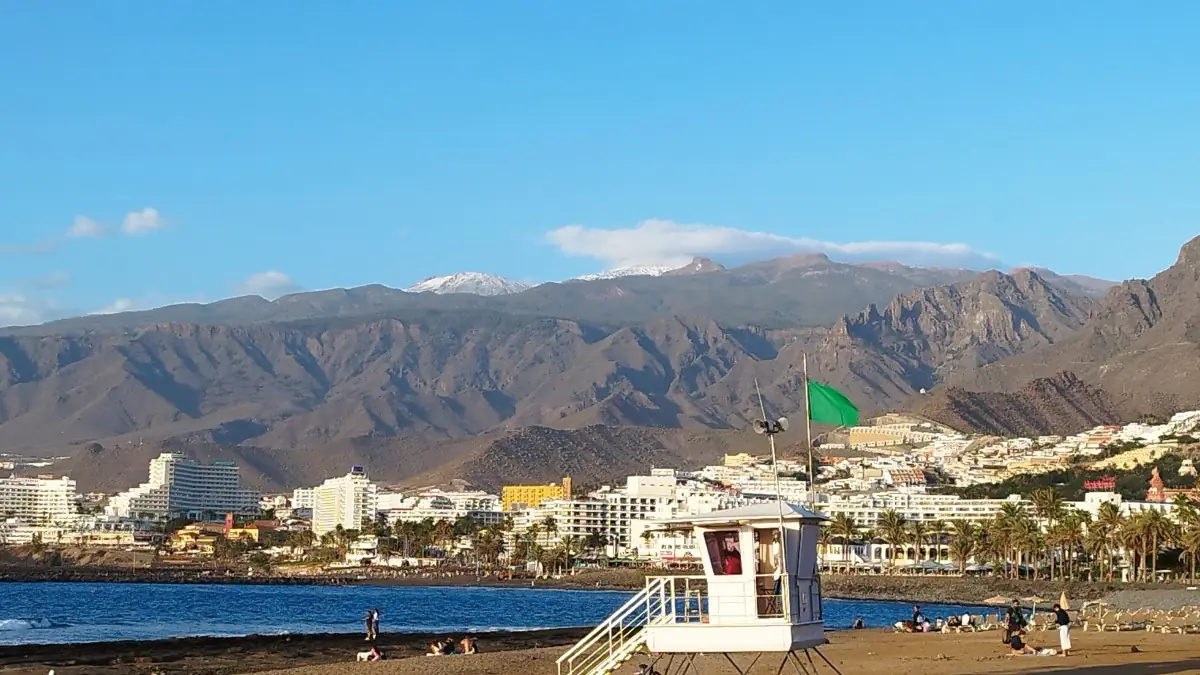
Image credit: Teo Blašković, The Watchers
Since 2016, monitoring networks have recorded gradual yet persistent geophysical changes beneath Teide, with a marked intensification of activity since 2022. Key indicators, including seismic swarms, ground deformation, and variations in gas emissions, suggest increasing pressurization within the hydrothermal system underlying the stratovolcano.
Of particular note is the correlation between altered fumarolic emissions and seismic activity concentrated around Las Cañadas, Cumbres de Adeje, and Vilaflor. In addition, over the past week, a localized seismic cluster near Vilaflor has generated at least 14 earthquakes within a 24-hour period.
The Canary Islands Volcanology Institute (Involcan), the Spanish National Research Council (CSIC), and the Directorate General of Emergencies are actively analyzing these developments, refining hazard models, and enhancing surveillance strategies.
In June and July 2023, a significant cluster of deep-seated earthquakes was detected near Santiago del Teide at depths exceeding 30 km (18.6 miles), indicative of magmatic or hydrothermal system adjustments. Later in 2023, another seismic sequence occurred beneath Las Cañadas, with focal depths ranging from 17 to 23 km (10.5 to 14.3 miles). Smaller swarms have also been documented under Izaña and the peaks of Arico, highlighting the complexity of the volcanic system.
Geodetic measurements suggest subtle yet measurable ground deformation, reinforcing the hypothesis of increased pressurization. Although these indicators do not currently imply magma migration toward the surface, they warrant continued scrutiny to assess potential changes in the system’s behavior.
The Canary Islands government remains vigilant, maintaining operational readiness through the Special Civil Protection and Emergency Plan for Volcanic Risk (PEVOLCA). While there is no immediate hazard to the population, authorities stress the importance of continuous monitoring and public awareness.
Residents and visitors are advised to stay informed through official updates and adhere to any guidance provided by emergency management agencies, particularly in regions experiencing heightened seismic activity.
The government said it will make the scientific committee’s findings publicly accessible through the Territorial Policy Department’s website.
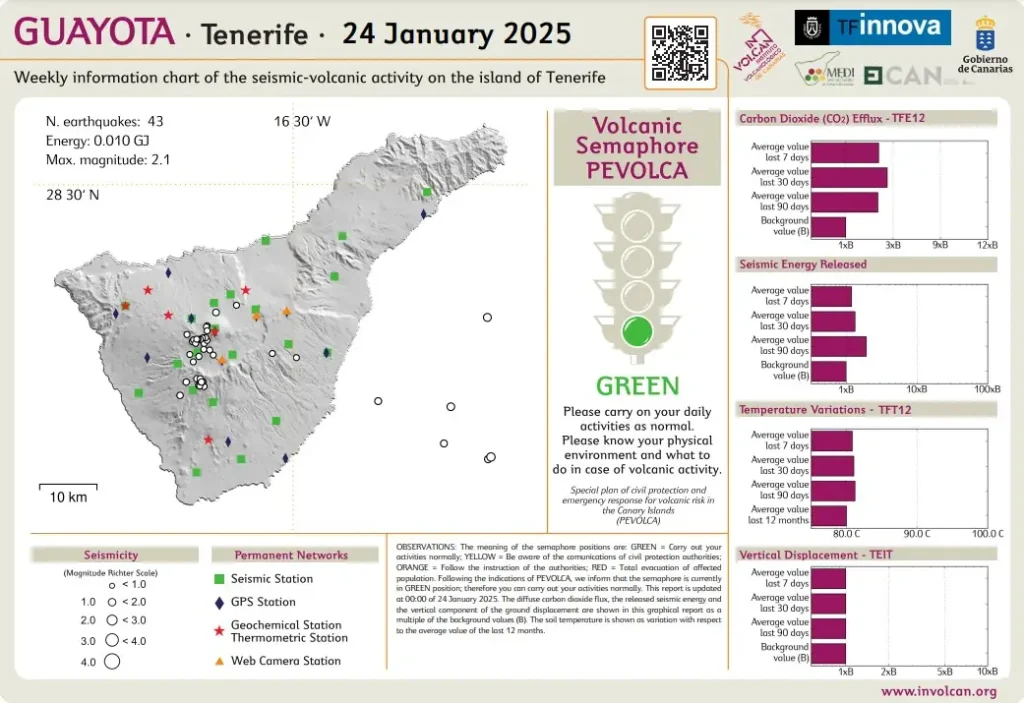
Geologically, Tenerife is composed of a complex of overlapping Miocene-to-Quaternary stratovolcanoes. The northeast-trending Cordillera Dorsal volcanic massif connects the Las Cañadas volcano on the southwest side of the island with older volcanic structures, forming the largest volcanic complex in the Canary Islands. Mount Teide was constructed within the 10 x 16 km (6.2 x 10 miles) Las Cañadas caldera on the southwest side of Tenerife.
The island’s volcanic history is characterized by the development of these overlapping structures, with the Las Cañadas caldera and the Teide–Pico Viejo complex being particularly significant. The caldera’s formation involved multiple cycles of construction and collapse, leading to its current morphology. Subsequent volcanic activity built up the Teide and Pico Viejo stratovolcanoes within the caldera.
Mount Teide last erupted in 1909 from the El Chinyero vent on the Santiago Ridge. This eruption was relatively small and did not cause significant damage.


The earliest recorded eruption in Tenerife occurred in 1492, known as the Boca Cangrejo eruption, which took place along the northwest rift zone. This event coincided with Christopher Columbus’s voyage across the Atlantic, and historical accounts suggest that his crew may have observed the eruption from their ships.
Between 1704 and 1705, a series of eruptions occurred at Siete Fuentes, Fasnia, and Arafo, all located along the northeast rift zone. While these eruptions marked one of the more prolonged eruptive periods on the island and produced lava flows that impacted the surrounding area, they did not result in significant loss of life.
In 1706, the Montañas Negras eruption on the northwest rift had a far more devastating impact. This eruption led to the destruction of Garachico, a major town and port at the time, which was buried under lava flows. The loss of the port significantly affected the local economy, as Garachico had been a crucial hub for trade and commerce in the Canary Islands. Today, the remnants of the lava flows serve as a historical reminder of the island’s volcanic hazards.
Another eruption occurred in 1798 on the western flank of Teide, known as the Narices del Teide or Chahorra eruption. This eruption lasted for several months and produced multiple lava flows, although it did not cause extensive damage to populated areas. However, it remains one of the most visually striking events in Tenerife’s recent volcanic history, as the lava vents are still visible along Teide’s slopes.
The most recent volcanic activity in Tenerife took place in 1909 with the El Chinyero eruption on the Santiago Ridge. This eruption, while relatively small, was well-documented and observed by residents. It produced lava flows that advanced towards nearby settlements but ultimately did not reach inhabited areas.
While Tenerife has not experienced another volcanic eruption since 1909, ongoing seismic swarms, geodetic deformation, and geochemical anomalies observed in recent years indicate increasing pressurization within the island’s magmatic-hydrothermal system and possible volcanic activity in the mid to long term.
References:
1 Experts identify “anomalous” volcanic activity at Teide but assure of no immediate eruption risk – Canarian Weekly – January 24, 2025
2 Tenerife – GVP – Accessed on January 26, 2025

I'm a dedicated researcher, journalist, and editor at The Watchers. With over 20 years of experience in the media industry, I specialize in hard science news, focusing on extreme weather, seismic and volcanic activity, space weather, and astronomy, including near-Earth objects and planetary defense strategies. You can reach me at teo /at/ watchers.news.

Commenting rules and guidelines
We value the thoughts and opinions of our readers and welcome healthy discussions on our website. In order to maintain a respectful and positive community, we ask that all commenters follow these rules.