
Kīlauea volcanic ash triggers biggest Pacific phytoplankton bloom
A new study shows that Kīlauea’s 2018 eruption released volcanic ash that contributed to a large phytoplankton bloom 1 930 km (1 200 miles) away in the North Pacific. The bloom, spanning 1.5 million km2 (5.8 million mi2), was one of the largest recorded in the region.
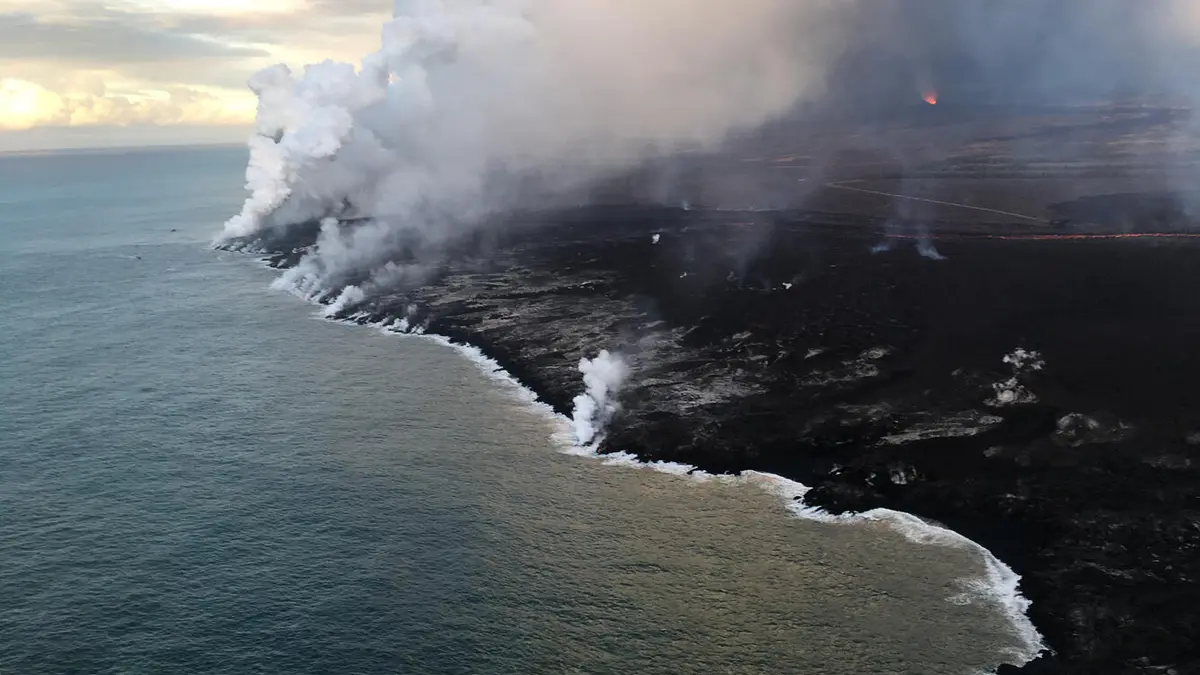
Kīlauea volcano - Fissure 8 Eruption - Early morning view of the ocean entry. Image credit: USGS/Hawaiian Volcano Observatory
In May 2018, Kīlauea volcano on Hawaiʻi Island erupted, releasing a plume of ash nearly 8 km (5 miles) high. The eruption, among the largest in over 200 years, emitted about 50 kilotons of sulfur dioxide and 77 kilotons of carbon dioxide per day. Easterly winds transported the ash westward, depositing it into the nutrient-poor North Pacific Subtropical Gyre, approximately 2 000 km (1 243 miles) from the volcano.
A study published on March 15, in the Journal of Geophysical Research: Oceans detailed the event. Conducted by researchers including Chun Hoe Chow, Wee Cheah, Ricardo M. Letelier, David M. Karl, and J.-H. Tai, the study linked the eruption to a massive phytoplankton bloom. The international team included scientists from the University of Hawaiʻi at Mānoa, Universiti Malaya, and National Taiwan Ocean University.
Satellite observations revealed a large phytoplankton bloom in June 2018, covering 1.5 million km2 (5.8 million mi2) near the International Date Line. The bloom, identified by changes in ocean color, peaked in July and continued until early August. Researchers reported that the bloom’s area was approximately five times that of Malaysia or 50 times that of Taiwan.

The ash provided essential nutrients, particularly iron and phosphate, which stimulated phytoplankton growth. Nitrogen-fixing microbes, capable of surviving without external nitrogen sources, were primarily responsible for the bloom. The nutrient-poor waters of the North Pacific Subtropical Gyre, combined with the ash input, created favorable conditions for the event.
Atmospheric factors, including precipitation, aided the deposition of ash into the ocean. Earth-orbiting satellites monitored the ash plume’s westward movement through aerosol optical depth measurements. Local rainfall and wind patterns influenced ash distribution, contributing to the bloom’s occurrence about 5° north of the deposition site.
Oceanic conditions also contributed to the bloom’s maintenance. A shoaling of the mixed layer to 25–50 m (82–164 feet) concentrated phytoplankton within the satellite-detectable optical depth. Ekman (wind-driven ocean currents) transport further supported the bloom by affecting surface water circulation.

The bloom significantly influenced the ocean’s carbon cycle. Satellite estimates indicated it produced 1.91 Tg of net carbon, with 0.34 Tg exported from the euphotic zone to deeper waters. This export removed nearly half of the carbon dioxide initially emitted by the eruption, sequestering it in the ocean.
Prior eruptions of Kīlauea had not been connected to open ocean phytoplankton blooms, despite regular volcanic activity over the past 40 years. However, previous research found that lava from the 2018 eruption warmed nutrient-rich deep waters near Hawaiʻi Island, initiating a local phytoplankton plume. The long-distance transport of ash distinguished the 2018 event.
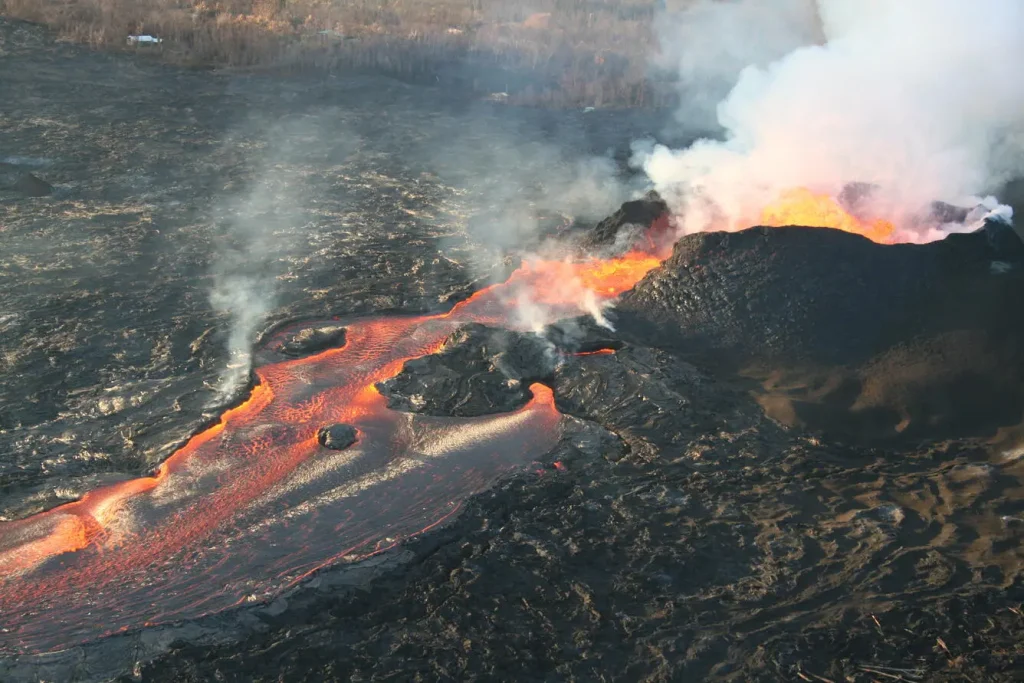
Researchers utilized satellite imagery, Argo float data, and atmospheric modeling to investigate the bloom and examined physical conditions to determine the bloom’s timing and location. They intend to monitor future eruptions for comparable phenomena.
References:
1 Kı̄lauea Volcanic Ash Induced a Massive Phytoplankton Bloom in the Nutrient-Poor North Pacific Subtropical Gyre – C. H. Chow, W. Cheah et al.- Journal of Geophysical Research: Oceans – March 15, 2025 – https://doi.org/10.1029/2023JC020676

I’m a science journalist and researcher at The Watchers, contributing to the Epicenter edition, where I cover peer-reviewed scientific research and emerging discoveries across Earth and space sciences. With a background in astronomy and a passion for environmental science, I’ve worked in shark and coral conservation in Fiji, conducting reef and shark-behavior research, contributing to mangrove restoration, and earning PADI Open Water and Coral Reef Certifications. I bring a blend of scientific rigor and storytelling to illuminate the discoveries shaping our planet and beyond.

Commenting rules and guidelines
We value the thoughts and opinions of our readers and welcome healthy discussions on our website. In order to maintain a respectful and positive community, we ask that all commenters follow these rules.