
Tephra up to 25 cm (10 inches) reported in the Volcano Golf Course subdivision during Kīlauea eruption episode 44, Hawaiʻi
Tephra up to 25 cm (10 inches) was reported in the Volcano Golf Course subdivision near Kīlauea, Hawaiʻi, during episode 44 of the ongoing summit eruption, which ended at 05:41 UTC on April 10, 2026, after 8 hours and 31 minutes of lava fountaining. The eruption generated 5.8 million m³ (7.5 million cubic yards) of lava, while ash and Pele’s hair reached as far as Hilo, prompting warnings and temporary closures.
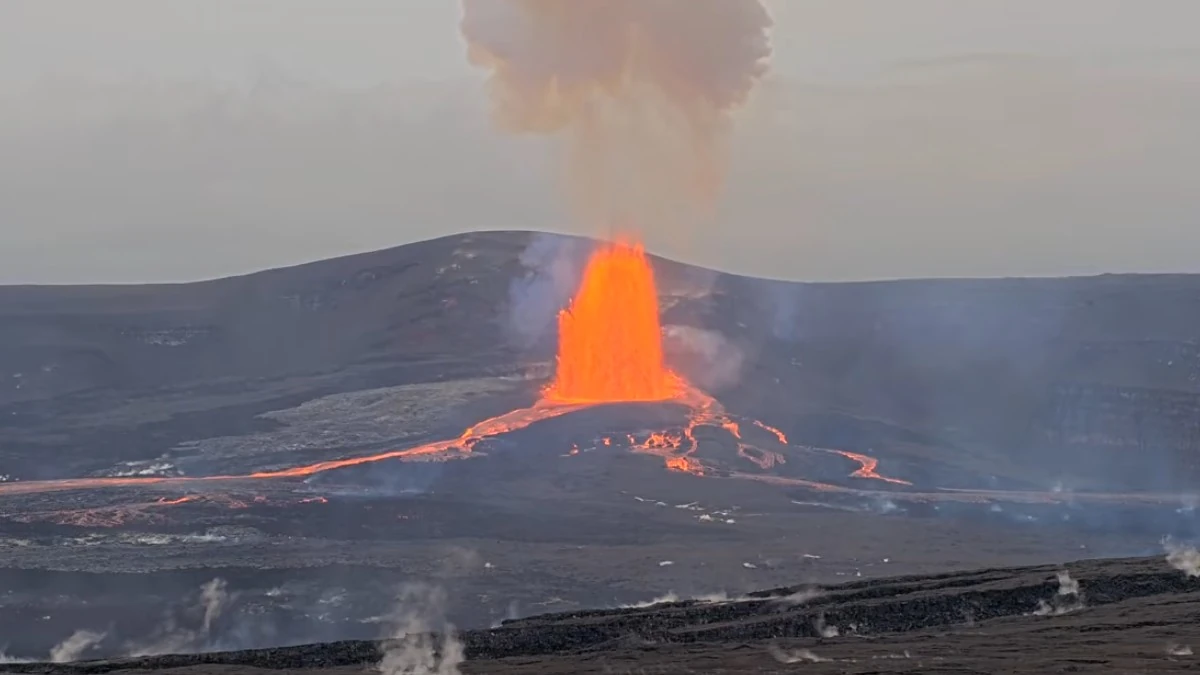
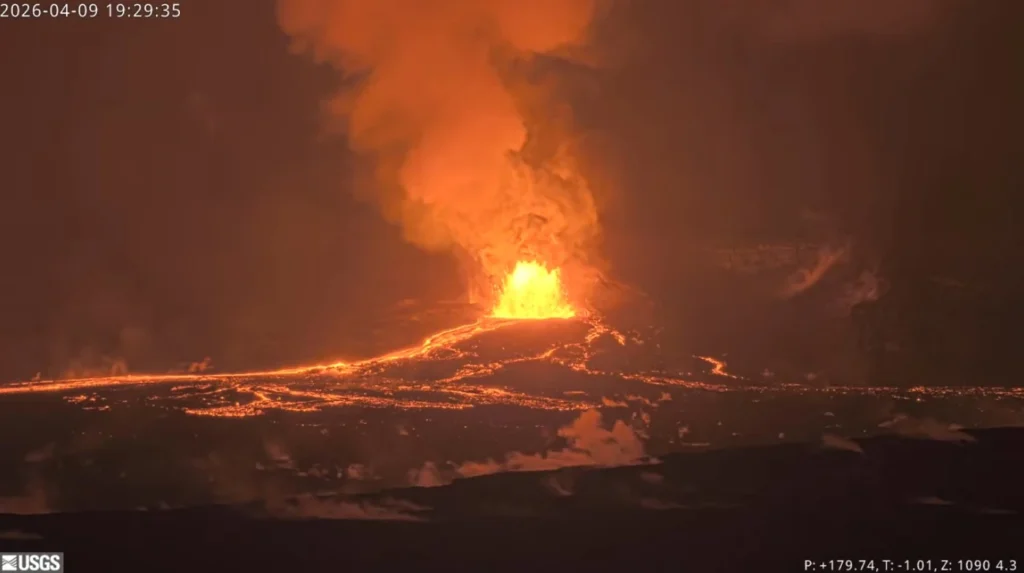
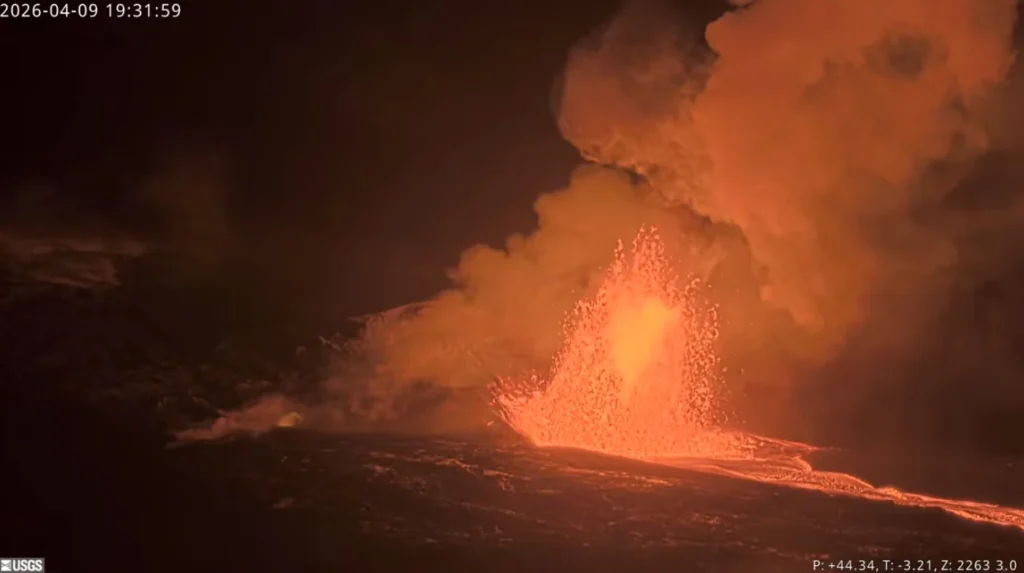
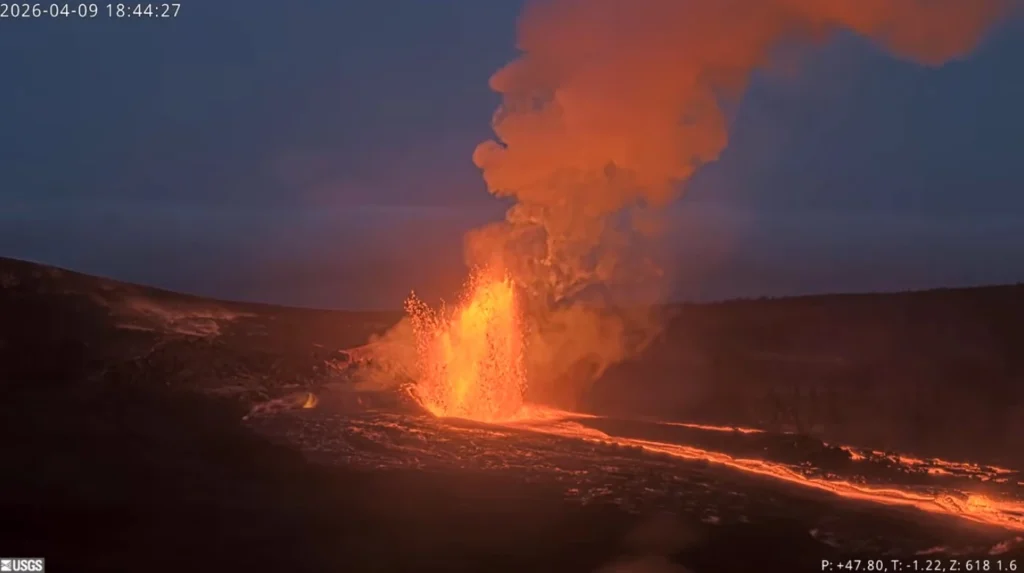
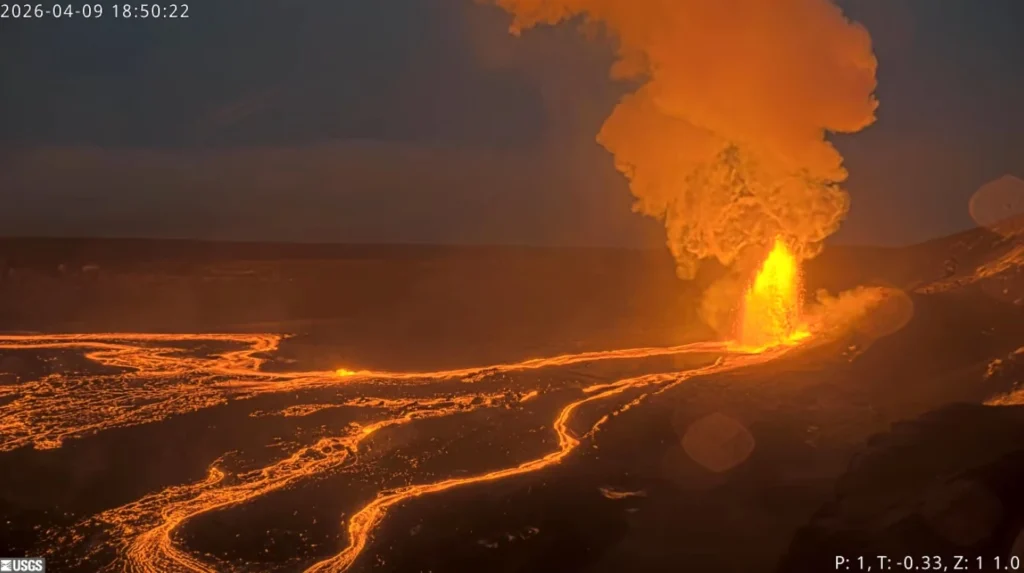
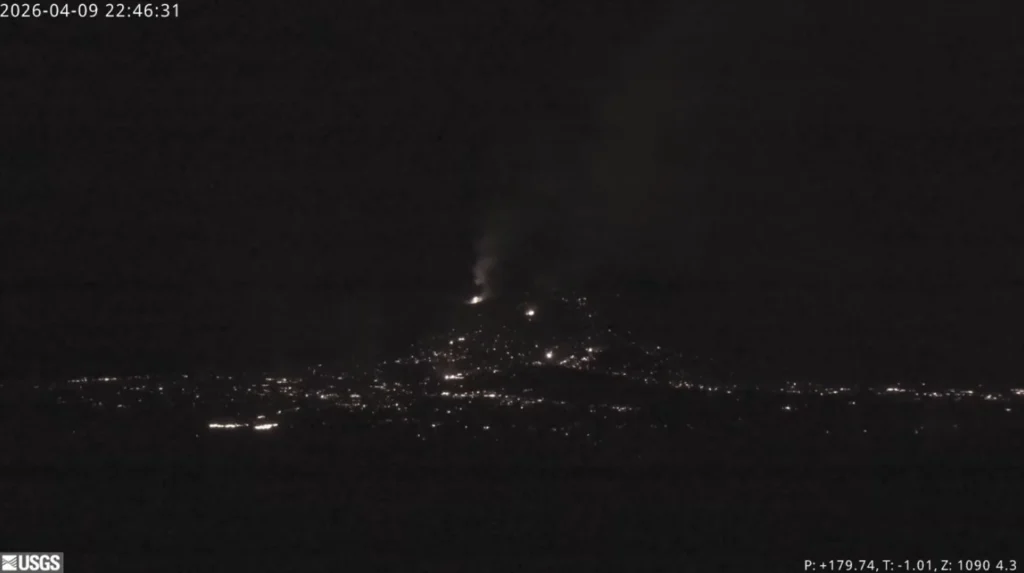
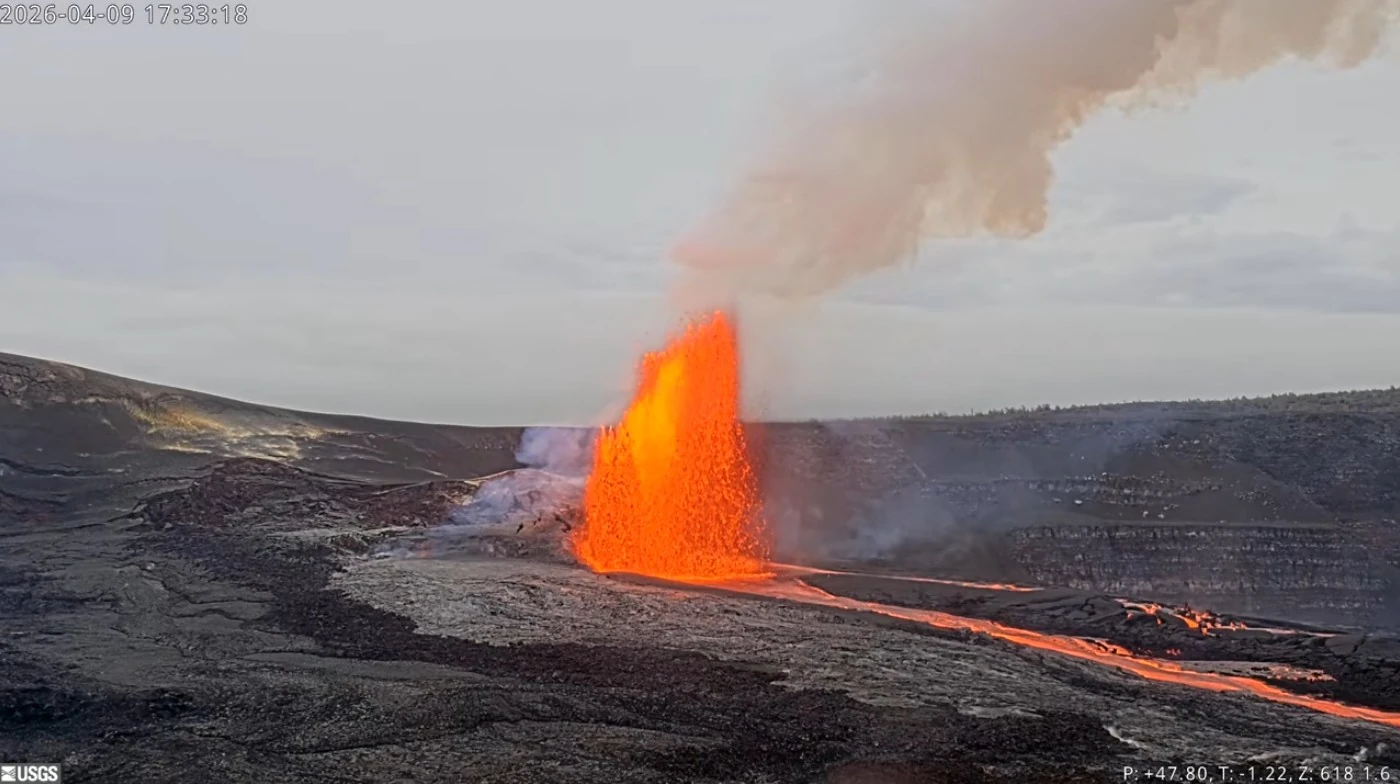
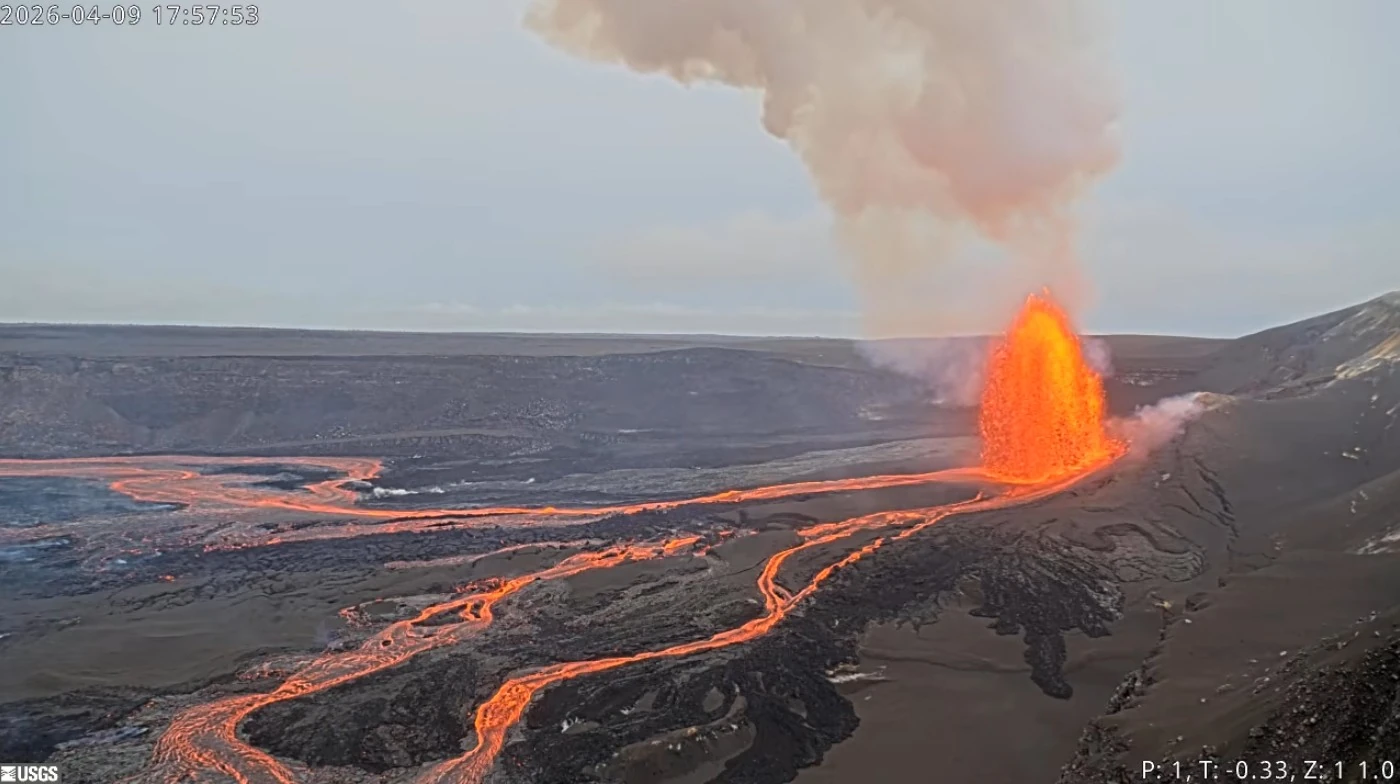
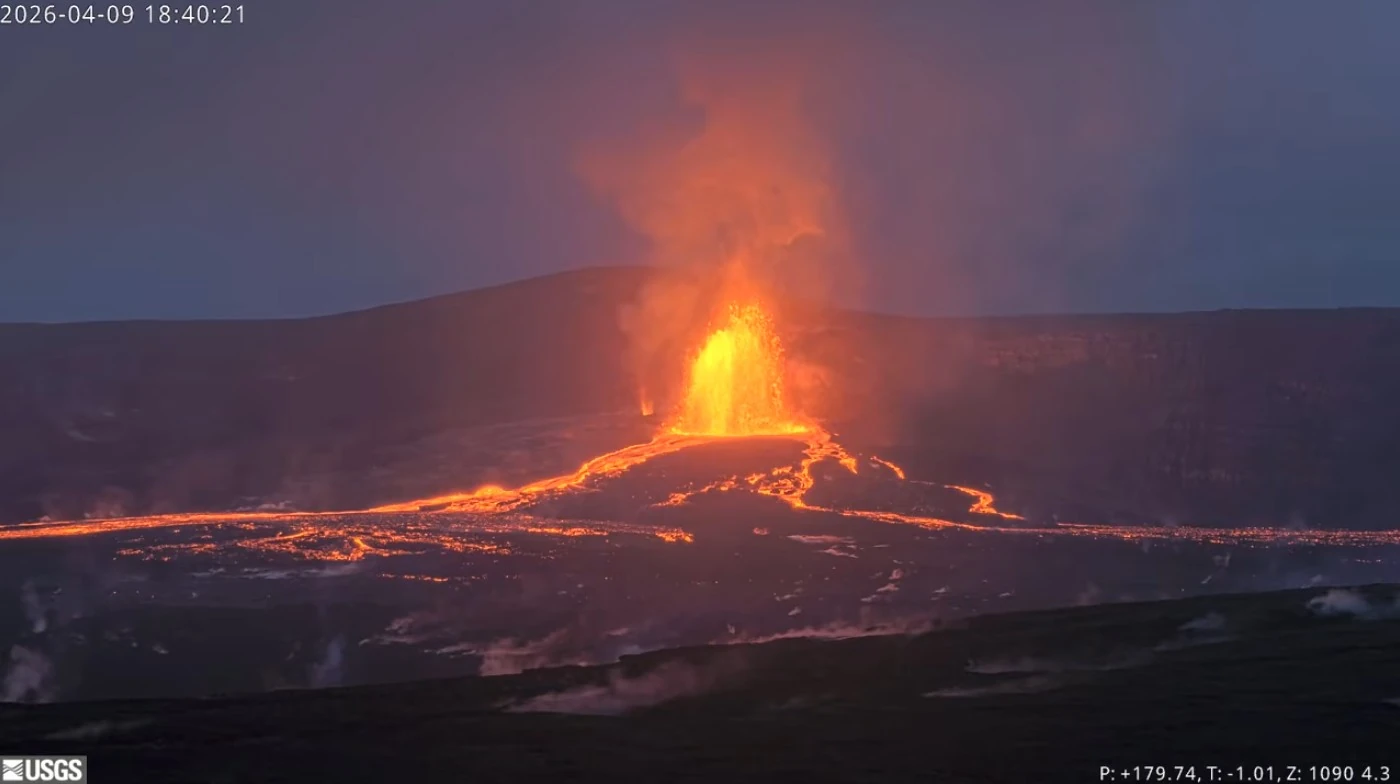
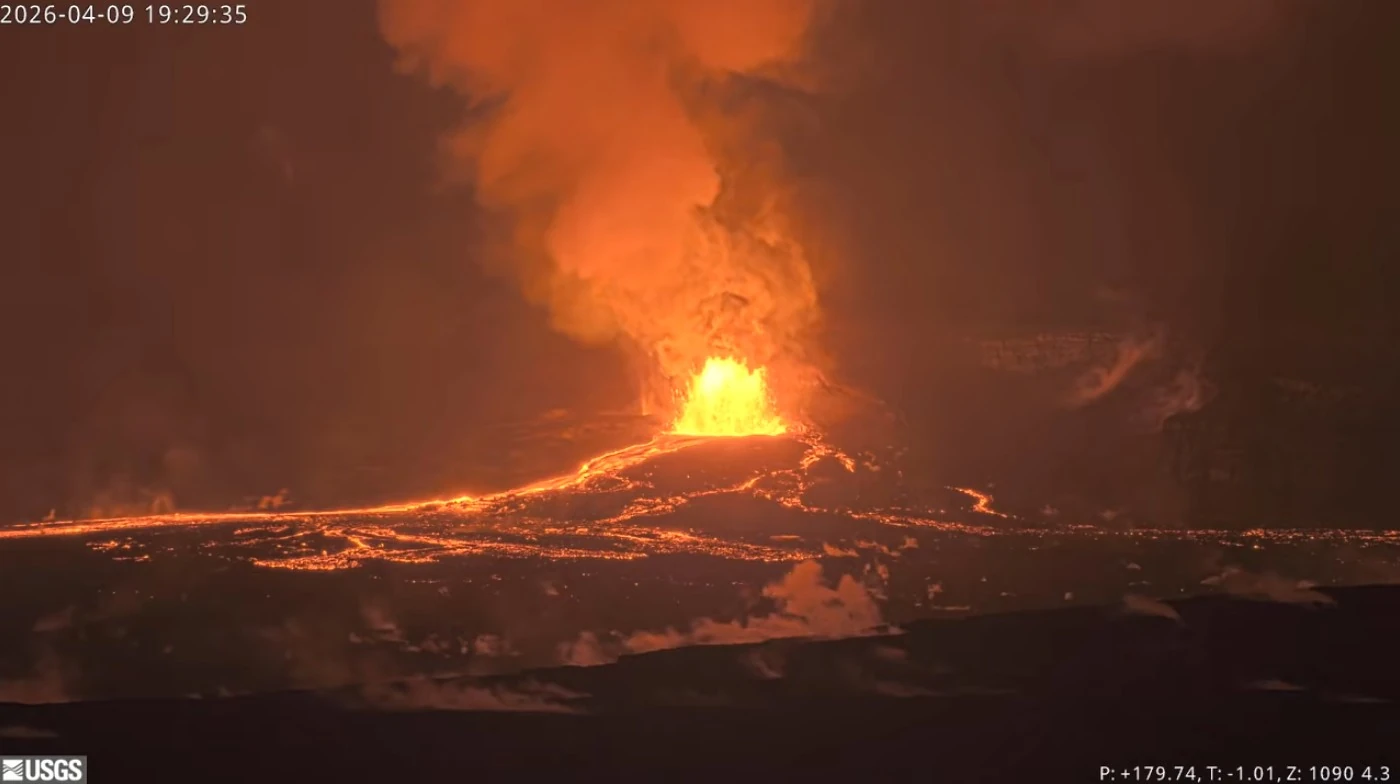
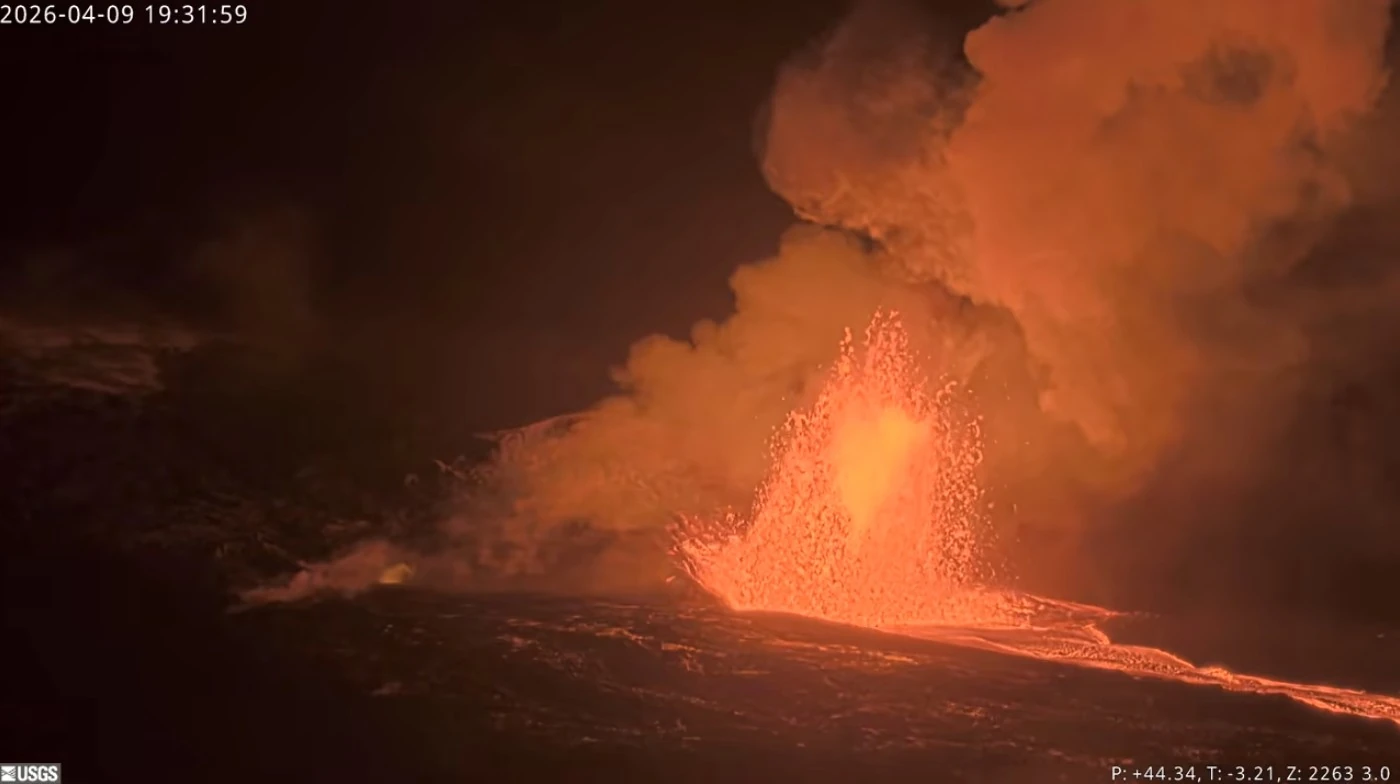
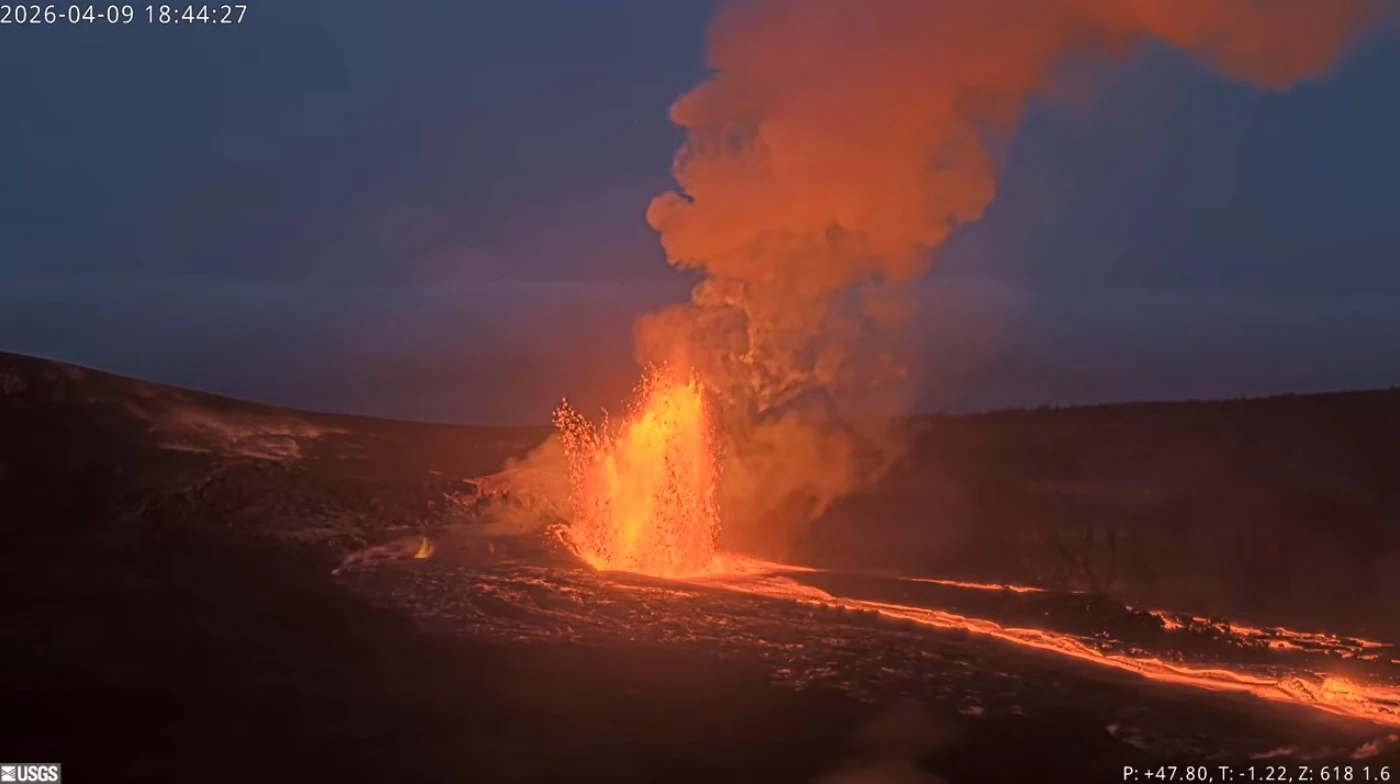
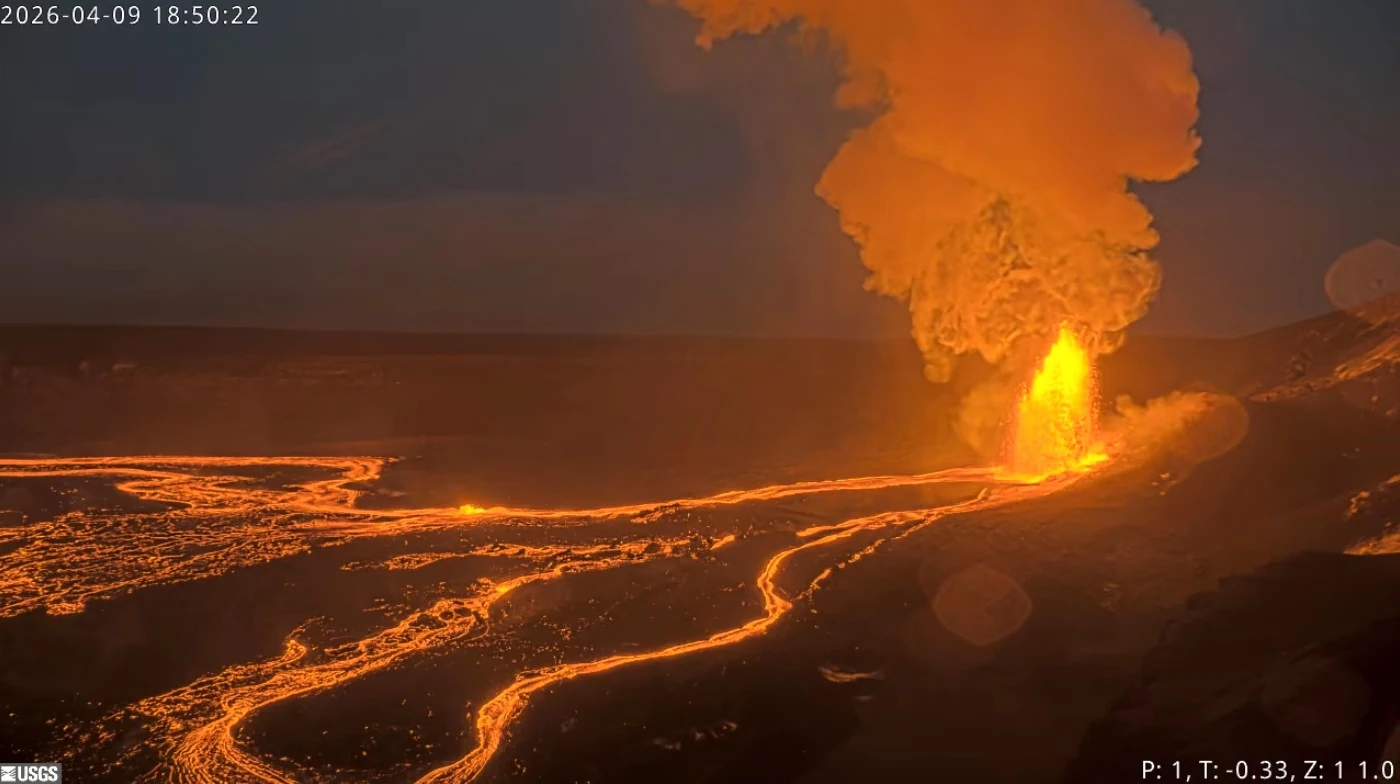
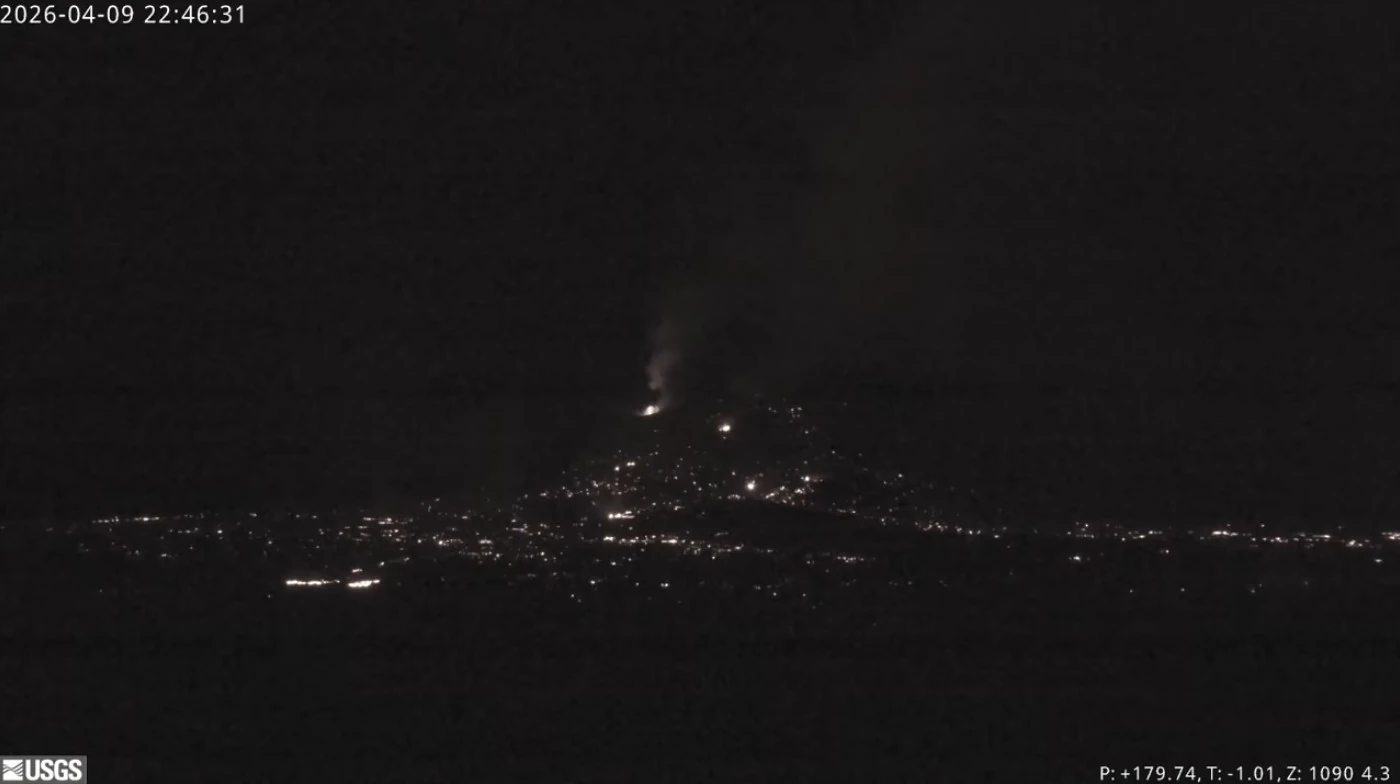
Eruptive episode 44 at Kilauea volcano, Hawaii on April 9, 2026. Credit: USGS/HVO
Tephra up to 25 cm (10 inches) was deposited in the Volcano Golf Course subdivision, a residential area located a few kilometers northeast of the summit of Kīlauea, during episode 44 of the ongoing Halemaʻumaʻu eruption. Lava fountaining ended at 19:41 LT on April 9 (05:41 UTC on April 10), after 8 hours and 31 minutes of continuous activity, and the eruption is currently paused. The Alert Level is currently at Advisory, and the Aviation Color Code is at Yellow.
The episode began at 11:10 LT (21:10 UTC) on April 9, following precursory activity that started on April 3, including approximately 75 lava overflows. The final overflow transitioned directly into sustained fountaining, accompanied by a sharp increase in seismic tremor and 17.6 microradians of deflationary tilt recorded by monitoring instruments.
Lava fountains from the north vent initially rose to about 100 m (330 feet) before intensifying to a peak height of approximately 240 m (800 feet) at 12:45 LT.
Heights declined through the afternoon, decreasing to about 150 m (500 feet) by 16:00 LT and continuing to diminish until the eruption ceased. The south vent did not produce sustained fountaining but showed intermittent gas jetting and flames.
Effusion rates reached just over 390 m³/s (500 cubic yards per second) at around 12:30 LT, with an average discharge of approximately 200 m³/s (260 cubic yards per second) over the duration of the event. The eruption produced an estimated 5.8 million m³ (7.5 million cubic yards) of lava, covering roughly 50% of the Halemaʻumaʻu crater floor.
Sustained fountaining generated a volcanic plume that rose to about 4 500 m (15 000 feet) above sea level by 13:30 LT. Southerly winds transported the plume northward, resulting in tephra fallout across areas of Hawaiʻi Volcanoes National Park and adjacent communities.
The heaviest fallout occurred near the summit, where coarse tephra, including scoria and spatter, accumulated in the Volcano Golf Course subdivision. Fine ash and Pele’s hair were transported farther downwind and were observed as far as Hilo, located approximately 45 km (28 miles) northeast of the summit.
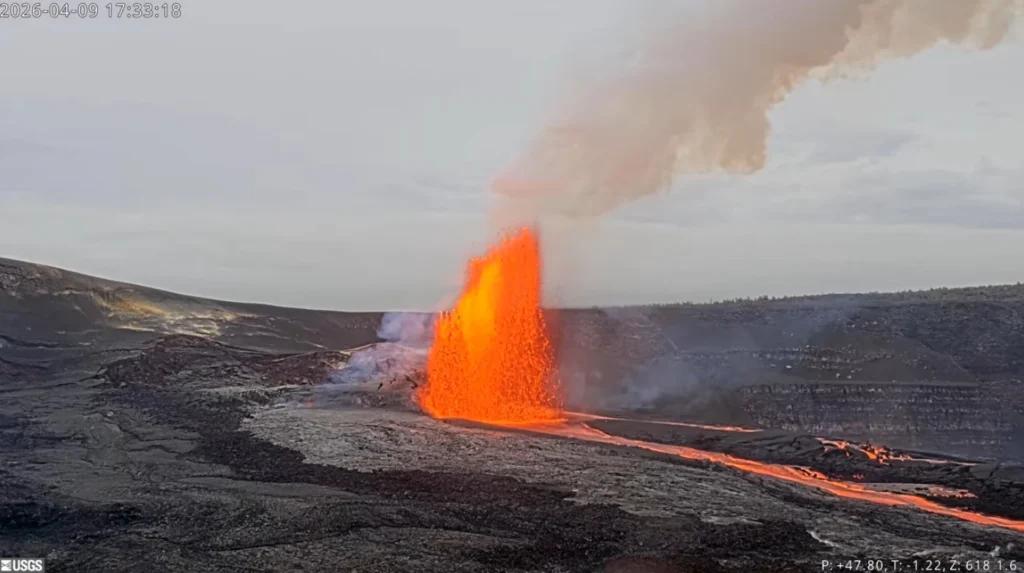
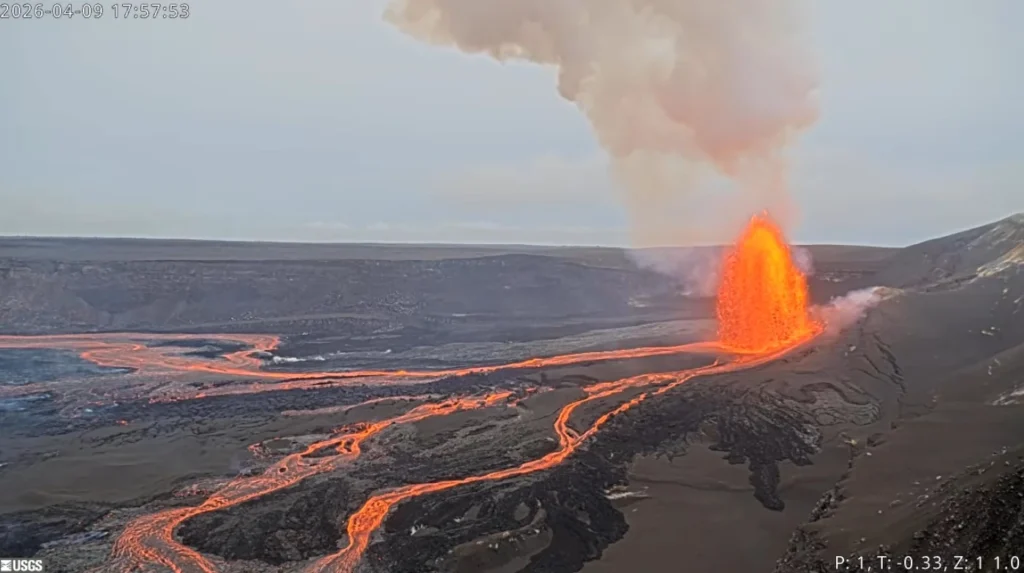
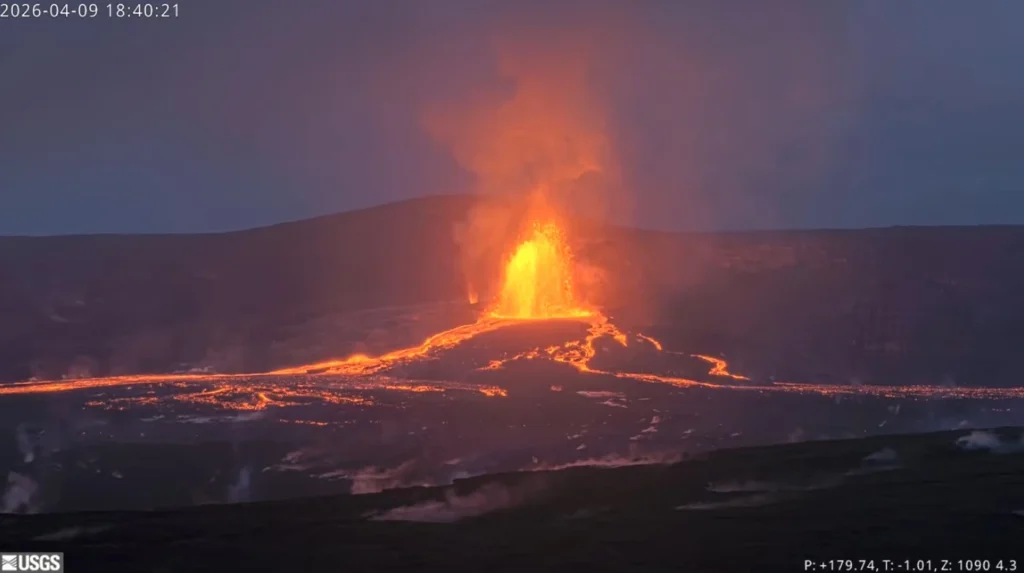
The Hawaiian Volcano Observatory increased alert levels from Orange/Watch to Red/Warning at 12:36 LT in response to hazards affecting nearby communities and aviation. The National Weather Service issued an ashfall warning at 12:40 LT, following an earlier advisory.
Highway 11 through the Volcano area and sections of the national park were temporarily closed.
Although episode 44 was smaller than episodes 41 through 43, wind conditions produced a tephra distribution pattern similar to previous events, extending impacts beyond the immediate summit area.
Volcanic gas emissions, including sulfur dioxide (SO2), were continuously released during the eruption, forming vog downwind. Exposure to vog and airborne tephra can cause respiratory and eye irritation, particularly in communities north of the summit.
Lava flows remained confined within Halemaʻumaʻu crater and the southwestern portion of Kīlauea’s summit caldera, with no reports of flows threatening residential areas. Instability persists along the crater rim, where rockfalls, ground cracking, and small landslides can occur near active vents.
The summit region of Kīlauea has been closed to the public since 2007 due to persistent hazards that can intensify during eruptive episodes.
References:
1 Status Report for Kilauea volcano – USGS/HVO – Issued at 06:52 UTC on April 10, 2026

I'm a dedicated researcher, journalist, and editor at The Watchers. With over 20 years of experience in the media industry, I specialize in hard science news, focusing on extreme weather, seismic and volcanic activity, space weather, and astronomy, including near-Earth objects and planetary defense strategies. You can reach me at teo /at/ watchers.news.

Commenting rules and guidelines
We value the thoughts and opinions of our readers and welcome healthy discussions on our website. In order to maintain a respectful and positive community, we ask that all commenters follow these rules.