
Kīlauea episode 47 ends after 9 hours, fine ash and Pele’s hair fall outside Hawaiʻi Volcanoes National Park
Episode 47 of the ongoing Halemaʻumaʻu eruption at the summit of Kīlauea ended at 00:27 HST (10:27 UTC) on May 15, 2026, after 9 hours of continuous lava fountaining from the north vent. The U.S. Geological Survey’s Hawaiian Volcano Observatory (HVO) said the eruption is paused and lowered Kīlauea to Volcano Alert Level Advisory and Aviation Color Code Yellow.
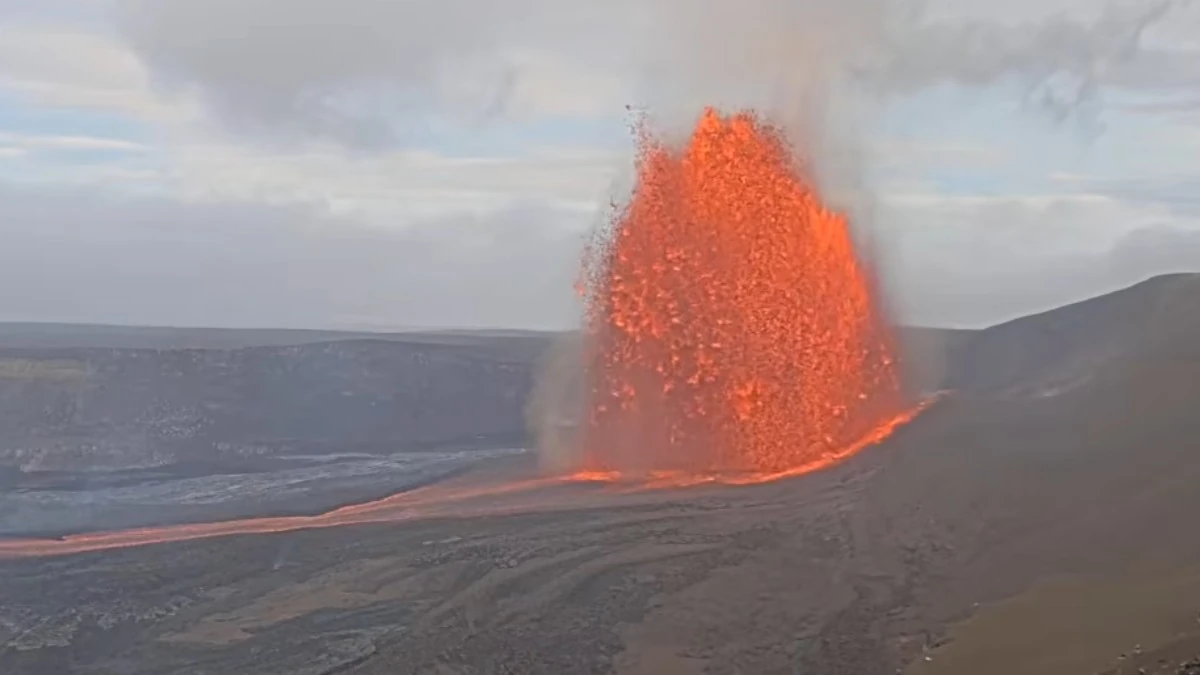
Kilauea Episode 47 - May 15, 2026. Credit: USGS/HVO
Lava fountaining began at 15:27 HST on May 14 (01:27 UTC on May 15), about 12 hours after precursory lava overflows began from the Halemaʻumaʻu south vent at 02:57 HST on May 14. HVO reported around 75 precursory overflows from the south vent before low-level dome fountaining began at the north vent at 14:58 HST and transitioned into episode 47 at 15:27 HST.
The south vent did not fountain during episode 47, although it spattered during the early hours of north vent activity. The instantaneous effusion rate peaked between 275–300 m3/s (360–390 cubic yards/s) around 17:00 HST on May 14, while the average effusion rate for the episode was 220 m3/s (270 cubic yards/s).
HVO estimated that 5.2 million m3 (6.8 million cubic yards) of lava erupted during the episode, covering about 30–40% of the Halemaʻumaʻu crater floor. The Uēkahuna tiltmeter recorded about 15.6 microradians of deflationary tilt during the episode.
The north vent fountain reached about 200 m (650 feet) by around 17:00 HST, then declined over several hours to about 60 m (200 feet) shortly before the episode stopped. It produced a plume that reached about 6 000 m (20 000 feet) above sea level, based on radar data reported by the National Weather Service (NWS) and the Washington Volcanic Ash Advisory Center.
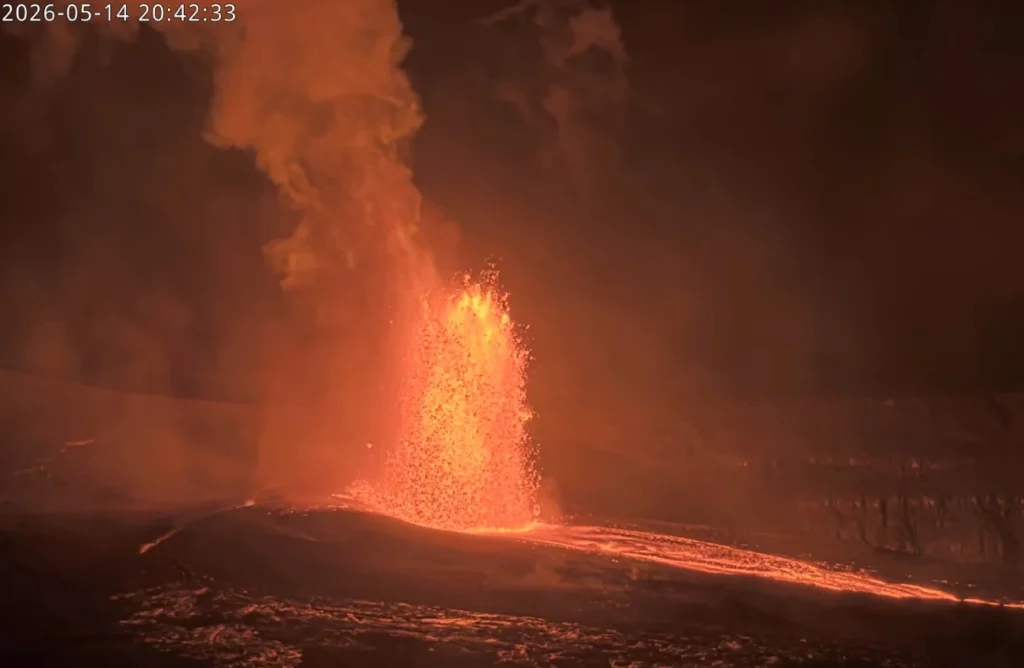
Most tephra fell inside the closed area of Hawaiʻi Volcanoes National Park. HVO reported sparse reticulite up to 3 inches (5 cm) in size at Uēkahuna and Keanakākoʻi overlooks, while fine ash and Pele’s hair fell outside the park in Mauna Loa Estates, ʻŌhiʻa Estates, Volcano village, and Royal Hawaiian Estates.
Low-altitude northeast trade winds first pushed most tephra southwest of Halemaʻumaʻu. Around the time of peak fountain height, weaker low-altitude winds allowed the plume to rise more vertically, while winds above 4 500 m (15 000 feet) transported lighter material toward the northeast.
The NWS office in Honolulu issued a Special Weather Statement at 21:47 HST on May 14 (07:47 UTC on May 15) for periods of light ashfall from Kīlauea. NWS said radar showed the highest detectable tephra rising to around 2 400 m (8 000 feet) above ground level and said any additional ash from the eruption would likely fall near the eruption source and over portions of the Kaʻū District immediately southwest of Halemaʻumaʻu Crater.
The agency advised residents and tourists to avoid excessive ash exposure and urged people with respiratory sensitivities to take extra precautions to minimize exposure.
Other hazards associated with Kilauea include volcanic gas, tephra, lava flows, crater-wall instability, ground cracking, and rockfalls. Close to the vents, tephra material on the crater rim can crack, slump, and produce small landslides that sometimes expose hot and molten material. Lava flows during the current summit eruption have remained confined to Halemaʻumaʻu crater and the southwest side of Kaluapele, Kīlauea’s summit caldera.
Kīlauea’s current eruption has been intermittently active in Halemaʻumaʻu crater since December 23, 2024, within the summit caldera in Hawaiʻi Volcanoes National Park.
References:
1 HVO Status Report for Kilauea volcano – USGS/HVO – May 15, 2026

I'm a dedicated researcher, journalist, and editor at The Watchers. With over 20 years of experience in the media industry, I specialize in hard science news, focusing on extreme weather, seismic and volcanic activity, space weather, and astronomy, including near-Earth objects and planetary defense strategies. You can reach me at teo /at/ watchers.news.

Commenting rules and guidelines
We value the thoughts and opinions of our readers and welcome healthy discussions on our website. In order to maintain a respectful and positive community, we ask that all commenters follow these rules.